Acoustic vs Original Mix: Deconstructing the Exact Chords Yojiro Noda Uses in 'Iindesuka?'
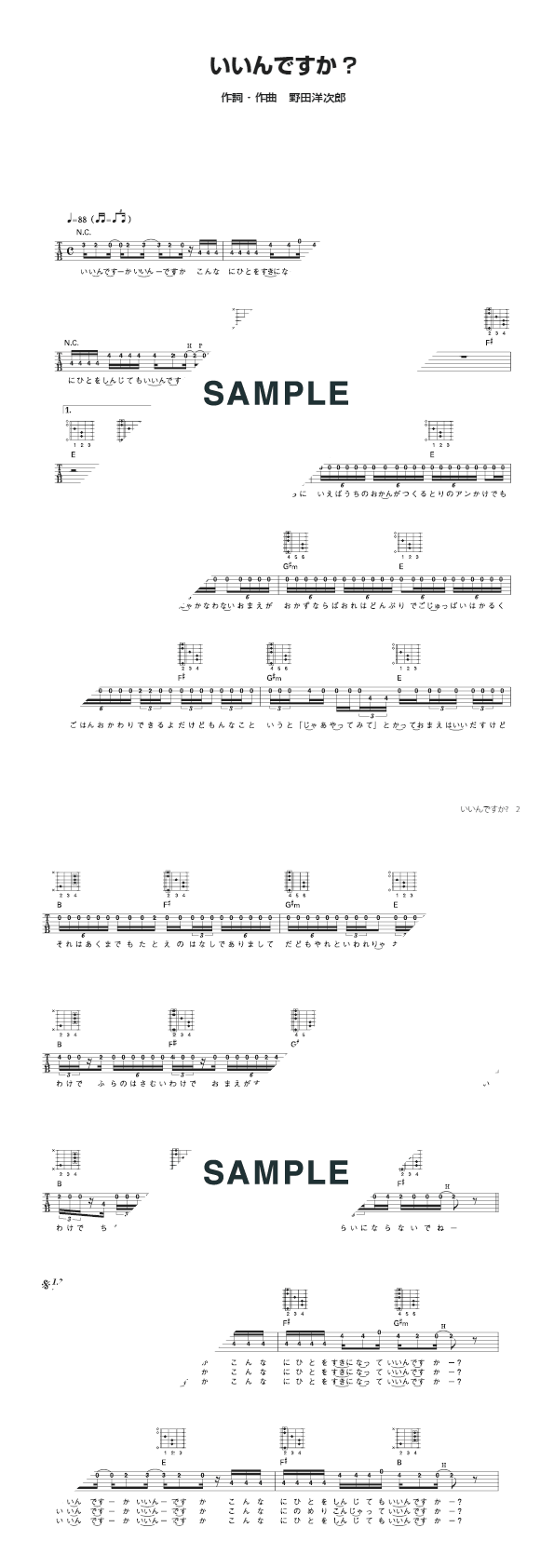
For nearly two decades, amateur guitarists across internet forums have traded flawed transcriptions of "Iindesuka?" (いいんですか?), the beloved hit from the seminal 2006 album RADWIMPS 4: Okazu no Gohan. Most user-submitted J-rock guitar tabs instruct beginners to slap a capo on the first fret and churn through standard campfire open chords. Yet anyone attempting to play along with front-man Yojiro Noda's live stages quickly realizes that something sounds profoundly detached. The chord changes clash, the treble registers sound thin, and the rhythmic swing collapses under heavy down-strums. While pop culture references frequently weave music terminology into narrative media, documented even in serialized storytelling archives like the Wikipedia (en) Report on manga chapters tracking musical codes, dissecting authentic Japanese alternative rock chords demands rigorous observational transcription rather than casual listening.
The gap between popular online chord charts and Noda's actual fretboard mechanics comes down to voice leading, percussive damping, and dynamic finger positioning. By examining multi-cam live footage from RADWIMPS' arena performances, including their landmark Saitama Super Arena footage and anniversary acoustic sets, we can settle how Noda approaches this track. He does not rely on beginner shortcuts. Instead, he utilizes precise, mid-neck standard tuning chord shapes combined with aggressive, funk-influenced right-hand muting to create the song's unmistakable bounce.
📌 Key Takeaways:
- Fretboard Reality: Noda typically plays "Iindesuka?" in standard tuning without a capo, relying heavily on modified E-shape and A-shape movable barre chord fingerings.
- Voicing Deconstruction: The song’s harmonic core sits in B♭ Major, shifting toward root-five and root-six positions rather than open chord substitutions.
- Acoustic Arrangement: In stripped-down and acoustic mix arrangements, Noda incorporates extended sus4 and add9 voicings to keep top strings ringing above the percussive slap.
The Origin and Enduring Appeal of the "Okazu no Gohan" Anthem
When RADWIMPS dropped RADWIMPS 4: Okazu no Gohan in December 2006, the record cemented their status as generational leaders of Tokyo’s rock underground. Among dynamic punk workouts and sweeping ballads, "Iindesuka?" stood out for its blend of spoken-word rhythmic cadences, heartfelt lyricism, and breezy, hip-hop-inflected groove. The album went double platinum in Japan, establishing guitar riffs that aspiring players attempted to decode nationwide.
Search volume for the song's chords ("いい んで すか コード") has remained consistently high across tab aggregators like U-Fret and ChordWiki. Yet, the dominant transcriptions published online routinely simplify the harmony to make the track accessible for novice acoustic strummers. Most websites transpose the song to A Major with a Capo on Fret 1, recommending standard G, Em, C, and D shapes. This simplification erases the percussive fret-hand chokes that define Noda's rhythm track. To understand why those beginner tabs fail to capture the sound, you have to look directly at the key signature and tempo.
The Authentic Voicings: Live Analysis vs. Online Tab Mythology
In concert, Yojiro Noda frequently sling-hangs a Fender Telecaster or a Gibson acoustic, setting the tempo at a brisk 92 BPM in a swung 4/4 meter. The track is written in the key of B♭ Major. While playing in B♭ Major typically terrifies beginner guitarists due to the required barre chords, Noda leans directly into those mechanics because barre chord fingerings give him complete control over sustain.
The core Iindesuka chord progression hinges on a classic pop-punk and Shibuya-kei turnaround: B♭, F, Gm, E♭ (I, V, vi, IV). When playing open shapes with a capo on Fret 1, the open strings continue to vibrate uncontrollably after an upstroke. Noda’s sound requires immediate, crisp silence between beats. He accomplishes this by fretting B♭ at the 6th fret (root-six barre) or the 1st fret (root-five A-shape), releasing finger tension instantly on the off-beats to create a sharp staccato chop.
High-definition footage reveals that Noda alternates between full-finger bars and hybrid shell voicings where his thumb wraps over the neck to deaden the low E string. In verses, he frequently drops the root entirely, playing upper triads on the D, G, and B strings while bassist Yusuke Takeda handles the bottom end. This arrangement technique keeps the rhythm guitar bright, percussive, and completely out of the bass guitar’s acoustic lane.
Chord Variation Breakdown Across Versions
Over the years, RADWIMPS has showcased "Iindesuka?" in stadium rock packages, orchestral revues, and intimate studio jams. Each format tweaks the guitar voicing setup to serve the room.
| Arrangement Style | Tuning & Capo Position | Primary Voicings Used | Acoustic Character |
|---|---|---|---|
| Original Studio Mix (2006) | Standard (E A D G B E), No Capo | B♭ (x13331), F (133211), Gm (355333), E♭ (x68886) | Dry, percussive, funk-influenced palm mutes |
| Stadium Live Tour | Standard, No Capo | B♭5, F5, G5 power chords transitioning to open triadic top-ends | Aggressive crunch, pick scraping, long downstroke drives |
| Unplugged / Acoustic Sets | Standard, Capo 1 (Occasional) or Capo 3 | A, E/G#, F#m7, Dadd9 (relative to Capo 1) | Resonant, chimey open-string drone, softer fingerstyle dynamics |
| Web Tab Simplified Standard | Standard, Capo 1 | Standard open A, E, F#m, D shapes | Muddy, lacks dynamic cut, uncontrolled open ringing |
Mastering the Rhythm Guitar Strumming Pattern and Right-Hand Slap
Voicing choices mean little if your right hand plays like a folk singer. The magic of "Iindesuka?" lives entirely inside the percussive pocket. The song uses a sixteenth-note syncopated pattern built on ghost notes and backbeat accents on beats two and four.
Noda utilizes a classic right-hand chop technique. When strumming the B♭ major chord, the pick sweeps downward across the middle strings, followed instantly by the flesh of the picking-hand palm striking the bridge saddle. This creates an acoustic snare effect. The rhythmic notation flows along this framework:
[Down - (Mute/Slap) - Up - Down - Up - (Mute/Slap) - Up]
During the bridge and breakdown, the strumming shifts into rapid-fire 16th-note chucking. To replicate this tone, keep your fret hand resting gently across all six strings without pressing them into the wire. Pick vigorously across the muted strings, pressing down only on the specific syncopated accents where the harmony spikes. This creates the rhythmic drive that makes the acoustic guitar behave more like a hi-hat or shaker than an ordinary harmony instrument.
Choosing Your Path: Casual Strumming vs. Stage Authenticity
Depending on your current skill level, playing "Iindesuka?" presents two distinctly different paths forward. Choose the approach that matches your practice goals.
Opt for the Authentic Standard Tuning (No Capo) If:
- You play electric guitar in a full-band rehearsal setting alongside a bass player.
- You want to develop professional fretboard muting control and clean barre switching.
- You are chasing the exact percussive crack heard on the original studio master.
Opt for the Capo 1 Transposition If:
- You are accompanying solo vocals on a steel-string acoustic guitar around friends.
- You struggle with hand fatigue and need to avoid repetitive full-barre chord shapes.
- You want to layer droning high-string chime (add9 and sus4 voicings) over a single rhythm track.
Frequently Asked Questions (FAQ)
Q1: What is the exact tuning used by RADWIMPS on "Iindesuka?"
A1: The original recording and primary live performances use standard tuning (E-A-D-G-B-E). Noda plays in standard tuning without an altered tuning or down-tuning.
Q2: Why do so many tab websites suggest playing with a Capo on the 1st fret?
A2: Transposing the song into A Major with a Capo on the 1st fret allows beginner guitarists to use standard open shapes (A, E, F#m, D) instead of continuous barre chords. While functional for beginners, it sacrifices the authentic muted rhythmic chop heard on the album.
Q3: How does Noda voice the bridge progression during the spoken breakdown?
A3: In the bridge, Noda shifts up the neck, utilizing higher inversions of Gm7 and E♭maj7 around the 8th to 10th frets. This leaves the lower mid-range frequency completely empty for his vocal cadence and the bass line.
Fretboard Discipline Over Tab Shortcuts
Learning RADWIMPS catalog tracks requires looking past automated internet chord charts. While simplified capo guides offer a quick entry point for casual campfire sing-alongs, capturing the swagger of "Iindesuka?" requires adopting Yojiro Noda’s actual fretboard discipline. By committing to standard-tuning barre positions, embracing tight dynamic mutes, and driving the sixteenth-note swing from the wrist, you unlock the punch and personality that made the 2006 track a permanent staple of modern Japanese rock.
