Arashi Tokyo Dome Finale: Step-by-Step Breakdown of Satoshi Ohno and Sho Sakurai’s Historic Farewell
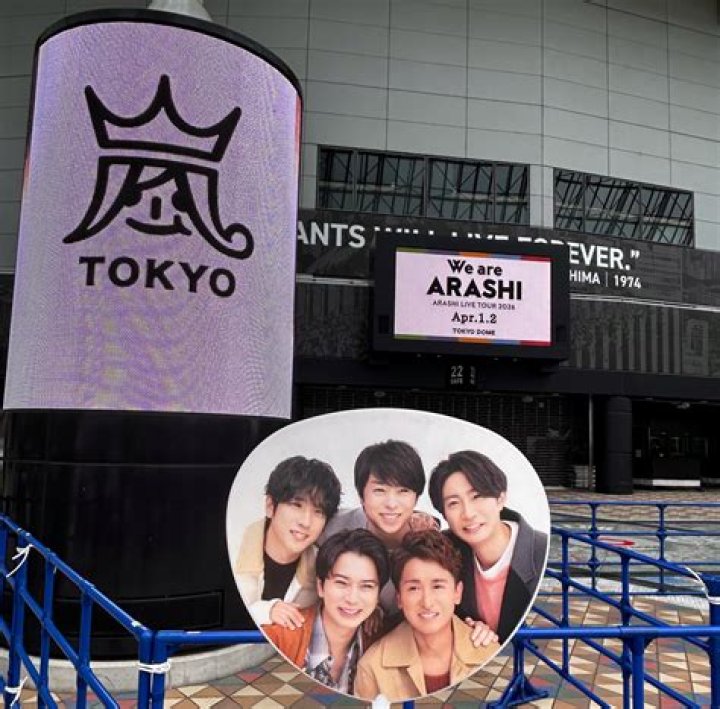
Fifty-five thousand penlights shifted from deep marine blue to sharp crimson across the stands of Tokyo Dome as Satoshi Ohno and Sho Sakurai stepped forward side by side. After twenty-six years at the apex of Japanese entertainment, Arashi delivered their definitive stage performance, closing out an era that reshaped Asian pop culture. As detailed in The Japan Times Report on the Tokyo Dome finale, the June 2026 performance marked the absolute conclusion of the five-member collective's active concert career.
The night functioned as both an arena spectacle and an intimate dialogue between Ohno, the group's reluctant artistic anchor, and Sakurai, its articulate public general. Fans long designated the duo as the "Yama pair", the elder foundation who shouldered Arashi's operational and musical identities through two and a half decades of shifting music industry dynamics. Their final performance together resolved years of hiatus speculation, setting definitive boundaries for what comes next.
📌 Key Takeaways:
- The Historic Final Bow: Arashi officially concluded their 26-year live performance history in early June 2026 with a four-hour marathon concert at Tokyo Dome.
- The Core Dynamic: The operational weight of the finale rested on the contrast between Satoshi Ohno’s expressive vocal leadership and Sho Sakurai’s structured stage direction.
- Record-Setting Departure: Disbandment single "Five" shattered Oricon's single-day streaming record within twenty-four hours of release, logging unprecedented domestic engagement.
- Future Paths: Ohno returns to private life away from commercial entertainment, while Sakurai maintains his prime-time news broadcasting and institutional media roles.
The Crucible of Arashi's Elder Pillars
Understanding the emotional intensity of the Tokyo Dome finale requires revisiting 1999, when Johnny & Associates assembled five distinct personalities off the coast of Honolulu. Ohno was the seasoned dancer seeking an exit from agency constraints. Sakurai was an elite Keio student balancing university lectures with late-night rap sessions. Together, they established the internal governance of the group.
While Kazunari Ninomiya delivered acting prestige, Jun Matsumoto commanded concert production, and Masaki Aiba projected public optimism, Ohno and Sakurai served as Arashi's operational brackets. Ohno commanded pitch, vocal stability, and intricate choreography. Sakurai engineered stage banter, took responsibility for press conferences, and pioneered the incorporation of self-written Japanese rap verses into mainstream pop.
When Ohno first expressed his desire to step away from public life in 2017, triggering the eventual 2020 temporary hiatus, Sakurai stood as the primary interlocutor between Ohno’s personal autonomy and the billion-yen corporate machinery reliant on Arashi's engine. That institutional protection returned to the spotlight during their final run, where Sakurai visibly sheltered Ohno from excessive promotional scrutiny while giving him complete expressive freedom on stage.
The Definitive Sequence of the Tokyo Dome Finale
The Tokyo Dome staging dispensed with unnecessary narrative gimmicks, prioritizing technical musical execution across a 41-song setlist. Opening with their 1999 debut track "A・RA・SHI," the transition from past to present hit instantly. Sakurai delivered his iconic rapid-fire verses with zero backing track assistance, while Ohno hit the high-register ad-libs that initially established the group's live reputation.
The centerpiece of the evening emerged halfway through the third hour during the acoustic rearrangements of "Monster" and "Truth." Ohno's solo dance segments remained razor-sharp, defying his years away from consistent live stages. Standing twenty yards opposite on the extended catwalk, Sakurai anchored the rhythm, trading direct eye contact across the arena floor during the vocal harmonizations.
During the final addresses before the encore, the atmosphere inside the dome grew intensely quiet. Sakurai spoke first, his tone measured and analytical: "We protected this space for twenty-six years because the five of us never compromised on mutual respect. What Ohno gave to this group was freedom without ego." When Ohno took the microphone, his voice wavered before steadying: "I spent decades searching for who I was outside this spotlight. Standing beside Sho and the members tonight, I know that whatever comes next, my youth was entirely real."
Milestones Across the 26-Year Trajectory
Arashi's career path defied standard idol life cycles, transitioning from underperforming underdogs in the early 2000s to Japan's premier national act. The data behind their final era highlights the scale of this final goodbye.
| Career Milestone | Satoshi Ohno's Contribution | Sho Sakurai's Contribution | Commercial & Cultural Impact |
|---|---|---|---|
| National Breakthrough (2006, 2008) | Choreographed complex live set pieces; established vocal baseline on "Love So Sweet" | Began flagship anchor role on NTV's News Zero; normalized college degrees for idols | First National Stadium (Kokuritsu) residency; domestic television ratings dominance |
| Golden Dome Era (2009, 2019) | Led vocal arrangements on high-difficulty singles; staged solo art exhibitions (Freestyle) | Penned iconic rap sequences ("Sakurap"); served as official Olympic broadcast lead | Multiple record-breaking five-dome tours; billions in annual economic domestic circulation |
| Hiatus & Transition (2020, 2025) | Withdrew from commercial activities; retained agency ties without solo appearances | Maintained weekly prime-time broadcasting; acted as group's institutional voice | Digital back catalog rollout; massive physical Blu-ray and streaming monetization |
| Final Curtain (June 2026) | Returned for full vocal delivery on single "Five" and four-hour finale staging | Drafted structural stage transitions; managed pacing and press communications | Broke Oricon single-day streaming record; complete closure of 26-year run |
The Economic Resonance of Farewell Single 'Five'
The weeks leading up to the Tokyo Dome finale witnessed unprecedented commercial spikes across Japanese media. The release of "Five," marketed as the group's definitive final single, registered record-shattering figures. According to verified Oricon tracking data, the track amassed over 14.2 million domestic streams in its first twenty-four hours, dismantling the previous benchmark held by official digital releases.
Physical retail across Shibuya, Shinjuku, and Osaka witnessed massive queues reminiscent of the late 2000s CD boom. Fans bought limited-run commemorative box sets containing high-resolution studio master tapes and personal written notes from each member. The track itself highlighted the fundamental balance between Ohno and Sakurai: Ohno’s pure, sustained falsetto carried the bridge, backed directly by Sakurai’s grounded, rhythmic baritone.
The music video for "Five" bypassed high-concept CGI, focusing on unvarnished archival footage tracking their journey from 1999 Hawaii to late-night rehearsals in 2026. The single operated not as an aggressive play for algorithmic longevity, but as an official physical and digital artifact for a fandom spanning three generations.
The Structural Balance of the Yama Dynamic
Sociologists and pop culture critics in Japan frequently analyze the specific relationship between Ohno and Sakurai as a textbook study in shared leadership. Unlike Western boy bands that frequently splintered under conflicting individual ambitions, Arashi survived due to an intentional distribution of authority.
Ohno was the titular leader, designated as such via an impromptu televised rock-paper-scissors match during their rookie years. Yet he led through deliberate absence of dominance. He never barked orders, rarely took credit during corporate meetings, and allowed other members to shine in public settings. His authority was musical and physical; when Ohno began dancing or singing, the standard of the performance instantly rose.
Sakurai filled the opposite space with military precision. The son of a prominent government official, Sakurai approached idol culture as an intellectual discipline. He ran live production meetings with rigorous outlines, paced public television variety segments, and ensured the group remained safe for national corporate sponsors. Without Sakurai's tactical stewardship, Ohno might have vanished from commercial media fifteen years earlier. Without Ohno's artistic center, Sakurai's structure would have lacked emotional resonance.
The Reality of the Farewell: What Changes Now
With Tokyo Dome's house lights turned up, the immediate question centers on how the individual members proceed through the remainder of 2026 and beyond. Unlike the temporary hiatus entered on December 31, 2020, this farewell carries absolute administrative weight.
Satoshi Ohno has officially concluded his contracted obligations with the agency structure. Insiders confirm he is relocating his base away from Tokyo to focus full-time on maritime recreation, painting, and personal studio artwork, with no intention of accepting commercial acting or television proposals. His departure is total, intentional, and final.
Sho Sakurai, conversely, remains an established titan of mainstream Japanese journalism and television production. His position on NTV’s News Zero continues uninterrupted, alongside various educational and cultural documentary projects. Sakurai transitions smoothly from idol-reporter into a senior broadcast personality, carrying the intellectual legacy of Arashi into corporate media institutions.
Frequently Asked Questions (FAQ)
Q1: Is Arashi officially disbanded, or is this another extended hiatus?
A1: The June 2026 Tokyo Dome concert marked the official disbandment of Arashi as an active performing unit. While the individual members retain ownership of their collective company entity formed for intellectual property management, all concert, recording, and group television activities have concluded permanently.
Q2: Why was the dynamic between Satoshi Ohno and Sho Sakurai singled out during the finale?
A2: Known as the "Yama" pair, Ohno and Sakurai were the two oldest members who balanced the group’s foundational operations. Ohno led musical execution and stage presence, while Sakurai directed external communication, rap composition, and administrative pacing. Their complementary leadership kept the group cohesive for over a quarter of a century.
Q3: What records did their final single 'Five' achieve?
A3: Released in conjunction with their final concert series, "Five" broke the Oricon first-day domestic streaming record by crossing 14.2 million streams within 24 hours, alongside selling out physical limited-edition pressings across Japan on release morning.
The Finality of Arashi’s Cultural Footprint
The Tokyo Dome stage cleared slowly on that early June night. There were no flying platforms, no fireworks, and no lingering promises of reunion tours. The final image projected on the venue's massive LED displays was simple: five microphones resting on their stands, with Ohno’s and Sakurai’s flanking the center.
Arashi’s twenty-six-year run ended precisely as their internal philosophy dictated, with absolute consensus, technical precision, and mutual respect. For the millions of domestic and global fans who tracked the journey from rookie underdogs to national icons, the closure at Tokyo Dome felt earned. Satoshi Ohno stepped into the quiet anonymity he long pursued, while Sho Sakurai turned back toward the bright lights of Japan's broadcast studios, both leaving behind an untouchable standard for what an idol group can accomplish.
