Are LARME Color Contacts Safe? The Hidden Health Risks Most Wearers Ignore
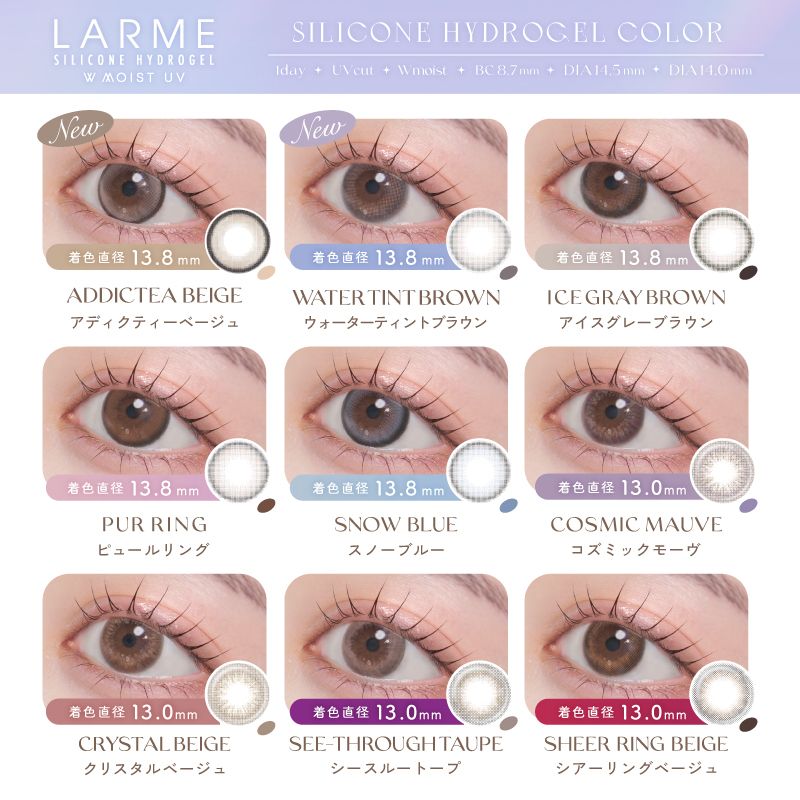
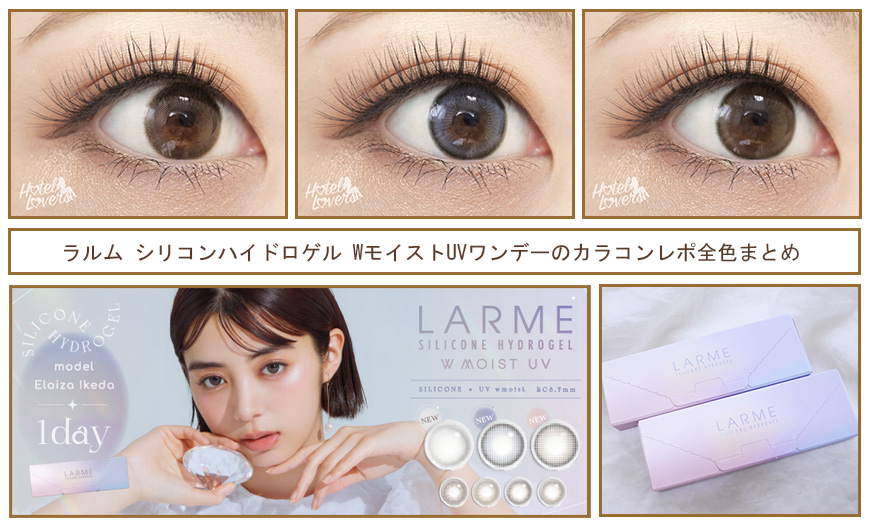
Over the past decade, Japanese cosmetic lenses have shifted from niche subculture accessories into mainstream daily beauty essentials across Asia, North America, and Europe. Among the front-runners is Queen Eyes’ flagship brand, LARME, celebrated for its watercolor-soft limbal rings, natural iris enlargement, and flattering gradients. Online beauty communities frequently praise the lenses for their instant comfort, but behind the curated social media photography lies a medical reality that buyers frequently misunderstand: cosmetic contact lenses are medical devices, not cosmetics.
The surge in unauthorized overseas re-sellers and cross-border grey-market imports has sparked sharp debate among eye care practitioners. While thousands wear the lenses without incident, clinics across Tokyo, Seoul, and Los Angeles routinely treat complications ranging from chronic inflammation to deep tissue infection. Evaluating the safety of LARME requires looking past promotional imagery and examining the material mechanics of how these lenses interact with the living tissue of the human eye.
📌 Key Takeaways:
- Regulatory Standing: LARME lenses carry official Japanese MHLW approval as Class III medical devices, mandating strict compliance with pigment encapsulation standards.
- Material Limitations: Traditional hydrogel models like LARME Moisture UV feature high moisture content percentages (58%) that can draw moisture away from tear films, while silicone hydrogel editions offer drastically better oxygen permeability Dk/t.
- Clinical Hazards: Poor daily disposable hygiene, extended wear past eight hours, and skipping an ophthalmologist prescription elevate the risk of corneal hypoxia and sight-threatening corneal ulcers.
How LARME Dominated the Global Cosmetic Lens Market
LARME made its debut through Japanese distributor Queen Eyes, carving out an immediate niche by moving away from the harsh, high-contrast "doll eye" circle lenses of the early 2010s. Instead, the brand pioneered translucent, low-saturation prints designed to mimic natural ocular depth. Backed by high-profile Japanese model endorsements and seamless digital marketing, the lineup expanded rapidly, spawning sub-lines like LARME Moisture UV and LARME Silicone Hydrogel 1-Day.
The commercial explosion caught eye care professionals off guard. Domestic purchases in Japan require medical oversight, yet international shoppers routinely bypass clinical checkpoints through direct-import e-commerce platforms. By eliminating mandatory optical consultations, consumer perception flipped: buyers view the lenses as cosmetic items akin to mascara or false lashes. That psychological shift removes typical precautions associated with wearing a foreign object directly on the ocular surface.
Manufacturing Standards and Japanese MHLW Oversight
In Japan, cosmetic contact lenses face some of the strictest manufacturing regulations in the world. Following regulatory revisions in 2009, the Japanese Ministry of Health, Labour and Welfare (MHLW) reclassified all non-corrective color lenses as Class III medical devices, placing them under the exact same regulatory scrutiny as prescription optical lenses.
LARME products sold through licensed distributors satisfy these regulatory benchmarks. Central to this standard is pigment leakage prevention. Substandard, uncertified lenses manufactured in unregulated overseas facilities frequently print dye directly onto the lens surface, exposing the delicate epithelial layer of the eye to toxic chemical abrasion.
To eliminate this threat, LARME utilizes a sandwich manufacturing structure. In this engineering setup, colorants are micro-encapsulated between two thin sheets of clear lens polymers:
- The micro-pigments never make direct contact with the cornea or the inner eyelid conjunctiva.
- The outer polymer shields retain a smooth optical finish, minimizing mechanical friction during blinking.
- Surface degradation from enzymatic proteins found in human tear fluid is significantly reduced.
This sandwich structure provides fundamental mechanical protection, ensuring the dye remains locked inside the matrix throughout the intended wear period.
Material Science: Traditional Hydrogel Versus Silicone Hydrogel
Physical dye containment is only half of the biological equation. A lens must allow the eye to breathe. The human cornea contains no blood vessels; it draws oxygen directly from atmospheric air dissolved in tear fluid. When a lens blocks this flow, corneal hypoxia begins.
The core LARME catalog splits into two distinct material philosophies: classic hydrogel and modern silicone hydrogel. Classic formulations, including early runs of LARME Moisture UV, rely on conventional hydrogel polymers featuring a high moisture content percentage of roughly 58%. While high water content delivers an initial burst of cushion-like comfort, it acts like a sponge over extended hours. As ambient air evaporates the water from the lens, the polymer replenishes its lost moisture by siphoning natural tears directly from the user's ocular surface. The outcome is acute dry eye syndrome, accompanied by stinging, redness, and lens tightening.
Silicone hydrogel material resolves this physical limitation. By incorporating silicone chains into the polymer backbone, oxygen passes directly through the physical material rather than relying strictly on water molecules as oxygen couriers.
| Lens Metric & Feature | LARME Moisture UV (Classic Hydrogel) | LARME 1-Day Silicone Hydrogel |
|---|---|---|
| Base Material | HEMA-based Hydrogel | Silicone Hydrogel Composite |
| Water Content Percentage | 58% (High Moisture) | 38%, 47% (Low/Mid Moisture) |
| Oxygen Permeability (Dk/t) | ~20, 28 Dk/t | ~100, 187 Dk/t |
| Recommended Wear Window | 4, 6 hours maximum | 8, 10 hours maximum |
| Dry Eye Risk Level | Moderate to High in dry climates | Low to Minimal |
The contrast in oxygen transmissibility (Dk/t) dictates how long a patient can safely keep these lenses inserted. Classic hydrogel models sit on the biological border of what human corneas can tolerate for daily wear, whereas the silicone models yield oxygen transmission levels up to five times greater, drastically minimizing metabolic stress.
The Biological Hazards of Unmonitored Wear
When consumers wear decorative lenses without clinical direction, complications escalate quickly. The most insidious issue is subclinical corneal hypoxia. When deprived of oxygen, the corneal epithelium weakens, causing cellular junctions to loosen. To compensate for chronic suffocation, the eye initiates corneal neovascularization, an irreversible condition where tiny, fragile blood vessels grow into the clear cornea in an attempt to supply it with oxygen, permanently clouding peripheral vision.
Weakened corneal tissue creates an open gateway for pathogens. The most feared clinical outcome is an infectious corneal ulcer, frequently driven by bacteria like Pseudomonas aeruginosa or water-borne parasites like Acanthamoeba. These organisms adhere aggressively to contact lens surfaces.
Once an ulcer takes hold, it can melt through corneal stroma within 24 to 48 hours, leaving behind dense scars that permanently reduce visual acuity or require emergency corneal transplants. A patient dealing with initial symptoms might dismiss the warning signs as routine dryness, continuing to wear lenses until irreversible structural damage occurs.
Consumer Practice Versus Clinical Reality
Surveys across cosmetic lens forums reveal a persistent gap between product design and real-world handling. LARME packs are sold overwhelmingly as daily disposables. Daily disposable hygiene carries one non-negotiable rule: you wear the pair once and throw it away immediately upon removal.
Yet financial pressures and casual attitudes lead many to stretch their wear:
- Multi-day reuse: Consumers store single-use lenses in saline cases overnight, unaware that daily lenses lack the durable polymer resistance required to survive chemical disinfection solutions.
- Overwear across work shifts: Wearers keep high-water hydrogel lenses in place for 12 to 14 hours across air-conditioned offices and computer screens, ignoring severe ocular strain.
- Unwashed handling: Users insert lenses with cosmetic residue, lotion, or tap water on their fingers, introducing bacteria straight to the lens surface.
Skipping a comprehensive ophthalmologist prescription remains the most pervasive risk factor. A prescription does not simply measure refractive error; it maps the physical shape of your eye. LARME lenses feature a specific base curve (typically 8.6 mm or 8.7 mm) and diameter (around 14.2 mm to 14.5 mm). If your natural corneal curvature is significantly steeper or flatter than the lens specification, the contact will either bind tightly to the eye like a suction cup, choking off tear exchange, or slide erratically, causing abrasive micro-scratches on every single blink.
Frequently Asked Questions (FAQ)
Q1: Are genuine LARME contact lenses safe for everyday use?
A1: Authentic LARME lenses manufactured with Japanese MHLW approval and the sandwich structure are structurally safe when worn according to guidelines. Safety depends heavily on whether you choose traditional hydrogel or silicone hydrogel, how well the lens matches your corneal curvature, and whether you discard them daily.
Q2: Why do my eyes feel gritty and dry after wearing LARME Moisture UV lenses for four hours?
A2: LARME Moisture UV features a high water content (58%). In dry environments or during focused screen use, the water inside the lens evaporates, causing the material to draw moisture out of your natural tear film to stay soft. For longer days, switching to LARME Silicone Hydrogel significantly lowers moisture depletion.
Q3: Can I store and reuse daily disposable LARME lenses if I only wear them for two hours?
A3: No. Daily disposable lenses are engineered with ultra-thin polymer profiles designed for a single wear cycle. They lack the material stability to withstand abrasive cleaning solutions, and re-inserting them exposes your eyes to bacterial contamination and elevated corneal ulcer risk.
Q4: How can I verify that my imported LARME lenses are not counterfeit?
A4: Purchase only from certified medical distributors or authorized Japanese retail exports like Queen Eyes. Inspect the packaging for crisp lot numbers, expiration dates, the Japanese medical device certification code (MHLW approval number), and tamper-evident packaging seals.
Navigating Cosmetic Lens Safety in 2026
LARME lenses demonstrate how precision manufacturing can bridge the gap between cosmetic design and medical utility. Their certified models successfully prevent dye leakage through advanced sandwich encapsulation, and their newer silicone hydrogel offerings provide genuine advancements in oxygen flow.
Safety is never an intrinsic guarantee built solely into the box. It requires strict adherence to human biology. Using these lenses safely means booking a formal eye exam to confirm your base curve, limiting wear time to medically sound windows, and resisting the dangerous temptation to treat medical-grade disposables as reusable accessories. Your eye health is irreplaceable; treating cosmetic lenses with clinical respect is the only way to protect it.
