Before and After Proof: 4 Proven Ways to Tighten Pant Hems Without Cutting Fabric
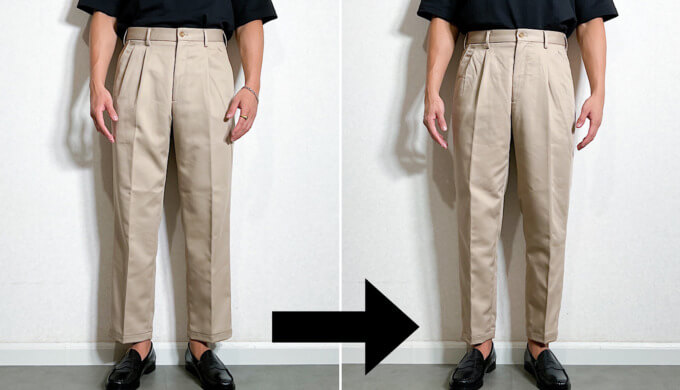
Oversized denim and wide-leg trousers dominate street fashion, but wide leg openings often drag on wet pavements or swallow low-profile sneakers whole. Tailoring a hem permanently removes excess fabric, stripping away the versatility of wearing the same trousers with both chunky boots and slim trainers. Streetwear enthusiasts and tailoring purists alike have shifted toward non-destructive adjustments that cinch open hems instantly without scissors or sewing machines.
Preserving the silhouette while protecting garment integrity requires an understanding of fabric weight and drape. As highlighted in a recent retail garment maintenance analysis from an MSN Report, handling folds properly keeps heavy denim from developing permanent, unsightly creases that ruin structural recovery. Applying the right mechanical fold or elastic anchor lets you secure a sharp taper that holds firm through a 10,000-step day.
📌 Quick Summary:
- Core Purpose: Learn four reliable, zero-cut styling techniques to taper pant legs without sewing, keeping original factory seams intact.
- Primary Mechanics: Master the pinroll jeans technique, the rubber band cuff hack, inside-out safety pins, and heat-free fabric tape.
- Best Applications: Select structural friction folds for rigid raw denim and hidden elastic band ankle cinching for lightweight chinos and nylon cargos.
Why Straight and Baggy Trousers Overwhelm Modern Footwear
The standard opening on straight-cut workwear spans roughly 18 to 22 inches in circumference. When paired with retro running shoes or sleek court sneakers, that excess material falls flat over the vamp, forming messy accordion folds around the tongue. Cyclists face a different headache: loose pant cuffs frequently snag against greasy chainrings, staining the inner calf and tearing chain-stitched seams.
Dropping pants off at an alterations shop costs between $15 and $30 per pair. Altering the cut also locks you into one ankle width forever. If you want to alternate between heavy combat boots on Tuesday and canvas low-tops on Wednesday, rigid tailoring works against you. A temporary hem tapering method lets the garment adapt to whatever footwear you lace up that morning.
The Four Non-Destructive Hem Cinching Techniques
Every pant fabric behaves differently. A method that locks rigid 14-ounce raw denim in place will slip completely out of lightweight rayon or poly-blend track pants. Choosing the correct approach depends directly on your textile thickness and how long you need the hold to last.
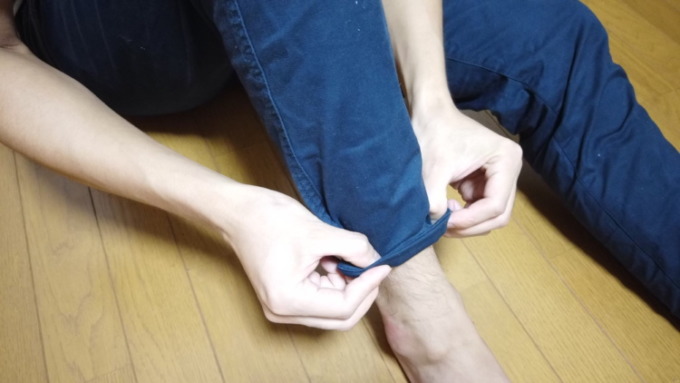
The pinroll jeans technique remains the standard for sneaker collectors wearing heavy denim. Stand straight, pull the excess lateral seam firmly against the outside of your ankle, fold that fabric back against the leg, and tightly roll the cuff upwards twice. The double roll traps the overlap through mechanical friction. The cuff stays tight only if the selvedge or denim has enough stiffness to resist unrolling.
The rubber band cuff hack solves the issue on light fabrics where folding slips loose. Slide a flat hair tie or thick elastic band over your foot up to the narrowest point of your ankle, right over the trouser leg. Pull the excess hem fabric out over the band, then tuck the bottom edge up and underneath, rolling the cuff inward until the elastic disappears. This creates a clean jogger cuff DIY look without any exposed rolling lines.
The peg leg fold tutorial variation works best on chinos and tailored cotton pants. Instead of gathering fabric laterally on the outer edge, fold the excess seam backward toward the Achilles tendon, pressing the crease flat. Roll the hem up once by approximately 1.5 inches, then follow with a second half-turn. By moving the fold behind the ankle bone, the front crease stays clean and straight.
The fabric tape hem fix provides a smooth, invisible finish on formal trousers and suit separates. Double-sided removable apparel tape holds an inward pinch flat against the inner seamline. It eliminates visible cuffs completely, giving the visual illusion of a custom tailor's needle without piercing threads or puncturing woven wool yarns.
Field Testing Durability: Comparing Hold, Time, and Profile
Different activities demand different levels of tension. A morning commute on the subway requires moderate security, while cycling through city traffic puts constant rotational strain on the lower calf. The following performance benchmark tracks real-world stability across four standard adjustments.
| Method | Setup Time | Durability (Step Count) | Ideal Fabric Type | Visible Cuff Exterior |
|---|---|---|---|---|
| Pinroll Jeans Technique | 45 seconds | 6,000, 8,000 steps | Rigid denim (12, 16 oz) | Yes (Double-cuffed ring) |
| Elastic Band Ankle Cinching | 60 seconds | 10,000+ steps | Nylon, linen, thin chinos | No (Inverted balloon fold) |
| Hidden Safety Pin Pleat | 2, 3 minutes | 12,000+ steps | Canvas, heavy twill, cargos | No (Internal seam lock) |
| Fabric Tape Hem Fix | 2 minutes | 4,000, 5,000 steps | Suiting wool, dress slacks | No (Completely flat hem) |
The elastic band system outlasts purely folded methods during running or cycling because it holds constant mechanical compression against the leg. Pure friction folds rely entirely on cloth rigidity. If a pair of stretch-denim jeans contains more than 2% elastane, the fabric stretches as you step, loosening the fold within thirty minutes of walking.
Preventing Long-Term Creases and Fabric Wear
Keeping a tight pinroll folded for days at a time weakens cotton fibers along the crease lines. Moisture, dirt, and friction collect inside the tight roll, grinding against the outer threads. Veteran retail staff emphasize that denim fibers under tension warp quickly if left folded after wash or wear cycles.
When you take your pants off , unroll the hem entirely. Shake the fabric out to release tension along the lateral seams. If a persistent fold line remains visible across the bottom hem, hang the trousers upside down by the cuffs using clip hangers. The natural weight of the waistband pulls the leg straight overnight, releasing deep folds without exposing the twill weave to high iron heat.
Watch out for safety pin placement on expensive or delicate garments. Pinning through a single layer of fine suiting fabric can leave visible holes or pull threads under tension. Always push the pin through the reinforced inner seam allowance where extra fabric layers absorb the pull of your stride.
Frequently Asked Questions (FAQ)
Q1: Will the rubber band cuff hack cut off my blood circulation during long wear?
A1: It can if you use thin, tight stationery elastics. Use flat, fabric-wrapped hair elastics or wide 1-inch braided elastic bands instead. Position them lightly above the ankle bone where natural muscle movement is minimal, ensuring you can comfortably slip two fingers beneath the band.
Q2: Can I pinroll wide-leg pants without creating a bulky bunched ring?
A2: Extreme wide-leg trousers (over 22 inches hem circumference) generate too much bulk for an external pinroll, creating an awkward protruding ring. For dramatic baggy cuts, use the inverted elastic band tuck or a rear hidden safety pin pleat to spread the gathered fabric evenly around the lower leg.
Q3: Does apparel tape ruin dry-clean-only fabrics?
A3: Low-tack, fabric-safe styling tapes leave zero chemical residue on worsted wool or cotton blends when peeled off gently within 24 hours. Avoid standard industrial double-sided tapes or heat-activated bonding webs, which dissolve into the fibers and permanently ruin fine textiles.
Choosing the Right Cuffing Method for Your Footwear
Baggy pants ankle adjustment works best when tailored directly to your shoe height. High-top sneakers and work boots provide natural ankle support, making an inward elastic tuck sit cleanly along the collar of the boot without riding up. Low-top retro runners look best with a sharp pinroll that clears the upper by a quarter of an inch, putting full focus on the sneaker tongue and eyelets.
Avoid rushing the initial fold. Smooth out the excess fabric against your calf, establish your pinch points firmly, and roll with even tension on both sides. Once you master these manual cinching techniques, you can change your trousers' taper anywhere in under a minute without cutting away an inch of fabric.
