Before and After: Visual Proof of How Wall-Hugger Faucets Save Space
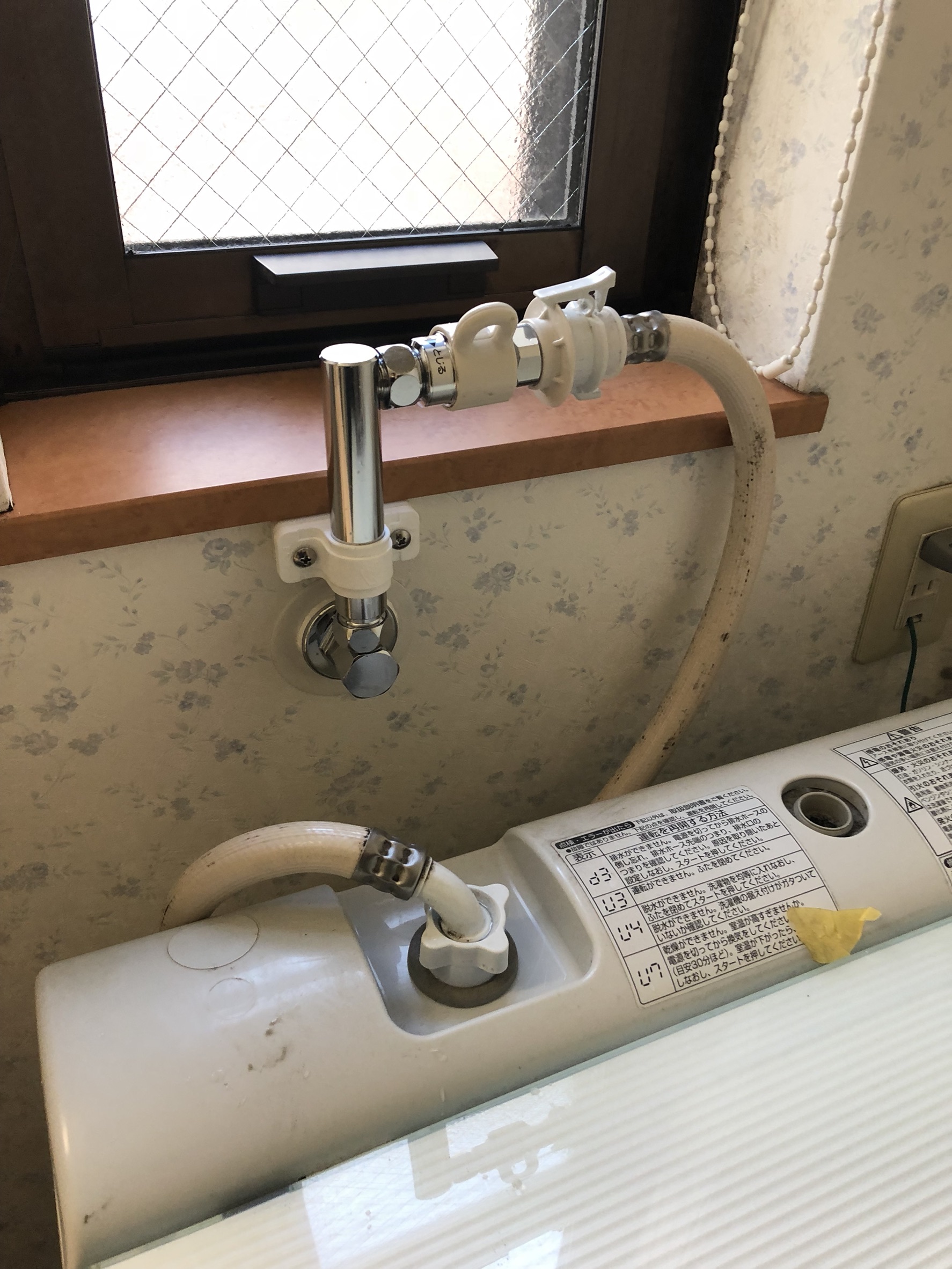
Delivery crews across urban high-rises run into the exact same barrier every week: the new drum washer fits the floor pan perfectly, but the legacy brass water tap on the wall sits precisely two inches too low, blocking the appliance from sliding back. In tight laundry closets and waterproof pan setups, modern front-load washing machines stand significantly taller than older top-loaders. When homeowners realize the appliance lid or upper motor housing collides with the existing faucet, standard plumbing quotes to open drywall and relocate copper lines inside the wall often climb past $600 to $1,200.
Japanese compact plumbing engineering resolved this dilemma decades ago with the kabe-pita suisen (壁ピタ水栓), literally the "wall-hugger faucet", and the concept is now spreading rapidly through micro-apartments and tight-space retrofits worldwide. By replacing a standard, downward-pointing outdoor-style tap with a dedicated low-profile washing machine valve, residents gain immediate vertical and horizontal clearance without knocking out a single piece of drywall.
📌 Key Takeaways:
- The Spatial Pinch: Modern high-capacity front-load drum washers regularly measure 1,000 mm to 1,060 mm tall, colliding with standard laundry water supplies set at heights of 950 mm to 1,000 mm.
- The Mechanical Fix: A wall-hugger laundry faucet shifts the water discharge port upwards by 40 mm to 100 mm while pulling the valve body flush against the wall plate.
- Safety Standards: Modern low-profile retrofits include integrated automatic water shut-off valves, which instantly cut supply pressure if a vibration-stressed hose disconnects.
The Vertical Collision Inside Tight Laundry Alcoves
Standard residential builds finished between 1990 and 2015 were plumbed around top-loading washing machines. Top-loaders rarely exceed 950 mm in rear chassis height, prompting plumbers to drop threaded supply spigots into wall studs at roughly 1,000 mm from the floor or waterproof tray.
Enter modern front-load drum washers and heat-pump washer-dryer combos. Units from brands like Panasonic, Sharp, Bosch, and LG frequently measure between 1,020 mm and 1,060 mm tall, especially once resting on vibration-dampening feet or deep waterproof drain pans (waterproof pans commonly called pan or saucer trays). When homeowners attempt to push these deep machines back into a narrow laundry alcove space saver setup, the back edge of the washing machine strikes the downward-curving spigot.
The clearance deficit is rarely massive; it is typically a matter of 30 to 80 millimeters. Yet a 30 mm collision prevents the appliance from seating over the floor drain, leaving machines stranded mid-closet with utility doors unable to close.
The Anatomy of a Low-Profile Extension Faucet
The wall-hugger faucet functions as a rigid, surface-mounted offset riser. Units engineered under specifications like the Panasonic CB-L6, Kakudai 732-000 series, or SANEI equivalents thread directly into standard 1/2-inch (PJ 1/2) wall fittings without requiring in-wall pipe adjustments.
[Standard Faucet Collision] [Wall-Hugger Offset Riser]
| Wall | Wall
| | ▲ Elevates +40mm to +100mm
|--[Spigot Protrudes 120-150mm] |-[Riser Body]
[Washer Top] ▼ Hits back corner | ▼ Flush Spout (40-60mm total depth)
| | | [Washer Slides Safely Underneath]
Instead of running water horizontally out and bending down through a conventional goose-neck pipe, the low-profile unit routes the internal waterway vertically upward inside a flattened metal housing clamped flush to the finished wall surface.
This design achieves two critical spatial corrections simultaneously:
- Vertical Elevation: It shifts the actual hose connection point upwards by 40 mm to 100 mm (1.5 to 4 inches), moving the connection clear above the machine's top panel.
- Horizontal Slimming: It shrinks the forward projection off the wall from a typical 120, 150 mm down to roughly 40, 60 mm, eliminating the bulk that normally prevents front-load washers from sliding fully into alcoves.
Before and After: Spatial Clearances and Installation Metrics
Field measurements illustrate how dramatically a flush-mount water supply alters usable closet geometry. In standard apartment inspections, replacing a traditional hose bibb with an offset riser salvages usable space instantly.
| Installation Metric | Traditional Brass Bibb | Wall-Hugger Riser (CB-L6 Style) |
|---|---|---|
| Wall Protrusion Depth | 120 mm, 160 mm | 40 mm, 65 mm |
| Effective Vertical Spout Height | Baseline (0 mm extension) | +40 mm to +100 mm elevated |
| Drywall Modification Required | None (Original) | None (Surface retrofit) |
| Average Hardware Cost | $15, $30 | $45, $95 |
| Burst Protection Feature | Rarely integrated (requires add-on) | Integrated automatic shut-off nipple |
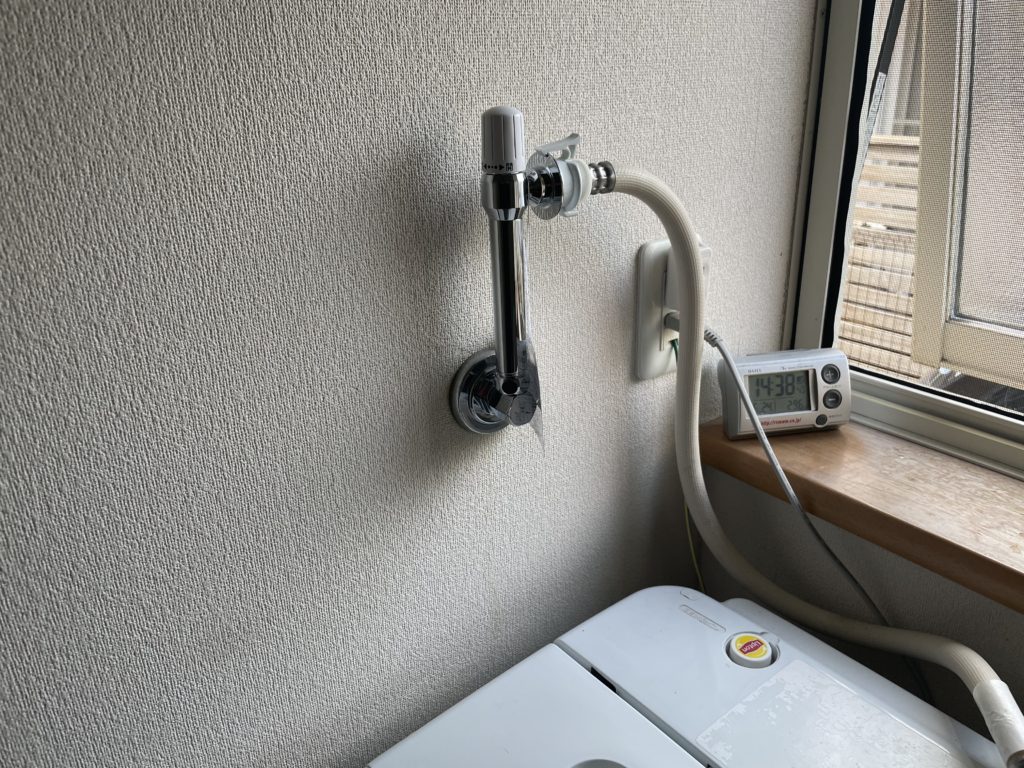
In visual field trials, the difference is immediate. Before the conversion, an LG or Panasonic front-loader sits pushed forward onto the plastic lip of the waterproof floor tray, skewing the drain hose alignment underneath and rattling during the spin cycle. After a 20-minute retrofit, the machine retreats 70 mm deeper toward the back stud line. The appliance rests level, directly centered over its drainage point.
The Built-In Safety Valve That Prevents Flooding Catastrophes
A recurring worry with tight-space laundry hookups is hose rupture or joint displacement caused by violent spin-cycle vibrations. When a washing machine sits jammed tightly against a rigid metal pipe, the transfer of harmonic shaking straight into the supply coupling can loosen conventional slip-joint hoses over time.
Wall-hugger units resolve this through an automatic water shut-off valve integrated directly inside the discharge nipple (often designated by manufacturers as a stopper mechanism).
Inside the connector sits a spring-loaded stainless steel valve core. As long as the washer's quick-connect hose is locked in place, the inner stem of the hose coupling depresses the valve pin, permitting full water flow. The split second that vibration, hose fatigue, or accidental impact dislodges the hose connector, internal line pressure combined with the internal spring snaps the valve shut instantly.
This mechanical fail-safe prevents catastrophic multi-floor flooding without relying on electronic sensors or motorized ball valves. For renters and condominium owners dealing with strict property liability rules, this built-in stopper is frequently a mandatory requirement before building managers authorize front-load conversions.
Step-by-Step Retrofit: How the Swap Is Performed
Swapping out an obstructive valve does not require cutting into tile or plasterboard. Because wall-hugger faucets rely on the original threaded wall drop elbow, the conversion is completely reversible.
- Step 1: Main Isolation. Turn off the main domestic water isolation valve and depressurize the lines by opening a nearby sink faucet.
- Step 2: Spigot Removal. Unthread the old spigot counterclockwise using an adjustable wrench. Clear away aged Teflon tape and pipe compound from the recessed wall female thread.
- Step 3: Fitting Inspection. Check that the female elbow inside the wall sits stable and square. If the joint sits deeper than 15 mm inside the finished drywall face, thread in a calibrated 1/2-inch brass extension barrel.
- Step 4: Sealant Application. Apply fresh PTFE sealing tape (5, 7 wraps clockwise) or anaerobic pipe thread sealant to the male threads of the offset riser base.
- Step 5: Alignment and Torquing. Thread the offset body into the wall fitting until the vertical rise aligns perpendicular to the ceiling. Tighten using a wrench on the designated hexagonal flat, taking care not to warp the thin decorative outer trim.
- Step 6: Wall-Plate Anchoring. Fasten the stabilizing backing bracket against the drywall using surface screws to ensure repeated hose pulling forces cannot twist the pipe within the wall stud.
- Step 7: Leak Verification. Restore water pressure with the washer hose unattached. Verify that the automatic shut-off valve holds back municipal line pressure with zero weeping, then lock the washer supply hose into position.
Who Should Use Wall-Hugger Faucets Versus Full In-Wall Relocations
Not every clearance dilemma should be solved with a surface riser. Certain building parameters dictate whether a surface-mounted low-profile unit or an invasive recessed valve box conversion makes sense.
Ideal Candidates for Surface Wall-Huggers:
- Apartment and Condominium Dwellers: Renters and leaseholders who cannot cut open plasterboard or alter permanent infrastructure.
- Tight Floor-Tray Constrained Spaces: Bathrooms where an immovable waterproof drain tray (waterproof pan) dictates exactly where the machine must stand.
- Marginal Collisions (30 mm to 90 mm): Situations where a drum washer misses clearance by just a few inches against an existing spigot.
When to Opt for In-Wall Recessed Valve Boxes:
- Complete Down-to-the-Studs Remodels: If drywall is already being stripped during a master utility overhaul, running PEX lines inside the wall to an Oatey or Sioux Chief recessed outlet box provides an entirely flush finish.
- Severe Height Gaps Over 120 mm: If the existing pipe sits ridiculously low, say, at knee height, a surface extension riser creates too much leverage on the wall fitting. Structural re-piping is required here.
- Degraded Galvanized Plumbing: If the wall elbow consists of 60-year-old rusted galvanized iron, applying unthreading torque risks snapping the pipe inside the wall cavity, necessitating wall access anyway.
Frequently Asked Questions (FAQ)
Q1: Does a low-profile wall-hugger faucet restrict water flow to high-efficiency washers?
A1: No. Modern high-efficiency front-loaders meter incoming water via internal solenoid timers rather than sustained high-gallon throughput. Quality wall-hugger faucets maintain an internal bore diameter equivalent to standard 1/2-inch plumbing, delivering 15 to 20 liters per minute at standard residential water pressure (30, 50 PSI), which easily matches appliance operational specs.
Q2: Can I install a wall-hugger faucet myself, or does it require a licensed plumber?
A2: A reasonably handy homeowner with basic tools (pipe wrench, PTFE tape, thread brush) can complete the swap in under 30 minutes. If the existing valve is corroded or stuck fast, hiring a licensed plumber is the safer route to avoid snapping the threaded drop elbow inside the wall stud.
Q3: Are Japanese models like the Panasonic CB-L6 compatible with US or European plumbing?
A3: Units engineered for the Japanese domestic market generally feature standard JIS G 1/2 or R 1/2 parallel/tapered pipe threads, which match British Standard Pipe (BSP) thread geometry. To connect to standard American 1/2-inch NPT female wall fittings, you must install an inexpensive 1/2-inch NPT male to 1/2-inch BSP female brass thread adapter with appropriate thread sealant.
Evaluating Your Laundry Space Before Upgrading Appliances
The frustration of having a new, high-efficiency drum washer turned away at the door comes down to missed vertical clearance calculations. Standard builders rarely plan for the imposing dimensions of modern front-load laundry systems, leaving homeowners stuck between paying high fees for drywall surgery or settling for an inferior, smaller top-load machine.
Opting for an engineered low-profile extension faucet breaks that logjam. By taking advantage of existing wall threads and shifting the water valve upward and flush against the wall, you gain the exact clearance required to push high-end drum machines safely into position. Before calling a contractor to open up your walls, grab a tape measure: a simple surface-mount retrofit might be all that stands between your new washer and a flawless fit.
