Before and After Wedding Updos: Perfect Hair for Oblong Faces
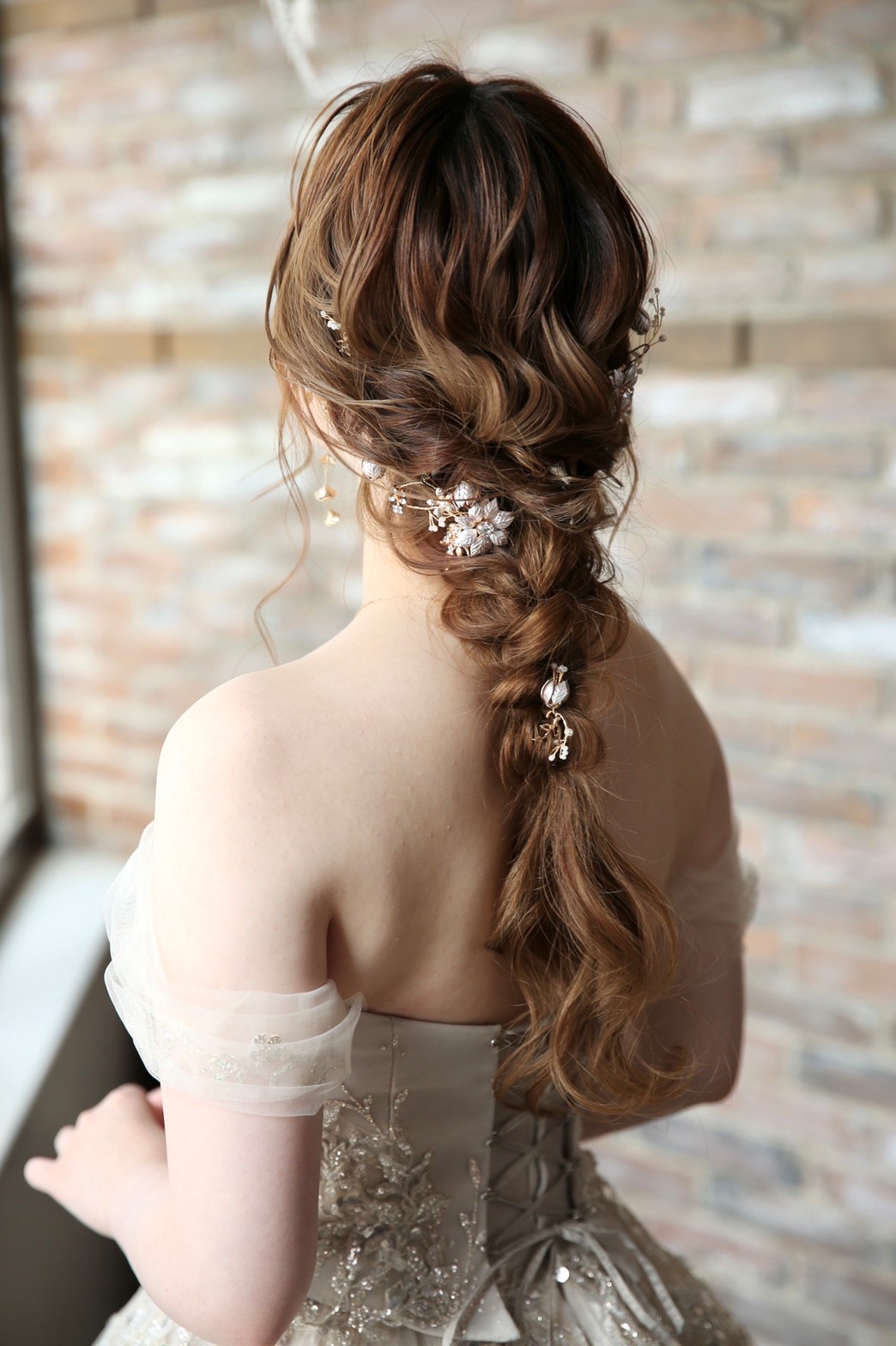
High-top bridal buns and slicked-back crowns often create an optical illusion that stretches facial proportions vertically. For individuals with an oblong face shape, traditional bridal updos frequently exaggerate length rather than softening it. Recent industry coverage from bridal stylists highlighted in a livedoor ニュース Report reveals how modern event styling has pivoted toward modular pinning, braided bands, and lower geometric profiles to build balance. Wedding attendees and brides now demand techniques that shift volume outward, balancing cheekbones and jawlines without relying on heavy hairspray.
Optical proportion in hair styling comes down to lateral width versus vertical height. When an oblong face, defined by a length noticeably greater than its cheekbone width, accompanied by a straight cheek line and higher forehead, is crowned with top-heavy volume, vertical lines dominate the profile. By contrast, redirecting structural mass toward the nape of the neck and ears creates an immediate focal counterweight.
📌 Key Takeaways:
- The Structural Pivot: Traditional top knots lengthen features; low chignons and horizontal dimension balance vertical facial ratios.
- Strategic Framing: Face-framing curtain bangs and side-swept partitions break up forehead expanse and draw attention outward.
- Accessory Mechanics: Side-pinned clips and comb placements pull the eye horizontally, anchoring width across the mid-face.
The Architectural Shift from Vertical Height to Lateral Width
The core struggle with oblong face shape wedding hairstyles stems from standard salon habits. For decades, traditional bridal styling treated crown volume as a universal flattering trick. For round or square jawlines, vertical lift creates an elegant lengthening effect. Apply that same logic to an oblong structure, and the overall look stretches thin.
Bridal updos for long faces require horizontal volume hair techniques. Instead of building height at the parietal ridge or teasing roots at the crown, stylists distribute volume along the occipital bone and the sides of the head. When hair spreads out past the ears, it mimics fuller cheekbones, visually resetting facial proportions.
This structural change transforms how a silhouette registers in photographs. A tight, slicked bun exposes the full uninterrupted vertical line from hairline to chin. A textured low bun styling with softness around the temples and jaw introduces width, cutting that vertical line into balanced segments.
Before and After: How Low Chignons and Side Braids Shift Proportions
Client trials across bridal salons illustrate clear visual differences when transitioning from high-set updos to lateral arrangements. A classic high ponytail or top knot accentuates forehead depth and chin length. When the structure drops down into a low chignon with side volume, the facial canvas feels grounded.
Side-swept bridal hair acts as an asymmetrical break. A deep side part cuts across a high forehead, interrupting vertical eye movement. Pairing that part with a low chignon or a loose French braid wrapped around the side widens the perimeter of the head. Curled tendrils pulled from the temples down to the jawline soften angular edges.
Wedding guest hair for an oblong face benefits from these identical adjustments. Guests often skip heavy structural hairpieces in favor of soft romantic waves paired with a half-up half-down oblong face silhouette. Pinning sections loosely behind the ears while allowing wavy tendrils to drape over the shoulders fills negative space around the neck, counteracting vertical pull.
Styling Metrics: Structural Comparisons for Oblong Face Updos
Selecting an updo depends on hair density, neckline cut, and accessory choices. The following breakdown shows how common updo variations impact facial proportions during wedding trials:
| Style Variant | Volume Anchor Point | Facial Width Impact | Ideal Wedding Attire |
|---|---|---|---|
| High Ballerina Bun | Crown / Top of Head | Negative (Elongates face) | High-neck Victorian collars |
| Wide Low Chignon | Nape / Lower Occipital | High (+30, 40% visual width) | Strapless, Sweetheart, V-Neck |
| Asymmetrical Side Braid | Ear / Diagonal Shoulder | Moderate (+20% visual width) | One-shoulder, Bohemian gowns |
| Half-Up Waves | Mid-Ears / Temporal Bones | High (+35% visual width) | Scoop neck, Off-the-shoulder |

Curtain Bangs and Perimeter Tendrils as Optical Tools
Contouring facial proportions with hair relies heavily on the frontal hairline. Face-framing curtain bangs serve as a dynamic horizontal cut across the forehead. Cut to hit right at the cheekbones and styled with a outward sweep, they guide the viewer's gaze horizontally across the widest point of the cheeks.
Fringe styles should avoid blunt, heavy cuts that hit dead straight across the eyebrows. A completely straight, heavy horizontal fringe can make the lower half of an oblong face appear disproportionately heavy or sharp. Layered, airy curtain bangs curve outward, framing the temples and merging cleanly into pinned side twists.
Curled tendrils left down around the perimeter must be placed with intention. Dropping straight, thin strands behind the ear simply adds two vertical lines beside an already elongated face. Curling these strands with an 1.25-inch barrel creates rounded S-waves that sit against the jawline, softening angular features and broadening the jawline.
Bridal Hair Accessory Placement: Avoiding Centerline Traps
Accessories can either correct proportions or destroy an updo's balance within seconds. Placing a sparkling tiara or tall comb directly at the center of the crown instantly adds two to three inches of vertical height. For someone with an oblong face, this exaggerates vertical length.
Bridal hair accessory placement should focus on the side or low back. Pinning a wide floral clip, an embellished comb, or pearl pins just above the ear pulls focus laterally. As cameras capture three-quarter angles, the eye catches the accent piece away from the face's center line, giving the appearance of wider temples.
Veil choice and anchor positioning follow identical rules. Anchoring a cathedral veil at the very top of the head creates an uninterrupted vertical cascade. Placing a fingertip or chapel-length veil under a low bun lets the fabric flow outward from the neck, creating horizontal fullness across the shoulders.
Who Should Choose Lateral Updos Versus Flowing Styles
Every face presents unique bone structures. Brides and guests need clear decision rules when planning salon trials:
Ideal Profiles for Low Lateral Chignons:
- Individuals with an oblong or narrow rectangular face shape seeking formal elegance.
- Those wearing strapless, off-the-shoulder, or low back gowns where shoulder space balances neck width.
- People with fine or medium hair density that holds teasing and texturizing at the sides.
Risk Flags and Alternative Approaches:
- Those with a short neck paired with an oblong face should avoid overly bulky nape chignons; a half-up textured style avoids crowding the clavicle.
- Brides wearing high-collared lace gowns should opt for a clean, horizontally pinned side twist rather than a wide messy bun to prevent messy fabric friction.
Frequently Asked Questions (FAQ)
Q1: Can an oblong face pull off a sleek bridal updo?
A1: Yes, provided the sleekness is directed horizontally rather than pulled tight toward a high crown. A middle or deep side part pulled back into an ultra-low chignon at the nape keeps the crown flat and relies on side volume and statement earrings to expand lateral focus.
Q2: How do you add side volume to fine, straight hair for an updo?
A2: Stylists use texturizing sprays, crimping at hidden under-layers, and backcombing along the parietal ridges. Pulling apart loops of a low braid or pinning horizontal twists out past the natural ear line creates a durable foundation that will not deflate over an eight-hour reception.
Q3: Should bridesmaids and wedding guests with oblong faces match bride updo rules?
A3: Yes. Guests can skip intricate bridal accessories in favor of soft waves pinned on one side with gold bobby pins or a textured half-up knot. The core rule remains consistent: avoid high tease on top and focus on shoulder-skimming softness.
Practical Updo Rules for Your Wedding Trial
Booking a bridal hair trial requires clear visual vocabulary. Rather than asking for a generic "romantic updo," request a style anchored at the lower occipital bone with lateral expansion across the ears. Bring photos that highlight wide chignons, curtain bangs, and soft tendrils rather than sky-high buns.
Test the hairstyle under varied lighting and camera angles. Take direct frontal portraits, side profiles, and three-quarter angles to inspect how wide the silhouette looks against your collarbones. When hair styling shifts from adding height to crafting natural width, facial proportions align smoothly for timeless wedding photographs.
