Behind the Enigmatic Wolfman: Vocal Artistry, Model References, and Hosoda's Hidden Notes
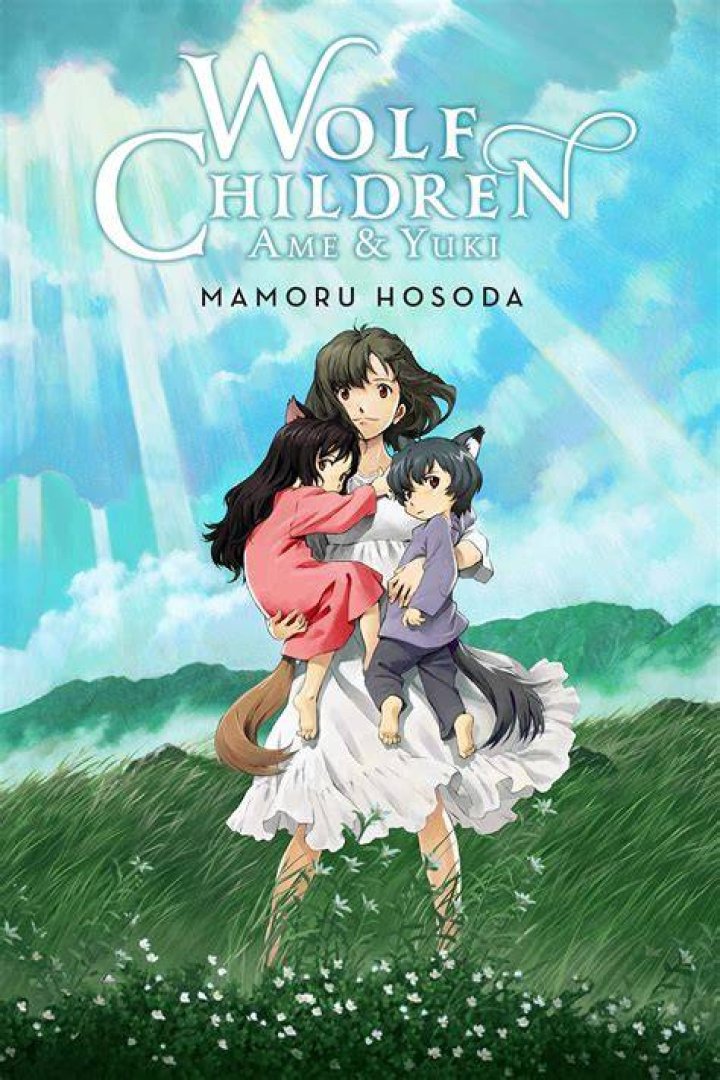
Fourteen years after Studio Chizu released Wolf Children (Ookami Kodomo no Ame to Yuki), the quiet specter of the children's nameless father remains one of the most haunting figures in contemporary Japanese animation. Known simply in the credits as "The Wolfman" (Ookami-otoko) or "Father," his presence defines the emotional baseline of the entire narrative despite disappearing before the first act concludes. The enduring impact of this character took center stage on June 19, 2026, when director Mamoru Hosoda joined actor Shota Sometani at the CREATIVE MUSEUM TOKYO during the "Mamoru Hosoda's Roots Exhibition," reflecting on the delicate voice-recording sessions that established the film's realistic domestic tone, as detailed in an ORICON NEWS Report.
The character was never designed as an archetypal fairytale prince or a menacing lycanthrope. Instead, Hosoda framed him as an ordinary urban laborer grappling with isolation, carrying the extinct bloodline of the Honshu wolf through a modern Tokyo that has forgotten wildness. Unpacking the character requires looking closely at actor Takao Osawa’s vocal reticence, Hosoda’s production archives, and the real-world rural artifacts that keep this cinematic lineage alive today.
📌 Key Takeaways:
- Vocal Restraint: Veteran actor Takao Osawa bypassed theatrical anime voice conventions, using near-whispered baritone registers to ground the Wolfman in domestic intimacy.
- Folklore Grounding: The Ame and Yuki lineage draws directly from historical records of the Japanese wolf (Canis lupus hodophilax), treating the creature not as a cursed monster, but as a vulnerable, solitary relict.
- Preservation Crisis: The physical mountain home that framed the father's legacy, Hana's House in Kamiichi, Toyama Prefecture, launched a ¥6 million emergency restoration fund in August 2026 to stabilize its sinking foundation.
The Weight of an Unnamed Legacy in Studio Chizu's Canon
In mainstream cinema, leaving a lead romantic interest nameless is an immense structural gamble. In Wolf Children, it serves as an artistic anchor. By withholding a legal identity, Hosoda stripped away social status, tax registries, and corporate affiliations, isolating the man’s existence down to raw survival and paternal instinct.
The Wolfman enters the frame in a Tokyo university lecture hall, dressed in a faded t-shirt, reading without a textbook, and taking notes on scrap paper. Production notes from Studio Chizu reveal that animator Yoshiyuki Sadamoto designed his human silhouette with sloped shoulders, weary posture, and sunken eyes. These visual cues spoke of chronic overwork rather than predatory power. He drove a moving truck by day, moved through the margins of society, and avoided bureaucratic footprints because he literally lacked the legal paperwork of ordinary citizens.
This design decision intersects directly with Japanese folklore. Unlike European werewolves, who transform under full moons and pass down curses via bites, the Japanese wolf was historically revered as okuchi no makami, a benevolent mountain guardian spirit. By the early twentieth century, rabies, habitat destruction, and deliberate eradication campaigns wiped the Honshu wolf from the wild. Hosoda casts the father as the ultimate survivor of that ecological purge. His silence is not mysterious posturing. It is a biological survival mechanism passed down through generations of hunted forebears.
How Takao Osawa Engineered the Wolfman's Gentle Gravity
Casting seasoned live-action actor Takao Osawa alongside Aoi Miyazaki (who voiced Hana) set the naturalistic tenor of the film. Voice acting in theatrical anime often leans into heightened projection and clear, theatrical articulation. Hosoda pushed Osawa in the opposite direction. Studio sessions were conducted with microphones set to capture breath fall and subtle chest resonance, demanding an almost conversational, mumble-inflected delivery.
Osawa had few lines to establish a decade-long emotional bond. In scenes where he reveals his true lupine form to Hana on the pedestrian overpass, his voice avoids dramatic trembling. Instead, he speaks with quiet resignation, asking simply if she is afraid. This understated approach was mirrored across the cast. During the June 2026 Tokyo retrospective, Shota Sometani, who voiced the teenage farmhand Tanabe before becoming one of Japan’s most sought-after screen actors, recalled how Hosoda’s direction pushed performers away from cartoonish expressiveness toward raw, documentary-style interactions.
Osawa’s vocal restraint established a believable domestic reality. When the father playfully cradles infant Yuki or cooks pheasant stew in their tiny apartment, his warmth feels earned precisely because it is delivered through quiet, steady baritone tones. He never shouts. He rarely raises his voice above the hum of Tokyo traffic. When his voice disappears from the soundtrack, the silence inside Hana’s apartment becomes deafening.
Tracing the Production Evolution of the Wolf Father
The visual and narrative architecture surrounding the Wolfman evolved considerably between Hosoda’s early 2010 storyboards and the ongoing preservation of the film’s real-world history. The timeline below tracks the key transitions from concept sketches to current structural preservation.
| Production Period | Creative Milestone | Narrative & Thematic Impact |
|---|---|---|
| 2010, 2011 Pre-Production | Yoshiyuki Sadamoto Character Drafts | Shifted the character from a rugged beast to a lean, tired urban laborer carrying an extinct lineage. |
| July 2012 Release | Theatrical Premiere Across Japan | Grossed over ¥4.2 billion; established Osawa's performance as a benchmark for naturalistic voice work. |
| June 2026 Retrospective | Creative Museum Tokyo Exhibition | Hosoda and Sometani uncovered early acoustic recordings, spotlighting the film's documentary voice direction. |
| August, September 2026 | Hana's House Crowdfunding Campaign | Secured ¥6 million emergency funding to repair tilted floors and rotting sills at the real-world rural model home. |
The Canal Sequence and the Anatomy of an Unspoken Tragedy
The defining sequence of the father’s arc, and perhaps the most jarring scene in modern family animation, is his sudden death. There are no villains, no grand battles, and no dramatic final words. Hana simply awakens to a torrential rainstorm, tracks a premonition toward a concrete drainage canal, and watches municipal sanitation workers use heavy equipment to fish the limp body of a dead wolf from the rushing water.
Online film forums frequently dissect the logistics of this sequence. Did he drown? Was he shot? Why was he hunting? Hosoda leaves the exact biological cause ambiguous, but contextual clues scattered across earlier scenes provide clarity. Newborn Yuki had fallen ill, and Ame had just arrived. In his human life, the father had few financial resources and no access to healthcare networks. His instinct to forage for high-protein wild game, specifically water birds along the riverbank, took over. Caught between human caution and wild instinct, he likely slipped along the concrete embankments during the storm, sustained a fatal injury, or suffered cardiac arrest from cold exposure.
The tragedy cuts deep because of the municipal sanitation truck. The workers treat the creature not as a mythical guardian or a fallen father, but as an anonymous sanitary hazard blocking an urban storm drain. They scoop him up in a trash net, deposit him into the rear compactor, and drive off. Hana cannot scream, run forward, or claim the body without exposing her infant children to state scrutiny. It is an unsparing depiction of the divide between civilized urban bureaucracy and untamed nature.
Preserving Hana's House and the Physical Anchors of Ame and Yuki's Lineage
When the father dies, his presence does not vanish. It transfers entirely into the physical landscape of the countryside where Hana takes the children to escape prying eyes. The visual prototype for their rural sanctuary is an authentic, centuries-old traditional farmhouse (kominka) nestled in the mountains of Aso in Kamiichi Town, Toyama Prefecture, Hosoda’s own hometown.
For more than a decade, the site known as "Hana’s House" (Hana no Ie) served as a quiet pilgrimage destination for fans worldwide. Visitors sat on the wooden veranda where Ame and Yuki learned to step between wolf and human forms, staring out at the identical ridgelines drawn by Studio Chizu's background artists. By 2026, however, the severe mountain winters took a devastating physical toll on the structure.
On August 3, 2026, local preservation teams launched an urgent crowdfunding campaign seeking ¥6 million to rescue the deteriorating property. On September 17, 2026, architectural experts led a specialized media tour through the closed sections of the house, revealing severely titled floorboards, sagging roof joists, and decaying exterior walls. The campaign highlighted an ongoing dilemma across rural Japan: how to fund the upkeep of cultural heritage sites tied to modern pop-culture landmarks when local depopulation leaves historic buildings without permanent caretakers.
Keeping the physical house standing is vital to the story's artistic memory. In the film, the house is where Hana reconstructs the father's agricultural textbooks, hangs his driver's license photo on a small shrine, and watches his traits split between her children. Yuki inherits his urban curiosity, while Ame inherits his wild, solitary duty to the forest.
Frequently Asked Questions (FAQ)
Q1: Why is the father never given a real name throughout Wolf Children?
Mamoru Hosoda intentionally withheld a legal name to universalize the character and highlight his lack of official status in modern Japanese society. Stripped of a family register (koseki), he exists outside societal frameworks, emphasizing that his connection to Hana and the children rests entirely on mutual trust and emotional commitment rather than institutional paperwork.
Q2: What actually caused the father's death in the drainage canal?
While the film never shows the exact moment of death, narrative evidence shows he reverted to his wolf form to hunt wild pheasant or water birds for his nursing family during a dangerous storm. He likely suffered a fatal fall along the slick concrete embankments, drowned in the sudden flash flood, or died of hypothermia, after which municipal workers disposed of his body as roadkill.
Q3: Can fans still visit the real-world house from the movie in Toyama?
Yes, though access has faced restrictions. Located in Kamiichi Town, Toyama Prefecture, "Hana's House" remains open periodically to visitors. However, structural degradation prompted a major ¥6 million crowdfunding restoration effort in August 2026, and parts of the building remain cordoned off while engineers stabilize the tilted flooring and replace rotting timber framing.
The Enduring Shadow of the Wolfman in Modern Anime
The Wolf Father represents a quiet rebellion against typical anime tropes. He is not a monstrous powerhouse or a brooding anti-hero. Through Takao Osawa’s grounded vocal warmth and Mamoru Hosoda’s patient direction, he remains a moving portrait of quiet fatherhood, devoted, fragile, and bound by biological limits he could not outrun.
As Studio Chizu continues to produce high-concept digital epics, Wolf Children endures precisely because of its earthly weight. From the archival recordings preserved at the CREATIVE MUSEUM TOKYO to the weathered timbers of the mountain house in Kamiichi, the nameless father still commands attention. His legacy is etched not in grand speeches, but in the rustle of mountain leaves, the crash of canal water, and the silent courage of a mother left to raise two worlds on her own.
