Cha Kato’s Latest Reminiscence: A Complete Timeline of His Bond with Ken Shimura
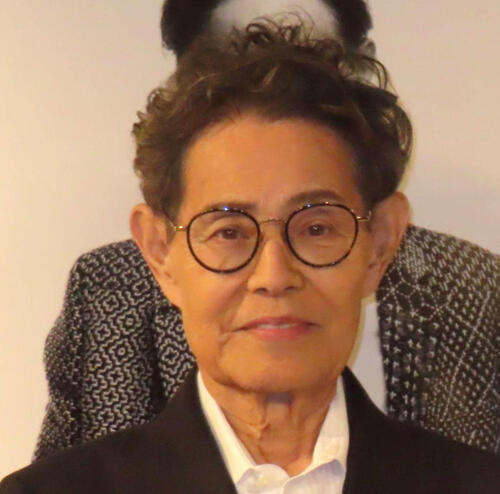
When 83-year-old Cha Kato took his seat in the broadcast booth of Nippon Broadcasting System on April 25, 2026, the studio atmosphere carried a familiar reverence. Joining hosts Sandwiched Man on Sandwichman Radio Show Saturday, the veteran performer addressed a question Japanese entertainment historians have dissected for decades: what actually happened between him and the late Ken Shimura behind closed doors during the golden era of Showa comedy? Shimura died of viral pneumonia in March 2020 at age 70, leaving behind a colossal footprint across Asian popular culture. Yet, despite decades of public adoration, the intimate mechanics of their formative partnership had rarely been laid bare by Kato himself.
As detailed in a 日刊スポーツ Report, Kato dismantled the persistent myth of backstage tension, offering an unvarnished window into their youth. "I never had another partner like him," Kato revealed during the two-hour live program, surprising the hosts by adding that he virtually never reprimanded his younger protégé. Their synchronicity was not forged through strict military-style discipline, which was standard practice in mid-century entertainment troupes. It grew out of shared poverty, cramped living quarters, and endless nocturnal rehearsals that began long before Shimura ever stepped in front of a live camera.
📌 Key Takeaways:
- Radio Retrospective: On Nippon Broadcasting System’s Sandwichman Radio Show Saturday, 83-year-old Cha Kato broke down his foundational creative partnership with Ken Shimura.
- The Roommate Era: Shimura started as a teenage apprentice for The Drifters who struggled with the grueling commute to suburban Higashimurayama, prompting Kato to take him in as an apartment roommate.
- Synchronized Instinct: Their wordless performance chemistry anchored landmark Showa variety hits like Hachiji Dayo Zenin Shugo and the "Hige Dance," establishing modern Japanese sketch comedy conventions.
The Radio Confession That Reopened Showa Comedy History
The April 2026 radio exchange struck an immediate chord with listeners across Japan. Talk show hosts Mikio Date and Takeshi Tomizawa prompted Kato to reflect on how he managed Shimura during the 1970s, an era when entertainment apprenticeships routinely involved harsh rebukes and physical hierarchy. The Drifters, led by bandleader Chosuke Ikariya, were famous for demanding absolute precision during high-stakes live stage broadcasts. Mistakes ruined sketches broadcast to tens of millions of viewers simultaneously.
Kato's admission turned conventional wisdom upside down. While Ikariya held the line as the stern paternal authority figure, Kato operated as Shimura's shield and creative incubator. He recognized that young Shimura possessed an unusual sensitivity to physical rhythm. Rebuking him would only stiffen his reflexes.
"I hardly ever scolded him," Kato told the studio. "He watched, he understood, and he matched my pace without me having to say a word." That telepathic balance transformed them from an ensemble pair into the primary creative engine of Japanese variety television.
From Higashimurayama Commutes to Roommates: The Tsukibito Years
Before Shimura became a household name, he was an exhausted teenager operating on the fringes of show business. Born in Higashimurayama, a sleepy municipality in western Tokyo, Shimura joined The Drifters as an apprentice, or tsukibito, shortly before graduating from high school in 1968. His duties were relentless. He hauled heavy stage equipment, carried luggage, cleaned dressing rooms, and ran errands between grueling live shows.
Commuting home proved unsustainable. Rehearsals routinely bled past midnight in central Tokyo, long after local train lines shut down. Reaching Higashimurayama took more than two hours by sporadic local transit, leaving the young assistant with barely three hours of rest before dawn call-times. Shimura was visibly wearing down.
Kato noticed the boy's exhaustion and intervened directly. "Going all the way back to Higashimurayama takes too long," Kato told him. "Just stay at my place."
What began as an informal offer of crash space turned into a full-time domestic partnership. For months, the two men shared Kato’s modest apartment. Shimura handled domestic chores and learned manners, while Kato provided meals, pocket money, and informal comedy lectures. They shared late-night bowls of ramen, analyzed overseas slapstick records, and dissected why specific sight gags succeeded or flopped on stage. Shimura absorbed Kato's exact timing, not as a terrified junior subordinate, but as a younger brother living under the same roof.
The Rise of an Unbeatable Comedy Duo
The investment paid massive dividends in March 1974. When Drifters core member Chu Arai announced his departure, Ikariya formally elevated 24-year-old Shimura to official member status. Many television critics initially predicted the group’s decline. Replacing Arai’s dry, veteran wit seemed impossible, and early broadcasts saw Shimura struggling to find his footing amidst established giants.
Kato functioned as his bridge to the audience. Whenever a sketch faltered, Kato pulled focus, set up easy punchlines, and fed Shimura opportunities to establish his comedic identity. When Shimura debuted his eccentric "Higashimurayama Ondo" folk parody in 1976, referencing his rural hometown roots, the studio erupted. The bit became a national craze. Kato stepped back gracefully, letting his former roommate occupy center stage.
| Phase & Timeline | Key Production Milestones | Dynamic & Impact |
|---|---|---|
| 1968, 1973: Apprentice Era | Tsukibito duties; rooming at Kato's home; backstage observation | Mentorship through daily living; absorption of jazz drum timing without formal scolding. |
| 1974, 1985: Zenin Shugo Dominance | TBS live broadcast; "Higashimurayama Ondo"; inception of "Hige Dance" | Ratings consistently exceeded 40%; paired physical comedy challenged Ikariya's authority. |
| 1986, 1992: Gokigen TV Era | Co-headlined Saturday primetime; pioneered viewer-submitted camcorder video segments | Equal top billing; format later licensed internationally to inspire Western clip shows. |
| 1993, 2020: Legacy & Reunion | Shimura’s solo sketch franchises; sporadic Drifters theater reunions | Unspoken stage rapport retained until Shimura’s passing in March 2020. |
Throughout the late 1970s and early 1980s, Hachiji Dayo Zenin Shugo routinely captured over 40% of Japanese television households on Saturday nights, setting an all-time peak of 50.5%. While Ikariya managed the logistics and script outlines, the physical energy generated by Kato and Shimura provided the emotional electricity that kept children and parents glued to the screen.

The Craft Behind the Mustache: Engineering the Hige Dance
Nowhere was their roommate-forged synergy clearer than in the "Hige Dance" (ヒゲダンス). Debuting in 1979 during a transitional period for Zenin Shugo, the routine stripped away Japanese wordplay entirely in favor of universal silent-film choreography.
Dressed in oversized black tailcoats and wearing exaggerated cartoon mustaches, Kato and Shimura moved their arms in a clipped, synchronized strut set to an instrumental groove adapted from Teddy Pendergrass's R&B cut "Do Me." The sketch contained no dialogue. The premise was deceptively simple: performing escalating acrobatic stunts, such as tossing apples across the stage onto a fencing foil, slicing flying daikon radishes, or balancing buckets of water on broomsticks.
During his radio appearance, Kato reflected on how that routine required absolute trust. If one performer threw the fruit half a second off-beat, the gag collapsed. Because both possessed a musical foundation, Kato was a skilled jazz drummer, while Shimura was an avid collector of American soul and funk vinyl, they synchronized through rhythm rather than verbal cues. They did not count beats aloud. They moved to the internal metronome established years earlier when they were trading jokes in Kato's small kitchen.
Gokigen TV and the Invention of Modern Variety Formats
When Zenin Shugo ended its historic 16-year live run in 1985, the broader media assumed the Drifters phenomenon had run its course. Instead, Kato and Shimura broke off to co-headline their own venture: Kato-chan Ken-chan Gokigen TV, premiering on TBS in early 1986.
The program proved they were not merely cogs in Ikariya's machine. They were creative auteurs capable of sustaining a 60-minute narrative block on their own. They starred as bumbling private detectives in cinematic sketches that blended elaborate chase sequences with slapstick pratfalls. The production values mirrored high-budget action films, filmed on location rather than inside cardboard studio sets.
Crucially, Gokigen TV introduced a viewer-submitted segment called "The Video Post Box" (ビデオ便り). Armed with newly affordable home camcorders, ordinary Japanese families mailed in short tapes capturing accidental slips, clumsy pets, and backyard blunders. The concept became a massive ratings magnet. American television producer Vin Di Bona licensed the concept from TBS, directly adapting the segment structure to launch America's Funniest Home Videos on ABC in 1989. The living room dynamic conceived by two former Tokyo roommates quietly reshaped global unscripted television.
Frequently Asked Questions (FAQ)
Q1: How did Ken Shimura first meet Cha Kato?
A1: Shimura met Kato in 1968 after successfully auditioning to join The Drifters as a backstage assistant (tsukibito) right around his high school graduation. Kato was already an established star within the group and took notice of the young apprentice during grueling theater preparations.
Q2: Why did Cha Kato offer to let Ken Shimura live with him?
A2: Shimura lived in Higashimurayama, a distant western Tokyo suburb. Finishing late-night stage rehearsals meant train service had already ceased, leaving him exhausted from multi-hour daily commutes. Kato offered him space in his apartment out of concern for his physical health, leading to years of shared living and private comedic mentorship.
Q3: Did Cha Kato and Ken Shimura ever experience a public falling out?
A3: No. While they pursued separate individual variety projects throughout the 1990s and 2000s as their creative interests diversified, they maintained close personal ties and frequently reunited for Drifters television specials until Shimura's death in March 2020.
The Enduring Blueprint of Japanese Double Acts
Comedic partnerships frequently dissolve under the weight of professional rivalry, unequal financial splits, or creative fatigue. The relationship between Cha Kato and Ken Shimura avoided that trap because it was built on mutual creative security. Kato never guarded his status as the established star; Shimura never forgot the man who gave him a key to an apartment when he had nowhere else to sleep.
Kato's frank recollections on Sandwichman Radio Show Saturday provide an essential corrective to the romanticized folklore of Showa entertainment. Great comedy does not require punitive severity to achieve greatness. At its highest level, it demands generosity from the senior partner and unforced observational instinct from the junior. Decades after their mustaches and tailored suits left primetime television, the rhythm they perfected in a cramped Tokyo flat remains the gold standard for physical comedy across Asia.
