Childhood Photos to Present Day: Comparing Ryo Nishikido's Unchanging Boyish Charms
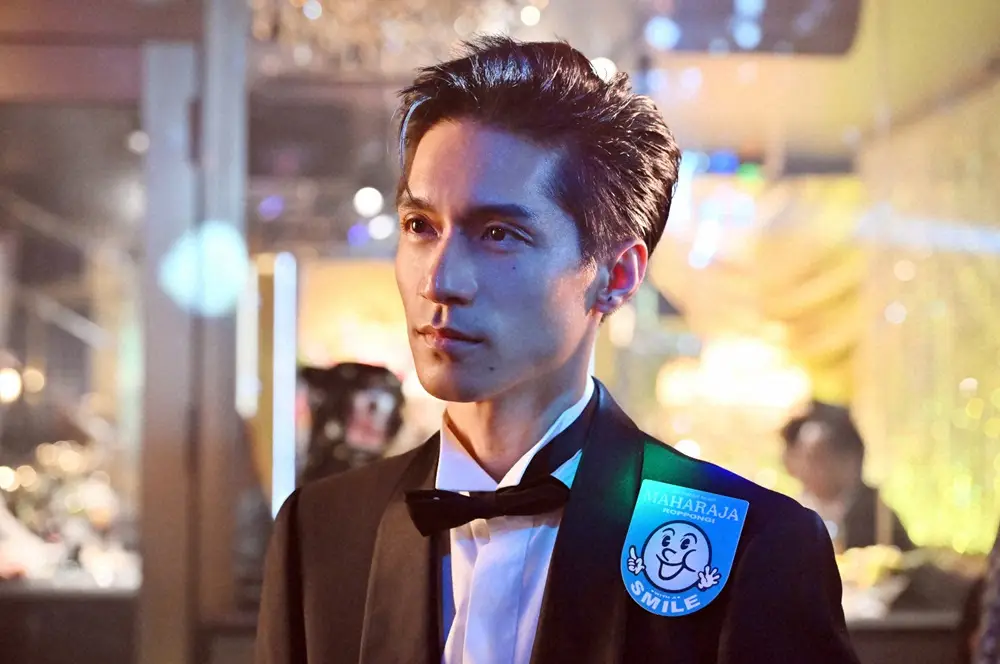
Childhood Photos to Present Day: Comparing Ryo Nishikido's Unchanging Boyish Charms
When Ryo Nishikido appeared alongside Kazunari Ninomiya on TBS's prime-time variety broadcast Nino Nano ni, Japanese social media erupted. Viewers tuned in expecting casual banter between former agency peers. Instead, X (formerly Twitter) was flooded with screenshots of the 41-year-old actor looking almost identical to the doe-eyed kid who dominated late-1990s television screens. According to a モデルプレス report detailing his television appearance, Nishikido reflected on the grueling years of holding dual group memberships while displaying the same quiet, self-deprecating smile that defined his earliest magazine covers. For fans who have tracked his career across nearly three decades, the visual contrast between his earliest studio portraits and his current look sparked an immediate online retrospective.
📌 Key Takeaways:
- The Viral Resurgence: A high-profile television reunion alongside Kazunari Ninomiya ignited widespread fascination with Nishikido’s ageless visuals at 41, sending archival footage from his pre-teen debut trending across Asia.
- The Signature Anatomy: Nishikido's defining facial structure, marked by downward-slanting (tareme) eyes, high cheekbones, and expressive brows, remains structurally unchanged from his 1997 audition era.
- Career Longevity: From surviving a rare dual debut in NEWS and Kanjani8 to establishing an independent solo music label and securing major drama roles, his visual presence evolved from angelic child star to a weathered, authentic leading man.
The Kansai Audition That Launched the Johnny's Jr Angel Era
Ryo Nishikido entered Johnny & Associates on September 6, 1997, at just 12 years old. In the late 1990s, the agency's Kansai branch operated in the shadow of Tokyo’s established idol factory. Nishikido stood out immediately. Small in stature, soft-spoken, and possessing remarkably clear vocal projection, he was dubbed an "angel" by producers and veteran talent alike. Archival footage from his earliest variety appearances shows a child whose physical proportions leaned delicate, framed by oversized stage costumes that emphasized his youth.
During this period, agency head Johnny Kitagawa frequently pushed Nishikido to the front of Kansai Jr. formations. His early solo performances of ballads like "Secret Agent Man" showcased an arresting juxtaposition: an innocent child's face carrying an unexpectedly mature, resonant singing voice. Unlike many child stars whose facial structures shift drastically during adolescence, Nishikido’s defining characteristics, specifically his almond, slightly drooping eye line and sharp philtrum, were fully formed by age 13. Magazine shoots from 1998 and 1999 capture an aesthetic that agency stylists rarely had to alter, establishing an archetype that would sustain his public image for decades.
The Anatomy of an Unchanging Face: A Visual Then-and-Now Breakdown
Analyzing Nishikido’s visual transition from a 1998 trainee to an independent artist in 2026 reveals a remarkably consistent facial blueprint. Cosmetic dermatologists and entertainment stylists frequently point out that certain bone structures resist conventional aging patterns. In Nishikido’s case, his pronounced facial bone structure, low facial adiposity, and distinctive eye shape have preserved his core features while absorbing natural maturation lines.
The hallmark of his look has always been his expressive eyes. In Japanese aesthetic terminology, these are recognized as tareme, eyes that slant gently downward toward the outer corners. In childhood portraits, this trait gave him an innocent, vulnerable expression that casting directors leveraged for dramatic television roles. In his forties, those same eyes, now framed by fine expression lines, convey a relaxed, understated gravity. Furthermore, Nishikido has avoided the heavy cosmetic styling, skin-smoothing filters, and artificial enhancements common among modern pop idols. His skin tone remains naturally sun-kissed, a byproduct of his lifelong passion for surfing, which balances his boyish proportions with rugged texture.
Visual Timeline: Three Decades of Nishikido's Public Transformation
Tracking Nishikido’s physical transformation across major career milestones highlights how his aesthetic shifted from agency-curated innocence to independent realism.
| Career Phase | Visual Hallmarks | Defining Screen Identity |
|---|---|---|
| 1997, 2002: Junior Era | Petite frame, round chin line, soft bangs, classic tareme eyes | The Kansai "angelic vocalist" archetype on music programs |
| 2003, 2011: Dual Group Debut | Sharpening jawline, lean athletic build, sun-tanned complexion | Melancholic male lead in 1 Litre of Tears and Last Friends |
| 2012, 2019: Maturing Idol Lead | Defined facial contours, natural stubble, relaxed styling | Grounded dramatic turns in NHK Taiga dramas and domestic films |
| 2020, 2026: Independent Solo Era | Natural expression lines, unretouched features, lean silhouette | Acoustic troubadour and nuanced character actor on network TV |

From 1 Litre of Tears to Network Comebacks: How His Looks Shaped His Roles
Nishikido’s aesthetic balance between vulnerability and edge directly dictated his casting trajectory. His breakthrough as a serious actor arrived in Fuji TV's 2005 classic 1 Litre of Tears, where he played Haruto Aso opposite Erika Sawajiri. Aso was an emotionally guarded high school student who quietly supported the terminally ill protagonist. Nishikido’s youthful face gave the character an authentic adolescence, while his naturally sorrowful gaze communicated emotional weight without excessive dialogue. With producers confirming a feature film adaptation slated for 2027 revisitation, the legacy of that visual identity continues to hold emotional currency.
That visual duality allowed him to avoid being typecast solely as a romantic lead. In 2008's Last Friends, he pivoted dramatically to play an abusive partner, shocking critics who had only known his gentle persona. The contrast between his boyish facial symmetry and the character’s volatile psychology created an unsettling screen presence. Decades later, screenwriters still exploit this dynamic. When he made an unannounced appearance in Kankuro Kudo’s 2024 drama Futekisetsu ni mo Hodo ga Aru! (Extremely Inappropriate!), his entrance triggered intense speculation precisely because his youthful silhouette allowed him to slip seamlessly into period-specific retro styling without feeling artificial.
The Demands of Dual Debuts and Surviving Early Stardom
Maintaining a stable public image is difficult under ordinary entertainment schedules. Nishikido faced conditions that broke many of his contemporaries. Between 2003 and 2011, he held an unprecedented dual membership in two major groups simultaneously: the pop-focused Tokyo unit NEWS and the rock-infused Osaka ensemble Kanjani8. The logistics were grueling. He split work weeks between Tokyo studio recordings, Osaka stadium rehearsals, and solo television shoots, regularly flying across the country multiple times in a single weekend.
On Nino Nano ni, Nishikido admitted that the physical exhaustion led him to fabricate excuses to production managers simply to secure basic sleep. Yet despite the relentless schedule, his physical appearance rarely showed signs of burnout on screen. He adapted to the pressure by adopting a minimalist lifestyle and prioritizing personal space outside the corporate machine. When he departed the agency in September 2019 to launch his own indie label, Nomad Records, industry observers questioned whether he could maintain cultural relevance. Free from rigid corporate grooming, Nishikido embraced his natural appearance, proving that his appeal was built on authentic charisma rather than agency mythmaking.
Frequently Asked Questions (FAQ)
Q1: Did Ryo Nishikido undergo cosmetic surgery after leaving his talent agency?
A1: There is no evidence or reporting indicating cosmetic surgery. High-resolution photos from his solo concert tours, television appearances, and social media feeds show the natural emergence of fine lines around his eyes and forehead, consistent with normal maturation of his teenage bone structure.
Q2: Why was he nicknamed an "angel" during his childhood Junior days?
A2: When he entered Kansai Johnny's Jr. in 1997 at age 12, his petite build, expressive eyes, and pure singing voice stood out. Senior agency figures, including Hideaki Takizawa, frequently referenced his delicate appearance on national variety shows like 8-ji da J.
Q3: How does Nishikido maintain his physical appearance in his forties?
A3: Nishikido maintains an active lifestyle centered on surfing, regular acoustic tour performances, and a preference for natural grooming over heavy television makeup. He has consistently resisted aggressive photo-retouching on his solo album covers and promotional materials.
The Endurance of Authentic Charisma
The public's enduring fascination with Ryo Nishikido's childhood photos stems from more than simple nostalgia. In an entertainment landscape dominated by heavy digital filtering, uniform cosmetic trends, and micro-managed idol images, Nishikido represents a rare visual consistency. The boyish features that captured audiences on 1990s variety broadcasts remain unmistakably intact, grounded by the natural lines of an artist who chose creative independence over corporate predictability. As he balances television roles with sold-out solo tours across Asia, his evolution serves as clear proof that true presence does not require freezing time, it simply requires owning every year of the process.
