Complete Mitsubishi Contract Worker Pay Guide: From Day-One Stubs to Full-Term Savings

Automotive manufacturing in Japan relies on a structural paradox: high-tech automation driven by a massive, flexible human workforce. Following years of geopolitical trade shifts, factory retooling, and supply-chain recalibrations documented in international reporting such as the Wikipedia (en) Report on corporate exits from Russia, domestic Japanese production lines have taken on renewed strategic weight. At Mitsubishi Motors, plants in Aichi and Okayama maintain punishing production schedules to meet worldwide demand for crossovers and commercial minicars. To keep lines moving, the automaker recruits thousands of seasonal contract laborers, known domestically as kikankou (期間工).
For job seekers, the proposition looks straightforward. Mitsubishi advertises high entry wages, company-provided dormitories, zero rent, and hefty six-month retention payouts. Yet parsing an actual pay slip (kyūryō meisaisho) tells a more nuanced story. Gross figures look enticing on recruitment flyers, but statutory social insurance withholdings, tax brackets, rotating shift differentials, and seasonal overtime fluctuations dramatically alter the final cash deposited into your bank account.
📌 Key Takeaways:
- Take-Home Realities: Base daily wages sit between ¥10,300 and ¥11,500, but rotating night shifts and overtime push typical gross monthly earnings to ¥330,000, ¥390,000.
- Deductions & Taxes: Statutory social insurance, health coverage, pension contributions, and income tax shave ¥50,000, ¥75,000 from gross monthly wages.
- Dormitory Advantage: Zero rent and subsidized utilities save workers roughly ¥70,000, ¥90,000 monthly compared to standard private leases, allowing aggressive 12-month net savings of ¥2.5M, ¥3.2M.
The Factory Floor Reality at Okazaki and Mizushima
Mitsubishi concentrates the bulk of its domestic vehicle manufacturing inside two primary complexes: the Okazaki Plant in Aichi Prefecture and the Mizushima Plant in Kurashiki, Okayama Prefecture. Okazaki serves as the assembly hub for high-margin SUVs like the Outlander and Eclipse Cross. Mizushima focuses on compact minicars (kei cars) and light electric vehicle platforms.
The rhythm of your earnings depends heavily on which facility you draw and which production line receives your assignment. Both plants operate primarily on a continuous two-shift rotation (kōtai-sei). A standard day shift starts at 08:00 and finishes at 16:45. Night shifts run from 20:00 to 05:00 the following morning.
Line speed dictates life inside the gates. Assembly operations move on strict takt times ranging from 60 to 90 seconds per vehicle. You stand on your feet for seven hours and 35 minutes of standard work time, handling pneumatic torque wrenches, running wiring harnesses through door frames, or loading heavy stamping presses. The work is physically punishing in the first three weeks. Fingers swell. Tendons ache. Those who endure the initial shock, however, unlock compensation packages rarely found in ordinary retail, hospitality, or warehouse positions across Japan.
Deconstructing the Pay Slip: Base Rates and Premiums
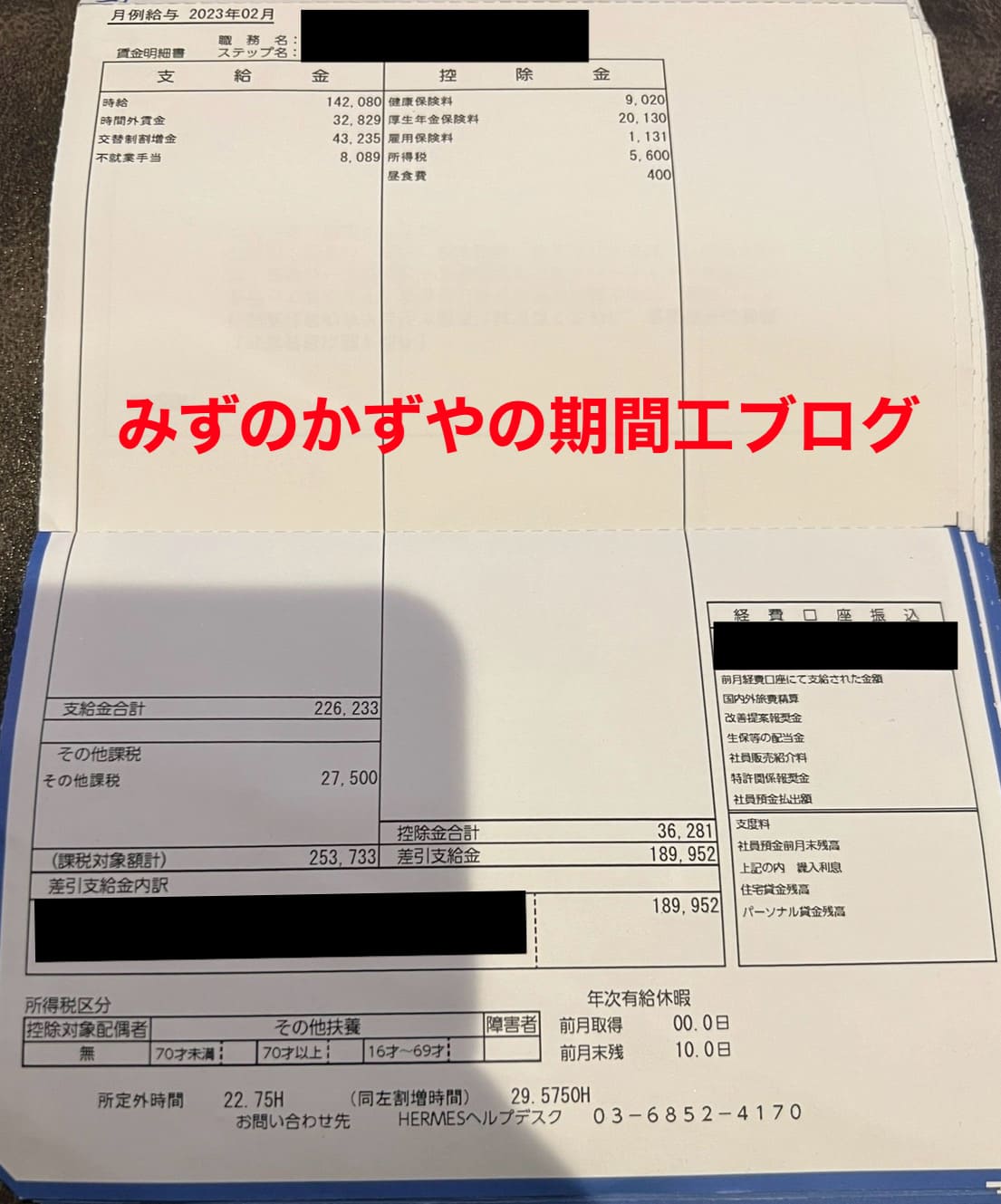
A Mitsubishi pay slip is split into two primary columns: earnings (shikyū) and deductions (kōjo). Understanding how these elements balance determines whether your monthly targets match reality.
The starting foundation is your base daily wage (kihunkyū). First-term workers without prior automotive line experience generally start at approximately ¥10,300 per day. Experienced returnees or workers who complete several six-month terms see this daily rate rise toward ¥11,500.
The daily rate alone accounts for only roughly ¥210,000 to ¥235,000 across a 21-day working month. The real money lives in the statutory premiums:
- Overtime Premium (Zangyō Teate): Mandated at a 28% to 30% premium over base hourly rates, typically yielding ¥1,700, ¥2,050 per hour. A month with 25 hours of overtime adds roughly ¥45,000, ¥51,000.
- Late-Night Shift Premium (Shinya Teate): Hours worked between 22:00 and 05:00 legally require an additional 25% to 30% premium. Night shifts systematically log 5 to 6 premium hours per shift, injecting ¥25,000, ¥35,000 into your earnings column each two-week night rotation.
- Shift Differential (Kōtai Teate): Mitsubishi pays an operational premium specifically for alternating between day and night patterns, often adding ¥15,000, ¥25,000 monthly.
- Attendance Allowance (Kaikin Teate): Workers who record zero unexcused absences and maintain a clean attendance record receive an operational bonus, usually ¥20,000, ¥30,000 credited monthly or quarterly.
Missing a single scheduled shift without an authorized doctor's note or advance paid leave (yūkyū) wipes out the attendance allowance immediately. It also reduces your daily wage. Punctuality is financially non-negotiable.
Monthly Pay Stub Benchmark: Gross vs. Take-Home Cash
Gross pay numbers quoted by dispatch recruiters look grand. Your bank account, however, only cares about net take-home pay (te-dori). Japan's statutory deductions scale directly with your total gross compensation.
The table below illustrates a typical pay stub for a standard production month, comparing a light-overtime month against a high-production schedule alongside a six-month milestone stub that includes the completion bonus.
| Pay Stub Item | Standard Month (15h OT) | Peak Line Month (35h OT) | Month 6 (Term Bonus Included) |
|---|---|---|---|
| Base Wage (21 Days) | ¥216,300 | ¥216,300 | ¥216,300 |
| Shift & Night Differentials | ¥48,000 | ¥54,000 | ¥48,000 |
| Overtime Pay | ¥27,500 | ¥64,200 | ¥32,000 |
| Attendance Bonus | ¥20,000 | ¥20,000 | ¥20,000 |
| Completion / Retention Lump Sum | ¥0 | ¥0 | ¥380,000 |
| Total Gross Earnings | ¥311,800 | ¥354,500 | ¥696,300 |
| Health Insurance (*Kenkō Hoken*) | ¥15,400 | ¥17,800 | ¥31,000 |
| Welfare Pension (*Kōsei Nenkin*) | ¥28,500 | ¥32,400 | ¥58,000 |
| Employment Insurance | ¥1,870 | ¥2,120 | ¥4,170 |
| Income Tax (*Shotokuzei*) | ¥7,200 | ¥9,800 | ¥32,500 |
| Dormitory & Utilities Fee | ¥0 | ¥0 | ¥0 |
| Total Deductions | ¥52,970 | ¥62,120 | ¥125,670 |
| Net Take-Home Pay (*Te-dori*) | ¥258,830 | ¥292,380 | ¥570,630 |
During your first calendar year, you avoid municipal resident tax (jūminzei) deductions if you did not earn taxable income inside Japan the preceding year. Enter year two, however, and local municipal taxes kick in, lopping an additional ¥15,000, ¥22,000 per month off your take-home pay.
The Multiplier Effect of the Six-Month Completion Bonus
Base monthly wages maintain your day-to-day cash flow. The engine that builds real savings is the contract completion bonus, known colloquially as manki ireikin (満期慰労金) alongside renewal incentives (keiyaku kōshin shōreikin).
Automakers design these payments to combat high turnover. Labor attrition spikes violently around day 14 and day 45. To incentivize workers to stay through peak assembly quotas, Mitsubishi issues lump-sum payments upon the successful completion of each contract term, typically structured in three-month or six-month blocks.
- Accumulates at roughly ¥1,500 to ¥2,800 per active working day. Completing a full six-month cycle without unexcused absences nets an aggregate lump sum of ¥350,000, ¥420,000.
- 12-Month Renewal Milestone: Workers who extend for a second six-month term receive heightened daily accumulation multipliers, generating another ¥400,000, ¥500,000 payout.
- Full 35-Month Cap: Under Japanese labor law, seasonal fixed-term contracts at a single enterprise cap out at 35 continuous months (just under three years) to prevent companies from permanently bypassing full-time hiring quotas. Over a full 35-month run, completion bonuses alone contribute upwards of ¥2,800,000 to ¥3,200,000 in total gross bonuses.
Taxes take a substantial bite from bonus checks. Health insurance, welfare pension, and income tax withholdings spike proportionately during payout months. Even so, receiving a net direct deposit exceeding ¥550,000 twice a year completely transforms an individual's balance sheet.
Dormitory Realities: The Secret to High Net Savings Rates
Earning ¥350,000 gross in an expensive metropolis like Tokyo leaves little surplus after rent, rail commuting, gas, and groceries. The economic rationale of the kikankou lifestyle hinges on an artificially suppressed cost of living.
Mitsubishi houses single seasonal workers in company-operated facilities near its facilities, such as the Chiryu or Hashimoto dormitories near Okazaki. Accommodations are generally private single rooms equipped with an air conditioner, a refrigerator, a bed frame, and bedding. Bathrooms, laundry areas, and large communal soaking baths (daiyokujō) are shared across floor units.
The financial terms are extraordinarily favorable:
- ¥0.
- Water, Gas, Electricity: Fully subsidized or capped at a negligible flat utility fee (under ¥5,000 monthly).
- Dedicated company shuttle buses transport workers between the dorms and plant turnstiles at no cost.
- Plant and dorm cafeterias serve subsidized meals. A breakfast tray costs around ¥250, ¥350, while lunch and dinner sets run ¥400, ¥550.
By utilizing the cafeteria and avoiding off-site alcohol runs to convenience stores, a worker can easily keep total monthly living expenses under ¥45,000 to ¥60,000.
If your net take-home averages ¥270,000 during normal months and surges past ¥550,000 in bonus months, you retain approximately 75% to 80% of your total net pay. Over a 12-month contract, total net savings realistically reach between ¥2,500,000 and ¥3,200,000 (equivalent to $17,000, $22,000 USD depending on currency exchange levels).
Who Should Apply and Who Should Steer Clear
The assembly line makes no allowances for fatigue, artistic ambition, or executive autonomy. It offers a purely mercenary trade: physical stamina and disciplined endurance swapped for fast liquid capital.
Who Excels in This System:
- Debt Eliminators & Capital Accumulators: Individuals seeking to pay down high-interest loans or amass capital to launch a business, fund university tuition, or invest.
- Those comfortable spending eight hours inside their own head while executing mechanical, repetitive tasks to millimeter precision.
- Workers Seeking Minimal Overhead: People who want to eliminate the administrative friction of modern life, apartment hunting, utility contracts, commuting transit cards, and grocery budgeting.
Who Should Avoid It:
- Those with Chronic Physical Vulnerabilities: Anyone with pre-existing lower back injuries, wrist tendonitis, or chronic sleep disorders. Day-night weekly shift swaps destroy sleep schedules quickly.
- You cannot negotiate your line speed, pause the conveyer belt to take a breath, or improvise process improvements without formal supervisor sign-off.
- Individuals who lean on weekend nightlife in nearby Nagoya or Osaka to vent stress end up draining their paychecks at bars, completely destroying the financial logic of the job.
Frequently Asked Questions (FAQ)
Q1: Do foreign applicants need fluent Japanese to secure a contract role?
A1: Basic conversational Japanese (equivalent to JLPT N4 or N3) is typically required to pass the initial interview, comprehend workplace safety instructions, and navigate plant signage. Applicants must possess legal work authorization inside Japan (such as permanent residency, spouse visas, long-term resident status, or specific bilateral working holiday permissions). Mitsubishi does not sponsor short-term seasonal work visas directly for unspecialized line assembly.
Q2: How much money do I actually need to survive until the first paycheck arrives?
A2: Plan to arrive with at least ¥70,000 to ¥100,000 in cash. While your dorm room is free, you must feed yourself at the cafeteria and buy immediate essentials (work socks, casual wear, laundry detergent, personal toiletries) before your first full month's pay clears. First-month pay stubs are often small if your onboarding date falls midway through a payment cycle.
Q3: Can a seasonal worker transition into a full-time, permanent employee (*seishain*)?
A3: Yes, but the funnel is narrow. Mitsubishi holds formal permanent-transition examinations (seishain tōyō shiken) once or twice a year. Candidates need an unblemished attendance record, high line proficiency, exceptional reviews from their section leader (shokuchō), and passing scores on written Japanese business tests and oral interviews. Only a single-digit percentage of seasonal cohorts successfully transition.
Maximizing Capital Accumulation Across a Contract
Working as a Mitsubishi seasonal employee is fundamentally an exercise in discipline. The assembly lines at Okazaki and Mizushima demand monotonous, relentless physical energy. The dormitory environment offers privacy, but little luxury.
The payoff exists entirely in the spread between your earnings and your living expenses. Where traditional municipal employment forces workers to surrender half their income to urban rent and household upkeep, the factory contract system strips overhead to the absolute bone. Treat the assignment not as a permanent career, but as a deliberate financial deployment: master the shift rotations, preserve your joints, protect your attendance record, and bank the completion bonuses. Handled strategically, a single contract term provides the exact capital launchpad you set out to build.
