Croquette Crashes Kenichi Mikawa's 80th Birthday: The Mid-Song Stage Ambush
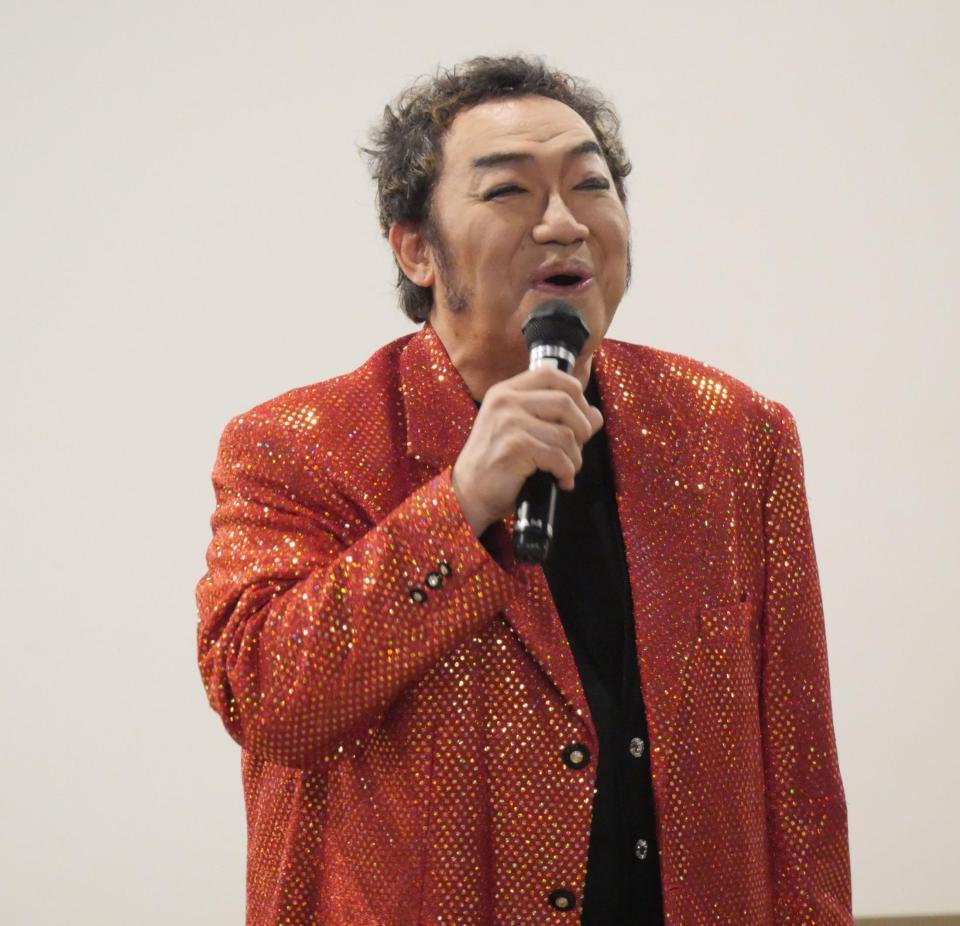
Veteran entertainer Kenichi Mikawa stood before reporters in Tokyo on May 15, 2026, marking both his 80th birthday milestone and a massive digital retrospective of his six-decade recording career. As the opening notes of his 1972 signature ballad "Sasoriza no Onna" (The Scorpion Woman) filled the press hall, Mikawa launched into the dramatic vocal phrasing that cemented his status as a titan of Japanese kayokyoku. Mid-verse, the press conference took an unscripted turn. Master impersonator Croquette slipped onto the stage unannounced, contorting his face into the legendary exaggerated scowl that turned their careers into one of Japanese entertainment's most enduring double acts.
The ambush caught Mikawa off guard, visibly rattling the veteran singer before he settled back into his trademark deadpan poise. As documented in an ORICON NEWS Report, the impromptu reunion quickly dissolved into affectionate bickering, with Mikawa roasting the comedian for gaining weight and muddying his glamorous physical silhouette. For the press corps, the moment was a vintage display of a professional partnership that revitalized both men's careers forty years ago and continues to define Japanese television comedy.
📌 Key Takeaways:
- The Ambush: Croquette crashed Kenichi Mikawa’s 80th birthday press event during a live rendition of "Sasoriza no Onna," catching the singer mid-song.
- The Milestone: The Tokyo appearance commemorated Mikawa’s 80th birthday (Sanju) alongside the digital streaming release of his complete discography spanning 61 years.
- Defying Illness: Mikawa delivered full-throated live vocals just months after public disclosures regarding his battles with Parkinson’s disease and sick sinus syndrome.
The Tokyo Press Conference and the Mid-Song Ambush
Mikawa organized the May 15 media gathering to mark his Sanju, the traditional Japanese celebration of reaching 80 years of age, and to announce the digital distribution of his life's work. Dressed in his trademark glamorous attire, Mikawa stepped forward to sing "Sasoriza no Onna" without vocal backing tracks. His baritone carried the dark, theatrical precision that fans have recognized since the Shōwa era.
Without warning, Croquette emerged from the wings. Creeping behind Mikawa with exaggerated tiptoes, the comedian mirrored the singer’s hand gestures and twisted his jaw into an extreme caricatured sneer. Mikawa glanced sideways, missed a fraction of a beat, and broke into a split-second grin before regaining his composure to finish the verse. The room erupted in laughter as flashbulbs strobed across the stage.
Rather than expressing indignation, Mikawa immediately went on the offensive with sharp comedic timing. "You've gotten fat lately," Mikawa scolded, gesturing toward Croquette's midsection. "My impression is supposed to be slender and glamorous. You're ruining my silhouette!" Croquette bowed apologetically, leaning straight into his famous routine: mimicking Mikawa attempting to lift an impossibly heavy boulder while trying to maintain aristocratic poise.
Defying Parkinson’s: Mikawa’s Vocal Discipline at 80
Beyond the laughs, the performance carried heavy emotional weight for the Japanese music press. In November 2025, Mikawa publicly announced that he had been diagnosed with Parkinson's disease, following an earlier September disclosure of sick sinus syndrome that required medical intervention. Neurological conditions often rob vocalists of breath support and diaphragmatic control. Yet Mikawa’s voice on May 15 cut through the room with remarkable volume and steady vibrato.
The display surprised few within his inner circle. Five months prior, at a December 2025 charity event for children's cafeterias in Tokyo, Croquette spoke candidly to reporters about his colleague’s work ethic. Despite fighting cardiac and neurological symptoms, Mikawa refused to cut corners during rehearsals.
"He is an absolute iron man," Croquette told reporters at the time. "Most veteran singers preserve their voices during sound checks and walk through the motions. Mikawa sings every single track at one hundred percent power during rehearsals, song after song. Watching him push through his medical hurdles makes you realize what a true showman looks like." That stamina was fully on display during the Tokyo showcase.
Six Decades on Record: Crown Records Opens the Vaults
The press event marked an unprecedented commercial release for traditional Japanese popular music. Crown Records officially cleared Mikawa’s entire historic catalog for global subscription streaming platforms. The distribution push makes six decades of recorded material available digitally for the first time.
Mikawa debuted in 1965 with the single "Dakedo Dakedo Dakedo." Over the following 61 years, he navigated changing industry landscapes, shifting from teen idol pop to enka ballads and camp lounge music. The streaming release preserves this expansive musical footprint in pristine digital formats.
| Catalog Metric | Scope / Volume | Historical Context |
|---|---|---|
| Career Span | 1965, 2026 (61 Years) | Debuted during the early Shōwa kayō boom |
| Singles Released | 117 Titles | Includes chart-toppers "Yanagigase Blues" and "Sasoriza no Onna" |
| Studio & Live Albums | 37 Records | Spans early Crown Records vinyl to Reiwa-era digital masters |
| Total Streamed Tracks | 581 Individual Songs | Unlocks rare B-sides and unreleased recordings worldwide |

How a 1980s Parody Rescued a Stalled Entertainment Career
The warm dynamic between Mikawa and Croquette hides an extraordinary show business narrative. In Western markets, harsh celebrity parodies frequently trigger legal cease-and-desist orders or bitter personal rivalries. In Japan, Croquette's mockery saved Mikawa’s career from terminal decline.
By the mid-1980s, Mikawa found himself sidelined. Changing pop trends and personal controversies had pushed him away from major television networks. Bookings dried up. Concurrently, a rising impressionist named Croquette appeared on the wildly popular prime-time competition show Omonita Taisho. Croquette did not merely impersonate Mikawa; he completely reconstructed him. He exaggerated Mikawa’s languid posture, turned his lip curl into an asymmetrical grimace, and transformed his sophisticated banter into absurd theatrical camp.
Instead of suing, Mikawa recognized the commercial opportunity. He leaned into the parody. Rather than fighting the caricature, Mikawa appeared side-by-side with Croquette on variety broadcasts, wearing identical sequined gowns. The self-deprecating humor endeared Mikawa to a younger generation that had never heard his 1960s hits. The exposure sparked a massive career resurgence, culminating in Mikawa’s historic multi-year costume rivalry with Sachiko Kobayashi on NHK's annual New Year's Eve broadcast, Kohaku Uta Gassen.
The Comedic Anatomy of Croquette’s Mikawa Routine
Croquette’s depiction of Mikawa remains a foundational masterclass in Japanese monomane (celebrity mimicry). Unlike Western impressionists who focus on vocal cadence or political satire, Japanese mimicry often relies on kinetic, physical distortion. Croquette identified the exact elements that made Mikawa distinctive and dialed them up by several hundred percent.
The performance hinges on three physical mechanics:
- The Slow-Motion Asymmetry: Croquette drops the right side of his lower jaw while allowing his left eyebrow to rise, freezing in place for several seconds to simulate an expression of aristocratic contempt.
- The Stiff Micro-Gestures: Holding an imaginary microphone with rigid, delicate fingers, the mimic sways with extreme economy of movement, satirizing Mikawa’s low-energy stage presence.
- The Heavy-Lifting Subversion: The bit that brought down the house at the May 15 event involves maintaining Mikawa’s detached, elegant facial sneer while visibly straining to lift an imaginary 200-pound object from the stage floor.
When Croquette executed the heavy-lifting bit alongside Mikawa during the birthday conference, the contrast between the pristine octogenarian singer and the sweat-soaked comedian created pure comedic gold. "I never move like that," Mikawa deadpanned to the cameras, drawing another round of laughter.
Frequently Asked Questions (FAQ)
Q1: Why was Kenichi Mikawa holding a major press conference on May 15, 2026?
A1: Mikawa celebrated his 80th birthday (known in Japan as Sanju) and formally announced the global digital streaming release of his complete discography, covering 61 years of music.
Q2: What medical conditions did Kenichi Mikawa disclose prior to this performance?
A2: Mikawa announced diagnoses of sick sinus syndrome in September 2025 and Parkinson's disease in November 2025. Despite these challenges, he delivered a live vocal performance without backing playback.
Q3: What makes the relationship between Kenichi Mikawa and Croquette unusual?
A3: During a career slump for Mikawa in the late 1980s, Croquette's exaggerated comedic impressions introduced the singer to younger generations. Instead of taking offense, Mikawa embraced the parody, collaborating frequently with Croquette and reviving his mainstream television career.
The Enduring Bond of Two Show Business Originals
Pop culture operates on disposable cycles, but the chemistry between Kenichi Mikawa and Croquette endures because it is grounded in mutual respect and sharp commercial intuition. At 80 years old, coping with neurological and cardiac conditions, Mikawa demonstrated that his voice, his wit, and his theatrical stage command remain fully intact.
Croquette crashing the stage was not merely a publicity stunt for the cameras. It was a reaffirmation of an artistic partnership that redefined how Japanese variety television approaches satire and tribute. With his complete 581-track catalog now streaming worldwide and his sharp comedic banter on display, Kenichi Mikawa proved that even after six decades under the spotlight, he can still outmaneuver anyone who attempts to steal his stage.
