Cut Toenail Too Short and It Hurts to Walk? The Ultimate Practical Guide to Rapid Pain Relief
That sudden, sharp wince usually happens before you even put your clippers down. Trimming a toenail too deep into the lateral nail fold exposes raw, highly vascular tissue that reacts violently to the slightest friction. Within hours, the simple act of pulling on a sock or lacing up a work boot turns into an ordeal of throbbing irritation. According to consumer health reporting in The New York Times regarding ergonomic foot care and clipping gear, selecting the wrong instruments or angling cutting blades down into the lateral curves of the toe accounts for the vast majority of preventable nail injuries seen in clinics each year.
When the hard keratin plate no longer shields the tender nail bed, your body interprets the everyday mechanical pressure of walking as continuous trauma. Walking forces the soft lateral skin directly against the severed edge of the nail plate, triggering rapid localized swelling. Left unmanaged, a simple overzealous trim can quickly transform into a painful bacterial complication or a full-blown ingrown nail that lingers for months.
📌 Quick Summary:
- The Immediate Driver: Over-trimming exposes sensitive nerve endings in the nail bed and removes the structural guide that prevents lateral skin from rolling inward.
- The First 48 Hours: Targeted physical redirection, such as lateral skin taping combined with an antiseptic soak, eliminates the mechanical friction causing acute walking pain.
- Long-Term Trajectory: Regrowing the missing nail margin takes 8 to 12 weeks, requiring straight-across filing rather than curved clipping to avoid chronic recurrences.
Why Over-Clipping Triggers Intense Walking Pain
Human toenails do not merely sit atop the digits as decorative shields. They distribute ground reaction forces across the distal phalanx whenever you push off your foot during a standard walking stride. When you cut the nail down past the hyponychium, the protective barrier between the nail bed and the free edge, the structural balance fails. The exposed nail bed pain stems from rich networks of sensory nerves and capillary loops suddenly subjected to direct ambient air, moisture shifts, and shoe pressure.
Compounding the problem is tissue mechanics. Lateral nail folds are supple and elastic. The hard nail plate normally holds those folds outward. Remove that rigidity by curving your cut deep into the corners, and the lateral skin instantly rolls inward over the raw gap. With every step you take, your body weight pushes the soft tissue straight into the jagged, newly cut margin of the nail plate. That friction causes micro-tears, fueling an inflammatory cascade marked by heat, localized edema, and a stubborn, rhythmic throb.
The Emergency Taping Technique to Relieve Walking Pressure
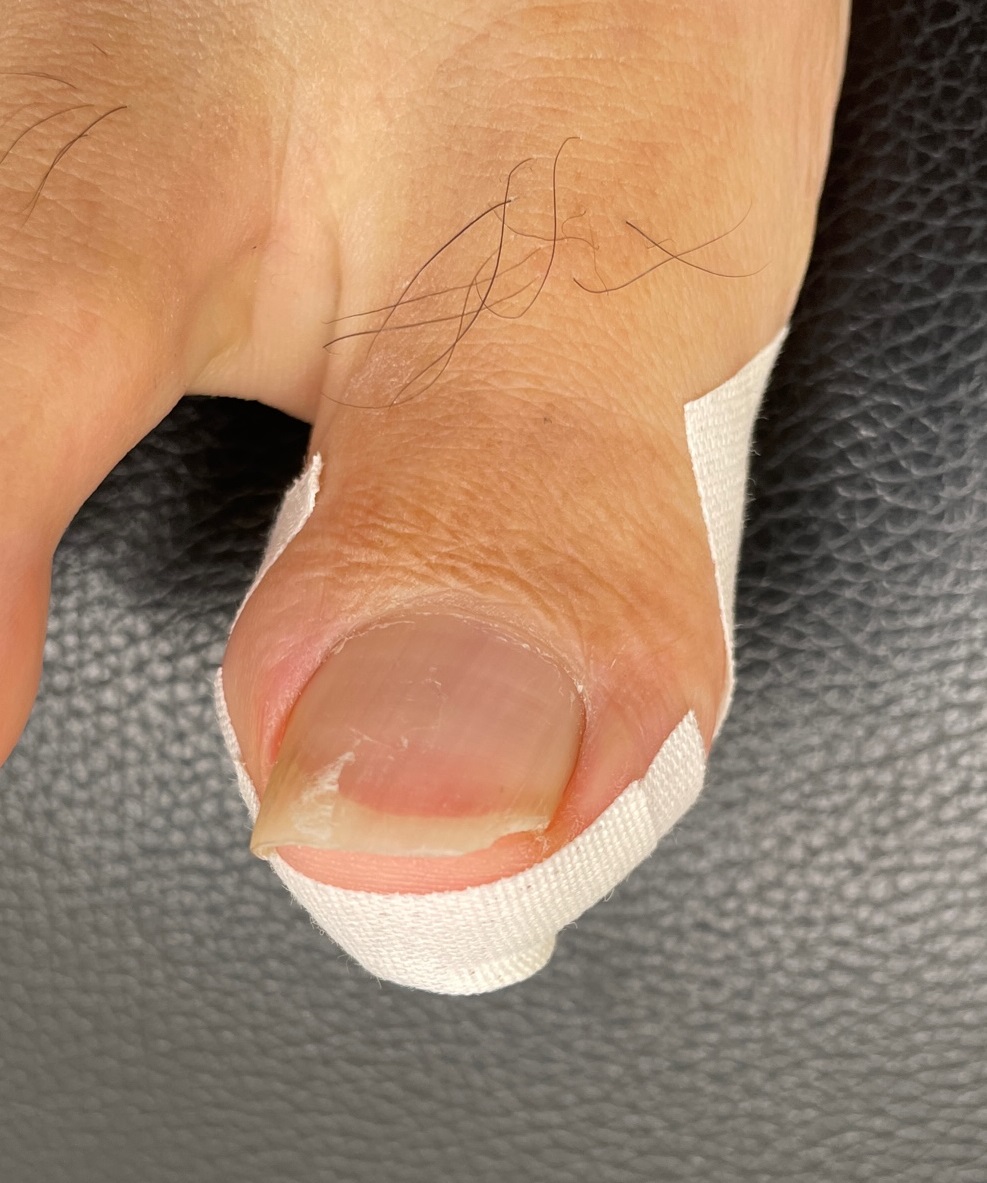
If you need to slip into closed-toe footwear right away, mechanical taping delivers almost immediate relief. This method does not involve wrapping the toe like a mummy; instead, it physically pulls the inflamed skin away from the sharp edge of the trimmed nail.
Start with a strip of high-adhesion elastic kinesiology tape or sturdy medical cloth tape, approximately 2 inches long and 0.5 inches wide. Clean and dry the toe thoroughly so the adhesive grips properly.
Place one end of the tape directly against the lateral fold of skin next to the painful nail edge, making sure the tape does not cover the nail itself. Anchor the edge firmly. Pull the remaining length of the tape under the toe pad with moderate tension, winding it diagonally across the bottom of the digit toward the opposite side. This tension pulls the swollen lateral skin wall outward and down, creating an artificial gap between your flesh and the nail margin. The sharp corner no longer digs into raw tissue, instantly reducing friction inside your shoes.
Immediate Home Care and Safe Foot Soak Routines
Once you return home and remove your shoes, shift the focus toward reducing tissue swelling and curbing microbial buildup. The micro-abrasions caused by aggressive clipping allow ubiquitous skin bacteria, such as Staphylococcus aureus, to slip past natural barriers.
Submerge the affected foot in a warm Epsom salt foot soak for 15 minutes twice daily. Use lukewarm water rather than scalding temperatures, keeping the ratio to approximately 1 to 2 tablespoons of magnesium sulfate per basin of clean water. The soak softens the rigid edge of the remaining nail plate while drawing excess fluid out of the inflamed periungual tissue.
After soaking, pat the area completely dry using a clean paper towel; avoid rubbing the toe with a damp bath towel that might harbor household mold or bacteria. Finish with a thin, targeted antibiotic ointment application along the exposed groove, and cover it with a sterile, non-stick dressing. If you are tracking how to bandage a cut toenail without adding bulk, use a tubular bandage or a sterile fabric strip placed lengthwise over the tip of the toe to avoid constricting lateral circulation.
Recovery Phases and What to Do While the Nail Grows Back
Toenails grow at a measured pace, averaging roughly 1.5 to 2 millimeters per month. Recovering from an aggressive cut demands patience, alongside consistent care adjusted to the healing stage.
| Phase & Timeline | Tissue Status | Required Actions | Footwear Rules |
|---|---|---|---|
| Acute Phase(Days 1, 3) | Raw nail bed, acute inflammatory swelling, severe friction sensitivity. | Taping protocol during the day; antiseptic Epsom soaks morning and evening; sterile dressings. | Wide toe box sneakers, open sandals, or unlaced casual shoes only. |
| Bridging Phase(Weeks 1, 3) | Epithelial recovery of the nail bed; new nail plate begins pushing forward. | Keep the sulcus clean; gently apply protective balms; avoid cutting the advancing edge. | Standard casual shoes permitted if they do not press against the big toe. |
| Clearance Phase(Weeks 4, 8) | The nail plate clears the distal skin fold; natural hyponychium seals. | File straight across; do not round off corners; inspect weekly for straight alignment. | Full return to athletic, dress, and work footwear. |
Spotting Complications: Paronychia and Red Flags
Most instances of over-clipping settle down within a few days if you take friction off the toe. However, breaking the nail barrier leaves the gate open to secondary infections. The most frequent complication is acute paronychia, an infection of the tissue immediately adjacent to the nail plate.
Keep a close eye on the toe for clear paronychia infection symptoms. If localized tenderness gives way to constant, throbbing pain that keeps you awake at night, trouble is brewing. Look for shiny, bright-red swelling along the lateral fold, heat radiating through the digit, and any visible yellow or white pustules forming near the nail groove. Bad odors or cloudy drainage are clear signs of toenail infection that require professional intervention rather than home remedies.
Individuals managing metabolic issues must exercise extreme caution. Strict diabetic foot care precautions demand skipping self-treatment entirely if a nail is clipped too deep. Reduced peripheral sensation (neuropathy) and compromised microvascular circulation can mask deep-tissue distress, allowing minor cuts to escalate into dangerous ulcers or cellulitis within days. If you have diabetes or poor peripheral blood flow, bypass home taping and schedule an immediate clinical evaluation.
Long-Term Prevention and Proper Trimming Technique
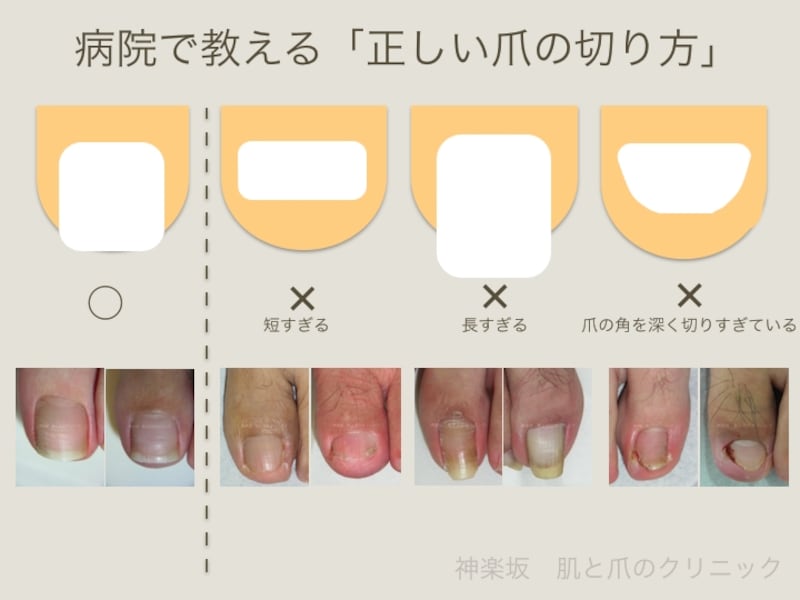
Breaking the cycle of painful trims comes down to proper toenail trimming technique. Most people inadvertently hurt themselves by trying to shape their toenails like fingernails, clipping deep, semi-circular arcs that track into the sides of the toe bed. That curved contour leaves sharp spicules buried below the lateral fold as the nail tries to push forward.
Always use straight-edge toenail nippers rather than small, curved fingernail clippers. Cut straight across the top of the nail plate, leaving the final edge roughly level with the tips of your toes. The corners of the nail should remain clearly visible above the skin fold. If the outer edges feel sharp, use an emery board to file down the point in one direction, keeping the structural square intact. Never dig down into the sides with scissors to excise embedded corners; that reflexive habit guarantees chronic ingrown edges down the road.
Frequently Asked Questions (FAQ)
Q1: How long does it take for pain to go away after clipping a toenail too short?
A1: Acute pain from an exposed nail bed usually calms down within 48 to 72 hours once you relieve pressure and keep the toe protected. Complete structural recovery takes roughly 6 to 10 weeks, the time required for the edge of the nail plate to grow past the sensitive distal skin fold.
Q2: Can I just cut out the sharp corner myself if it starts digging in?
A2: No. Attempting so-called bathroom surgery almost always worsens the issue. Digging clippers or scissors into the side wall typically leaves behind a jagged, unseen spike of nail buried deeper under the skin, substantially raising the odds of severe paronychia or an embedded ingrown nail.
Q3: When is it time to visit a podiatrist for toenail treatment?
A3: Seek professional care if the digit throbs continuously for more than three days, displays visible pus or drainage, spreads redness up the toe, or if you have diabetes or vascular disease. A podiatrist can place a temporary protective splint or perform a minor in-office margin excision under local anesthesia to resolve the issue quickly.
Practical Foot Care Priorities Moving Forward
A clipped-too-short toenail is an uncomfortable, frustrating nuisance, but it does not have to turn into a medical ordeal. By acting early, using targeted taping to separate skin from nail, soaking in warm Epsom salt baths, and keeping the toe protected, you take mechanical pressure off the digits so the tissue can heal cleanly. Resist the temptation to perform follow-up trims in the lateral folds. Give the nail bed space, allow the hard plate to slowly push past the natural edge of your toe, and your everyday stride will be back to normal before you know it.
