Deconstructing Gin-san's Bushido: How Gintama Redefined the Samurai Code for Modern Fans
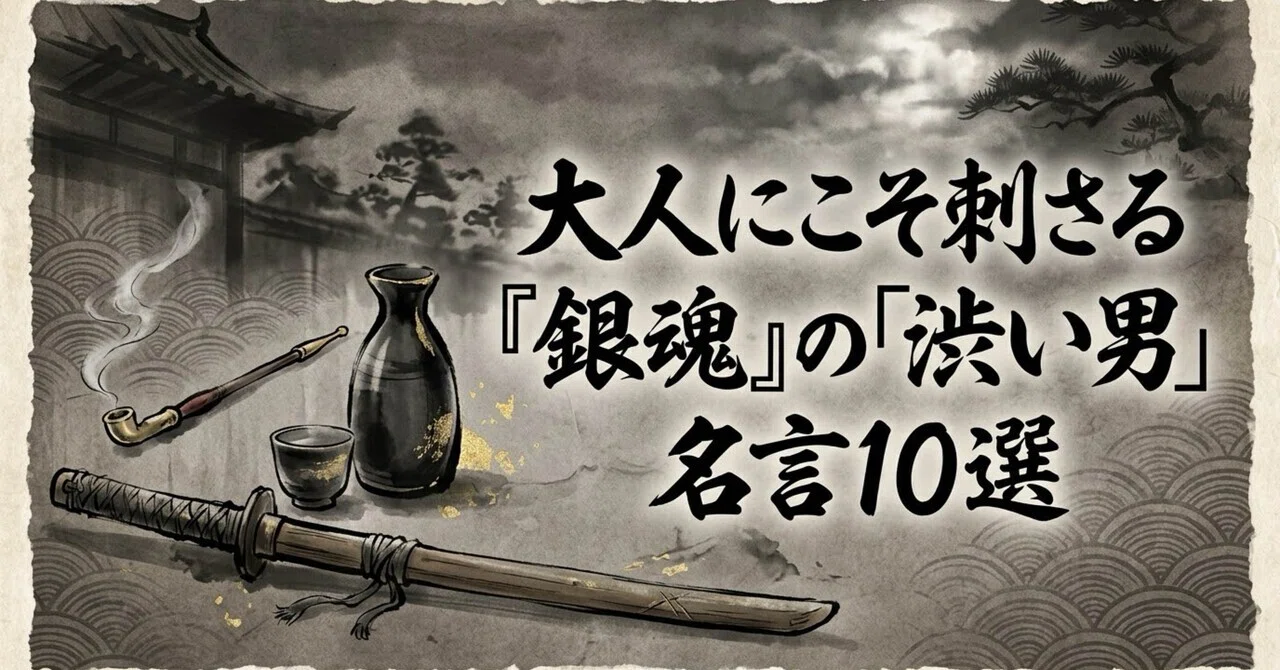
Most legendary shonen swordsmen draw their blades to protect the nation, avenge a bloodline, or claim the absolute apex of martial strength. Gintoki Sakata fights to pay overdue rent to an abrasive landlady and ensure his household can afford strawberry milk. In an industry historically saturated with noble, tragic heroes bound by feudal loyalty, Hideaki Sorachi’s protagonist introduced an unapologetic rejection of traditional warrior stoicism. A recent viral retrospective highlighted on note Report cataloged how the legendary quotes from Gintama's hardest-bitten characters continue to hit adult readers harder than they ever did during their original serialization. The reason is straightforward: Gintoki Sakata dismantled classical samurai mythology and replaced it with a blue-collar philosophy built for people who have already lost their wars.
The cultural footprint of this oddball swordsman has proved remarkably enduring. Even with the launch of the television anime adaptation of the Ginpachi-sensei spin-off on October 7, 2025, fans on social platforms quickly noted that Sorachi's humor and heavy moral cadence have not aged a day. Beneath the scatological humor and parodies of mainstream icons like Akira Toriyama's works, Gintoki’s spoken philosophy, the iconic "Gin-san meigen", articulates an adult framework of resilience. It is a samurai code rebuilt for broken, imperfect survivors.
📌 Key Takeaways:
- The Core Shift: Gintoki dismantles feudal loyalty, replacing blind obedience to lords with an intimate, domestic defense of everyday companions.
- Weapon of Survival: The Lake Toya wooden sword serves as an ideological statement, substituting fatal honor duels with everyday conflict resolution.
- The Real-World Resonance: Adult fans identify with Gintoki because his morality accounts for financial debt, chronic exhaustion, and profound grief rather than romantic heroism.
From Shiroyasha to Odd-Jobs: Stripping the Romance from Bushido
Classical Japanese bushido, popularized by early 20th-century texts like Inazo Nitobe's treatises and romanticized throughout Edo-period military tales, treats death as an aesthetic perfection. The ideal warrior preserves honor by dying gracefully for a lord or a cause. Gintoki Sakata inverts that entire doctrine within the opening volumes of Gintama. Having fought on the losing side of the Joui war as the feared "Shiroyasha" (White Demon), he witnessed the complete collapse of his comrades, his ideals, and his mentor, Shoyo Yoshida. He knows firsthand that dying for a lost cause accomplishes nothing.
When Gintoki tells Shinpachi Shimura early in the series, "If you've got time to fantasize about a beautiful death, why not live beautifully until the very end?" he drops a philosophical anchor that guides the entire narrative. To Gintoki, romanticizing martyrdom is an intellectual cop-out. Surviving in disgrace, picking up garbage, scrubbing dishes, and enduring the hangover of a lost war requires far more courage than gutting oneself on a battlefield. This perspective immediately shifted the series away from mainstream power fantasies toward a meditation on post-traumatic survival.
His weapon choices mirror this mental posture. The Lake Toya wooden sword (Bokuto), bought via mail-order infomercials, is not an heirloom passed down through noble samurai bloodlines. It is a cheap, mass-market substitute for a lethal steel blade. Gintoki carries it today the extraterrestrial Amanto have outlawed swords because he refuses to surrender his soul, but he deliberately chooses non-lethal blunt trauma over executions. He has already spilled an ocean of blood; he has no interest in feeding the soil with more young corpses.
The Domestic Perimeter: Defending the Six-Foot Radius
Traditional samurai fought for abstract institutions: the Shogunate, clan honor, regional territory. Gintoki openly scoffs at these grand narratives. When pressed on what he actually fights to protect as the head of Yorozuya Gin-chan, his definition of duty shrinks down to a strictly domestic perimeter. He explains that his hands are small, and trying to carry the whole world will only cause you to drop everything. Instead, he focuses entirely on what is within arm's reach.
"I don't have any grand ambitions," he famously confesses across several critical arcs. "All I want is to protect the people within my reach. If someone falls inside that circle, I'll pull them back up." This quote articulates a realistic moral scale. Gintoki understands the paralyzing fatigue that comes with trying to right every systemic wrong. In Kabukicho, an underground district packed with hostesses, gamblers, debt collectors, and outcasts, grand moral crusades are useless. What keeps people alive is mutual aid at the street level.
This localized morality explains why Yorozuya Gin-chan functions like an alternative family unit rather than an elite guild. Shinpachi Shimura is an awkward teenager trying to save his family dojo; Kagura is an alien immigrant carrying violent hereditary impulses; Sadaharu is an abandoned divine dog. None of them represent geopolitical power. Yet for Gintoki, their combined well-being constitutes his entire moral universe. When an adult worker faces burnout or emotional defeat, Gintoki’s small-scale bushido offers a tangible philosophy: ignore the noise of the world and guard your immediate house.
| Philosophy Metric | Classical Bushido (Feudal) | Sakata Gintoki's Bushido |
|---|---|---|
| Ultimate Virtue | Absolute loyalty to the lord and state | Protection of immediate, personal bonds |
| View on Death | Honor found in noble martyrdom (Seppuku) | Surviving through disgrace to live another day |
| Weapon of Choice | Lethal ancestral katana (Soul of the Samurai) | Mail-order Lake Toya wooden sword |
| Social Demeanor | Rigid stoicism, decorum, and detachment | Lazy, comedic, financially broke, deeply empathetic |
| Primary Loyalty | The Shogun and aristocratic hierarchy | Promises made to friends and the dead |
The Kabukicho Four Devas Arc and the Jirocho Doromizu Clash
The definitive test of Gintoki's philosophy arrives during the Kabukicho Four Devas arc. The storyline strips away the comedy to confront the raw debt between generations. Gintoki is forced to face Jirocho Doromizu, an aging yakuza boss and former Joui patriot who once shared a vow to protect Kabukicho and its matriarch, Otose. Jirocho chose the path of ruthless alienation, abandoning his biological daughter Pirako to rule the district through cold violence.
When Jirocho strikes down Otose in the graveyard rain, Gintoki loses his characteristic composure. The ensuing clash is savage, ending in Gintoki’s brutal physical defeat. Yet what resonates most from this arc is not the swordplay, but the confrontation between two men bound by identical promises. Jirocho believed that protecting something required sacrificing his humanity. Gintoki rejects that premise entirely.
During their final duel in the rain-slicked streets, the clash represents two divergent interpretations of modern masculine responsibility. As documented in retrospective commentary, Jirocho’s iconic line, "I came to keep a promise to a man", meets Gintoki’s unwavering refusal to let an old pact crush the living. Gintoki does not fight to destroy Jirocho; he fights to break the old man out of the psychological prison of his past. By defeating Jirocho without killing him, Gintoki forces him to return to his estranged daughter. He demonstrates that a broken promise to an old comrade is not rectified by compounding tragedies, but by repairing the relationships that still remain.

Sorachi's Pen: Balancing Slapstick Depravity with Existential Weight
Hideaki Sorachi pulled off an editorial miracle for fifteen years in Weekly Shonen Jump. He alternated toilet humor, copyright-infringing parodies, and slapstick sketches with profound essays on human suffering. A chapter might feature Gintoki suffering through a panic attack at the dentist over an Amanto drill, followed three weeks later by a speech on why an old man with dementia still deserves dignity.
Sorachi understood that unearned seriousness turns into empty melodrama. By showing Gintoki picking his nose, reading Jump on the toilet, running from debt collectors, and failing to pay Shinpachi's salary for eight consecutive months, Sorachi earns the reader's trust. Gintoki is not an unreachable demigod. He is a flawed guy trying to get through the week without being evicted.
When Gintoki speaks about hardship, his lines carry weight because readers have seen his weakness. In the Benizakura arc, he delivers a definitive truth to his former comrade Nizou: "My back is already bent from carrying too much baggage. But if I drop it now, I won't have anything left." That is not the battle cry of an invincible warrior. It is the candid confession of a survivor carrying unresolved trauma. Sorachi's dialogue cuts through standard shonen tropes because it mirrors the quiet exhaustion of adult life.
The Cultural Endurance of Gintoki's Life Lessons in 2026
Decades after Gintoki Sakata debuted, his dialogue retains immense cultural weight across the global anime community. The broadcast of the Ginpachi-sensei anime adaptation in late 2025 and merchandise releases through 2026 reflect an audience that refuses to outgrow the franchise. The generation that read Gintama as teenagers now faces real-world labor markets, domestic bills, family caretaking, and chronic stress. To this readership, Gintoki’s quotes read less like comic book dialogue and more like practical street philosophy.
Consider Gintoki's advice on navigating seasonal changes and aging: "Life is like a conveyor belt sushi restaurant. If you keep hesitating, the plate you wanted will drift away forever. But if you take too much, your stomach will explode." He demystifies modern decision paralysis using cheap diner food as a metaphor. He gives readers permission to be clumsy, to fail exams, to miss deadlines, and to try again tomorrow without performing performative ritual suicide.
Unlike traditional heroes whose arcs conclude with a conquered kingdom or an undisputed title, Gintoki’s story ends where it began: back in the Yorozuya office, answering phone calls for mundane errands. He does not rule Kabukicho. He does not hold political office. He simply exists as a reliable neighbor with a wooden sword, standing ready to defend the square footage he occupies. That modest ambition is precisely what makes his bushido revolutionary.
Frequently Asked Questions (FAQ)
Q1: Why does Gintoki use a wooden sword instead of a real katana?
A1: During the Amanto alien invasion, carrying real swords was banned across Edo, turning traditional samurai into outlaws. Gintoki chooses to carry a Lake Toya wooden sword (Bokuto), which he comically claims is made from an ancient space tree, but actually buys through home shopping channels, as a deliberate moral choice. It allows him to retain his samurai spirit without killing opponents, symbolizing his transition away from the slaughter of his Joui war past.
Q2: What is the true meaning behind Gintoki's "Silver Soul" philosophy?
A2: The "Silver Soul" represents an inner core that will never break, even if it tarnishes. Unlike gold, which is pure, dazzling, and easily associated with perfection, silver is common, oxidizes over time, and requires regular polishing. Gintoki believes that human beings are naturally flawed and beaten down by life, but as long as their inner silver core remains intact, they can always stand back up.
Q3: How does Gintama's view of samurai honor differ from classic historical Bushido?
A3: Historical Bushido emphasizes loyalty to a feudal lord, strict social decorum, and honorable death through ritual seppuku when disgraced. Gintama completely dismantles this framework. Gintoki rejects fealty to the government, mocks strict etiquette, and insists that surviving through shame to protect immediate friends is infinitely more honorable than dying for an abstract political ideology.
Living Beautifully Until the End
Gintoki Sakata never asked to be an inspiration. He would probably demand a consulting fee and a chocolate parfait before offering any genuine life advice. Yet across hundreds of chapters and animated episodes, Hideaki Sorachi used this lazy, silver-haired odd-jobs worker to redefine how modern audiences understand personal integrity.
True bushido is not measured by the sharpness of a blade or the glory of a battlefield death. It is found in the willingness to clean up your own messes, protect the small group of people who depend on you, and get out of bed on Monday morning despite the crushing weight of the past. Gintoki’s words remain unforgettable because they remind us that surviving ordinary life with your soul intact is the greatest martial victory of all.
