Do Three-Eyed Fish Actually Exist? Separating Real Biological Anomalies from Radiation Panic
When the Japanese government initiated the monitored discharge of treated water from the Fukushima Daiichi Nuclear Power Station into the Pacific Ocean, feeds across global platforms flooded with a familiar orange cartoon: Blinky, the three-eyed fish created for The Simpsons in 1990. Within hours of Japanese Prime Minister Fumio Kishida eating Fukushima sashimi on camera to demonstrate consumer safety, viral posts across Weibo, X, and TikTok weaponized the 34-year-old animation cell to imply that local waters would soon produce mutant teleosts. As detailed in an investigative ジェイビープレス Report, digital agitators repurposed the classic pop-culture motif to ignite trade boycotts and consumer panic, obscuring empirical oceanography beneath sensational cartoon lore.
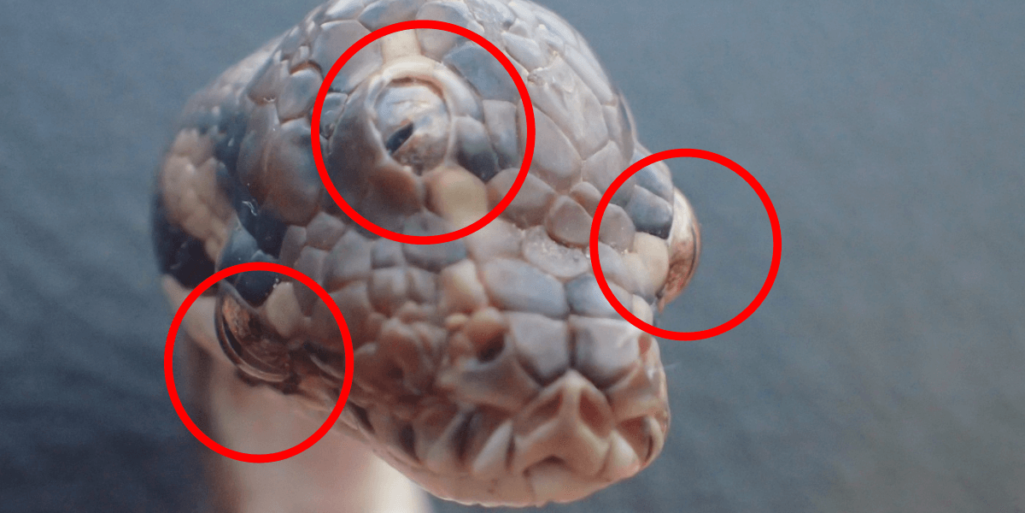
Wild reports of three-eyed aquatic organisms are not entirely fabricated. Anglers periodically pull bizarre specimens from Canadian lakes, Argentine reservoirs, and coastal estuaries. Yet the gap between a genuine congenital defect and a radioactive mutation is vast. What online commentary presents as proof of nuclear contamination is almost always a failure of embryological cell division or a misunderstanding of primitive vertebrate anatomy.
📌 Key Takeaways:
- The Viral Trigger: The viral surge linking three-eyed fish to treated water releases relied on deliberate satire from 1990, not verified ecological field data.
- The Biological Cause: Verified occurrences of three-eyed vertebrates represent embryonic developmental anomalies such as diprosopus or incomplete twinning, not radiation-induced gene lines.
- The Evolutionary Relic: Some primitive fish and reptiles naturally possess a third, photosensitive "parietal eye," which non-scientists frequently mistake for an unnatural deformity.
How Blinky Became a Modern Disinformation Weapon
Matt Groening conceived Blinky for season two of The Simpsons as a visual joke about Montgomery Burns' reckless disregard for the environment around Springfield. Decades later, that same cartoon image operates as visual shorthand for anti-nuclear campaigns. When international inspectors from the International Atomic Energy Agency (IAEA) verified that the ALPS (Advanced Liquid Processing System) discharge met global safety thresholds with tritium levels under 1,500 becquerels per liter, algorithmic engagement rewarded spectacle over nuclear physics.
Satire converts into accepted fact when visual proof feels plausible. Digital platforms amplify images of malformed carp or bass out of context because grotesque morphology drives instant engagement. An angler in Córdoba, Argentina, caught a verified three-eyed wolf fish in 2011 near a cooling lake for a nuclear station, cementing the urban myth in Latin America. Years later, an Ontario catch provoked similar headlines. Online communities rarely trace these discoveries to peer-reviewed ichthyology journals, preferring the simpler narrative of radioactive waters spawning science-fiction horrors.
The Embryology Behind Polyophthalmia and Craniofacial Duplication
True three-eyed fish do exist, but their origins lie in developmental biology rather than nuclear fallouts. The condition is generally categorized under diprosopus, a severe form of craniofacial duplication. During the blastula stage of embryonic development, the embryonic axis fails to separate cleanly. Instead of dividing into symmetrical twin embryos, the primitive streak undergoes partial duplication.
This incomplete fission can lead to polyophthalmia, the presence of three or four ocular structures on a single head. Sonic hedgehog (Shh) signaling proteins govern midline facial formation in developing teleosts. If chemical disruptions, extreme temperature shifts, or baseline genetic mutations throw this protein pathway off balance, the optic fields fail to separate correctly. The result is either cyclopia (a single fused eye) or an ectopic third eye wedged between normal ocular orbits. These congenital malformations appear spontaneously at a baseline frequency across all vertebrate populations, from wild salmonids to domestic livestock.
The Parietal Eye: Nature's Real Third Ocular Structure
What anglers occasionally report as a terrifying mutation is often an encounter with normal, archaic vertebrate biology. Certain fish, amphibians, and reptiles possess a functional parietal eye, often called the pineal eye. This structure sits atop the skull, complete with a rudimentary lens, cornea, and cellular retina linked to the pineal complex.
Lampreys, an ancient lineage of jawless aquatic vertebrates, display pronounced pineal and parapineal organs on the dorsal midline of their heads. In juvenile stages of several teleost fish species, a translucent "pineal window" sits directly above the brain, regulating circadian rhythms and seasonal migration by sensing changes in surface sunlight. When recreational fishermen catch deep-water species or primitive fish with prominent dorsal sensory pits, they frequently misinterpret normal anatomy as a radioactive deformity. The organ is not an extra eye designed for vision; it is a photoreceptive instrument that has existed for hundreds of millions of years.

Radiation Myths Versus Marine Reality: What the Data Shows
Ionizing radiation does cause biological damage, but its effects in wild ecosystems look nothing like monster movies. High doses of radiation destroy cellular machinery, cause double-strand DNA breaks, and induce necrosis. If a developing fish embryo absorbs severe radiation, the most likely outcome is developmental arrest: the egg simply dies before hatching.
Decades of marine radioecology reveal that low-level chronic exposure yields elevated chromosome aberrations, reduced fertility, or micro-scale tissue lesions. It does not systematically orchestrate the neat, symmetrical assembly of a functioning third eye, an adaptation that requires coordinated gene expression across thousands of neural, muscular, and vascular pathways.
| Phenomenon | Biological Mechanism | Occurrence Rate | Documented Cause |
|---|---|---|---|
| Craniofacial Duplication (Diprosopus) | Incomplete embryonic splitting; ectopic midline tissue formation | Extremely rare ( | Random genetic error, thermal shock, hypoxemic embryonic stress |
| Parietal/Pineal Eye Expression | Ancestral dorsal neuroanatomy; circadian endocrine regulation | 100% in targeted primitive lineages (e.g., lampreys, tuataras) | Normal evolutionary conservation |
| Chemical Teratogenesis | Disruption of morphogenetic gradients during organogenesis | Localized clusters (1%, 5% in contaminated drainages) | Heavy metals (cadmium, selenium), pesticides, dioxins |
| Ionizing Radiation Damage | Double-strand DNA cleavage; cellular apoptosis; genomic instability | Rare outside extreme containment failures | Severe unshielded nuclear contamination (Chernobyl core zone) |
Why Aquatic Mutations Rarely Reach the Dinner Plate
Social media feeds frequently circulate photos of monstrous fish landed by commercial trawlers or sport anglers. Yet in real marine ecosystems, natural selection operates ruthlessly on developmental flaws. Fish hatch by the hundreds of thousands precisely because embryonic mortality runs so high.
A fry with craniofacial duplication, an unaligned optic nerve, or polyophthalmia rarely survives past its first week of life. Teleost hunting and escape behavior require precise stereoscopic vision and rapid lateral-line response. A fish born with a third eye generally suffers from accompanying neurological disorientation, spinal lordosis, or impaired jaw mechanics. Predatory pike, perch, or seabirds eliminate these individuals long before they reach reproductive age or market size. The occasional adult fish pulled from the water with an extra eye represents a vanishingly rare biological anomaly, not a burgeoning mutant population.
Environmental Toxicity Versus Genetics in Wild Fish Populations
When localized spikes in fish malformations do happen, environmental toxicologists look toward agricultural chemicals and industrial runoff, not nuclear power plants. Heavy metals like selenium and mercury interfere with cellular protein folding during early embryogenesis. In high concentrations, selenium runoff from coal ash ponds or agricultural irrigation produces severe teratogenic defects, including curved spines, missing fins, and facial deformities.
Water temperature fluctuations also trigger developmental chaos. Aquaculture hatcheries monitor water temperatures meticulously because shifts of just two to three degrees Celsius during initial egg incubation produce high rates of skeletal and ocular defects. Attributing every strange catch to nuclear fallout ignores the everyday pollutants and physical stressors that degrade global river basins and coastal waters daily.
Frequently Asked Questions (FAQ)
Q1: Have fishermen ever verified a real three-eyed fish outside of cartoons?
A1: Yes, documented catches exist in Canada, Argentina, and parts of the United States. In each studied case, university biologists confirmed the fish had diprosopus (incomplete craniofacial duplication), a rare embryonic splitting anomaly that happens across all vertebrate species.
Q2: Can radiation from the Fukushima treated water release cause fish to grow third eyes?
A2: No. The ALPS-treated water released by TEPCO is heavily filtered to remove 62 radionuclides and diluted to safe tritium thresholds verified by the IAEA. Radiation damage halts cell division or kills embryos outright; it does not trigger the complex genetic coordination required to assemble extra eyes.
Q3: How can someone tell a mutant eye from a natural parietal eye?
A3: A natural parietal eye is located along the exact dorsal midline of the skull, flush with the bone and covered by a translucent scale or skin layer, common in lampreys and certain lizards. A malformed eye from diprosopus is typically an irregular, ectopic ocular structure jutting out near the primary eye sockets or forehead.
Navigating Aquatic Science in an Age of Viral Memes
Memes offer simplicity where ecology presents nuance. A single image of an orange three-eyed fish encapsulates complex political, environmental, and international trade anxieties in an instant. Yet treating television satire as marine toxicology distorts public understanding of our oceans.
Real threats to marine life, ocean acidification, industrial chemical spills, microplastics, and habitat destruction, rarely produce neat cartoon mutations. They manifest as quiet population collapses, reduced reproductive fitness, and toxic bioaccumulation. Understanding the true mechanisms of craniofacial duplication strips viral folklore of its power, allowing public attention to focus on empirical marine science rather than recycled television jokes.
