Don't Cut It Off: The Dangerous Mistakes Worsening Toenail Granulation Tissue

That angry, throbbing red bump spilling over the side of your big toenail is not an ordinary callus or a pimple you can squeeze away. It is hypergranulation tissue, a fragile mass of proliferating capillaries and inflammatory cells generated by your body in a desperate, misdirected attempt to heal a chronic wound. When an ingrown nail pierces the lateral nail fold, the mechanical irritation acts like a buried dagger. Countless sufferers reach for nail clippers, razor blades, or tweezers in a panicked bid for bathroom surgery, only to unleash excruciating pain, intense bleeding, and dangerous systemic infections.
As documented in the foundational clinical guidance from the aafp.org Report authored by Dr. Thomas J. Zuber, onychocryptosis frequently escalates through distinct stages when mechanical trauma goes unchecked. Attempting to slice off this vascular mound at home does nothing to eliminate the underlying spike of nail plate driving the inflammation. Resolving the crisis requires addressing the root mechanical friction, halting bacterial colonization, and applying targeted conservative maneuvers or definitive in-office podiatric interventions.
📌 Quick Summary:
- The Real Hazard: Slicing, clipping, or popping toenail granulation tissue destroys delicate healing pathways and rapidly triggers secondary bacterial infections.
- Underlying Mechanism: The red overgrowth stems from a foreign body reaction driven by sharp nail spurs, hyperhidrosis, and excessive pressure from narrow footwear.
- Proven Solutions: Clinically proven relief relies on non-invasive splinting, corrective taping, silver nitrate cauterization, or partial nail avulsion paired with chemical matrixectomy.
The Biological Trigger Behind That Painful Red Overgrowth
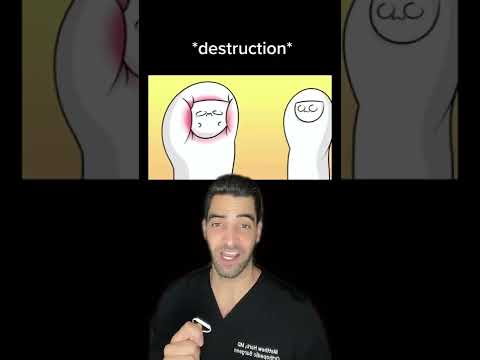
Ingrown toenail granulation tissue forms when the lateral edge of the nail plate penetrates the adjacent perionychium. The skin treats the hard keratin edge as a foreign body. Blood vessels multiply rapidly to flood the breach with repair cells, but the constant sawing motion of the nail prevents true epithelialization. The resulting mound, clinically similar to a pyogenic granuloma on the toe, consists of delicate, highly vascular tissue that bleeds at the slightest contact.
The condition progresses through three distinct clinical stages:
Stage one involves localized erythema, mild swelling, and tenderness when applying direct pressure to the nail groove. Stage two manifests with acute drainage, localized seropurulent discharge, and active skin breakdown along the side wall. By stage three, chronic inflammatory granulation tissue overtakes the lateral nail fold, partially encasing the nail plate and hardening into hypertrophic ridges that resist standard wound dressings.
Excess moisture compounds this vulnerability. Hyperhidrosis foot care represents a critical clinical factor because constant sweat macerates the surrounding epidermis, lowering the threshold for sharp nail corners to pierce the sulcus. Once the physical barrier collapses, bacteria like Staphylococcus aureus colonize the tissue bed, transforming a simple structural issue into an escalating medical problem.
The Severe Risks of At-Home Bathroom Surgery
Grabbing bathroom clippers or sterilized pins to cut away protruding tissue creates catastrophic tissue damage. Because granulation tissue lacks a protective stratum corneum layer, non-sterile cutting tools introduce aggressive pathogens directly into an open, hyper-vascular vascular bed. A minor local swelling can rapidly deteriorate into ascending cellulitis, paronychia, or deep osteomyelitis of the distal phalanx.
Online forums like Reddit's r/popping and foot health communities frequently feature horror stories of people cutting off granulation tissue in their bathrooms, only to report unbearable blood loss and next-day emergency room visits. The bleeding is extraordinarily difficult to control with regular bandages because the vessel walls inside reactive tissue lack the smooth muscle architecture needed to constrict properly.
Slicing away the bump leaves the offending nail barb intact beneath the sulcus. The remaining nail fragment continues to burrow deeper into the freshly traumatized dermis. The body responds by rebuilding even more exuberant granulation tissue within 48 to 72 hours, compounding the patient's pain while inflating eventual treatment costs.
Clinical Care Pathways: From Conservative Soaks to Minor Surgery
Podiatrists evaluate onychocryptosis according to tissue severity, infection markers, and vascular viability. Minor lateral fold swelling can respond to conservative at-home splinting, but persistent hypergranulation requires clinical-grade cautery or minor surgical correction.
| Severity Stage | Observable Symptoms | Primary Clinical Approach | Typical Recurrence Rate |
|---|---|---|---|
| Stage 1 (Mild) | Erythema, minor edema, localized pressure pain | Warm Epsom salt soak, elastic taping, wide shoes | 30%, 45% if nail habits continue |
| Stage 2 (Moderate) | Purulent drainage, acute inflammation, initial tissue growth | Topical steroid ointment, silver nitrate, cotton packing | 20%, 35% without permanent resection |
| Stage 3 (Severe) | Extensive granulation tissue, structural deformity, infection risk | Partial nail avulsion with chemical matrixectomy | Less than 5%, 8% post-phenolization |
Conservative Treatments and Taping Strategies That Actually Help
If the toe displays mild to moderate irritation without red streaking, systemic fever, or spreading heat, conservative management can relieve lateral pressure. The goal is to physically separate the sharp nail margin from the inflamed skin fold without cutting.
The podiatric taping method remains one of the safest home interventions. Use strong, flexible medical tape or kinesiology tape cut into a strip roughly 2 inches long. Anchor one edge of the tape directly against the inflamed lateral nail fold, pulling the swollen skin down and away from the nail edge. Wrap the remaining tape diagonally around the bottom of the toe to anchor it securely. This physical retraction creates immediate breathing room in the sulcus, reducing mechanical irritation and allowing inflammation to subside.
A warm Epsom salt soak, performed for 15 minutes twice daily, softens hyperkeratotic skin and clears dried serous crusts. Pat the toe completely dry using a clean paper towel. If prescribed by a physician, applying a medium-potency topical steroid ointment directly to the non-infected granulation tissue suppresses capillary hyper-proliferation and shrinks the mass within days. Never apply topical steroids if active, cloudy bacterial pus is discharging without an accompanying antibacterial protocol.
In-Office Podiatric Solutions: Cautery and Permanent Matrixectomy
When conservative measures fail to shrink the overgrowth within a week, professional podiatrist treatment options provide definitive relief. Patients often dread these appointments, expecting agonizing procedures, yet clinical solutions are fast, virtually painless under local anesthesia, and permanently curative.
For moderate outgrowths, a clinician will apply silver nitrate cauterization directly to the granulating nodule. Silver nitrate chemical sticks burn away the excess tissue through chemical coagulation, sealing leaking capillary beds and shrinking the lesion into an inactive black scab within seconds. The procedure causes minimal discomfort and requires zero downtime.
If the nail border curves severely inward or recurs continuously, the gold standard procedure is partial nail avulsion combined with chemical nail matrixectomy. After a digital block numbs the entire digit with 1% to 2% lidocaine, the podiatrist vertically resects a small 2 to 3 millimeter sliver of the offending nail border down to the germinal matrix. The doctor then applies an 80% to 88% phenol solution or uses radiofrequency electrocautery to permanently ablate that narrow section of the nail root. The rest of the toenail stays intact, the cosmetic appearance remains natural, and recurrence rates drop below 5%.
Preventing Reoccurrence: Nail Trimming and Footwear Corrections
Granulation tissue almost never happens by accident. The vast majority of cases trace back directly to improper toenail trimming. Cutting nails into rounded, half-moon curves or digging deep into the side corners leaves behind a ragged nail spike. As the nail plate advances forward, that hidden spike acts like a chisel, puncturing the lateral sulcus wall.
Always trim toenails straight across using clean, heavy-duty straight-edge clippers, leaving the corners visible above the flesh of the lateral fold. Gently smooth sharp corners with an emery board rather than snipping them off diagonally.
Ill-fitting shoes pressure plays an equally damaging role. Pointed dress shoes, narrow athletic cleats, and unyielding work boots compress the lateral digits, forcing the lateral skin fold directly against the hard nail margin with every step. Ensure footwear features a wide toe box with roughly a thumb's width of space between your longest toe and the tip of the shoe. For athletes and workers contending with hyperhidrosis, switching to moisture-wicking merino wool or synthetic socks maintains a dry skin barrier that resists breakdown under friction.
Frequently Asked Questions (FAQ)
Q1: Can toenail granulation tissue go away on its own without treatment?
A1: Unlikely. As long as the physical nail edge continues to rub against the raw dermal tissue inside the sulcus, the foreign body reaction will persist. The tissue will remain hyper-vascular, prone to bleeding, and highly susceptible to secondary bacterial infection until the mechanical friction is resolved through taping, splinting, or surgical trimming.
Q2: How much does partial nail avulsion and matrixectomy cost?
A2: In the United States, an in-office partial nail avulsion with matrixectomy typically ranges from $250 to $650 per toe without insurance. Most commercial insurance plans, Medicare, and HSA/FSA accounts cover the procedure when diagnosed as symptomatic onychocryptosis with hypergranulation.
Q3: Is it safe to apply hydrogen peroxide or rubbing alcohol to granulation tissue?
A3: No. Harsh antiseptics like hydrogen peroxide and isopropyl alcohol destroy healthy epithelial cells and fibroblasts, worsening tissue necrosis and prolonging recovery. Stick to mild soap, sterile saline washes, or warm Epsom salt soaks, followed by an antibiotic or prescribed barrier ointment.
Clinical Realities and Safe Recovery
Hypergranulation tissue is not a cosmetic inconvenience to be snipped away with nail clippers. It is an active vascular alarm system signaling ongoing trauma deep inside the lateral nail border. Taking sharp tools to your own toes trades a manageable local irritation for the imminent threat of deep-space foot infections, cellulitis, and prolonged medical leave.
If home taping and structured salt soaks fail to produce measurable relief within five to seven days, put down the scissors and schedule an evaluation with a licensed podiatrist. A ten-minute in-office procedure can permanently eliminate the offending nail corner, remove the hyperactive tissue safely, and restore your foot to painless, dependable health.
