Everything to Know About 'Asu e no Tobira': Lyrics, Meanings, and Legacy Explained
When the pink van of Fuji TV’s reality series Ainori rolled across television screens in the early 2000s, it carried a generation’s romantic hopes on an acoustic melody that became inescapable across Japan. Written and performed by the duo I WiSH, comprising vocalist Ai Kawashima (credited then simply as "ai") and composer-keyboardist nao, the 2003 single "Asu e no Tobira" (明日への扉, or "Door to Tomorrow") remains one of the definitive milestones of modern Japanese love ballads. Renewed archival interest and recent catalog updates, highlighted by an official YouTube Report featuring a 2026 remaster, have thrust this millennial classic back into global streaming playlists.
The song represents far more than nostalgic TV merchandise. It marks a bridge between grassroots street performance and top-tier studio craftsmanship, holding a rare dual life alongside its tear-jerking graduation twin, "Tabidachi no Hi ni...". Whether discovered through retro television broadcasts, algorithmic recommendations, or viral stripped-back performances, the track continues to hook new listeners worldwide.
📌 Key Takeaways:
- The Television Spark: Premiering as the weekly theme for Fuji TV's hit travel-romance variety show Ainori, the single sold over 900,000 physical copies and spent two non-consecutive weeks at #1 on the Oricon charts in 2003.
- The Melody's Dual Identity: The melody originally belonged to Kawashima's graduation anthem "Tabidachi no Hi ni...", which was rewritten with upbeat romantic lyrics to serve as I WiSH's commercial debut.
- Modern Renaissance: A stripped-down performance on THE FIRST TAKE and subsequent digital streaming releases expanded the song's footprint well beyond its original Japanese millennial audience.
The Late-Night Television Hit That Defined 2000s J-Pop
To understand the cultural weight of "Asu e no Tobira," one must revisit Japanese network television at the turn of the millennium. Launched in October 1999, Ainori followed seven young Japanese men and women traveling the globe in a distinctive pink minibus, looking for romantic connections. When participants confessed their feelings, they handed their crush a one-way return ticket to Japan. If accepted, they kissed and flew home together; if rejected, the confessor left the bus alone.
The show pulled massive viewer ratings among teenagers and twenty-somethings, routinely exceeding 20% market share in late-night broadcast slots. By late 2002, producers needed a new theme song that encapsulated both the fragility and the exhilaration of spontaneous travel confessions. They turned to an anonymous street busker.
Before her commercial breakthrough, Ai Kawashima stood on the cold sidewalks outside Shibuya Station in Tokyo. She had set a daunting personal target: perform 1,000 street concerts and sell 100,000 self-produced CD-Rs to fund her path to a major solo showcase at the Shibuya Public Hall. Producer and keyboardist nao recognized her pure, vibrato-light vocal quality. Together, they formed I WiSH, keeping Kawashima’s face and identity obscured during the single's initial release so her burgeoning solo street campaign would not be compromised.
Released on February 14, 2003, "Asu e no Tobira" caught fire immediately. The combination of reality-TV emotional climaxes and Kawashima's transparent voice turned the track into an unstoppable hit. The single held steady across the Oricon Top 10 for months, finishing as the second best-selling single of 2003 in Japan.
Deconstructing the Lyrics and Signature Chord Progression
Musically, "Asu e no Tobira" is a clinic in classic Japanese pop songcraft. Built primarily around the classic Japanese "Royal Road" progression (王道進行, or Oudo Shinkou: IV, V, iii, vi), the song moves through a chord sequence that balances wistfulness with an infectious forward drive. In the key of C major, the verse and chorus utilize familiar cadences (F, G, Em, Am), allowing the melody to float naturally without sounding overly dramatic or weighed down.
Keyboardist nao anchored the track with an upbeat piano hook, bright synth pads, and a shuffle-beat rhythm that mirrors a train gliding along a track. The bridge provides an emotional lift, modulating subtly before plunging back into a cathartic final chorus punctuated by gentle strings and layered backing vocals.
Lyrically, the song shuns dramatic hyperbole in favor of quiet, observable human details. Kawashima’s lyrics explore the awkward, electric transition from solitary youth to shared intimacy:
"Hikaru kaze no naka kikoete kuru kimi no koe..." ("Your voice carried across the shining wind...")
Lines like these ground the listener in a specific sensory memory. The chorus captures the universal anxiety of opening oneself up to someone new, asking to hold hands not merely for physical closeness, but to discover the courage to walk forward together. It avoids toxic possessiveness, presenting love instead as mutual reassurance.
The Parallel Life of 'Tabidachi no Hi ni'
One of the most unusual elements of "Asu e no Tobira" is its secret origin story. It is not an entirely original composition created for commercial television. Instead, it is an alternate version of a school graduation song.
During her early street-busking days, Kawashima wrote "Tabidachi no Hi ni..." (旅立ちの日に…, "On the Day of Departure...") to comfort peers graduating from middle and high school. The melody, which Kawashima composed on a modest electronic keyboard while processing personal loss and transition, carried a somber, reflective atmosphere. When industry scouts approached her to compose for Ainori, nao recognized that the melody possessed an undeniable hook, but the melancholy graduation lyrics were completely mismatched with an international road-trip romance.
Kawashima rewrote the verses entirely, speeding up the tempo, shifting the key, and replacing images of empty classrooms and chalkboards with sunny streets and shared futures. While "Asu e no Tobira" became a chart-topping pop smash in 2003, Kawashima later recorded and released the original "Tabidachi no Hi ni..." under her own name in February 2006.
Today, Japanese schools regularly perform "Tabidachi no Hi ni..." during March graduation ceremonies, while wedding planners favor "Asu e no Tobira" for spring ceremonies. A single musical melody successfully anchors two entirely different life transitions across Japanese society.

Two Decades of Cultural Impact
The song has evolved across several distinct release eras, spanning physical CD singles to modern digital streaming and theatrical stages.
| Release / Project | Primary Artists | Release Era | Key Achievement / Context |
|---|---|---|---|
| Asu e no Tobira (Original Single) | I WiSH (ai & nao) | 2003 | Oricon #1; 900,000+ copies sold; theme song for Fuji TV's Ainori. |
| Tabidachi no Hi ni... (Solo Version) | Ai Kawashima | 2006 | Reclaimed original graduation lyrics; became a nationwide school choir staple. |
| THE FIRST TAKE Studio Session | Ai Kawashima | 2024, 2025 | Acoustic live recording; digitally distributed on streaming platforms in May 2025. |
| Asu e no Tobira Musical Production | Jikei Gakuen COM Group | 1993, 2026 | Long-running public-interest musical raising bone marrow registry awareness. |
How THE FIRST TAKE and Digital Remasters Revived the Song
Rather than fading into the bins of retired CD rental shops, the song enjoyed a major revival when Ai Kawashima appeared on the popular YouTube channel THE FIRST TAKE. Stripping away the early-2000s commercial production, Kawashima stood alone in front of a condenser microphone with minimal piano accompaniment.
The raw performance showcased how well the composition withstands scrutiny. Kawashima’s voice, deepened slightly with maturity but retaining its crystal-clear tone, resonated with both nostalgic millennials and younger listeners who had never watched a single episode of Ainori. Following widespread social media engagement, the audio was officially released to worldwide digital streaming platforms on May 7, 2025, instantly climbing back into regional viral charts.
Modern streaming services have introduced the track to overseas anime and J-pop fans who recognize the song from cover albums and internet karaoke trends. Remastered releases in 2026 continue to log hundreds of thousands of monthly spins, proving that genuine vocal sincerity easily outlives production trends.
Clarifying the 'Asu e no Tobira' Musical Connection
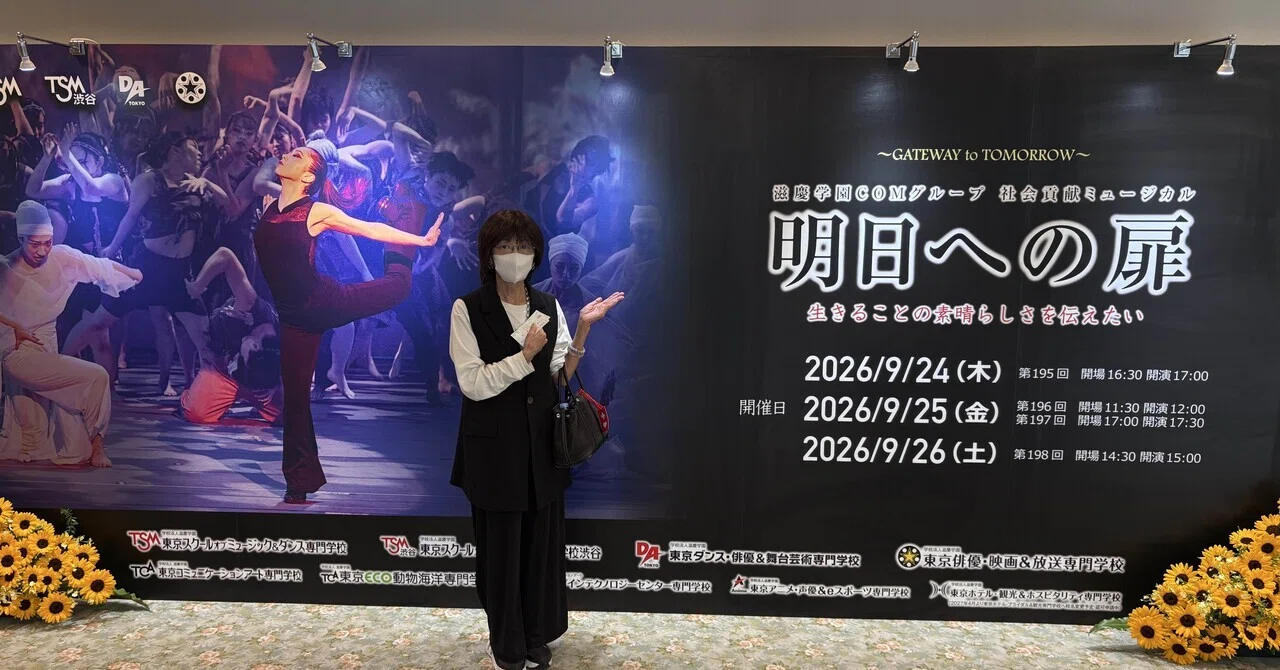
Search queries for "明日への扉" often introduce an unexpected point of confusion for international researchers: a high-profile Japanese stage production sharing the exact same title. It is important to distinguish the pop single from the stage musical.
The stage musical Asu e no Tobira is an enduring, non-commercial production run by students of the Jikei Gakuen COM Group vocational education network. Running continuously for more than 33 years, this stage play tells the story of young people confronting leukemia and exists to raise public awareness for the Japan Marrow Donor Program.
While the I WiSH pop single and the Jikei Gakuen stage show share the identical title, "Door to Tomorrow", they are independent cultural works. However, both tap into a parallel emotional thread in modern Japanese culture: using youthful vulnerability to confront uncertain futures with optimism.
Frequently Asked Questions (FAQ)
Q1: Why are there two different songs with the same melody by Ai Kawashima?
A1: Kawashima originally composed the melody for a graduation track titled "Tabidachi no Hi ni...". When selected to write the opening theme for Ainori under the duo name I WiSH, she overhauled the lyrics into an upbeat love confession called "Asu e no Tobira". Both songs share the identical musical skeleton but feature different tempos, lyrical themes, and arrangements.
Q2: Who were the members of I WiSH?
A2: I WiSH was a Japanese pop duo formed in 2002 consisting of female vocalist ai (Ai Kawashima) and male pianist/producer nao (Nao Sugawara). The duo formally disbanded in 2005 so Kawashima could focus fully on her solo career, though they occasionally reunite for special anniversary performances.
Q3: Where can international audiences stream "Asu e no Tobira" today?
A3: The original 2003 I WiSH studio track is available worldwide on Spotify, Apple Music, and YouTube Music. In addition, Kawashima's live acoustic performance recorded for THE FIRST TAKE was released for digital streaming in May 2025, alongside various remastered audio releases.
Why This Millennial Anthem Continues to Endure
Pop songs tied to television shows often evaporate as soon as broadcast schedules change. "Asu e no Tobira" avoided that fate by staying modest. It did not rely on flashy electronic production or ironic lyrical detachment. It relied instead on nao's clean, classical chord logic and Kawashima's straightforward delivery.
More than two decades after its mid-winter release, the song remains a staple of Japanese karaoke rooms, wedding ceremonies, and cross-generational playlists. It reminds listeners that entering unfamiliar territory, whether confessing feelings on a dusty road abroad, leaving school, or stepping toward an unmapped tomorrow, simply requires opening the door.
