Fact Check: Can Asaichi's Quick Muscle Workout Really Reverse Age-Related Muscle Loss?

Morning television in Japan has long influenced domestic wellness habits, but few segments command the dedicated viewership of NHK's Asaichi (あさイチ) fitness segments. For millions of viewers confronting age-related muscle loss, the program presents a comforting premise: a brief sequence of accessible, joint-friendly home workouts can preserve independent mobility without gym memberships or heavy barbells. Linguistic and media archives documenting morning broadcast scripts, such as entries preserved in the Wikipedia (en) Report on broadcast terminology, illustrate how Japanese public media routinely converts complex clinical instructions into digestible everyday language. The central medical question remains unanswered on screen: can five to ten minutes of low-impact resistance training genuinely arrest sarcopenia, or does it merely provide a false sense of physiological security?
📌 Key Takeaways:
- Clinical Reality: While the NHK Asaichi morning workout improves neuromuscular activation and joint mobility, halting advanced sarcopenia requires significantly higher mechanical tension than light bodyweight drills generate alone.
- The Stimulus Gap: Low-impact resistance training stimulates brief muscle protein synthesis in deconditioned seniors, yet progressive overload remains indispensable for long-term hypertrophy.
- Everyday Application: Pairing the broadcast's bodyweight squats and daily mobility exercises with intentional dietary protein and progressive resistance creates an effective preventive defense against frailty.
How Morning Television Turned Functional Fitness into a National Habit
Japan faces the world's most accelerated demographic transition, with citizens aged 65 and older accounting for nearly 30% of the total population. Against this backdrop, public broadcaster NHK designed Asaichi as a morning magazine show aimed predominantly at home-based adults and retirees. Its exercise segments, widely searched online under "あさ いち 筋 トレ" (Asaichi muscle training), target the anxiety surrounding bedridden aging.
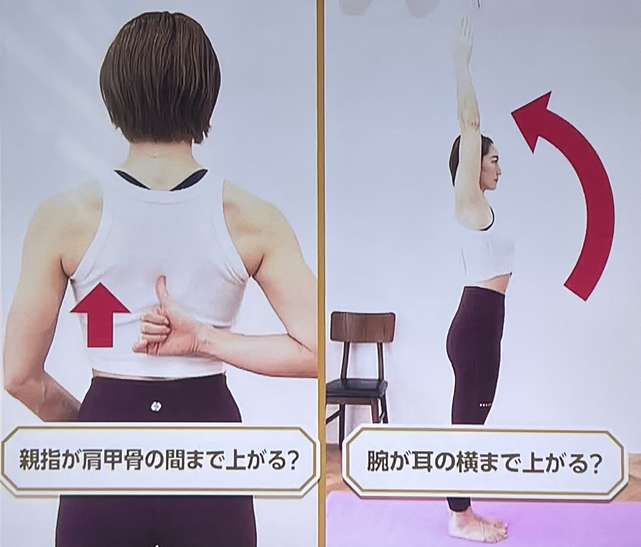
The program strips away athletic intimidation. Viewers encounter trainers demonstrating bodyweight squats against kitchen counters, seated leg extensions, and gentle core stability training. Sets rarely exceed two minutes per muscle group. The sessions demand zero specialized equipment. Production teams frame each movement around functional fitness routines: standing up from a low tatami mat, climbing train station stairs, or carrying heavy grocery bags. By framing resistance work as self-care rather than athletic toil, Asaichi made morning strength training acceptable to demographics that historically avoided physical conditioning.
The Physiology of Sarcopenia Prevention Versus Gentle Morning Drills
Sarcopenia is not standard muscle fatigue. It is the systemic, involuntary loss of skeletal muscle mass, architecture, and neuromuscular function, accelerating at an estimated rate of 1% to 2% annually after age 50. Type II fast-twitch muscle fibers, which govern power and slip-and-fall prevention, bear the brunt of this decay.
Preventing sarcopenia requires triggering muscle protein synthesis through sufficient mechanical tension. In untrained elderly individuals, even modest bodyweight resistance initiates signaling cascades via the mTOR pathway. Performing chair squats or calf raises delivers an immediate morning metabolic boost, clearing glucose from the bloodstream and improving balance.
The limitation lies in adaptation thresholds. Muscle tissue adapts rapidly to static demands. Once a senior viewer masters ten repetitions of an unweighted squat, the stimulus ceases to generate adequate cellular micro-tears or motor unit recruitment. For sarcopenia prevention, gentle calisthenics function as an entry ramp, not the destination. Without progressive loading, muscle protein synthesis returns to baseline within hours, leaving deeper muscular atrophy largely unchecked.
Evaluating Morning Protocols Against Medical Standards
Exercise scientists categorize resistance interventions across distinct thresholds of volume, intensity, and progressive load. Comparing public broadcast routines with geriatric clinical guidelines clarifies the boundaries of broadcast fitness.
| Protocol Metric | Asaichi Morning Routine | Clinical Geriatric Protocol | Progressive Resistance Model |
|---|---|---|---|
| Daily Time Commitment | 5, 10 minutes | 20, 30 minutes | 45, 60 minutes |
| Load Intensity (% 1RM) | 20%, 35% (Bodyweight only) | 50%, 65% (Bands / light weight) | 65%, 80% (Barbells / machines) |
| Primary Physiological Adaptation | Neuromotor mobility & blood flow | Arrest of fast-twitch muscle atrophy | Definitive myofibrillar hypertrophy |
| Weekly Frequency | 5, 7 days per week | 3 days per week | 2, 4 days per week |
| Adherence Rate Over 12 Months | High (60%, 75%) | Moderate (40%, 55%) | Low (20%, 35%) |
Examining Trainer Claims Against Biomechanical Reality
Guest fitness professionals on morning television often promote joint-friendly home workouts as comprehensive strength solutions. They assert that five minutes of controlled movement can preserve lower-body power throughout retirement. Biomechanics paints a more nuanced picture.
When an individual performs a shallow squat without extra load, the joint forces on the knees and hips remain minimal. This safety feature makes the movement appropriate for arthritic populations. However, the gluteal muscles and quadriceps experience minimal structural challenge once basic balance stabilizes. The mechanical work falls short of recruiting high-threshold motor units.
Strength gains documented in novice participants during their first eight weeks of television-guided workouts stem primarily from neural adaptation. The brain learns to fire existing motor units more synchronously. True muscle tissue growth requires muscular fatigue within a targeted repetition range, typically reaching momentary mechanical failure. A routine that stops well short of exertion provides joint lubricating benefits and daily mobility exercises, but it cannot be classified as an aggressive countermeasure against severe sarcopenia.
Matching Movement Prescriptions to Physical Frailty Baselines
Determining whether the Asaichi style workout works depends entirely on the physical baseline of the participant.
For a frail 78-year-old who spends the majority of daytime hours seated, the broadcast is undeniably valuable. Daily wall sits, calf pumps, and core stabilization restore proprioception and enhance balance. In this group, low-intensity training produces measurable drops in fall incidence and improves sit-to-stand speed. The routine succeeds here because the distance between complete inactivity and low-intensity movement is physiologically enormous.
For an active 60-year-old who walks daily and seeks to maintain functional independence into their nineties, the calculus changes. The broadcast is insufficient on its own. Preserving lean skeletal muscle at this stage requires resistance bands, adjustable dumbbells, or progressive bodyweight calisthenics that demand effort near muscular failure. Relying solely on low-impact morning routines creates an illusion of complete physical preparation while type II muscle fibers slowly diminish in the background.
Public Health Impact and the Scaling of Preventative Geriatric Care
Public health institutions recognize that the ideal clinical protocol is useless if no one performs it. Supervised gym regimens boasting heavy loads yield superior muscle cross-sectional area, yet senior dropout rates in conventional facilities exceed 60% within six months. Transportation friction, gym intimidation, and injury fears remain formidable hurdles.
NHK's broadcast model bypasses these behavioral hurdles entirely. By embedding senior strength exercises inside morning television, public broadcasting creates behavioral consistency. Viewers link physical movement to their morning tea or daily news viewing.
Public health researchers increasingly treat these televised routines as functional scaffolding. They provide baseline motor coordination and joint health, establishing a psychological safety zone. The ongoing challenge for medical professionals is encouraging viewers to view television fitness not as the final ceiling of physical training, but as the starting foundation for progressive, lifelong loading.
Frequently Asked Questions (FAQ)
Q1: Can bodyweight squats done during morning television build actual muscle in older adults?
A1: Bodyweight squats build measurable muscle mass in sedentary individuals during the first six to eight weeks of regular training. After that initial period, the body adapts, and muscle protein synthesis plateaus unless you add extra resistance, increase repetitions close to fatigue, or slow the eccentric tempo.
Q2: Is a five-minute workout enough to provide a morning metabolic boost?
A2: Yes, for immediate metabolic function. Five to ten minutes of calisthenics stimulates blood circulation, mobilizes synovial fluid in stiff joints, and enhances cellular glucose uptake for several hours. It does not, however, replace structured cardiovascular or heavy resistance sessions.
Q3: What should viewers add to televised routines to truly halt sarcopenia?
A3: Viewers should pair morning movements with progressive overload, such as using loop resistance bands or holding filled water bottles during squats, and consume 1.2 to 1.6 grams of protein per kilogram of body weight daily, distributed across meals to support muscle synthesis.
Rethinking Daily Resistance for an Aging Society in 2026
The morning workout popularized by Japanese television highlights an enduring tension in preventive medicine: balancing clinical efficacy against behavioral adherence. A rigorous, high-load training protocol achieves optimal sarcopenia reversal in clinical trials, yet millions of aging adults will never step foot inside a weight room. Television calisthenics solve the adherence problem by removing fear, complexity, and expense from resistance movement.
Recognizing the limits of morning television does not mean abandoning it. The Asaichi approach succeeds as a daily mobility exercise and neuromuscular warm-up. Its true power emerges when viewers treat it as an entry point into physical culture. By adding external resistance, challenging stability, and consuming sufficient dietary protein, aging adults can transform an accessible morning broadcast into a genuine shield against physical frailty.
