Fact-Checking Hibari Misora's Apple Legend: The True Origins Behind Her Hometown Classics
Fact-Checking Hibari Misora's Apple Legend: The True Origins Behind Her Hometown Classics
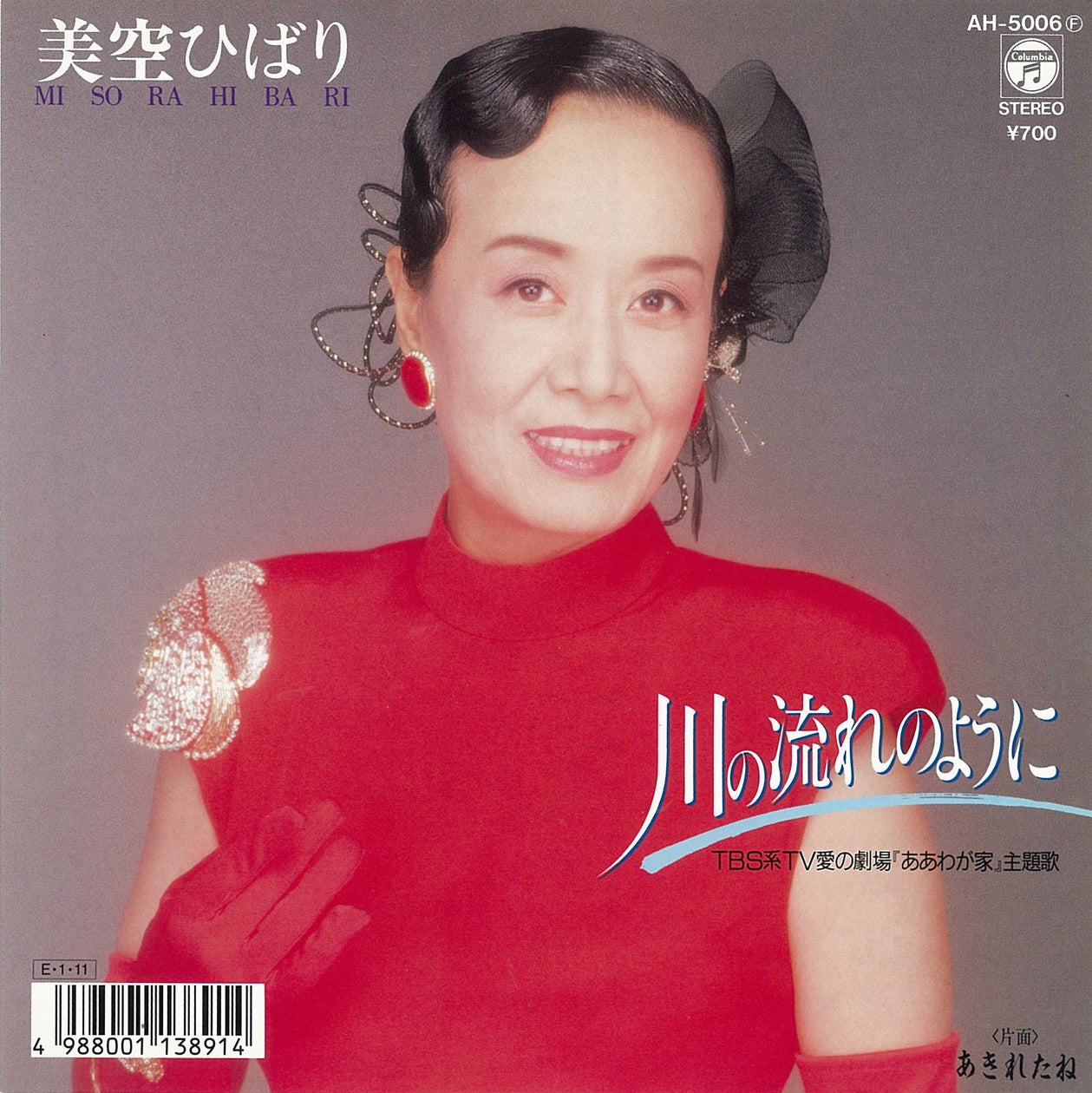
For decades, millions of listeners across Japan and the diaspora grew up believing that Hibari Misora, the undisputed queen of Showa era kayokyoku, carried the red soil and orchard winds of Aomori Prefecture in her blood. Her 1952 masterpiece "Ringo Oiwake" (Apple Packhorse Song) painted such an evocative portrait of northern orchards, drifting blossoms, and rural sorrow that it became the definitive anthem of Tsugaru apple country folklore. Even as her final masterwork "Kawa no Nagare no Yoni" earned the Silver Prize at the 2026 JASRAC Awards thirty-six years after its release, an unprecedented milestone tracked in the latest PR TIMES Report, audiences continue to conflate Misora's theatrical mythos with her real-life biography.
The reality tells an entirely different story of postwar Japanese pop culture. Misora was not a northern farm child singing traditional field laments. She was a precocious urban prodigy born in Yokohama, Kanagawa Prefecture, who turned a tightly scripted commercial radio project into an eternal national touchstone. As fresh archival treasures resurface alongside primetime television tributes marking her 89th birth anniversary on May 29, 2026, untangling Misora’s apple country legend reveals how postwar mass media turned commercial entertainment into enduring folk heritage.
📌 Key Takeaways:
- The Geographical Reality: Hibari Misora had no ancestral roots in northern Japan; she was born Kazue Kato in industrial Yokohama and forged her artistic identity in city performance halls.
- The Commercial Genesis: "Ringo Oiwake" did not originate as traditional folk music. It was commissioned for an NHK radio serial drama and a companion Shochiku studio film in 1952.
- The 2026 Resurgence: Unreleased recordings cut at age 18, high-profile primetime television revivals, and historic copyright distribution milestones demonstrate that her Showa catalog retains unmatched commercial power.
The Postwar Radio Drama That Built an Apple Dynasty
In the spring of 1952, Japan was navigating the end of the Allied occupation, struggling through industrial reconstruction, and desperately seeking domestic comfort. Nippon Columbia tapped 15-year-old singing prodigy Hibari Misora to headline a cross-media production that would define her early career. The project centered on Ringo-en no Shojo (The Apple Orchard Girl), a daily NHK radio drama written by Keisuke Ozawa. Misora played an orphaned girl enduring hardship amid northern apple orchards. Shochiku quickly adapted the drama into a feature film, demanding a title theme that could capture both rural innocence and profound melancholy.
Composer Masao Yoneyama took an unconventional approach. Instead of writing a standard Western-style pop melody, he infused the track with the melismatic vocal bends of oiwake, a traditional Japanese packhorse driver folk style, and paired it with Ozawa's lyrics describing drifting apple blossoms in Tsugaru. Misora's vocal performance was startling. At only fifteen, her mastery of microtonal pitch inflections (kobushi) conveyed centuries of northern stoicism. When Nippon Columbia pressed the single onto 78-rpm shellac discs, it shattered contemporary sales records, selling an estimated 700,000 copies within months and eventually surpassing 1.3 million copies in long-term catalog sales.
The record’s seismic popularity immediately blurred the line between fictional role and personal identity. Displaced rural workers laboring in Tokyo factories wept at her radio broadcasts. To a generation severed from their ancestral villages by war and rapid urbanization, Misora’s voice became the voice of home. The character she portrayed on screen became inseparable from the singer herself.
Urban Roots and Northern Folklore: Dissecting the Yokohama Origin
Despite the persistent myth that Misora hailed from Tohoku, Kazue Kato was born on May 29, 1937, in Isogo Ward, Yokohama. Her father was a local fishmonger, and her mother managed her early performance career with relentless discipline. Misora learned her trade not in rural community halls, but in smoky urban theaters, vaudeville circuits, and local neighborhood festivals in Kanagawa. She was exposed to boogie-woogie, American jazz played by occupying soldiers, and fast-paced Tokyo theater music.
Her vocal delivery on apple-themed hits was an act of extraordinary musical theater rather than hereditary folklore. When she sang the famous spoken-word monologue inside "Ringo Oiwake", whispering about the pale moon, the cold northern wind, and the drifting petals, she was executing a carefully crafted theatrical soliloquy. The Tsugaru apple farmers embraced the track precisely because Yoneyama’s composition and Ozawa’s words honored their regional identity without condescension. Misora did not need northern blood to capture northern sorrow; her urban stage training gave her the technical range to inhabit any corner of the Japanese emotional landscape.
Milestones of Misora’s Apple Catalog and Modern Discoveries
The journey from a 1952 postwar shellac single to modern digital distribution illustrates how Misora's catalog transformed from transient entertainment into permanent cultural infrastructure. The table below outlines key milestones across her apple-era milestones and contemporary archival discoveries.
| Timeframe | Production / Cultural Milestone | Commercial & Artistic Impact |
|---|---|---|
| May 1952 | Release of "Ringo Oiwake" via Nippon Columbia | Sells over 700,000 initial units; establishes nationwide apple mythology. |
| 1952, 1955 | Theatrical releases of Ringo-en no Shojo and follow-up films | Cements Misora as Shochiku's premier adolescent cinema draw. |
| 1988, 1989 | Tokyo Dome farewell concert & release of "Kawa no Nagare no Yoni" | Final creative triumph before her death on June 24, 1989. |
| May 15, 2026 | Nippon Columbia announces unreleased master "Futari Kiri de" | Pops master recorded at age 18 scheduled for worldwide streaming release. |
| May 20, 2026 | JASRAC Silver Prize awarded to "Kawa no Nagare no Yoni" | Achieves top royalty distributions 36 years after release, a first in Japanese history. |
| May 26, 2026 | NHK Uta Con primetime broadcast tribute | Enka powerhouse Kouhei Fukuda performs "Ringo Oiwake" for multi-generational audience. |

Why Tsugaru Adopted a Yokohama Native as Its Cultural Voice
Cultural ownership is rarely decided by birth certificates alone. In the town of Kuroishi and across the Tsugaru region of Aomori, granite song monuments (kahi) honor Hibari Misora alongside native poets and folklorists. Why did northern farming communities embrace an urban pop star with such fierce devotion?
The answer lies in the socioeconomic reality of mid-century Japan. The apple industry in Aomori was recovering from wartime devastation, dealing with harsh frosts, unpredictable weather, and severe crop damage. Apples required backbreaking labor on steep hillsides. When Misora sang about the fruit in 1952, she did not treat it as an exotic commodity. She delivered lyrics that framed the orchard as a sanctuary of endurance.
For rural migrants moving to Tokyo during the economic boom, buying a single of "Ringo Oiwake" was an act of personal communion. It served as an emotional tether to the families they left behind in the snow-heavy northern prefectures. Misora gave regional pride a national stage. Over time, the performance stopped being a movie tie-in and evolved into an organic piece of regional folklore.
Archival Vaults Open: The 2026 Resurgence from JASRAC to Unreleased Masters
Interest in Misora's formative years exploded into public view in May 2026. On May 15, Nippon Columbia revealed a historic archival discovery: a previously unreleased vocal track titled "Futari Kiri de" (Just the Two of Us), recorded when Misora was only 18 years old. The recording captures her during the exact period she was balancing traditional kayokyoku with rhythm-driven pop numbers. Set for digital distribution in June 2026, the track offers a rare glimpse of her teenage vocal dexterity outside the somber world of rural enka ballads.
Broadcasters rushed to capitalize on the momentum ahead of her 89th birth anniversary. Satellite channel CS Eisei Gekijo announced the television premiere of her vintage daytime variety appearance on Hiru no Present, alongside restorations of her mid-1950s films Shimai and Hibari no Komoriuta. On May 26, NHK’s flagship music program Uta Con dedicated its primetime broadcast to her legacy, pairing contemporary enka star Kouhei Fukuda with a live performance of "Ringo Oiwake" while pop singer Haruko Nagaya of Ryokuoushoku Shakai reflected on her vocal lineage.
That cultural longevity translates directly into commercial power. The 2026 JASRAC Silver Prize for "Kawa no Nagare no Yoni" proved that her catalog generates higher domestic copyright distributions than almost any modern pop release, even decades after her death. Whether singing about mountain rivers or northern orchards, Misora commands commercial relevance that transcends nostalgia.
Frequently Asked Questions (FAQ)
Q1: Was Hibari Misora born in Aomori or Tsugaru?
A1: No. Misora was born in Isogo Ward, Yokohama, Kanagawa Prefecture on May 29, 1937. She had no ancestral connection to Aomori Prefecture.
Q2: Is "Ringo Oiwake" an authentic traditional Japanese folk song?
A2: No. "Ringo Oiwake" is a commercial kayokyoku song composed in 1952 by Masao Yoneyama with lyrics by Keisuke Ozawa. It incorporates stylistic elements of traditional oiwake packhorse folk songs but was written specifically for an NHK radio serial drama and a Shochiku film.
Q3: What sparked the renewed attention around Hibari Misora in May 2026?
A3: The resurgence was driven by three events: her 89th birth anniversary on May 29, Nippon Columbia's announcement of an unreleased recording titled "Futari Kiri de" cut at age 18, and "Kawa no Nagare no Yoni" winning the Silver Prize at the 2026 JASRAC Awards thirty-six years after release.
Preserving the Showa Diva’s Legacy in a Streaming Era
Hibari Misora’s enduring association with northern apple country demonstrates the transformative power of postwar performance. She did not inherit the culture of Tsugaru; she illuminated it through raw technical execution and deep empathetic interpretation. Her apple songs resonated because they mirrored the anxieties, displacement, and quiet perseverance of an entire nation rebuilding its identity from scratch.
As her estate enters a modern phase marked by streaming catalog drops, satellite film restorations, and unreleased studio tapes, Misora remains the benchmark of Japanese vocal artistry. The true story of her apple classics diminishes none of their emotional weight. Instead, it highlights the genius of an eighteen-year-old girl from Yokohama who could step in front of a microphone and give an entire country a place to call home.
