Fact-Checking the Google Doodle Cricket Legacy: Origins and Viral Revival
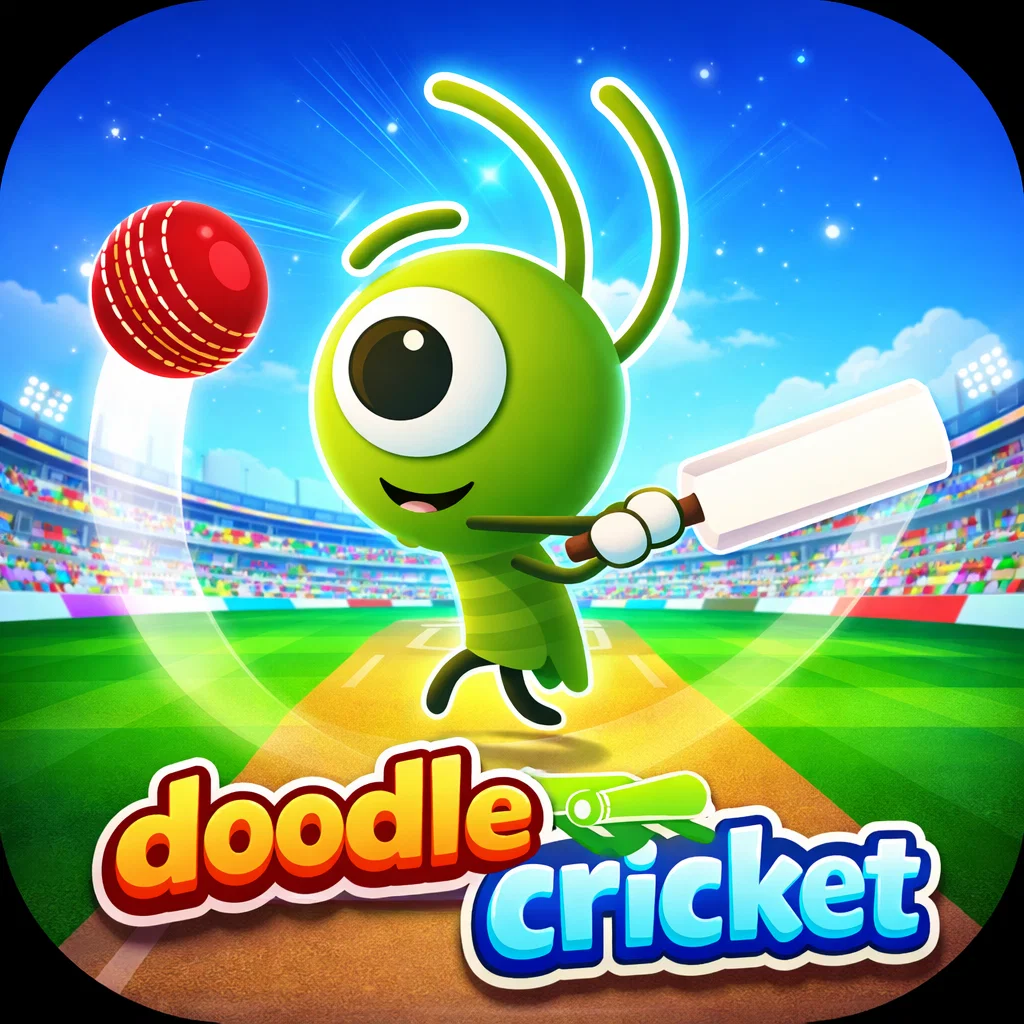
When engineers at Google pushed a lightweight web animation live on June 1, 2017, they intended it as a fleeting tribute to the eight-nation ICC Champions Trophy tournament hosted in England and Wales. Few predicted that a 400-kilobyte browser cricket game pitting an insect batsman against bowling snails would outlive the tournament by years. Its real explosion came three years later, on April 28, 2020, when Google revived the project as part of its celebrated Stay and Play at Home series during global pandemic lockdowns, as documented in an archival Google Doodles Report.
What began as an experiment in bare-metal mobile web optimization mutated into an international competitive phenomenon. Even today, millions of players bypass app stores and massive graphic engines to click a single yellow button on the Google doodle archive. The journey of Google Doodle Cricket reveals how ruthless technical constraints and intuitive physics created one of the most durable interactive doodle games in web history.
📌 Key Takeaways:
- The Real Origin: Launched on June 1, 2017, for the ICC Champions Trophy, the game was engineered under a 500KB payload limit to run over patchy 2G mobile connections in cricket-loving nations.
- The Lockdown Spike: A re-release on April 28, 2020, during the pandemic Stay and Play throwback initiative introduced the project to tens of millions of isolated users, setting record session times across global browsers.
- Mechanical Depth: Despite relying on a single click or tap, the engine employs a scaling algorithmic bowler difficulty curve that alters pitch trajectory, bounce friction, and spin after every boundary milestone.
Engineering for Low Bandwidth: The June 2017 Tournament Debut
During early 2017, the Google Doodle engineering unit set out to honor the ICC Champions Trophy with an interactive homepage feature. The design premise embraced an overt visual pun: an anthropomorphic cricket wielding a flat wooden bat, defended by a field of slow-moving snails wearing red fielding caps.
The design hurdle was connectivity. The primary target demographic spanned South Asia, parts of southern Africa, and the Caribbean, regions where cellular networks in 2017 frequently struggled with heavy data assets. Engineering teams set an aggressive budget: the entire package, including audio sprites, animations, collision logic, and responsive CSS wrappers, had to clock in below 500 kilobytes.
To hit that ceiling, developers bypassed heavy commercial web engines in favor of custom HTML5 Canvas drawing routines and compressed vector sheets. The game loaded instantly, even on 2G mobile connections. When players stepped up to the digital crease, the browser handled physics calculations locally without querying remote servers. The result was instantaneous input response, an asset that would prove decisive when the game found a second life three years later.
How the 2020 Stay and Play Initiative Sparked a Global Obsession
By late April 2020, streets were empty and internet traffic was smashing historical records. Tech platforms rushed to alleviate universal cabin fever. Google responded by launching a 10-day series showcasing its most popular past Google doodles, urging users across the world to remain inside.
On April 28, 2020, day two of the showcase, Google placed the 2017 cricket title back on the primary search landing page across North America, Europe, Asia, and Latin America. Major newsrooms, including Newsweek, Gadgets 360, and India Today, immediately covered the sudden reissue. Coverage demystified the title for an audience that had never watched a single over of real-world cricket.
The title landed with profound impact in markets outside traditional cricket strongholds. American and continental European users, largely unfamiliar with leg-before-wicket rules or pitch degradation, embraced the stripped-down, one-button dynamic. By removing fielding setups, pitch wear, and LBW technicalities, the engineers had distilled the core psychological appeal of the sport into pure kinetic timing.
The Evolution of Doodle Cricket: 2017 to the Modern Browser Era
The trajectory of this browser cricket game moved through distinct cultural and technical phases, shifting from a regional sports promotion to an unblocked fixture of school computer labs and workplace break rooms.
| Phase & Date | Distribution Platform | Technical & Cultural Impact |
|---|---|---|
| June 2017 | Regional Homepage Launch | Built for the 2017 ICC Champions Trophy; hyper-optimized sub-500KB build for low-bandwidth 2G markets. |
| April 2020 | Global Stay and Play Revival | Re-featured on the global homepage; introduced to tens of millions of lockdown users; broke session-length averages for doodles. |
| 2021, 2023 | Google Doodle Archive Permanence | Transitioned into a persistent, unblocked classic hosted in Google's cloud catalog; spawned multiple third-party mirror clones. |
| 2024, 2026 | Open Web & Offline Asset | Maintains status as a standard test harness for lightweight mobile browser performance and offline PWA integration. |
The Code Behind the Pitch: Algorithmic Bowler Difficulty and Batting Timing
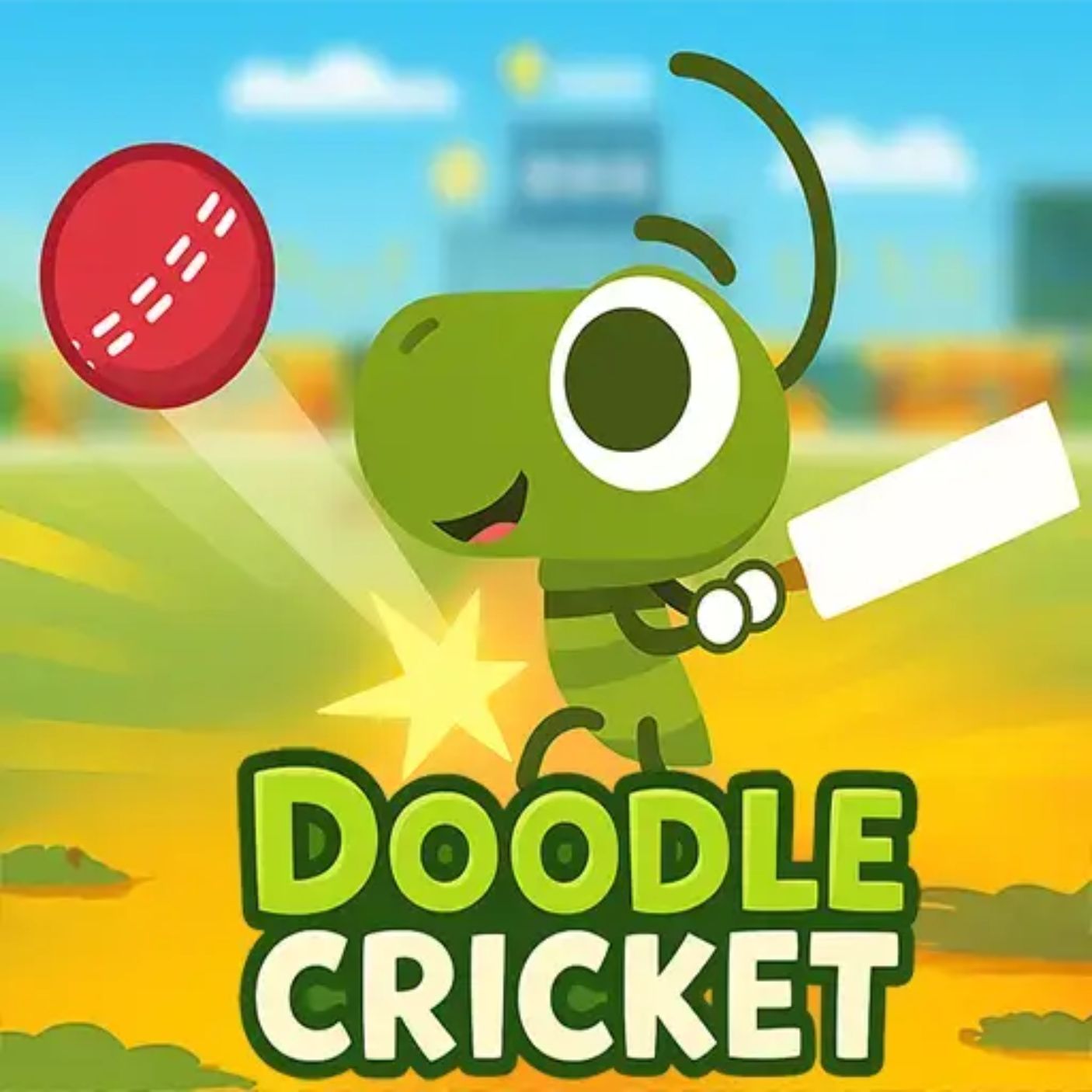
The enduring challenge of the crickets vs snails match-up lies in its deceptively sophisticated difficulty curve. While the controls demand nothing more than a spacebar stroke or an iPhone tap, the underlying batting timing mechanics work against human perception.
The game's bowler employs an adaptive algorithmic difficulty model based on the player's run aggregate:
- The snails roll straight, medium-pace deliveries with clear trajectory paths, giving users wide visual reaction windows.
- Pitch physics begin incorporating variable friction. Some deliveries bounce high off the strip, while others cut sharply across the off-stump, shrinking the window for four-run boundaries.
- 100+ Runs: The delivery pattern introduces erratic pacing. Slow, floating deliveries alternate with lightning-fast yorkers designed to exploit muscle memory and force premature swings.
Once the batsman swings, the client-side physics engine checks two spatial parameters: the distance of the ball from the wicket plane, and the horizontal alignment of the bat sprite. A swing executed microseconds too early produces a top-edge pop-up easily tracked by snail fielders. A late swing results in a clean-bowled animation that leaves the stumps shattered. Only a strike timed within a tight 50-millisecond window lofts the delivery clean over the boundary hedge for six runs.
The Pursuit of the Century: High-Score Strategies and Schoolyard Legacy
The game's simplicity cemented its permanence among unblocked web games. Because the title operates entirely within browser memory and pulls assets from authorized Google Content Delivery Networks, institutional filters inside public schools and university computer labs rarely block the script.
Competitive subcultures formed around pushing the scoring software to its theoretical edge. Online communities on Reddit and gaming forums started sharing high score strategy guides:
- Sightline Anchoring: Competitive players avoid looking at the swinging bat. Instead, they lock their gaze on the bowler’s release point at the bottom-left quadrant to read delivery speed instantly.
- Refusal to Chase Sixes: Lofting every delivery brings excessive variance. Grounding low-trajectory straight drives past mid-off provides consistent two-run singles without triggering high-risk pop-ups.
- Patience on the Snail Change-Up: The slowest delivery in the algorithm functions like a pitching off-speed change-up. Tapping prematurely when the snail lobs an ultra-slow delivery accounts for roughly 70% of all player dismissals past the 100-run threshold.
Verified score runs exceeding 1,000 runs require complete concentration over hundreds of consecutive deliveries, proving that the engine houses an arcade-tier skill ceiling beneath its friendly visual exterior.
Frequently Asked Questions (FAQ)
Can you still play Google Doodle Cricket in 2026?
Yes. The complete, fully functional build remains hosted permanently within the official Google Doodle Archive. Users can access and play the game on any modern desktop or mobile browser without downloading additional plugins.
Why did Google choose crickets playing against snails?
The visual concept was a literal joke devised by Google’s design team for the 2017 tournament. The batsman is an actual cricket insect, while the fielding side consists of snails to reflect the historically slow, deliberative pace of traditional test cricket matches.
What is the maximum achievable score in the game?
There is no hard-coded programmatic ceiling in the scoring algorithm. The score counter continues to increment as long as the player avoids being bowled or caught out. Players have posted verified runs exceeding 2,500 through uninterrupted focus.
Why Minimalist Web Games Outlast Big-Budget Distractions
The staying power of Google Doodle Cricket illustrates an undeniable truth about interactive entertainment: visual realism cannot compensate for unresponsive input loops. today modern gaming forces multi-gigabyte installations, intrusive microtransactions, and mandatory account creation, a lightweight HTML5 canvas canvas that launches in under three seconds delivers pure satisfaction.
Google set out in 2017 to solve a mundane networking problem for cellular users in developing sports markets. In solving that technical constraint through lightweight code and intuitive physics, they created an accidental classic that continues to quietly steal millions of productive hours across the world.
