Faked or Pure Instinct? The Investigative Truth Behind Clumsy TV Comedians

Every year, millions of viewers tune into TV Asahi’s legendary variety franchise Ame-Talk! to watch seasoned entertainers fail spectacularly at basic physical tasks. Whether it is sprinting across a gym floor with completely rigid joints or attempting a simple soccer kick only to fling their limbs in impossible directions, these segments consistently generate viral laughter. Skeptics frequently write off the awkward blunders as rehearsed slapstick tailored for television ratings, yet physiological analyses tell a different story. As detailed in an insightful note Report examining movement science behind television athletics, these bizarre physical failures stem directly from documented motor skill acquisition deficits rather than cynical theatrical fabrication.
The cultural footprint of Undou Shinkei Warui Geinin (Comedians with Poor Athletic Coordination) extends far beyond lighthearted entertainment. These routines have sparked serious inquiries among kinesiologists, sports scientists, and media analysts attempting to separate authentic physical reflexes from comedic exaggeration. Understanding what happens when unathletic performers confront demanding movement under harsh studio lights reveals a fascinating intersection of motor control, self-preservation, and television production.
📌 Key Takeaways:
- The Biomechanical Reality: The grotesque, stiff-legged movements seen on screen are caused by a neuromuscular phenomenon known as "freezing degrees of freedom," where the nervous system locks joints to simplify complex motion.
- Production Truth: Television producers select performers based on genuine lack of coordination rather than scripted choreography, though editorial framing and studio pressure visibly amplify those instincts.
- Cultural Footprint: The franchise has expanded into lucrative spin-offs like Odoritakunai Geinin (Comedians Who Refuse to Dance), preserved on streaming platforms like Ame-Talk Club with archives spanning over 300 classic episodes.
The Golden Age of Ame-Talk Sports Fails
Japanese variety television built a reputation around physical comedy decades ago, but Ame-Talk! shifted the paradigm by spotlighting involuntary incompetence rather than rehearsed physical stunts. The segment dedicated to uncoordinated talent, popularized in the early 2010s, quickly evolved into one of TV Asahi's highest-rated recurring specials. Instead of showcasing trained athletes pulling off impressive feats, the program put middle-aged comedians in tracksuits and asked them to execute middle-school gym tests: serving a volleyball, jumping over a vaulting box, or running sixty meters.
The results were instant comedic history. Performers like Kenji Murakami of the comedy duo Fruit Punch developed legendary status for physical miscalculations so extreme they seemed impossible to mimic. Murakami's stiff, upright, and disjointed movement earned him the moniker "Hiza-shin" (Knee God), drawing disbelief from casual viewers who suspected the entire broadcast was a calculated pantomime. Viewers wondered how an adult human body could produce such contorted running mechanics without intentionally aiming for a laugh.
Freezing Degrees of Freedom: The Kinetic Reality of Hiza-shin
Kinesiology provides an objective explanation for what audiences mistake for slapstick acting. In motor learning theory, human movement involves coordinating dozens of independent joints and muscle groups, which biomechanists classify as "degrees of freedom." When a novice encounters an unfamiliar or panic-inducing athletic task, the central nervous system faces sensory overload. To reduce complexity and prevent catastrophic falls, the brain adopts a defensive movement reflex by locking multiple joints simultaneously.
This biomechanical motor freeze explains the Fruit Punch Murakami running style with clinical precision. Instead of allowing the ankles, knees, and hips to flex sequentially to absorb shock and propel the body forward, Murakami’s nervous system clamps the knee joints in hyper-extension. The body attempts to run using only the pelvis and spinal sway, producing an unnatural, robotic gait. Far from being a calculated farce, this locked posture represents an involuntary coping mechanism common in individuals with fundamental motor skill acquisition deficits.
Evaluating Staged Slapstick Against Involuntary Athletic Failure
The ongoing debate over staged vs unscripted comedy in Japanese broadcasting often blurs the line between deliberate exaggeration and neurological reality. While comedians understand camera timing and reaction cues, reproducing precise biomechanical failure on command is nearly impossible, even for trained stunt performers.
| Diagnostic Element | Scripted Physical Slapstick | Involuntary Biomechanical Failure |
|---|---|---|
| Joint Articulation | Excessive loose bending; dramatized flailing to indicate falling. | Severe joint stiffness; rigid locking of knee and elbow axes. |
| Visual Gaze Tracking | Checks landing zones, camera angles, and nearby co-stars. | Hyper-fixated on the ball or completely disoriented during flight. |
| Center of Gravity | Maintained safely over base of support until intentional descent. | Erratic displacement caused by poor spatial coordination. |
| Repeatability | Can replicate the exact fall across multiple rehearsals. | Highly irregular; subsequent attempts yield different errors. |
The Psychology of Studio Pressure and Defensive Reflexes
Athletic coordination failure does not happen in a vacuum. Comedian psychology plays a massive role in exacerbating these motor deficits. On a production set with dozens of studio staff, bright lighting, and intense commercial scrutiny, performance anxiety spikes acutely. For an entertainer who already carries childhood shame surrounding gym class, being placed in front of high-speed tracking cameras triggers classic fight-or-flight chemistry.
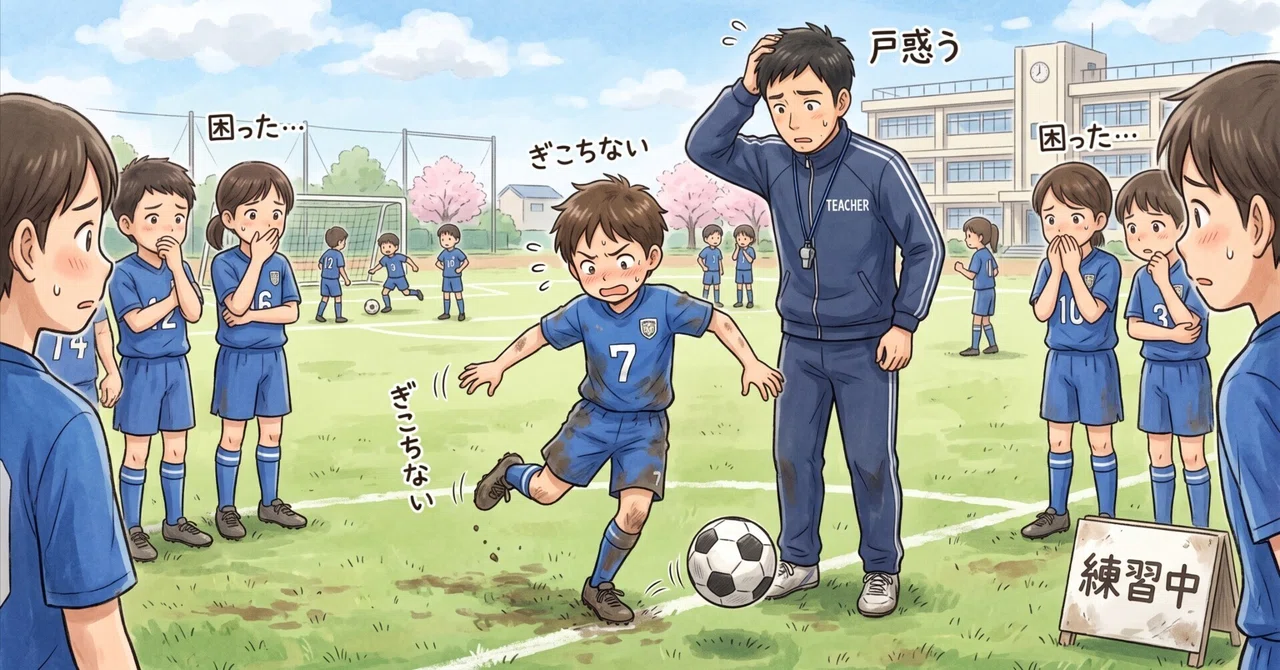
Adrenaline surges tighten extensor muscles, severely compromising fine motor control. When a performer attempts to kick a soccer ball under extreme scrutiny, reciprocal muscle inhibition breaks down. Instead of the quadriceps contracting while the hamstrings relax smoothly, both muscle groups contract at the same instant. The resulting movement appears comical, awkward, and distinctly unathletic. Comedians lean into their personas after the blunder occurs, but the physical misfire itself originates as an authentic physiological collapse.
Spin-Offs and the Business of Uncoordinated Talent
Broadcasters recognized the enduring commercial viability of uncoordinated talent, spawning sister franchises that test rhythmic and spatial capabilities. The most prominent example is Odoritakunai Geinin (Comedians Who Refuse to Dance), a format spotlighting performers who cannot match their body movements to musical tempo. TV Asahi regular broadcasts feature talent like Hironobu Komiya of Sanshiro, Sho Kaga of Kagaya, Sakamoto of Mayurika, alongside crossovers from the athletic coordination series like Nobuyuki Hanawa of Knights.
The franchise has become a cornerstone of TV Asahi’s digital ecosystem. The dedicated streaming service Ame-Talk Club offers on-demand access to a back catalog of over 300 classic episodes for a monthly subscription fee of 770 yen. Viewers analyze classic sports failures with the same scrutiny sports analysts apply to professional game footage. The digital archive allows fans to track the development, or persistent stagnation, of performers' motor skills across more than a decade of broadcasting history.
Frequently Asked Questions (FAQ)
Q1: Are the comedians in these segments instructed by directors to fail on purpose?
A1: Production staff do not script specific physical blunders. Producers conduct pre-interviews and basic movement screeners to select performers with genuine coordination deficits. While participants understand that succeeding cleanly would not produce good television, the physical mishaps occur organically due to genuine physiological limitations.
Q2: Why does the "Knee God" phenomenon look so completely unnatural?
A2: The rigid running style is a textbook demonstration of "freezing degrees of freedom." When the central nervous system feels threatened by an unfamiliar movement, it locks joint axes to avoid destabilization. This makes the limbs move like rigid levers rather than fluid shock absorbers.
Q3: Can genuine physical coordination problems be cured in adulthood?
A3: Yes. Adult motor coordination can improve significantly through targeted neuromuscular conditioning, physical therapy, and deliberate spatial training. However, variety show participants rarely undergo corrective training, as their lack of coordination serves as an asset within Japanese entertainment media.
The Cultural Endurance of Everyday Athletic Failure
The enduring popularity of clumsy comedians relies on universal recognition rather than cynical trickery. Almost everyone remembers the sting of underperforming in physical education classes, tripping over a hurdles rack, or freezing before a volleyball serve. Watching charismatic public figures experience those identical kinetic failures strips away the polished veneer of celebrity life. Supported by authentic biomechanical reflexes and reinforced by studio tension, these variety specials offer a rare, unfiltered glimpse into human physical fallibility.
