Feline Behavior Research Update: Why Cats Seek Physical Contact During Human Stress
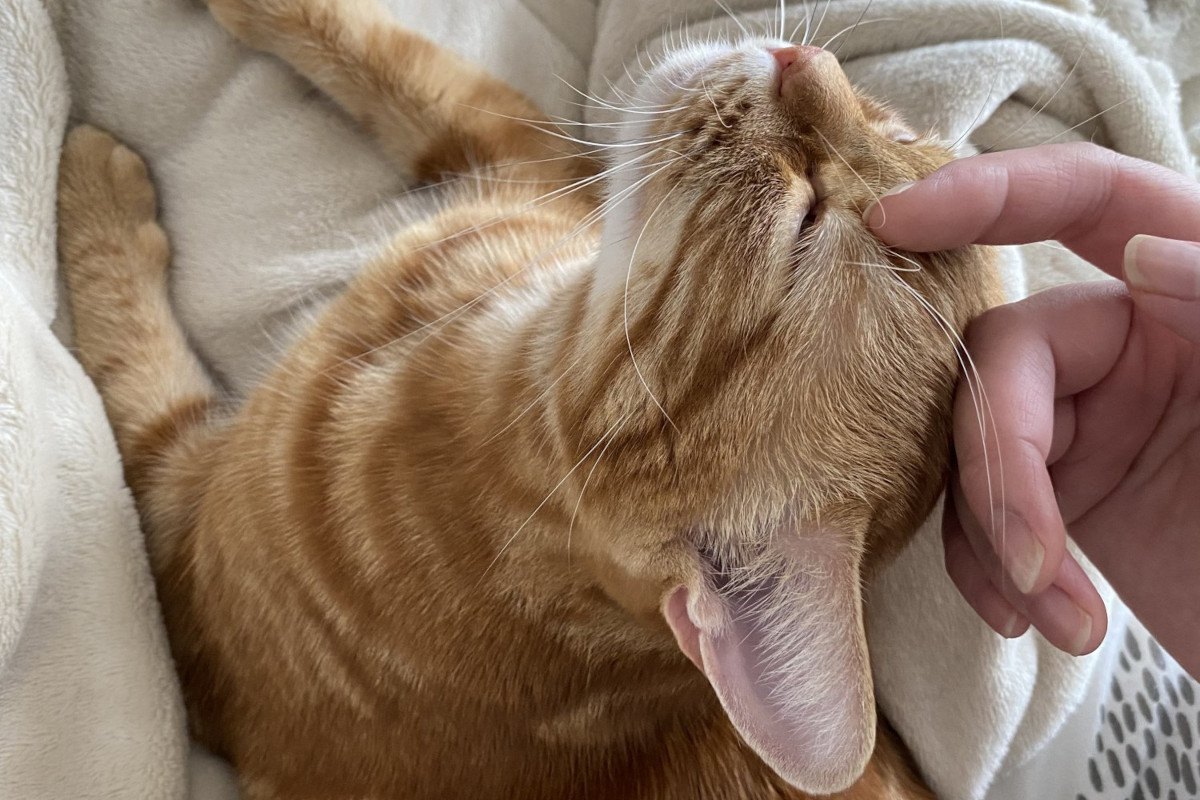
Anyone who shares a home with a cat knows the sensation: a sudden, purposeful brush against the shins, followed by an insistent head-press against the ankles. For decades, popular lore dismissed this ritual as either casual begging for wet food or sheer territorial indifference. Yet veterinary ethologists are uncovering a far more nuanced physiological dialogue unfolding between feline scent glands and human chemistry. Detailed behavioral analyses, including a comprehensive veterinary breakdown highlighted by an MSN Report, demonstrate that rubbing, known clinically as bunting or allorubbing, serves as an active biological stabilizer.
When humans experience emotional turbulence or physical illness, our skin microclimate shifts, altering cortisol excretion and sweat composition. Cats detect these minute shifts with extraordinary precision. Far from showing simple detachment, felines often accelerate their physical contact during these precise windows, deploying complex chemical signals to maintain a shared sensory ecosystem within the household.
📌 Key Takeaways:
- Sensory Chemistry: Cats possess specialized sebaceous glands around their lips, cheeks, forehead, and tail base that release calming semiochemicals during deliberate contact.
- Stress Responsiveness: Recent clinical observations confirm cats increase facial rubbing when household routines destabilize or when human cortisol secretions signal acute distress.
- Communal Security: Rubbing is rarely about solitary property claims; it establishes an allomarking safety zone that calms both pet and owner through mutual scent blending.
The Anatomy of Bunting and Sebaceous Scent Deposition
Cats navigate their physical environment through chemical cartography. While humans rely on sight and speech, a cat interprets safety through volatile organic compounds distributed across specific cutaneous zones. The feline head is an intricate nexus of specialized sebaceous glands concentrated along the chin, corners of the lips, temporal areas between eyes and ears, and along the caudal base of the tail.
When a cat presses its forehead into your wrist, a behavior ethologists define as cat head bunting behavior, it deposits secretions containing specific fractions of feline facial pheromones. Chief among these is the F3 facial fraction, long studied by companion animal behaviorists for its role in mapping familiar pathways and reducing autonomic reactivity. Facial rubbing in cats against doorframes, sofas, and human legs deposits these lipophilic residues, creating chemical signposts that signal immediate safety.
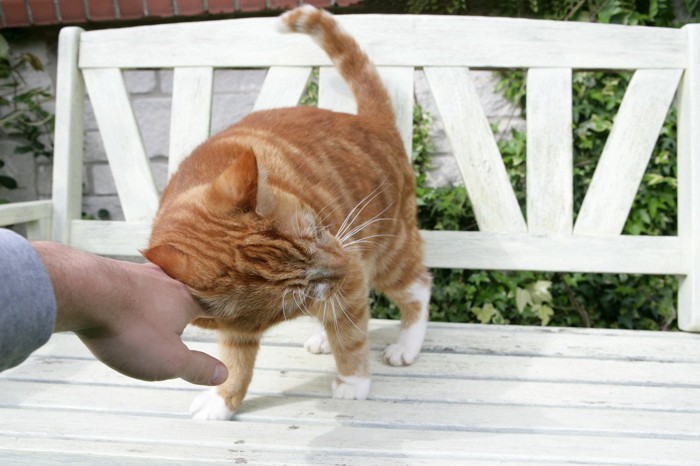
Field research into multi-cat colonies reveals that mutual rubbing, or allorubbing, happens almost exclusively between individuals with established social bonds. When transferred to human-animal dynamics, the cat greeting behavior seen at the entryway is not merely an automatic greeting. It is an intentional act of sensory integration, refreshing an olfactory passport that tells the animal its domestic territory remains secure.
How Domestic Cats Detect Human Sickness and Emotional Distress
Domestic felines possess an exceptional olfactory apparatus featuring roughly 200 million olfactory receptors, dwarfing the human baseline of roughly 5 million. Their sensory perception is further amplified by the vomeronasal organ, situated directly behind the incisors on the palate. When an owner experiences illness, systemic inflammation, or heightened stress, human sweat and breath undergo measurable chemical adjustments. Cortisol spikes alter autonomic skin emissions, and metabolic shifts generate trace ketones and distinct fatty-acid profiles.
Ethological monitoring demonstrates that cats frequently adjust their spatial proximity in response to these biochemical transitions. Rather than retreating, companion cats often approach resting owners, exhibiting increased cheek gland pheromones through sustained pressing against hands, faces, and blankets.
Dr. Sophia Vance, an animal behavior specialist in clinical practice, notes that this reaction often functions as a reciprocal feedback mechanism:
"Owners often interpret head-pressing during their own bouts of migraine or grief as pure empathy. From an evolutionary biology standpoint, the animal registers a disruption in the expected chemical balance of its companion. By rubbing aggressively against the owner, the cat works to re-establish the shared group scent, which concurrently lowers its own physiological anxiety."
Community observations across veterinary forums reflect this exact dynamic. In documented community discussions on platforms like Reddit's r/CatAdvice, pet owners routinely describe how cats that typically remain aloof begin persistent leg-weaving and bunting the moment the owner comes down with a fever or experiences an anxiety attack.
Mapping Feline Contact: Behavioral Drivers and Scent gland Mechanics
To understand why a cat initiates physical contact, owners must learn to differentiate territorial bunting from urgent medical distress. The tactile mechanics, bodily postures, and targeted glands differ markedly across everyday interactions.
| Observed Rubbing Action | Active Scent Gland Zone | Primary Emotional Trigger | Typical Context |
|---|---|---|---|
| Forehead Bunting | Temporal / Frontal glands | Affiliation & deep trust | Quiet resting, bonding, response to owner emotional vulnerability |
| Cheek and Lip Wiping | Perioral / Buccal glands | Security & familiarization | Marking territory, brushing against furniture, reconnecting after work |
| Figure-Eight Leg Weaving | Flank & Caudal (tail base) glands | Arousal & resource requests | Pre-feeding rituals, urgent attention seeking, return of owner from travel |
| Chin Scraping | Submandibular glands | Environmental anchoring | Establishing perimeter markers on hard edges, shoes, or bags |
Leg-weaving behaviors demonstrate how cats integrate visual blockades with sensory marking. When a cat cuts across your path and coils its spine against your calf, it demands visual prioritization while simultaneously saturating your trousers with its caudal scent trail.
Territory Marking Versus Affection: Decoding the Social Contract
A recurring debate among pet owners centers on intent: Is the cat displaying affection, or is it merely cataloging household possessions? Feline body language interpretation suggests these two motives are not mutually exclusive.
In solitary predators like the African wildcat (Felis lybica), scent marking serves primarily to prevent accidental skirmishes by spacing individuals out across hunting grounds. But in domestic cats (Felis catus), thousands of years of living alongside human settlements have retooled these ancestral pathways for social coordination.
When a cat targets an owner's face or hands, it rarely behaves with territorial jealousy. Instead, it engages in what ethologists identify as communal scent-sharing. Cats thrive within a shared group odor. When an owner leaves the house for an 8-hour to 10-hour workday, they return smelling of automotive exhaust, workplace disinfectants, and unfamiliar colleagues. This alien scent profile disrupts the domestic baseline.
The vigorous cat greeting behavior that follows is an active recalibration. By brushing against legs and nudging palms, the cat strips away foreign environmental odors and replaces them with familiar home pheromones. Far from demonstrating aloof ownership, this process brings the human back into the cat's inner social circle.
Red Flags: Distinguishing Affectionate Bunting from Head-Pressing Pathologies
While cheek rubbing and bunting reflect stable health, caregivers must watch for a critical neurological anomaly that mirrors these movements: compulsive head pressing.
Normal affectionate bunting involves a fluid sequence: the cat approaches with an upright tail, often sporting a slight, friendly curve at the tip, blinks slowly, and rubs with rhythmic pauses to sniff the area or solicit chin scratches.
Neurological head pressing looks entirely different:
- Static compression: The cat forces the top of its skull firmly into a solid wall, corner, or floorboard without rubbing or purring.
- Lack of social engagement: The animal remains motionless for extended periods, unresponsive to vocal calls or treats.
- Accompanying neurological signs: Pacing in repetitive circles, disorientation, dilated pupils, sudden vocal distress, or stumbling.
This clinical presentation indicates severe intracranial pressure, hepatic encephalopathy, lead poisoning, or brain trauma. If an owner witnesses true static head pressing against walls, emergency veterinary evaluation is essential within hours. Knowing the difference between sensory bonding and acute neuropathology can save a pet's life.
Practical Responses: How to Handle Intensive Feline Rubbing
Handling intensive rubbing requires matching your response to the cat's underlying motivation.
For high-energy attention seeking behavior, especially around the kitchen during dinner preparations, leaning down to pet the cat often backfires. It rewards the physical obstruction, reinforcing the habit. In contrast, when an animal approaches during quiet hours or periods of human convalescence, acknowledging the gesture strengthens your bond.
- Offer an extended finger: Present an index finger at the cat's eye level. If the cat pushes its philtrum or cheek against your finger, it has granted consent for social grooming.
- Concentrate on low-arousal zones: Stroke the cheeks, temple margins, and base of the ears. These areas correlate with positive pheromone release and avoid overstimulation.
- Avoid the caudal trap: Avoid sweeping heavy strokes down the entire spine to the base of the tail if the cat is already keyed up. In many felines, the caudal region is hypersensitive; prolonged stroking there can trigger sudden petting-induced aggression.
- Respect disengagement cues: A sudden skin twitch along the spine, an ear turned sideways like an airplane wing, or a tail flicking stiffly from side to side signals that the cat has had enough. Step back immediately to prevent defensive swatting.
Frequently Asked Questions (FAQ)
Q1: Why does my cat rub its teeth or gums against my phone and hands?
A1: The margins of the lips and chin contain specialized submandibular scent glands. Rubbing hard surfaces like phone edges, laptop screens, or knuckles helps deposit these pheromones efficiently while offering gentle, soothing counter-pressure along the jawline.
Q2: Is my cat rubbing against me purely because it wants food?
A2: Food anticipation frequently triggers physical contact, but the motivation is broader than mere hunger. Leg rubbing around feeding times blends excitement with social coordination. The cat uses tactile contact to guide your path directly to the food bowl.
Q3: Why does my cat suddenly bite me right after rubbing against my face?
A3: This behavior stems from sensory overstimulation. The transition from affectionate scent marking to physiological arousal can occur in seconds. Watch for subtle warnings: skin rippling, widening pupils, or a suddenly rigid posture mean the interaction has become too intense.
Evolving Insights into the Feline Scent Dynamic
The physical contact domestic cats seek during moments of human stillness, sickness, or stress represents an intricate form of cross-species dialogue. What early ethologists wrote off as crude territorialism is now recognized as a sophisticated chemical exchange. By reading these scent cues accurately, owners can better navigate their pets' emotional landscapes, building a domestic environment rooted in mutual calm.
