Fretboard & Key Breakdown: The Definitive Chord Voicings of 'Marunouchi Sadistic'
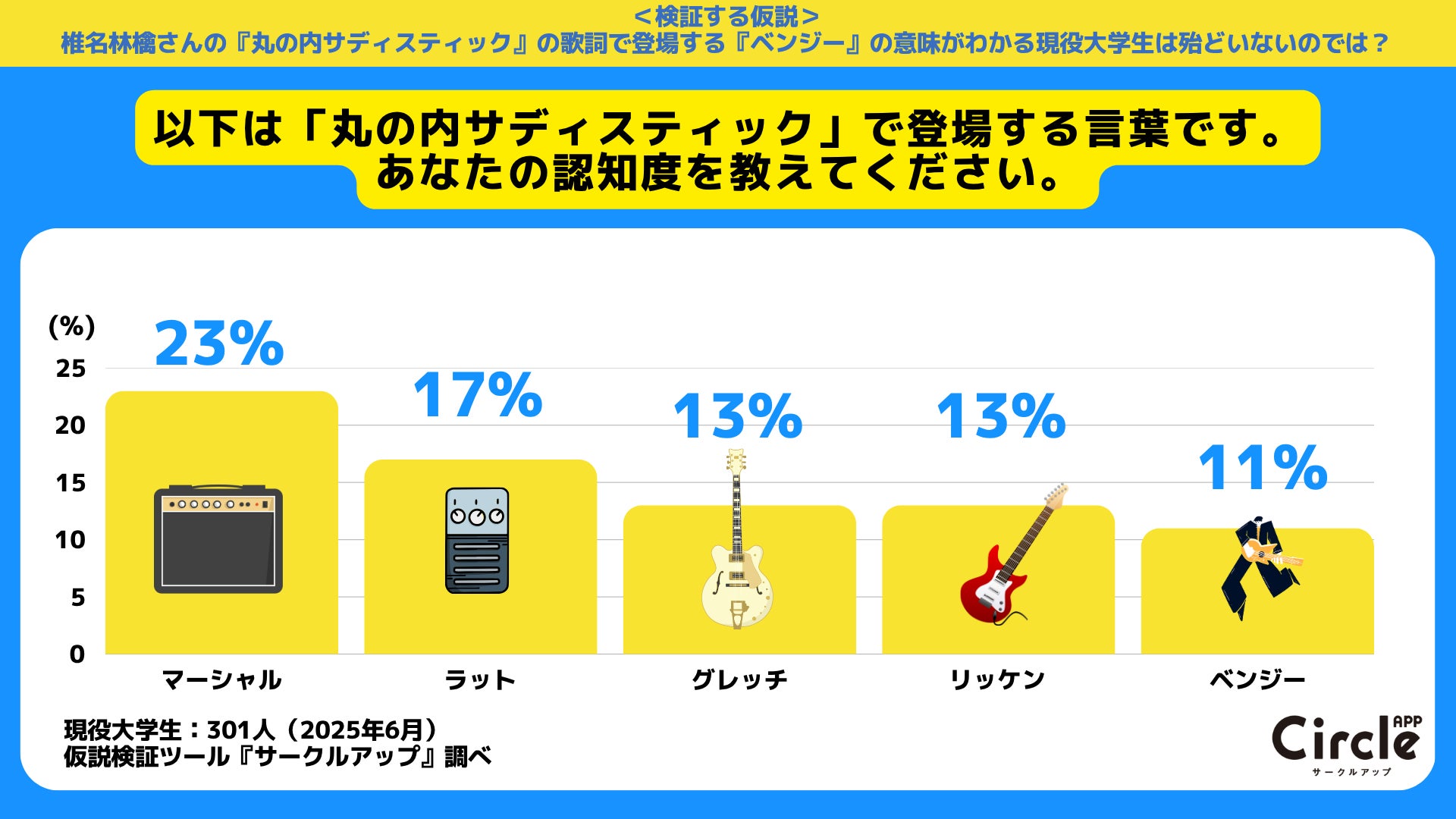
When Sheena Ringo recorded "Marunouchi Sadistic" for her 1999 debut album Muzai Moratorium, she did not just cut a hit track; she codified a harmonic archetype that rules Japanese jazz-pop harmony to this day. Aspiring guitarists and keyboardists across Tokyo still learn its circular groove as an essential rite of passage. According to a generational data study highlighted in a PR TIMES Report, younger listeners and musicians continue to discover vintage performance gear, specifically Rickenbacker electric guitars and Marshall amplification, directly through Ringo's autobiographical lyricism.
Broadcast features on TV Asahi’s music analysis program KanJam Complete Burn have repeatedly examined how this four-chord vamp became the foundational DNA of modern Japanese songwriting. While international musicians know the core cadence as the "Just the Two of Us progression J-pop" variant, Ringo's arrangement introduces precise voice-leading tweaks, neo-soul chord voicings, and an irresistible rhythmic swing. Mastering this song requires stripping away sloppy barre chords and embracing clean jazz extensions on both guitar and piano.
📌 Quick Summary:
- Harmonic Engine: The track revolves around a modified IVmaj7, III7, VIm7 turnaround in E-flat major, enriched with secondary dominant substitutions.
- The Essential Key: Written in E-flat major (relative C minor), the progression relies on subtle altered tensions (#9, b13) on the III7 dominant chord to generate emotional pull.
- Voicing Strategy: Both guitar and piano arrangements require rootless guide-tone voicings to prevent low-end mud against the syncopated bass line.
Harmonic Analysis: Deconstructing the IVmaj7, III7, VIm7 Cadence
The progression of "Marunouchi Sadistic" is deceptive. It sounds smooth and straightforward, yet it conceals sophisticated harmonic friction. Set in the key of E-flat major, the harmonic framework functions as follows:
Abmaj7, G7, Cm7, Ebm7 to Ab7
In classical and jazz Roman numeral analysis, this reads as IVmaj7, III7, VIm7, Vm7, I7. The progression begins on the subdominant chord, Abmaj7, rather than the tonic Eb. Starting away from the home chord strips the music of predictable resolution. It creates an endless, floating sensation.
The transition from Abmaj7 to G7 represents a secondary dominant substitution (V7/vi). Instead of playing a diatonic Gm7 (iii7), Ringo inserts an active dominant seventh chord. G7 contains the leading tone B natural, which pulls urgently toward the root of the subsequent chord, C minor 7 (vi). This sharp, chromatic lift supplies the characteristic melancholic bite heard in early Tokyo Jihen music theory and modern Shibuya-kei arrangements.
The final measure provides the dynamic engine of the loop. Rather than staying on Cm7, the harmony introduces a rapid secondary ii, V turnaround: Ebm7 to Ab7. This fleeting relative minor key modulation functions as a backdoor ii, V leading straight back to the opening Abmaj7. Without this brief chromatic detour, the loop would stall. The turnaround propels the groove forward indefinitely.
Guitar Voicings: Fretboard Chord Shapes and Rickenbacker Tone
Playing open chords or standard six-string barre shapes destroys the nuanced rhythmic bounce of this track. The recorded guitar tone, classically tracked with a Rickenbacker 620 running through an overdriven Marshall head, relies on compact four-note shell voicings centered on the middle strings.
To capture the authentic studio performance, mute both the low E and high E strings. Focus your fretting hand strictly on the A, D, G, and B strings to leave sonic space for the kick drum and bass guitar.
1. Abmaj7 (IVmaj7), 4th Fret Shell
• Fretboard shape: 4-x-5-5-4-x
• Technique: Grip the root on the low E (or A string equivalent x-11-13-12-13-x). The fourth-fret position provides a warm, round midrange that lets the major seventh (G) sing through.
2. G7(#9) or G7(b13) (III7), 10th Fret Altered Shape
• Fretboard shape: x-10-9-10-11-x or x-10-9-10-12-x
• Technique: Avoid playing an unaltered G7 bar chord. Adding the sharp ninth (A#) or flat thirteenth (Eb) introduces the authentic grit heard on Tokyo Jihen records. Hit this chord with an aggressive downstroke followed immediately by a percussive fret-hand mute.
3. Cm7 or Cm9 (VIm7), 8th Fret
• Fretboard shape: 8-x-8-8-8-x or x-3-1-3-3-x
• Technique: For maximum neo-soul color, substitute a Cm9 (x-3-1-3-3-x in lower register, or x-x-10-8-8-10). Let the 9th degree (D) ring against the minor third.
4. The Turnaround: Ebm7 to Ab7, 6th to 4th Fret
• Ebm7: x-6-8-6-7-x
• Ab7: 4-x-4-5-4-x or x-x-6-5-7-x
• Technique: Execute this change with a crisp sixteenth-note swing. Strum Ebm7 on beat one and shift decisively to Ab7 on beat two and a half to pull the listener back into the top of the sequence.
Piano Voicings: Guide Tones and Smooth Left-Hand Economy
Pianists often overcomplicate "Marunouchi Sadistic" by duplicating the bass player's root notes with their left hand. This quickly clutters the lower register. To achieve the clean, shimmering attack heard on the original studio cut and subsequent Tokyo Jihen live tours, your hands must split duties.
Your left hand should play guide tones (thirds and sevenths) or simple root-fifth stabs, while the right hand layers upper chord extensions (9ths, 11ths, and 13ths).
| Chord | Left Hand (Bass / Foundation) | Right Hand (Tensions & Voicing) | Harmonic Color |
|---|---|---|---|
| Abmaj9 | Ab1, Eb2 | G3, Bb3, C4, Eb4 | Lush, open major 9th texture |
| G7(b13, #9) | G1, F2 | B3, Eb4, Bb4 | Tense altered dominant resolution |
| Cm9 | C2, G2 | Eb3, G3, Bb3, D4 | Cool, melancholy minor 9th |
| Ebm9 → Ab13 | Eb2 → Ab1 | F3, Gb3, Db4 → Gb3, C4, F4 | Brisk secondary ii, V turnaround |
Focus on smooth finger transitions between chords. Notice how the top voice of the right hand moves logically from Eb down to Bb, then steps up to D before sliding into the turnaround. Minimizing hand movement on the keyboard keeps the tone fluid and rhythmically centered.
Arrangement Evolution: Studio Rawness Versus Tokyo Jihen Sophistication
The harmonic skeleton of "Marunouchi Sadistic" remains unchanged across Sheena Ringo's catalog, but her arrangement styles have diverged significantly over the past two decades. Understanding these differences allows musicians to choose the appropriate arrangement style for their ensembles.
On the 1999 Muzai Moratorium studio cut, the arrangement leaned heavily on garage-rock grit. The guitars clipped sharply against a dry snare drum, accentuating raw pick attack and unpolished dynamics. The performance relied on angular syncopation rather than delicate jazz flourishes.
By the time Tokyo Jihen toured the song across the 2000s and 2010s, featuring keyboardists Masayuki Hiizumi (H ZETT M) and later Ichiyou Izawa, the arrangement transformed into an elite exhibition of modern jazz-funk. Hiizumi brought lightning-fast stride piano riffs and chromatic neighbor tones to the G7 altered chord. Izawa leaned into Rhodes electric piano voicings, emphasizing neo-soul clusters and spacious syncopated comping.
Modern session bands regularly blend these two approaches: driving, overdriven electric guitar riffing alongside extended keyboard triads.
Dialing in the Tone: Guitar Rigs and Drum Syncopation
No chord breakdown of this track is complete without addressing sound design. Ringo’s lyrics specifically cite the instruments shaping the track: Kenichi "Benjie" Asai's Gretsch, a Rickenbacker, and Marshall amplification.
To replicate the authentic guitar tone, choose a guitar with single-coil pickups or vintage mini-humbuckers. Rickenbacker bridge pickups produce a distinct, chimey upper midrange that cuts through dense arrangements without becoming harsh. Plug your guitar into a British-voiced valve amplifier, such as a Marshall JCM800, Bluesbreaker, or a Vox AC30 set to the edge of breakup.
Keep your gain low. The percussive quality of the chord chops relies on headroom; too much distortion mushes the guide-tone intervals, making the G7(#9) sound like random noise. Roll your guitar's tone knob down to roughly 7 to round off brittle highs.
For drummers and rhythm sections working alongside these chords, emphasize the off-beat backbeat. The bass line stays anchored to an infectious, syncopated sixteenth-note rhythm that anticipates beat three. Locking your fretboard strums directly to the drummer's hi-hat ensures the cyclical chord progression swings without dragging.
Frequently Asked Questions (FAQ)
Q1: What key is "Marunouchi Sadistic" originally played in?
A1: The original recording on Muzai Moratorium is in the key of E-flat major (relative C minor). However, Sheena Ringo and Tokyo Jihen have performed live arrangements in transposed keys, including C major and D major, to adapt to dynamic vocal ranges and altered instrumentation.
Q2: Why is this progression referred to as the "Just the Two of Us" cadence?
A2: Grover Washington Jr. and Bill Withers popularized the IVmaj7, III7, VIm7 loop in their 1981 smash "Just the Two of Us." Japanese composers adapted this specific harmonic cadence during the 1980s and 1990s, using it so ubiquitous across city pop, anime themes, and modern hits that local music theory circles routinely refer to it as the "Marunouchi progression."
Q3: Can I substitute a standard G7 for the altered G7(#9)?
A3: You can play a basic G7 or G dominant 7th barre chord, but you will lose the dark, biting tension that defines the composition. Using an altered tension, such as G7(#9) or G7(b13), accentuates the chromatic voice leading into the subsequent Cm7 chord.
The Lasting Impact of Ringo's Harmonic Legacy
The progression underpinning "Marunouchi Sadistic" is far more than a simple loop; it serves as a masterclass in harmonic motion, tension, and economic arranging. By prioritizing tight voice leading, secondary dominant alterations, and precise fret-hand muting, Sheena Ringo elevated an American soul staple into a definitive fixture of contemporary Japanese pop music. Whether practicing rootless keyboard shells in a home studio or hammering muted chops through a cranked tube amp, mastering these specific voicings unlocks one of the most expressive chord progressions ever recorded.
