From 1970s Idol to 45 Years of Marriage: The Momoe Yamaguchi Story Today
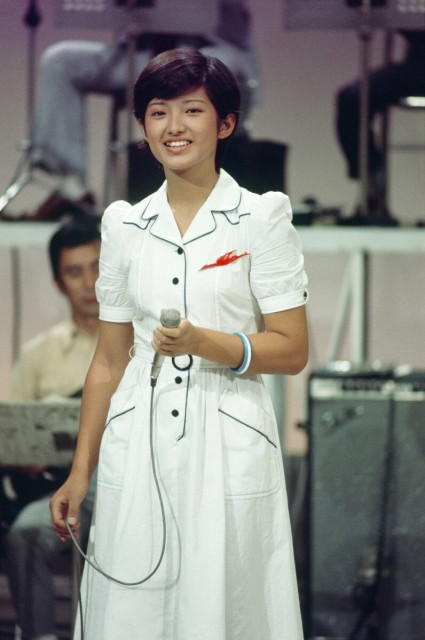
On a quiet January evening in suburban Tokyo, actor Tomokazu Miura celebrated his 74th birthday away from the glare of television cameras. Sitting across the dinner table was his wife of forty-five years, Momoe Yamaguchi, now 67. Decades after walking away from the pinnacle of the Japanese entertainment industry at the age of 21, the former Showa era pop idol remains a figure of singular fascination. While modern pop stars build multi-decade brands across social media and reunion tours, Yamaguchi chose complete domestic anonymity, a decision documented in retrospective coverage by the dメニューニュース Report tracing her enduring cultural presence.
Her absolute disappearance from public performance has done the opposite of fading her legacy. Today, she navigates life as a grandmother, an accomplished quilt artist, and half of Japan’s most respected celebrity marriage. At the same time, her music reaches teenagers and overseas listeners through global streaming platforms, anchoring an enduring obsession with an artist who walked away and never looked back.
📌 Key Takeaways:
- Current Private Life: Momoe Yamaguchi lives quietly in Tokyo at age 67, recently marking Tomokazu Miura's 74th birthday and embracing life as an attentive grandmother to her eldest son's young daughter.
- Enduring Partnership: The couple celebrated their 45th wedding anniversary in late 2025, consistently topping annual Japanese public surveys as the nation's ideal married couple.
- Streaming Renaissance: Her entire 1973, 1980 studio catalog, starting with debut record Toshigoro, has found widespread global traction through complete streaming reissues on Apple Music and television retrospective rankings.
The Nippon Budokan Farewell That Rewrote Japanese Celebrity Culture
On October 5, 1980, Yamaguchi stood center stage at Tokyo’s Nippon Budokan for her final concert. Dressed in a pure white gown, she concluded her performance of "Sayonara no Mukogawa" (The Other Side of Goodbye), bowed deeply to an arena filled with weeping fans, placed her white microphone on the stage floor, and walked off into complete retirement. That final gesture became an indelible visual shorthand in Japanese pop culture, copied and referenced for the next four decades.
Retirements in the music industry are usually contract negotiations in disguise. Artists step away for personal rebrands or hiatuses before staging lucrative comeback tours. Yamaguchi made her announcement when her commercial power was at its absolute peak. Between her debut in 1973 and her exit in 1980, she racked up over 30 hit singles, multiple Japan Record Award nominations, and starring roles in films and prime-time television dramas. Walking away entirely to marry Tomokazu Miura was viewed by contemporary media as a shocking sacrifice, yet it established an untouchable mystique that no continuous career could have maintained.
Forty-Five Years Beside Tomokazu Miura: Family, Longevity, and Grandchildren
Yamaguchi married Miura on November 19, 1980, at Tokyo's Catholic Meguro Church, surrounded by hundreds of reporters and over a thousand fans lining the perimeter. In an era when tabloid scrutiny tore young entertainment marriages apart, the pair built an impenetrable domestic sanctuary. In late 2025, the couple crossed their 45th wedding anniversary, remaining at the summit of Japan’s annual "Ideal Celebrity Couple" polls run by Meiji Yasuda Life Insurance.
Family life inside their Kunitachi residence stayed strictly shielded from television broadcasts. The couple raised two sons: Yutaro Miura, born in 1984, who pursued a career as a singer-songwriter, and Takahiro Miura, born in 1985, who established himself as a versatile film and television actor. In recent years, Yamaguchi stepped into a role close friends describe as deeply fulfilling: that of a devoted grandmother. Following Yutaro’s marriage to voice actress Yui Makino and the birth of their daughter in 2022, Japanese weekly magazines reported that Yamaguchi frequently assists the young family, doting on her granddaughter while preserving the household's privacy.
Milestones and Transitions: The Momoe Yamaguchi Chronology
Yamaguchi’s career was astonishingly compressed. Her entire professional discography was recorded in a seven-year burst, followed by four and a half decades of deliberate silence.
| Period | Milestone Event | Cultural Significance |
|---|---|---|
| 1972, 1973 | Discovered on Star Tanjo!; releases debut album Toshigoro | Introduces an introspective, mature image that disrupted upbeat Showa idol formulas. |
| 1974, 1979 | Co-stars with Tomokazu Miura in Izu no Odoriko; releases hits like "Cosmos" and "Playback Part 2" | Solidifies the "Golden Duo" on screen while pioneering rock-infused kayokyoku pop. |
| 1980 | Nippon Budokan farewell concert; puts down white microphone; marries Miura on Nov 19 | Creates the modern blueprint for decisive, total celebrity retirement in Japan. |
| 1986, 2019 | Raises two sons; exhibits handmade quilts under her married name, Momoe Miura | Demonstrates complete refusal to exploit past fame, publishing quilt books purely on artisanal merit. |
| 2020, 2026 | Worldwide catalog streaming release on Apple Music; celebrates 45th wedding anniversary | Spurs an international city pop and Showa retro revival without a single promotional appearance. |
The Digital Renaissance: Apple Music and the Showa Retro Revival
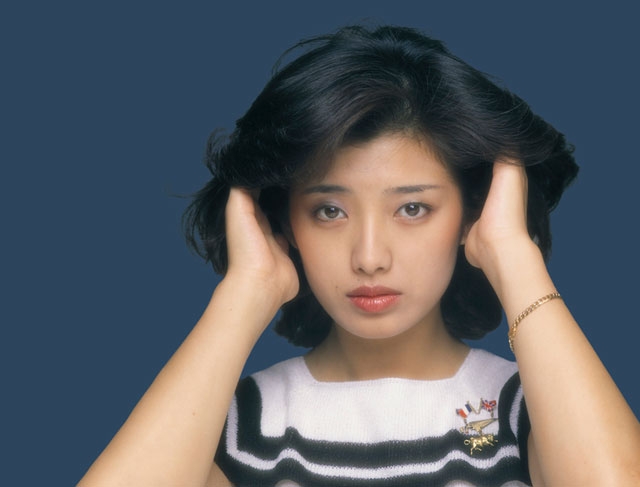
Yamaguchi's complete catalog landed on subscription platforms like Apple Music and Spotify with minimal advance warning, accompanied by digital liner notes detailing her discography from her 1973 debut Toshigoro through to her final studio tracks. The reception revealed an appetite extending far beyond nostalgia circuits. Her compositions, written by heavyweight talents like Yoko Aki and Ryudo Uzaki, reached overseas audiences riding the waves of city pop and Showa retro aesthetics.
Japanese broadcast television continues to fuel this revival. Programs such as TV Asahi’s Showa no Meikyoku series regularly place her tracks, including "Ii Hi Tabidachi" and "Playback Part 2", at the sharp top of Showa pop hit rankings. Listeners in their teens and twenties, encountering her voice on TikTok edits or karaoke countdown specials, discover a vocalist completely divorced from modern algorithmic production: raw, distinctly low-register, emotionally defiant, and utterly unbothered by commercial trends.
Why Celebrity Retirement in Japan Rarely Mirrored Her Absolute Exit
The Japanese entertainment industry operates largely on continuity. When members of iconic groups step away, they typically transition into variety television hosting, acting, lifestyle blogging, or production. Complete retirement is rare. Maintaining media silence across four straight decades, despite multimillion-dollar offers from concert promoters and national broadcasters like NHK for their annual New Year’s Eve Kohaku Uta Gassen, is nearly unprecedented.
Yamaguchi resisted every overture. When she engaged in public creative work, it was through Japanese patchwork quilting. Writing under her legal married name, Momoe Miura, she exhibited intricate textiles at major Tokyo crafts exhibitions and published individual works solely judged on technique rather than pop celebrity. Her refusal to trade on her past converted her seven-year run into something fossilized and preserved at its highest point of artistic excellence.
Frequently Asked Questions (FAQ)
Q1: Has Momoe Yamaguchi ever made a television or singing appearance since 1980?
No. Since placing her white microphone on the Nippon Budokan stage on October 5, 1980, she has not given a single televised performance, stage concert, or commercial radio interview. Her public artistic expressions have been limited entirely to published craft books on quilting under her married name, Momoe Miura.
Q2: How are her children involved in the entertainment industry today?
Her eldest son, Yutaro Miura (born 1984), is an active singer-songwriter who occasionally covers his mother’s classic catalog with her blessing. Her younger son, Takahiro Miura (born 1985), is an acclaimed film and television actor who has starred in numerous prominent Japanese dramas and independent features.
Q3: Where can international listeners access Momoe Yamaguchi’s complete discography?
Her entire studio discography, including all 22 original albums, live records, and compilation singles, is available globally on major streaming platforms, including Apple Music, Spotify, and YouTube Music, complete with original album covers and catalog liner notes.
The Lasting Dignity of Japan's Most Elusive Cultural Icon
Modern fame is defined by access. Musicians broadcast their homes, their daily meals, and their private anxieties directly to digital feeds. Momoe Yamaguchi chose the opposite path: absolute scarcity. By disappearing at the exact height of her creative and physical powers, she left behind an immaculate body of work that never experienced commercial compromise, artistic dilution, or the awkward compromises of aging under public scrutiny.
Today, her life centers around her family in suburban Tokyo, her quilting craft, and the quiet satisfaction of a forty-five-year marriage that weathered decades of national attention. Her music plays continuously in izakayas, on high-resolution streaming platforms, and across television retrospectives. She proved that an artist does not need to linger to remain indelible; sometimes, leaving the microphone on the stage floor is the loudest statement possible.
