From Classical Birds to 3D Parakeets: The Evolution of Modern Creative Origami
For centuries, the paper crane defined Japanese paper craft across the globe. Crisp, symmetrical, and unapologetically flat, the classic orizuru served as an emblem of peace and foundational geometry. Over the past several years, however, a quiet design rebellion swept through folding circles. The angular profiles of traditional folklore gave way to rounded, expressive, and tactile companions, crowned by the explosive popularity of domestic bird designs. Rather than abstract wings, contemporary folders now demand lifelike postures, swollen avian chests, and distinct facial crests.
The inflection point arrived when independent designers solved a long-standing mechanical dilemma: how to capture the pudgy, organic posture of household parakeets without cutting the paper or requiring industrial adhesives. As spotlighted in a livedoor ニュース Report, viral craft creator da~chan upended conventional bird folding by repurposing the humble fusen (traditional balloon base) to produce plump, three-dimensional parakeets and cockatiels. What began as a viral video demonstration grew into an international craft movement, fundamentally altering how paper folders approach modern animal sculpture.
📌 Key Takeaways:
- Core Mechanical Shift: Modern 3D paper bird folding abandons flat-creased kite and bird bases in favor of inflated balloon foundations, producing lifelike volume straight from an uncut square.
- Advanced Shaping Syntax: Creators rely heavily on structural pleat folding and closed sink folds to create distinct beaks, eye perimeters, and cockatiel crests without compromising interior volume.
- Widespread Accessibility: Unlike hyper-complex modular assemblies that require hours of wet-folding, intermediate budgerigar paper craft balances accessibility with anatomical authenticity.
From Two-Dimensional Cranes to Volumetric Sculptures
Traditional origami spent decades prioritizing geometric economy. Models derived from the classical bird base generate stunning silhouettes, yet they remain largely two-dimensional when viewed from the front. They sit flat on desks. They slip neatly between the pages of books.
Pet owners and contemporary paper folders wanted something entirely different. They wanted an object that simulated the round, vulnerable weight of a live budgerigar resting against a perch. The shift reflects a wider cultural turn toward playful, expressive domestic subjects within modern paper art. Instead of folding mythical dragons or ceremonial motifs, designers applied structural mathematics to everyday domestic companions.
Achieving roundness from a rigid sheet of pulp presents a fascinating geometry problem. Paper resists compound curves. If you force a curved fold, the material wrinkles or tears along tension lines. Solving that tension required designers to step outside the standard dogmas of mid-century Japanese manuals and embrace inflatable, structural volumes.
The Engineering Secret: Transforming the Traditional Balloon Base
The breakthrough that fueled the recent wave of origami parakeet instructions involves an ancient building block: the waterbomb, known across Japan as the densho no fusen (traditional balloon base). For generations, school children folded this model, inserted air through a pinhole at the apex, and created a boxy cube. It was considered an entry-level novelty.
Creator da~chan realized that this hollow air pocket contained the precise kinetic tension needed to mimic avian anatomy. By modifying the base creases prior to inflation, the hollow chamber transforms into an expansive chest cavity. The rear flap elongates into an anchored tailpiece, while the upper corners gather downward into resting wing shoulders.
The moment of inflation changes the paper entirely. Instead of sharp knife-edge creases, the paper sheet absorbs tension across its face, swelling into a rounded belly. The resulting model does not simply sit on a table; it perches. By shifting the internal center of gravity lower in the body cavity, the folded parakeet stays upright on a wooden twig or monitor frame using tiny folded claws, bypassing the need for separate wire armatures.
Advanced Techniques Behind the Feathers: Pleats and Sinks
Producing a generic rounded body is only half the battle. A parakeet demands a blunt, curved beak and inset cheeks; a cockatiel requires a flamboyant, expressive head crest. Merely blowing air into a modified waterbomb yields an unrefined blob. Refining that shape relies on exact mechanical operations.
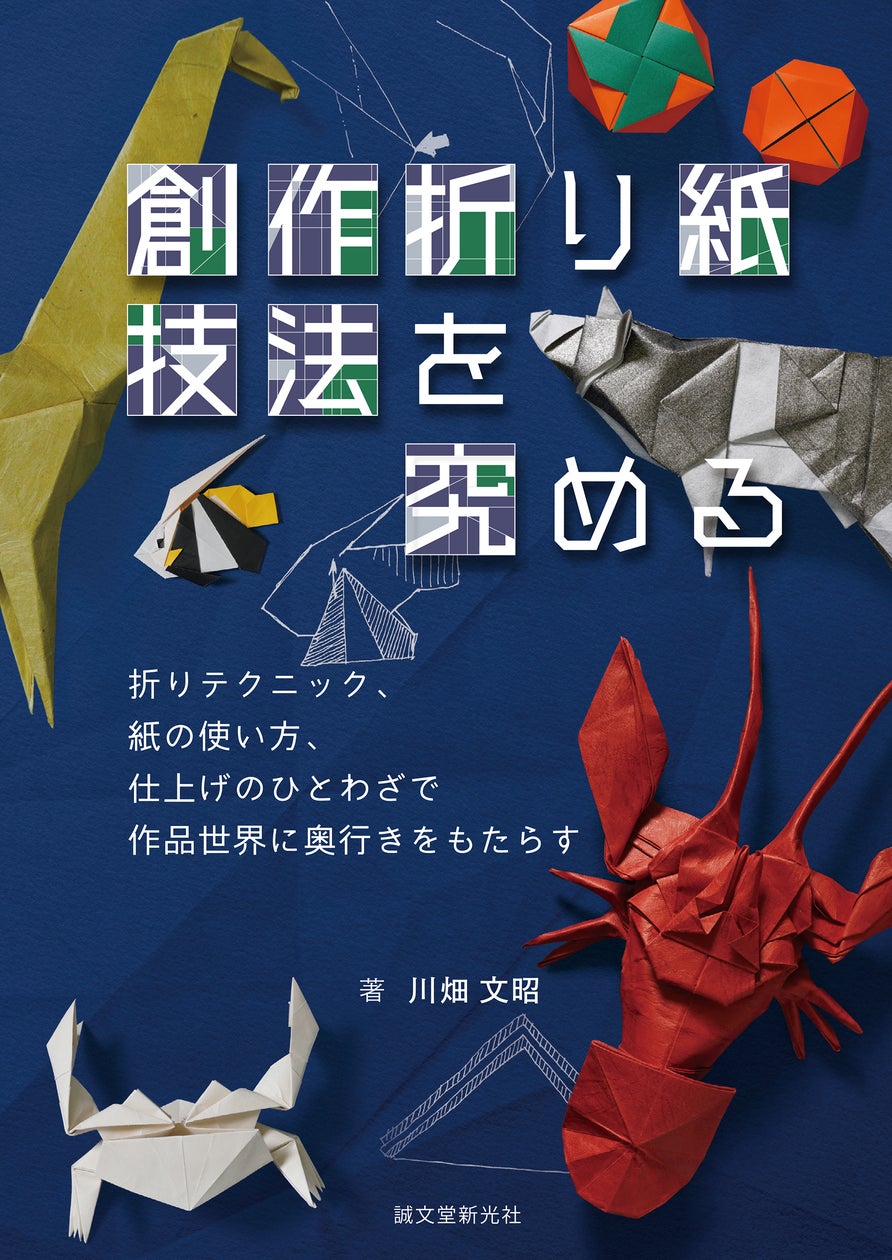
As documented in modern professional manuals, such as the comprehensive technical guide published via PR TIMES in September 2024 detailing elite creative origami methods, folding artists turn to specific architectural manoeuvres to isolate layers:
- The Sink Fold Technique (沈め折り): This intermediate-to-advanced move pushes a mountain crease inward against opposing layers without opening the entire sheet. In parakeet models, an open or closed sink stabilizes the nape of the neck, preventing the inflated air pocket from leaking upward and collapsing the bird's posture.
- Pleat Folding (段折り): Alternating mountain and valley folds along a minute millimeter scale allows artists to step paper layers down. In a cockatiel origami tutorial, pleat folds form the iconic forehead plumage, giving the crest structural rigidity while stepping down into the flat planes of the cere and beak.
- Continuous Reversal (連続折り): Repeated inside-reverse folds compress the tail feathers, ensuring the tail feathers taper into a realistic quill shape instead of splaying outward.
When these maneuvers are executed correctly on duo-color paper (such as yellow-and-green or grey-and-white sheets), color changes happen automatically. The crest flashes a contrasting tone, the cheeks show their orange patches, and the belly retains its vibrant plumage.

Structural Evolution: Comparing Origami Eras
The methodology powering today's sculptural 3D origami represents a radical break from both ancient folk patterns and the extreme mathematical tessellations of the late 20th century. The timeline below illustrates how the design philosophies shifted over time.
| Era & Design Movement | Structural Foundation | Dimensionality & Aesthetic | Primary Technical Challenge |
|---|---|---|---|
| Classical Folk Era(Pre-1960s) | Bird Base, Frog Base, Kite Base | Flat, planar, highly geometric silhouettes | Maintaining symmetry with low-grade wood pulp paper |
| Complex Super-Realism(1980, 2010s) | Circle packing, box pleating, 64-division grids | Hyper-dense, skeletal, multi-layered realism | Excessive paper thickness; requires thin foil backing |
| Contemporary Sculptural 3D(2020, 2026) | Inflatable balloon bases, tension cavities | Curved, organic, plump silhouettes ("poppori") | Balancing volumetric tension against delicate sink folds |
Anatomy of an Intermediate Budgerigar Fold
Folding an expressive budgerigar paper craft model requires patience, proper material selection, and deliberate pacing. Unlike simpler schoolyard projects, small millimeter inaccuracies compound rapidly once the model inflates.
Standard 15x15 centimeter kami (standard origami paper) works for initial practice, but serious folders gravitate toward Tant or 70 GSM duo-colored Japanese mulberry sheets. Tant paper provides enough surface tooth to hold curved tension without springing back, while resisting tears when the lower vent undergoes inflation.
The sequence begins with horizontal and diagonal valley creases to establish the waterbomb foundation. Before collapsing the form into a triangle, the folder locks the head flaps through a sequence of small valley folds that demarcate the forehead. Folders often rush this stage. If the initial grid deviates by even half a millimeter, the parakeet will lean lopsided after inflation.
Next comes the body taper. The wings are folded downward toward the centerline using asymmetrical pleats, while the lower third of the paper is drawn into a slender tail. The critical moment arrives when the artist opens the bottom valve and gently blows into the structure. The paper expands suddenly. Working quickly with the fingertips, the folder cups the chest while pinching the spine, locking the volume into place permanently.
The Global Rise of Functional Paper Art
The explosion of 3D bird models speaks to an evolving demographic. Historically, origami communities divided into two distinct camps: casual hobbyists folding simple modular stars, and academic mathematicians creating impossibly intricate 120-step arthropods.
Sculptural domestic bird models bridged this divide. On video platforms and digital craft communities across Japan, Europe, and North America, instructional videos for 3D parakeets and cockatiels routinely amass millions of views. The format thrives on social feeds because the transformation appears magical: a flat square pops into a living, charismatic desk ornament in under ten minutes.
Beyond screen views, these folded models serve real-world needs. Senior centers throughout Tokyo use volumetric pet bird folding in occupational therapy, engaging tactile memory and fine motor skills. School clubs fold entire aviaries of colorful parakeets to decorate pediatric hospital wards. The emotional payoff of a rounded, cheerful paper pet is immediate.
Frequently Asked Questions (FAQ)
Q1: What paper size is recommended for a beginner folding a 3D parakeet?
A: Start with a standard 15x15 cm (6x6 inch) sheet of regular dual-colored origami paper. Mastering the collapse and inflation steps on smaller paper (such as 7.5 cm) is significantly harder because the beak and crest folds become microscopic.
Q2: Why does the paper tear when I try to blow air into the balloon base?
A: Tearing occurs when the central aperture is pinched too tightly or when cheap, heavily bleached wood-pulp paper is used. Ensure the corner creases intersecting at the inflation hole are relaxed, and use your fingertips to ease the interior layers apart slightly before blowing.
Q3: How do I make the finished paper bird model sit balanced without tipping forward?
A: Balance depends on the angle of the tail. Gently crease the base of the tail downward where it emerges from the body cavity. This creates a tripod base, using the two folded leg points and the single tail extension to anchor the parakeet securely on any flat surface.
The Future of Domestic Paper Art in 2026
The humble parakeet demonstrates that the limits of paper craft are determined by imagination, not the physical sheet. By rejecting the tyranny of rigid flat creases, designers revived centuries-old balloon mechanics to build sculptures full of warmth, humor, and life.
As modern origami moves deeper into architectural software and complex simulations, these handheld avian models stand out for their elegant simplicity. One uncut square, a handful of calculated pleats, and a breath of air can bring an expressive companion to life on any desk. The classic crane will always command reverence, but the three-dimensional, plump parakeet proves that the art form is more alive, adaptable, and charming than ever.
