From Lab Tech to Major Tournaments: The Surge of Sonic's Deadly New Route
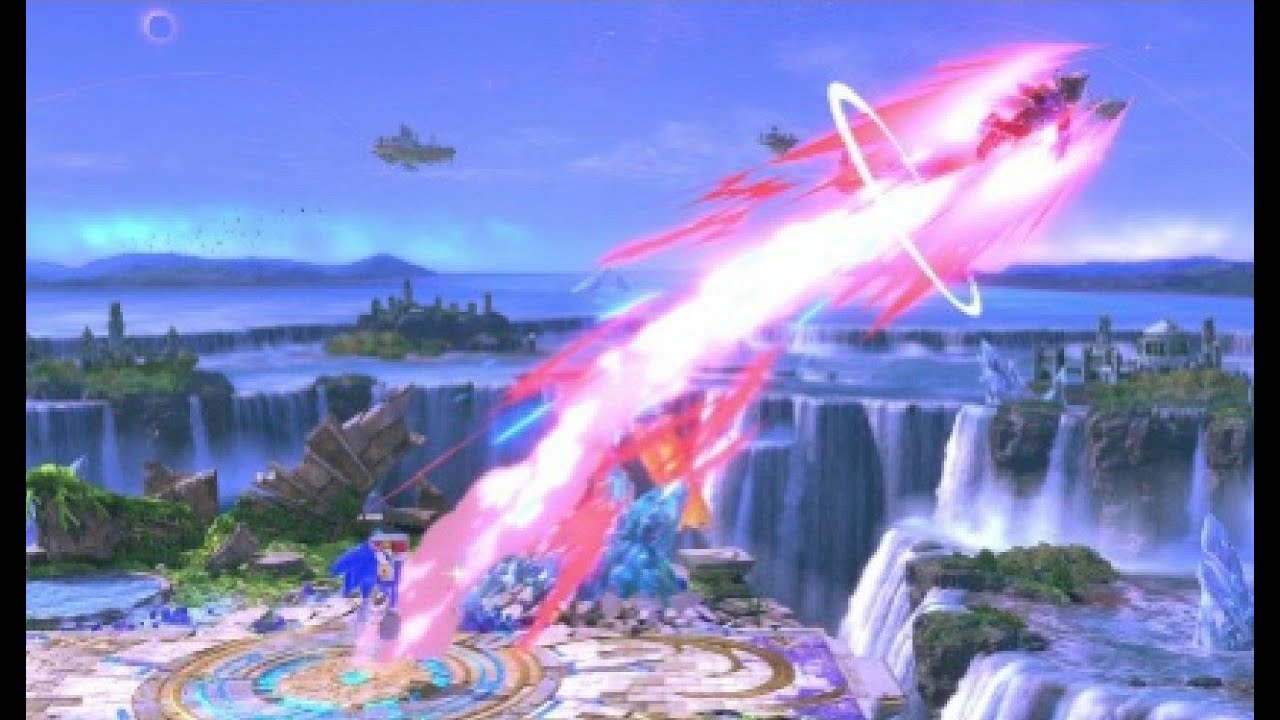
For nearly six years, competitive Super Smash Bros. Ultimate treated Sonic as an endurance test. Matches involving top-tier Sonic specialists routinely pushed the seven-minute timer, defined by patient drift, circular baiting, and low-risk hit-and-run tactics. That defensive dogma cracked open when viral clips from Japanese lab sessions and North American major tournaments showcased something radically different: Sonic deleting opponents from a clean 0% state off a single grounded opening.
What Japanese players dubbed the sokushi konbo (即死コンボ), the zero-to-death sequence, has rapidly migrated from experimental training rooms into high-stakes bracket play. By pairing precise Spin Dash cancels with vertical ladder routes and aerial resource denial, Sonic players have engineered an offensive touch of death execution that upends the character's traditional identity, sparking fiery debates across competitive esports circles.
📌 Key Takeaways:
- The Technical Core: Players combine grounded Spin Dash cancels with frame-tight fast fall aerial timing, turning low-commitment pokes into true vertical carry routes.
- The Execution Barrier: Unlike pre-programmed cutscene combos, the route relies heavily on DI read traps and stage-specific platform extensions across narrow percentage kill windows.
- The Meta Impact: Top contenders face an agonizing dilemma: Sonic now pairs the safest neutral game in the title with the ability to close stocks inside ten seconds.
The Mechanical Genesis of the Blue Blur's Death Touch
Sonic's neutral toolkit was long considered solved. Between Side-B (Spin Dash) and Down-B (Spin Charge), the hedgehog possessed unrivaled stage control, allowing top competitors to dictate match pacing at will. However, frame-data purists in Japan began exploring the micro-interactions behind grounded cancel windows. By interrupting the startup of Spin Dash using precise shield drops and jump inputs, players discovered they could preserve forward momentum while instantly accessing aerials.
This subtle shift unlocked unprecedented combo routes. Instead of settling for a stray aerial and resetting to neutral, players began converting grounded hits directly into an Up-Air ladder combo. The route relies on hitting the late hitboxes of aerial attacks, dragging airborne opponents toward the upper blast zone. Where Sonic once harvested 18% per neutral win, optimized sequences now push targets straight off the screen before the match clock ticks down thirty seconds.
The lab discovery did not remain theoretical for long. High-level Japanese competitors began demonstrating that the route worked across a wide spectrum of character weights, turning routine platform stages like Battlefield and Small Battlefield into lethal execution grounds.
Precision Tracking: The Up-Air Ladder and Spring Gimp Route
At the heart of the zero-to-death conversion sits a relentless sequence of vertical escalations. Once the initial Spin Dash cancel connects at 0% to 15%, the Sonic player buffers an immediate short hop, linking a rising Up-Air before executing a strict fast fall aerial timing sequence. This rapid descent enables a second grounded jump, sustaining hitstun long enough to reset the ladder.
The finishing blow diverges depending on stage layout and enemy reaction. If the opponent drifts inward, Sonic carries them straight into the upper blast barrier. If they attempt an outward escape, the attacker deploys the Spring offstage gimp. By dropping the Up-Special spring directly onto a recovering opponent, Sonic forces an untechable downward spike or strips their double jump entirely, leaving standard recoveries helpless below the ledge.
Understanding these conversion branches requires looking closely at how the sequence shifts across match states:
| Phase & Route | Execution Mechanism | Opponent Counter-Play |
|---|---|---|
| Phase 1: Grounded Starter (0%, 15%) | Spin Dash cancel into buffered short-hop aerial | Hard defensive shield-stop, preemptive poke |
| Phase 2: Ladder Extension (15%, 50%) | Micro-spaced Up-Airs utilizing platform resets | Aggressive outward Directional Influence (DI) |
| Phase 3: The Finisher (50%+) | Spring offstage gimp or top-blast zone Up-Air finish | Resource burning: directional air-dodge to ledge |
The narrow percentage kill windows demand surgical accuracy. If the target takes even 25% prior to the starter, knockback scaling pushes them outside the true follow-up window, reverting the situation to standard advantage play.
Breaking the Defensive Mold in the Sonix Tournament Meta
The broader tournament implications came into focus when these offensive sequences began surfacing in major brackets. Throughout 2024 and 2025, Carlos "Sonix" Pérez dominated premier events worldwide, finishing runner-up or champion at major after major through uncompromising defensive precision. The traditional Sonix tournament meta prioritized stage positioning, zero-risk spacing, and punishing overextensions.
Yet during high-stakes clashes against elite adversaries like Sparg0 and Miya, the pace visibly shifted. Instead of circling the perimeter for four minutes, modern Sonic play began incorporating burst zero-to-death attempts during opening interactions. When an opponent anticipated a standard defensive retreat, a sudden burst forward produced a stock-ending conversion before the commentary desk could finish analyzing the matchup.
The psychological weight on opponents has multiplied. Facing a player who can run out the clock creates immense pressure; facing that same player knowing a single misjudged shield release at 0% means instant death induces total paralysis.

Neutral B Tech Chases and Grounded Trap Scenarios
The ladder route to the ceiling is only half the problem. Sonic mains have increasingly woven the Homing Attack follow-up into their close-quarters arsenal, exploiting specific launch angles to force uncomfortable knockdowns across flat stages like Final Destination.
When an airborne target survives the initial vertical burst, a descending Neutral B tech chase creates an oppressive guessing game. The tracking velocity of Homing Attack forces the opponent into an immediate tech scenario. A missed tech yields a direct reset into another aerial ladder. A tech roll away often runs directly into an pre-charged Spin Dash, while a roll inward gets swallowed by a raw up-smash.
This setup flows seamlessly into an oppressive ledge trap conversion. If the defender attempts to disengage completely by grabbing the ledge, Sonic's spring drop clips their recovery timing. By dropping the spring from the stage lip, the player eliminates normal ledge-hang invincibility windows, forcing a scramble where the defender possesses neither jump nor actionable frames.
Community Fallout and Competitive Balance Debates
The proliferation of these fatal routes has triggered widespread anxiety across community channels. For years, detractors argued that Sonic damaged viewership numbers due to prolonged, low-interaction sets. The sudden emergence of hyper-explosive stocks has not quelled those complaints; instead, it has redirected them.
Critics argue that combining the best mobility attributes in the game with a touch of death execution creates an unhealthy balance profile. On specialized forums and social feeds, clips of players losing stocks in under eight seconds regularly rack up hundreds of thousands of views, accompanied by debates over whether the sequence qualifies as a true combo or a series of unforgiving DI read traps.
Top competitors maintain that the execution difficulty preserves competitive integrity. Navigating the exact DI inputs requires real-time adjustments down to single-digit frames. A defender who recognizes the visual tell of an early Spin Dash cancel can DI sharply away from the platform, forcing the Sonic player to burn resources or drop the sequence entirely.
Strategic Takeaways for the Evolving Meta
Sonic’s strategic trajectory demonstrates how late-stage competitive games refuse to sit still. Even without balance patches from Nintendo, high-level practitioners continually uncover hidden mechanics buried within engine physics. Sonic is no longer solely a war of attrition; he is a dual-threat character capable of suffocating opponents on the clock or obliterating them in single-digit seconds.
Surviving against modern Sonic demands ironclad defensive habits at 0%. Players must treat the opening seconds of every stock with the same caution previously reserved for fighting Kazuya or Luigi. Directional influence cannot be reactive; it must be preemptive. As top brackets head deeper into 2026, the competitors who fail to adapt to this lethal evolution will find their tournament runs cut short long before the timer ever becomes a factor.
Frequently Asked Questions (FAQ)
Q1: Is Sonic's zero-to-death combo completely true across all characters?
A1: No. The combo requires true frame links during the initial Spin Dash cancel into the first two Up-Airs, but later extensions depend heavily on the victim's weight class, fall speed, and Directional Influence (DI). Skilled defenders can alter their trajectory to escape the final Spring gimp or ceiling kill.
Q2: What is the primary counterplay when caught in the ladder starter?
A2: The most reliable defense is early outward DI combined with SDI (Hitstun Directional Influence) away from Sonic's momentum. This widens the distance between both characters, preventing the Sonic player from reaching the late hitbox needed for a platform reset.
Q3: Why did this setup emerge so late in Ultimate's competitive lifespan?
A3: Early Sonic meta focused heavily on low-risk neutral play, which yielded consistent tournament placements with minimal execution error. Discovering the exact fast-fall windows and shield-drop cancels required intensive lab work that only matured as defensive playstyles faced diminishing returns against aggressive top-tier counterpicks.
