From Niconico Underdogs to Shibuya Takeovers: Strawberry Prince's Untold 10-Year Evolution
From Niconico Underdogs to Shibuya Takeovers: Strawberry Prince's Untold 10-Year Evolution
Commuters boarding the Tokyu Toyoko Line in Shibuya this August step directly into a saturated pastel world. Across ten train cars, custom illustrations celebrate a decade of music, banter, and virtual lore. Outside, billboards across Tokyo announce a corporate alliance with telecom heavyweight NTT Docomo, while over 150,000 concertgoers pack venues nationwide. Ten years ago, the founders of Strawberry Prince, known universally as Sutopuri (すとぷり), were broadcasting to a few dozen late-night listeners from bedroom microphones, scraping together listener tips on TwitCasting and Niconico Douga.
Their climb from chaotic indie net-casters to an entertainment powerhouse that commands stadium runs marks one of the most defining cultural shifts in modern Japanese entertainment. As detailed in official company filings and confirmed in a recent PR TIMES Report, management agency STPR Inc. has turned what began as an informal coalition of voice actors, game streamers, and amateur cover vocalists into a multimedia machine. Their 10th-anniversary arena tour, culminating at Tokyo's Yoyogi National Gymnasium, cements the commercial triumph of the "2.5D idol" subculture.
📌 Key Takeaways:
- The Underground Shift: Sutopuri originated in mid-2016 as a loose collective of voice streamers (haishinsha) and cover singers (utaite) on platforms like TwitCasting and Niconico Douga, completely bypassing mainstream talent agencies.
- The 2.5D Commercial Model: By maintaining illustrated avatars online while reserving real-face appearances exclusively for live in-person concerts, the group pioneered a lucrative hybrid identity that bridges anime culture and traditional idol fandom.
- Mainstream Legitimacy: Operating under agency STPR Inc., the group marked its 2026 decennial milestone with an official NTT Docomo sponsorship, a full Shibuya Tokyu Toyoko train takeover, and a 13-date arena tour drawing approximately 150,000 attendees.
The Bedroom Streamers of Niconico Douga (2016 Origins)
In mid-2016, Japan's digital youth scene was fragmented across niche streaming hubs. YouTube had not yet locked down the creator economy in Tokyo; instead, creative misfits clustered on TwitCasting (ツイキャス), Niconico Douga, and Openrec. Young performers known as utaite recorded stylized Vocaloid covers, while voice streamers held marathon late-night talk sessions.
Sutopuri did not begin inside an elite talent agency boardroom. The founding members, brought together by leader Nanamori, were independent solo internet personalities. They spent hours broadcasting gameplay commentary, improvising voice dramas, and reacting to listener text messages in real time. Audience sizes were tiny. A good broadcast gathered a few hundred concurrent listeners.
Early production was genuinely DIY. Audio levels fluctuated wildly, graphics were drawn by amateur online acquaintances, and schedules shifted on a whim. The group lacked institutional backing, media training, and commercial sponsors.
Yet that rough intimacy became their secret weapon. While mainstream talent agencies kept their trainees locked away behind corporate PR walls, Sutopuri members stayed online for five, six, or ten hours at a stretch. They answered live comments by name. They built an intensely devoted, participatory community across middle-school and high-school demographics that traditional media completely failed to register.
Inventing the 2.5D Faceless Idol Blueprint
The group’s defining strategic innovation was its strict "faceless" presentation. During online streams, music videos, and social media promotions, members represented themselves strictly through colorful 2D anime-style characters, each designated a signature color and personality archetype.
However, they refused to stay purely digital.
Unlike purely virtual YouTubers (VTubers) who hide behind digital motion-capture rigs 100% of the time, Sutopuri introduced a strict physical boundary: fans could only see their actual, unmasked faces inside ticketed live music venues. This structural friction transformed a normal concert ticket from simple musical entertainment into a rare, exclusive revelation.
[ Digital Realm: YouTube / TwitCasting / X ]
2D Illustrated Avatars & Voice Only
│
▼ (Ticket Paywall / Physical Arena)
[ Real World: Strawberry Memory Arena Tours ]
Unmasked, In-Person Live Performance
This model solved a massive operational headache that had plagued legacy Japanese idol agencies for decades. Traditional physical idols aged out of youthful concepts and suffered immense physical scrutiny from tabloid paparazzi. Virtual avatars offered aesthetic longevity and visual consistency. Simultaneously, the real-world concert payoff delivered the visceral emotional connection of a live pop concert.
Japanese entertainment sociologists call this the 2.5D space, the deliberate intersection of two-dimensional graphic fantasy and three-dimensional human staging. Sutopuri proved that an illustrated avatar could headline arena stages without ever showing a human face on public television.
A Decade of Structural Expansion: 2016 to 2026
The group's operational trajectory illustrates how self-managed internet talent systematically displaced legacy media channels over the past decade.
| Timeframe | Operational Phase | Key Venues & Benchmarks | Estimated Audience Footprint |
|---|---|---|---|
| 2016, 2017 | Indie Bedroom Streaming | TwitCasting, small live houses (Strawberry Memory Vol.1, 3) | Hundreds to low thousands |
| 2018, 2019 | Agency Founding & Mainstream Breakthrough | STPR Inc. founded; Zepp tour circuits; Nippon Budokan debut | Tens of thousands; Oricon album chart top positions |
| 2020, 2022 | Dome Tour Expansion & Virtual Staging | Belluna Dome, Tokyo Dome, 5-Dome National Tour circuits | 300,000+ live attendees; millions of social followers |
| 2023, 2025 | Multimedia Conglomerate Phase | Theatrical feature film release; television animation tie-ins | Multimillion-dollar retail and merchandise lines |
| 2026 | Decennial Milestone & Telecom Alliances | 10th Anniversary Arena Tour; Yoyogi National Gymnasium finale | ~150,000 arena attendees across 13 shows; nationwide theater broadcasts |
From their debut shows at small live houses holding barely 200 people to their current arena footprints, the group maintained an astonishing cadence of physical output. They bypassed standard industry protocols, relying on algorithmic momentum and intense fan-driven organic social promotion.
The STPR Engine: Corporate Agency Muscle and Blue-Chip Alliances
Sutopuri's longevity rests largely on its corporate vehicle: STPR Inc. Headquartered in Shibuya under the leadership of President Kenji Akita, the agency took over publishing rights, live event operations, and IP merchandise lines.
Instead of taking a standard commission cut while farming out merchandising to third-party brokers, STPR built an integrated in-house merchandising and event ecosystem. The company manufactures its own acrylic stands, character pens, apparel, and light sticks. Fans buy directly through STPR’s proprietary storefront. By keeping retail profits in-house, the group generated margins that legacy idol companies, burdened by massive executive overhead, could rarely match.
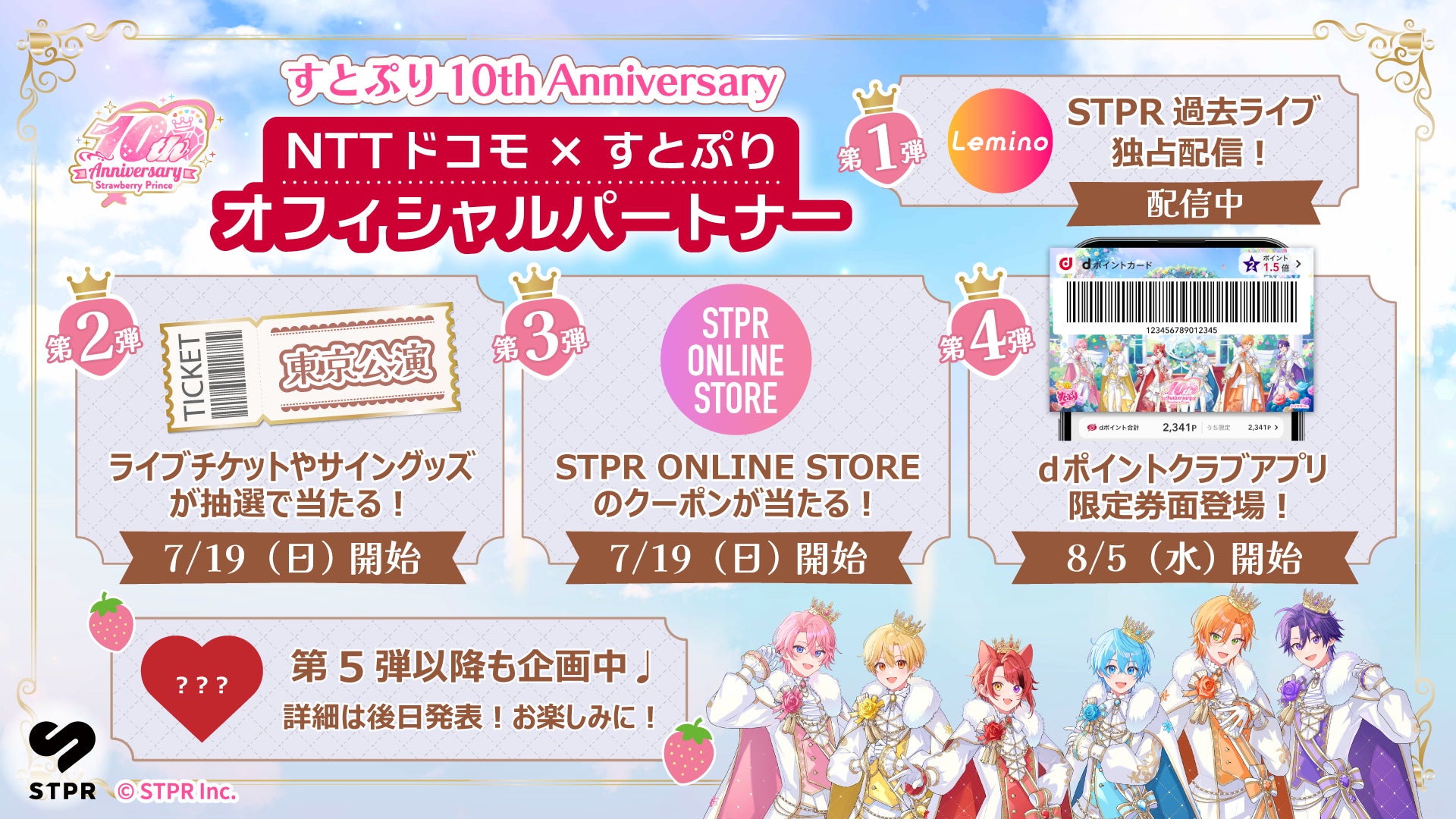
Corporate Japan took note. On July 21, 2026, telecommunications giant NTT Docomo signed on as the official partner for Sutopuri's 10th anniversary celebrations.
A decade earlier, corporate giants viewed independent internet streamers with extreme suspicion. They saw them as copyright risks prone to broadcast gaffes. Today, those same conglomerates line up to back them. The Docomo partnership represents a structural shift: telecommunications companies now treat virtual idol collectives as frontline drivers of mobile data consumption, digital subscription platforms, and high-margin retail campaigns.
The Shibuya Toyoko Takeover and the Yoyogi Arena Finale
The scale of Sutopuri’s 10th anniversary was impossible to miss in urban Tokyo throughout August 2026.
From August 7 through August 30, 2026, the group executed their first full train takeover: the "Strawberry Prince 10th Anniversary Train." A dedicated 10-car Tokyu Toyoko Line train was plastered with member illustrations and retrospective timelines, cycling thousands of commuters daily between Shibuya and Yokohama.
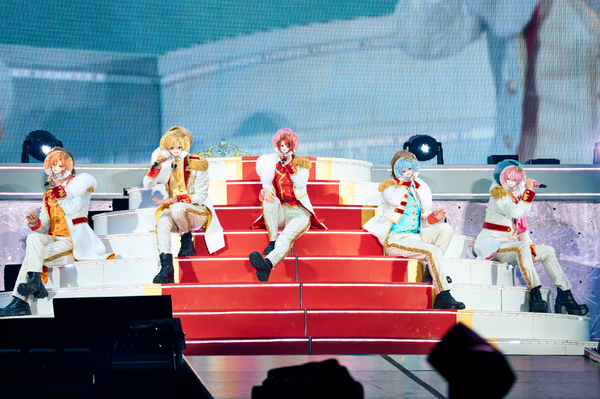
Meanwhile, their live tour, officially billed as Strawberry Memory Vol.10th anniversary ~Sutopuri ARENA TOUR~, crisscrossed major metropolitan centers. At Marine Messe Fukuoka Hall A, the group completed a three-show sweep on July 25 and 26, 2026, working local dialect jokes into their banter to delight regional fans.
The nationwide tour reached its climax from August 18 to 20, 2026, at Tokyo's iconic National Yoyogi Stadium First Gymnasium. Across three consecutive days, thousands of fans packed the arena holding color-coded penlights matching the members' avatars.
For the final August 20 show, tickets sold out so quickly that STPR coordinated live satellite viewing across movie theaters in all 47 Japanese prefectures. The 13-performance arena run pulled an aggregate in-person audience of roughly 150,000 attendees, proving their cultural footprint extends far beyond digital view counts.
Navigating the Pressures of Virtual-Physical Celebrity
The 2.5D entertainment model is undeniably effective, but it creates intense behavioral pressures.
Sutopuri's relationship with its community is built on extreme personal access. Fans listen to members stream for hours late into the night, hearing them talk through personal setbacks, creative fatigue, and everyday thoughts. This dynamic produces fierce loyalty, but it also generates high-stakes parasocial expectations.
When a member steps out of character, faces personal scandal, or takes an extended hiatus, the fallout among fans hits far harder than it does for a conventional pop band. Because the character avatars represent purity and accessibility, disruptions to that digital image can trigger massive backlash across social media forums.
Operating under anime illustrations also requires extraordinary discipline. Real-world privacy becomes an obsession. Members must navigate everyday life in Tokyo knowing that a single leaked photograph of their unmasked face could compromise their commercial exclusivity. Sutopuri has walked this tightrope for ten continuous years, showing other digital creators how to build an avatar-based franchise without losing their human authenticity.
Frequently Asked Questions (FAQ)
Q1: Why do Strawberry Prince members hide their real faces in public media?
A1: The group uses illustrated 2D avatars for online broadcasts, social media, and music videos to build an accessible, anime-style brand. They reserve their real-face reveals strictly for ticketed, in-person live events, turning concert tickets into an exclusive, highly sought-after experience for core fans.
Q2: Who owns and manages the Strawberry Prince project today?
A2: The group is managed by STPR Inc., a specialized Japanese entertainment agency based in Shibuya, Tokyo, led by Representative Director and President Kenji Akita. STPR manages their intellectual property, music catalog, live touring operations, and direct-to-consumer merchandising.
Q3: What were the key attendance milestones of their 10th-anniversary tour in 2026?
A3: The 2026 Strawberry Memory Vol.10th anniversary ~Sutopuri ARENA TOUR~ spanned 13 performances across major cities, drawing an estimated 150,000 live concertgoers. Highlights included a three-show run at Marine Messe Fukuoka Hall A and a sold-out three-day finale at Tokyo’s National Yoyogi Stadium First Gymnasium, which was simultaneously broadcast to cinemas nationwide.
The Blueprint for Modern Hybrid Entertainment
Sutopuri’s rise from bedroom streamers to mainstream icons represents a permanent transformation in how Japanese idols are discovered, developed, and commercialized.
They did not rely on legacy television networks or established talent agencies. Instead, they built an independent digital collective on Niconico Douga, cultivated direct fan bonds through marathon live audio streams, and turned avatar-based personas into an arena-filling empire. Their 2026 decennial milestone, backed by NTT Docomo and celebrated across Shibuya’s rail infrastructure, shows that internet-native creators are no longer working on the margins of Japanese pop culture. They are writing its mainstream playbook.
