From 'Rabbit' to Matriarch: Why Touka Kirishima Remains Tokyo Ghoul's Most Powerful Symbol
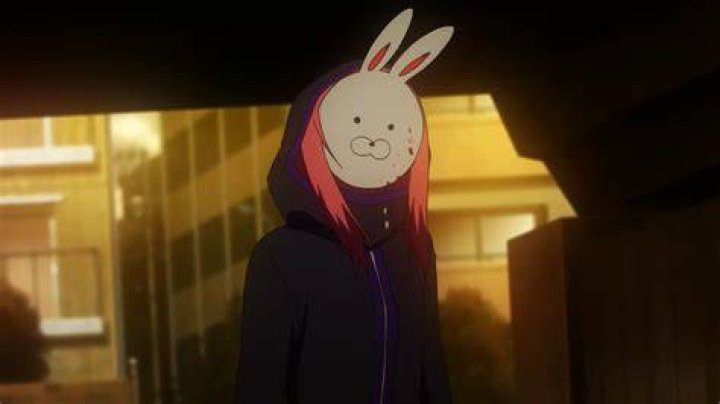
When readers reflect on dark fantasy manga, the conversation frequently centers on male leads enduring physical torment and descending into madness. Yet Sui Ishida’s masterwork subverted this pattern through Touka Kirishima (霧嶋董香). As examined in the comprehensive retrospective by the Crunchyroll Report on how the narrative unpacks tragedy across distinct phases, Touka's evolution forms the ideological spine of the entire franchise. While Ken Kaneki’s psyche splintered into half a dozen contradictory alter egos, Touka preserved her core identity through sheer will, moving from an aggressive street fighter to the pragmatic architect of ghoul survival.
Her narrative trajectory cuts against the grain of conventional shonen and seinen tropes. Touka does not exist to be saved, nor does she operate purely as emotional collateral to drive someone else's awakening. She works long shifts, hides her scent behind coffee grounds, memorizes biology textbooks to blend into human high schools, and bleeds defending the fragile normalcy of the 20th Ward. Decade-long community evaluations across forums and analytical essays consistently converge on one point: Touka is the moral compass that kept an inherently nihilistic story tethered to reality.
📌 Key Takeaways:
- Core Identity: Touka Kirishima moved from a defensive teenage vigilante known as "Rabbit" to the steady maternal core of the ghoul-human coexistence movement.
- Combat Pragmatism: Armed with an explosive yet stamina-draining Ukaku kagune, she balanced relentless tactical speed against systemic attrition throughout the Commission of Counter Ghoul (CCG) crackdowns.
- Narrative Endurance: Her perseverance running the :re coffee shop while maintaining underground safehouses provided Kaneki with an anchor, culminating in the birth of their daughter, Ichika Kaneki.
From 20th Ward Alleyways to the Counter at Anteiku
Introduced in early 2011 serialized chapters, Touka confronted readers as a bundle of defensive aggression. Abandoned along with her younger brother Ayato Kirishima after their father Arata was captured by the CCG, Touka learned early that vulnerability invited extermination. She masked her fear behind callousness. When Kaneki was shoved into the predatory underbelly of Tokyo as a half-ghoul, it was Touka who forced raw flesh down his throat to keep him alive, disgusted by his naive refusal to acknowledge his new biological reality.
Yoshimura, the manager of the Anteiku cafe, offered her an alternative to mindless slaughter. Anteiku operated as a sanctuary where ghouls collected suicide victims rather than hunting living humans, pouring pour-over coffee to suppress their cravings and practicing how to eat human sandwiches without retching. Touka took this discipline to heart. By day, she attended Kiyomi High School alongside her human friend Yoriko Kosaka, enduring Yoriko’s home-cooked bentos despite the excruciating digestive sickness they caused. By night, she patrolled the district wearing a grotesque rabbit mask, killing predatory investigators like Kureo Mado to shield the weak.
Her early dynamic with Kaneki was marked by sharp friction. She resented his former human privilege, while he feared her lethal violence. But beneath the surface, both shared a profound dread of solitude. When the CCG launched their raid on the 11th Ward and Kaneki was captured by Aogiri Tree, Touka burned through her physical limits to breach the stronghold. Kaneki's subsequent departure to form his own anti-Aogiri cell wounded her deeply, precisely because she understood the self-destructive spiral he had entered.
The Mechanics and Strain of the Ukaku Kagune
Combat within Sui Ishida's world functions as a direct extension of character psychology, governed by strict biological rules regarding Rc cells. Touka possesses an Ukaku kagune, manifesting from the shoulder blade area as crystalline, flame-like wings capable of firing high-speed hardened shards. While providing blinding agility and overwhelming close-to-mid-range burst damage, the Ukaku type suffers from rapid stamina depletion.
This biological constraint dictated Touka’s operational doctrine. Unlike Rinkaku users who regenerate severed limbs within seconds, or Koukaku users who absorb heavy ordnance behind dense shields, Touka had to finish engagements within seconds or risk total collapse. Her fighting style mirrored her personality: sudden, blistering, and fiercely protective, but prone to burning through its fuel reserve when pushed into prolonged sieges.
During her brutal rooftop clash with Ayato, this biological disparity became painful. Ayato, who had embraced predatory savagery within Aogiri Tree, mocked her exhaustion as she fought on empty reserves to protect Anteiku’s pacifist philosophy. Later, against Special Class Investigator Kisho Arima and his lightning-quick Narukami quinque, built directly from the harvested kagune of her mother, Hikari Kirishima, Touka faced down the CCG's apex predator with an asymmetric disadvantage that highlighted her personal courage.
Touka Kirishima's Evolution Across Narrative Eras
The progression of Touka’s character across the original serialization and the sequel series demonstrates a deliberate transition from reactive combatant to strategic leader. The following timeline tracks her functional status, combat loadouts, and tactical motivations across major milestones.
| Phase & Narrative Era | Operational Role & Public Alias | Primary Tactical Objectives |
|---|---|---|
| Early Tokyo Ghoul (2011, 2012) | Anteiku Waitress / "Rabbit" Vigilante | Avenging Hinami's mother; maintaining high school cover; eliminating CCG scouts in Ward 20. |
| Late Tokyo Ghoul (2013, 2014) | Anteiku Defender / Kiyomi High Graduate | Holding the line during the Anteiku Raid; rescuing civilian ghouls; surviving CCG sweeps. |
| Early Tokyo Ghoul:re (2014, 2016) | Manager of :re Coffee Shop | Providing a quiet lighthouse for amnesiac Haise Sasaki; rebuilding broken communication networks. |
| Late Tokyo Ghoul:re (2017, 2018) | Goat Executive / Resistance Strategist | Securing food supplies in underground Ward 24; coordinating ghoul-human joint fronts against Dragon. |
The :re Coffee Shop and Haise Sasaki’s Forgotten Memories
When Ishida launched the sequel series Tokyo Ghoul:re, Touka’s initial reintroduction stunned long-time followers. Anteiku had burned to ash during the CCG's devastating operation. Kaneki had disappeared, presumed dead or recycled into government quinque steel. Instead of waging a suicidal revenge campaign against the authorities, Touka chose to build something durable.
Partnering with Renji Yomo, she established :re, an independent coffee shop tucked away in a quiet neighborhood. When CCG Mentor Haise Sasaki walked through the door alongside his Quinx squad, he had no conscious recollection of his past life as the One-Eyed Ghoul. Touka served him coffee, observed his confusion, and offered a gentle, sorrowful smile that instantly rattled Haise's psychological defenses.
This encounter demonstrated exceptional emotional restraint. A lesser character would have demanded recognition, screamed at his memory loss, or dragged him into the underground network. Touka recognized that Haise had found a peaceful identity surrounded by subordinates who cared for him. She chose to give him space, leaving the door unlocked so that whenever his synthetic persona shattered, he would have an authentic home waiting for him.
The Goat Resistance Organization and the Underground Wedding
When Kaneki finally recovered his identity as the One-Eyed King, the narrative escalated into systemic warfare. The CCG, overtaken from within by Furuta Nimura and the clandestine V syndicate, initiated an aggressive purge of Tokyo’s ghoul population. Kaneki established the resistance movement Goat, moving thousands of refugees into the subterranean ruins beneath the 24th Ward. Touka stepped into an indispensable leadership position, managing rationing, internal policing, and humanitarian logistics.
Her relationship with Kaneki shifted from unspoken longing to open mutual reliance. Aware that tomorrow was never guaranteed in an underground tomb surrounded by execution squads, the two confirmed their commitment in chapter 125, culminating in a traditional ghoul wedding ceremony marked by mutual bite scars. This sequence stripped away the melodrama typical of battle shonen, portraying two traumatized survivors choosing companionship in the shadow of impending annihilation.
When the CCG’s Oggai squads raided the underground haven, a pregnant Touka was forced to fight on the front lines while eating human food to keep her hybrid baby alive, pushing her biological systems to catastrophic limits. As Kaneki mutated into the city-destroying entity known as "Dragon," Touka refused to accept despair. She took a pickaxe, dug through thousands of tons of toxic biomass with her bare hands alongside human investigators like Koutarou Amon and Akira Mado, and pulled Kaneki from the center of the organism.
Frequently Asked Questions (FAQ)
Q1: Why was Touka Kirishima given the code name "Rabbit" by the CCG?
A1: During her early vigilante activities in the 20th Ward, Touka concealed her civilian identity behind an unadorned white rabbit mask with rounded ears. Her lightning-quick leaps, sudden hit-and-run tactics, and blistering Ukaku attacks led CCG investigators to assign her the classification code name "Rabbit."
Q2: How was Touka able to successfully carry and give birth to Ichika Kaneki?
A2: A child born between a natural ghoul and an artificial half-ghoul faces severe developmental barriers. If a female ghoul carries a hybrid child, her body naturally views the fetus as nourishment, absorbing it. To prevent this metabolic response, Touka deliberately forced herself to eat human food throughout the pregnancy, weakening her ghoul biology and providing the essential human nutrients her daughter needed to survive.
Q3: How did Touka's relationship with her brother Ayato Kirishima resolve?
A3: Ayato initially joined Aogiri Tree out of a misguided desire to gain enough destructive power to protect Touka from a distance, scorning her peaceful lifestyle. Over time, Ayato witnessed the horrors of ideological extremism, reconciled with Touka, and fought directly alongside her and Goat during the Dragon war.
The Lasting Cultural Footprint of Touka Kirishima
When Tokyo Ghoul:re concluded with chapter 179, Ishida presented a world transformed by painful compromise. The unified front between the United Front of Ghouls and former CCG personnel established the Tokyo Peace-Keeping Commission. Ghouls gained synthetic food alternatives, medical rights, and legal representation. At the center of this hard-won stability stood Touka, Kaneki, and their young daughter, Ichika Kaneki.
Touka Kirishima endures in pop culture because she never traded her humanity for martial power. While Kaneki repeatedly surrendered his stability in search of sacrificial strength, Touka proved that endurance is an active, day-to-day discipline. She worked early mornings, cleaned dishes, endured horrific physical pain, and held her ground against overwhelming odds. By balancing fierce combat ability with unyielding devotion to her community, Anteiku's former Rabbit earned her legacy as the definitive survivor of Tokyo's darkest hours.
