From Singles Champion to Ice Dance: Shoma Uno's New Path and Physical Overhaul
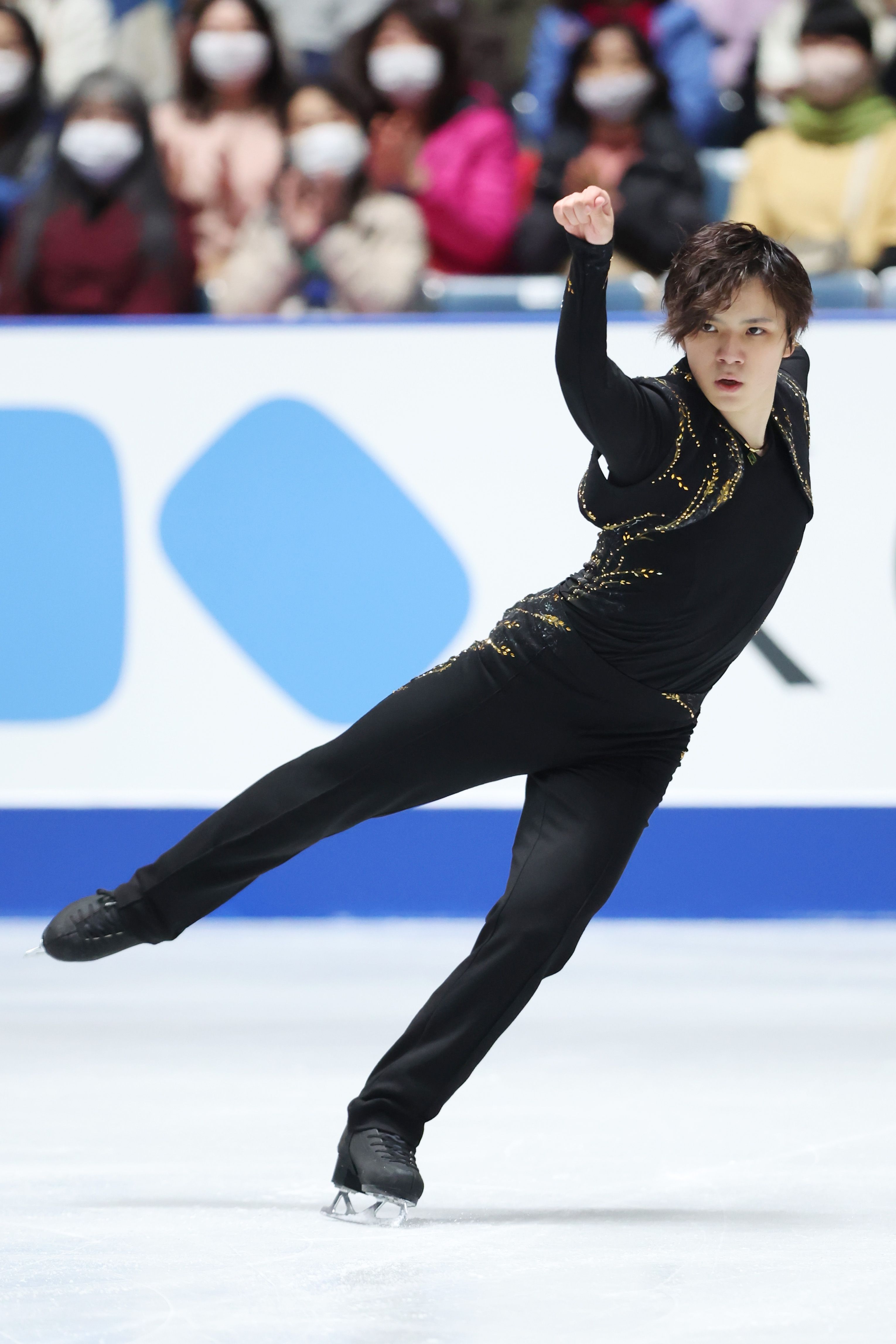
When two-time World champion Shoma Uno announced his retirement from competitive singles skating in May 2024, the sporting world expected a standard victory lap across international galas. Instead, Uno took an unorthodox turn. As detailed in an olympics.com Report, Uno unveiled his self-produced ice show "Ice Brave," showcasing a full transition into ice dance alongside longtime partner Marin Honda. The pairing immediately ignited debate across the global skating community, centering on an undeniable physiological reality: Uno’s stature.
Uno stands at an officially recorded 158 cm (5 feet 2 inches), while Honda measures approximately 163 cm (5 feet 4 inches). In a discipline built on towering male partners who hoist compact female skaters overhead, Uno and Honda are rewriting the conventional blueprint. The shift requires not just artistic reinvention, but a wholesale physical overhaul that challenges long-standing assumptions about skater proportions, balance, and partnering mechanics.
📌 Key Takeaways:
- The Measurement Profile: Uno Shoma height in cm sits at 158 cm, pairing with Marin Honda at 163 cm, creating an inverted height dynamic rarely seen at the discipline's upper tiers.
- Mechanical Transition: Moving away from singles skating means trading the rapid rotational velocity needed for quadruples for the upper-body torque and deep edge sustained glide needed in partnered lifts.
- The Ice Brave Showcase: Uno's collaborative production serves as the active testing ground for custom partner elements designed around inverted leverage.
The Biomechanics of 158 Centimeters in Men's Singles
Uno’s height was never a limitation during his decade at the top of men's singles; it was his mechanical advantage. Standing 158 cm with a competitive weight hovering near 55 kg, Uno possessed an exceptionally low figure skating center of gravity. In physics, the moment of inertia directly determines how fast an object rotates: reducing the body's radius from its axis exponentially increases rotation speed. Uno harnessed this law to perfection.
Where taller competitors battled centrifugal drag to snap into revolutions, Uno snapped into tight rotational positions within a fraction of a second. This compact frame allowed him to land historic elements, including the world's first ratified quadruple flip in 2016. His lower center of mass also enabled his signature cantilever and deep running edges, absorbing the brutal impact forces of high-velocity descents. His knees flexed deeper than almost any peer, turning physical compactness into explosive athletic expression.
The Yuzuru Hanyu Height Comparison and Japanese Skater Builds
Discussions regarding Japanese men's figure skating build inevitably draw comparisons to Yuzuru Hanyu. Standing at 172 cm (5 feet 8 inches), Hanyu brought a lean, elongated silhouette that came to define classic Japanese competitive aesthetics during the 2010s. The 14-centimeter height differential between the two stars created sharply contrasting dynamics on the ice, most visibly at the 2018 PyeongChang Winter Olympics, where Hanyu claimed gold and Uno took silver.
Hanyu relied on long lever arms and spring mechanics, using his height to generate massive ice coverage on takeoffs. Uno countered with sheer rotational speed, tight edge work, and rapid torque generation. The Japanese men’s program has historically seen world-class talent thrive across compact body types, from Daisuke Takahashi at 165 cm to Yuma Kagiyama at 160 cm. Yet while a smaller build offers undeniable physics advantages in jumping disciplines, transferring that exact frame into ice dance alters every established rule of leverage.
Engineering Lifts When the Female Partner Is Taller
Traditional ice dance pairings adhere to strict physical ratios. Elite male partners usually stand between 180 cm and 188 cm, pairing with female skaters measuring 155 cm to 162 cm. This 20-to-25-centimeter gap gives the male skater the overhead reach and leverage needed to hoist, spin, and deposit his partner across compulsory lift sequences without destabilizing his own edge.
Partnering with Marin Honda inverts that formula. Because Honda stands roughly 5 centimeters taller than Uno, classical overhead press lifts introduce significant mechanical complications. The lifting partner's shoulders must support weight that sits above their own center of mass, requiring radically different balance vectors. In the "Ice Brave" rehearsals, the duo bypassed conventional overhead presses, focusing instead on rotational dance lifts, stationary waist-level slides, and complex edge carries. By anchoring Honda's mass directly across Uno's hips and midsection rather than extending his arms overhead, Uno converts his low center of gravity into an unshakeable platform.
| Physical Metric | Men's Singles (2015, 2024) | Ice Dance Transition (2024, 2026) |
|---|---|---|
| Target Body Weight | ~54, 55 kg (optimized for jump takeoff) | ~57, 59 kg (hypertrophy for lifting base) |
| Muscular Emphasis | Quadriceps, calves, core rotation | Trapezius, rhomboids, glutes, grip strength |
| Center of Mass Target | Individual axis along vertical spine | Shared midpoint shifted toward partner contact |
| Primary Blade Mechanics | Deep knee bend into explosive toe pick release | Sustained flat-knee glide and synchronized tilt |
Rebuilding the Upper Body for Partnered Ice Dance
To execute the physical demands of ice dance, Uno spent the period from late 2024 through early 2026 undertaking a focused physical transformation. Elite male singles skaters keep their upper bodies deliberately lean. Excess muscle mass in the chest, shoulders, and arms adds dead weight, dragging down jump height and slowing rotational speed. In ice dance, however, upper-body strength is non-negotiable.
Uno had to add functional muscle across his back, shoulders, and core while preserving his signature ankle flexibility. Reports from his training sessions indicate heavy emphasis on isometric carries, compound barbell pulls, and partner stability work. Honda’s center of mass must align perfectly with Uno’s hips during directional changes. If her weight drifts outside his support base, Uno cannot rely on long limbs to catch the balance; he has to absorb and redirect the momentum instantly through brute core strength and edge control.
Choreographic Adjustments in the 'Ice Brave' Arena
Beyond weight rooms and blade profiles, the partnership demanded an overhaul in visual presentation. When a male skater is shorter than his partner, standard arm placements can look cramped, and synchronized step sequences can expose mismatched stride lengths. Honda possesses long, flowing extensions honed across her competitive singles career; Uno skates with explosive power, driving his blades deeply into the surface.
During the debut performances of "Ice Brave," choreographers adjusted their spacing to turn this contrast into a feature rather than a flaw. Instead of forcing classical balletic silhouettes, the routines highlight intricate, parallel footwork sequences and close-contact choreography. Skating aficionados on platforms like Reddit's figure skating hub noted that Uno’s glide efficiency compensates for shorter reach, allowing the pair to match speeds without Honda feeling restricted. The dynamic produces a visual style focused on shared momentum rather than the traditional story of a powerful man presenting a delicate partner.
Frequently Asked Questions (FAQ)
Q1: What are Shoma Uno’s official height and physical stats?
A1: Shoma Uno is officially measured at 158 cm (5 feet 2 inches) and maintained a competitive weight of approximately 55 kg (121 lbs) during his men's singles career, gaining slightly more functional muscle mass for ice dance training.
Q2: Is Shoma Uno shorter than his ice dance partner Marin Honda?
A2: Yes. Marin Honda stands at approximately 163 cm (5 feet 4 inches), making her roughly 5 cm taller than Uno. This inverted height dynamic is uncommon in high-level ice dance, where male partners are typically 15 to 25 cm taller.
Q3: Did Uno's height help or hurt his singles skating career?
A3: It was a clear asset. His 158 cm height gave him a low center of gravity and a tight rotational radius, allowing him to master quadruple jumps with elite rotational velocity while maintaining soft, deep-edge knee landings.
Q4: Are Uno and Honda competing in official ISU ice dance events?
A4: As of 2026, the duo has focused primarily on their professional ice show productions, including "Ice Brave," using performance programs to refine their partnered elements rather than entering the official ISU Olympic-cycle competitive circuit.
The Evolution of Uno and Honda’s Ice Dance Partnership
The progression of Shoma Uno from singles powerhouse to ice dance performer proves that physical metrics do not dictate an athlete's boundaries on the ice. By leaning into biomechanical reality rather than attempting to mimic traditional partner ratios, Uno and Marin Honda have established a distinctive identity within professional figure skating. Uno’s low center of gravity, once the engine behind quadruple flips, now serves as an unyielding anchor for synchronized glides and intricate lift mechanics. As "Ice Brave" continues to tour and expand its repertoire through 2026, Uno’s physical transformation demonstrates that elite skating technique is fluid, adapting seamlessly whenever a master technician chooses to alter the angle of approach.
