From Tokyo Station Snarl to Nagoya Highway: Ayumi Hamasaki's Wild Commute

A sudden rail shutdown at Tokyo Station on June 19, 2026, turned an ordinary arena tour commute into an urgent cross-country road race. When an unauthorized trespasser walked onto the tracks at Hamamatsu Station shortly after 5:30 PM, Central Japan Railway halted service across the Tokaido Shinkansen corridor, stranding thousands of peak-hour travelers. Among those trapped on the platform was 47-year-old J-pop icon Ayumi Hamasaki and her entire touring production crew, hours before scheduled rehearsals in Aichi Prefecture. Refusing to scrap the performance dates, her management split the traveling party across five private passenger vehicles, embarking on a grueling 350-kilometer dash along the Tomei and Shin-Tomei Expressways, as detailed in a 毎日新聞 Report.
The impromptu highway run did more than solve an immediate logistical bottleneck. It struck an immediate chord with Japan’s vocal automotive subcultures, where Hamasaki’s visual legacy has thrived for more than two decades. As news of the five-car convoy spread across social media, the singer's executive highway dash intersected directly with the long-running tradition of Ayumi Hamasaki tribute vehicles, the rolling, heavily modified "Ayu-cars" and music-subculture itasha that have followed her tours across Japan since the turn of the century.
📌 Key Takeaways:
- The Transit Disruption: A trespasser near Hamamatsu Station paralyzed the Tokaido Shinkansen at 5:30 PM on June 19, 2026, forcing Ayumi Hamasaki's team to abandon rail travel at Tokyo Station.
- The Highway Solution: Her production team split into five chartered luxury vans, covering the roughly 350-kilometer route to Nagoya entirely by highway to keep tour operations on schedule.
- The Cultural Ripple: The event renewed intense public and enthusiast interest in Japanese pop icon car culture, contrasting Hamasaki's executive VIP fleet against the elaborate, fan-crafted tribute wraps and decocars that populate arena parking lots.
The Tokyo Station Transit Snarl and the Five-Car Split
The Tokaido Shinkansen serves as the central artery of Japanese domestic touring, linking Tokyo, Nagoya, and Osaka with precision that touring managers take for granted. On the evening of June 19, that precision vanished in minutes. With bullet trains frozen between Shinagawa and Toyohashi, passenger concourses inside Tokyo Station jammed with stranded commuters and touring professionals.
For Hamasaki, waiting out the track inspection was out of the question. Arena setups demand rigid timelines: sound checks, lighting calibration, choreography walkthroughs, and physical therapy for a high-intensity stage performance. Prolonged rail delays can jeopardize an entire weekend engagement. Through updates shared directly with fans via Instagram Stories, Hamasaki revealed that the management team made a rapid tactical call: abandon the rails, secure five passenger vans, and run the highway network southwest toward Nagoya.
Navigating out of central Tokyo during Friday evening rush hour is notoriously slow. The convoy had to thread through the Metropolitan Expressway before clearing the Tokyo toll gate onto the Tomei Expressway, racing dusk and highway congestion across Kanagawa and Shizuoka prefectures. Long-distance road transit on short notice poses distinct challenges for vocalists, who require controlled cabin humidity, lumbar support, and acoustic isolation to preserve stamina ahead of multi-hour performances.
Inside the Executive Van Fleet: Mobility and Acoustic Isolation
The vehicles chosen for such celebrity road operations are rarely standard passenger cars. High-profile Japanese artists rely almost exclusively on custom executive minivans, predominantly high-trim Toyota Alphards, Vellfires, or flagship Lexus LM variants. Just weeks prior, on May 7, 2026, Hamasaki shared glimpses of her private transport cabin on social media, showcasing a bespoke interior configured specifically for privacy and recovery on the road.
These mobile lounges bridge the gap between a private dressing room and a boardroom. Captain chairs equipped with independent climate zones, ottoman recliners, and integrated massage features allow artists to rest between engagements. Dual-pane acoustic glass, active noise cancellation, and dense cabin insulation mute tire hum from concrete highway pavements. Rear-cabin partitions provide full visual isolation from outside traffic, while onboard air purifiers maintain vocal cord hydration against dry conditioning air.
Mobilizing five such vehicles simultaneously required sharp fleet coordination. Road conditions along the Shin-Tomei Expressway permit higher cruising speeds up to 120 km/h in designated stretches, yet a five-vehicle unit must balance pacing, scheduled refueling stops at service areas like Ebina and Hamamatsu, and communications between drivers to ensure the entire core unit arrives intact.
Timeline: The Race from Central Tokyo to Aichi Prefecture
The operational pivot from high-speed rail to highway pavement demanded rapid decision-making under intense time pressure. The schedule below outlines the key events of the June 19 scramble and its immediate aftermath.
| Time (JST) | Operational Incident / Milestone | Logistical Impact |
|---|---|---|
| 17:35 | Track intrusion reported at Hamamatsu Station. | Tokaido Shinkansen power cut; full line stoppage between Tokyo and Shin-Osaka. |
| 18:10 | Tour operations aborts train travel at Tokyo Station. | Production staff, band members, and Hamasaki split into five chartered vans. |
| 18:45 | Convoy clears Metropolitan Expressway onto Tomei. | Fleet encounters Friday evening outbound congestion through Kanagawa. |
| 21:30 | Midway transit across Shizuoka via Shin-Tomei. | Clear highway stretches allow steady cruising; social updates alert awaiting fans. |
| 23:45, 00:30 | Staggered arrival at Nagoya base hotels. | Entire traveling party secured with zero schedule cancellations for weekend shows. |
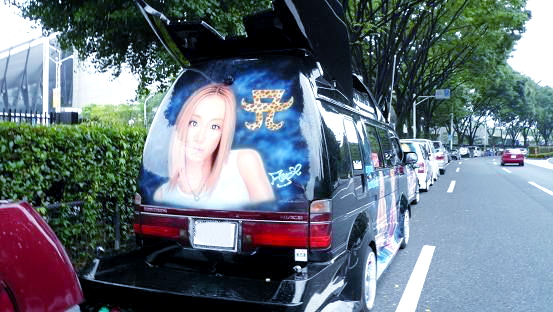
The Ayu Decocar Legacy: From Early 2000s Vans to Modern Itasha
The sight of Hamasaki traversing the national expressway network triggered an instant association for Japanese car enthusiasts: the legendary "Ayu-sha" phenomenon. While the modern term itasha typically denotes vehicles wrapped in anime, manga, or mobile game graphics, the subculture’s roots in mainstream music fandom owe an immense debt to Ayumi Hamasaki's commercial peak between 1999 and 2005.
During the height of the Avex visual revolution, fans transformed everyday hatchbacks, Toyota bBs, and boxy HiAce vans into rolling expressions of devotion. These builds carried full-body airbrushed portraits of Hamasaki, oversized vinyl cuts of her signature winged "A" insignia, metallic flake paint jobs, and intricate mirror-tinted windows. Known interchangeably as decocars or music-tribute itasha, they filled the parking lots of venues like Yoyogi National Gymnasium and Nagoya Rainbow Hall (now Nippon Gaishi Hall).
The aesthetic was bold, loud, and uncompromising. Rear hatches were stripped of spare tires to house plexiglass-mounted subwoofers, precision-cut neon tubes, and synchronized LED strips pulsing to high-BPM eurobeat remixes of "Trauma" and "Evolution." For many fans, the car was not merely transport; it was a mobile listening lounge and an emblem of identity within the artist's nationwide community, Team Ayu.
The Evolution of Fan Tribute Vehicles in the 2020s
Automotive modification among music fans has evolved significantly from the airbrush shops of the early 2000s. Today, digital design suites and high-grade cast vinyl have replaced irreversible paint modifications, bringing professional precision to fan tribute vehicles.
Modern builds lean on high-definition wrap films from manufacturers like 3M and Avery Dennison, protected by UV-resistant gloss or satin overlaminates. A full vehicle wrap celebrating an artist's tour cycle typically costs between 450,000 and 900,000 JPY ($3,000 to $6,000 USD), depending on the complexity of panel contours and material choices. Enthusiasts coordinate typography and high-resolution album imagery directly with independent graphic designers, ensuring precise color calibration that matches official Avex concert merchandise.
Audio engineering inside these tribute vehicles has also matured. The harsh, blown-out speaker arrays of the early decocar era have given way to digital signal processors (DSPs), custom fiberglass subwoofer enclosures integrated seamlessly into trunk wells, and high-resolution audio head units capable of lossless master playback. When Hamasaki took to the asphalt on June 19, she was traveling the same expressway corridors that her most dedicated automotive followers use to shuttle between tour dates each year.
Frequently Asked Questions (FAQ)
Q1: Why did Ayumi Hamasaki travel by road instead of waiting for the Shinkansen to restart?
A1: The June 19 track disruption occurred at 5:30 PM, a peak transit hour. Given the strict setup timelines for major arena productions, waiting hours for track inspections and train repositioning created unacceptable risks for the tour schedule. Moving immediately by car ensured the team reached Nagoya that evening.
Q2: What is the difference between an anime itasha and an Ayu tribute car?
A2: While both share wrapping techniques, anime itasha feature fictional characters from manga, light novels, and games. Ayu tribute cars (often called decocars or music-tribute itasha) feature real-world portraiture, tour typography, the iconic "A" logo, and competition-level audio installations designed for communal listening outside concert grounds.
Q3: Are full vinyl vehicle wraps legal on public highways in Japan?
A3: Yes, provided the wrap does not obscure the windshield, front driver-side and passenger-side windows, or vehicle lighting assemblies. Number plates and safety inspection stickers must remain fully visible, and external modifications must comply with standard Japanese shaken vehicle inspection regulations.
The Lasting Link Between J-Pop Stardom and the Open Road
The logistical scramble of June 19 highlighted how quickly high-stakes live entertainment depends on asphalt when railway networks fail. Ayumi Hamasaki’s late-night transit was a pragmatic response to an unpredictable transit disruption, yet it offered an accidental mirror to the culture her music inspired.
For more than a quarter-century, the relationship between J-pop royalty and highway culture has been symbiotic. As executive vans carried the tour production into Nagoya under the cover of night, they traced the same pavement where heavily wrapped tribute cars have carried the artist's imagery for decades. The highway remains an active canvas where modern celebrity mobility and grass-roots automotive dedication meet.
