From Traditional Festivals to TV Sensation: The Rise of Gulab Jamun's Viral Fame
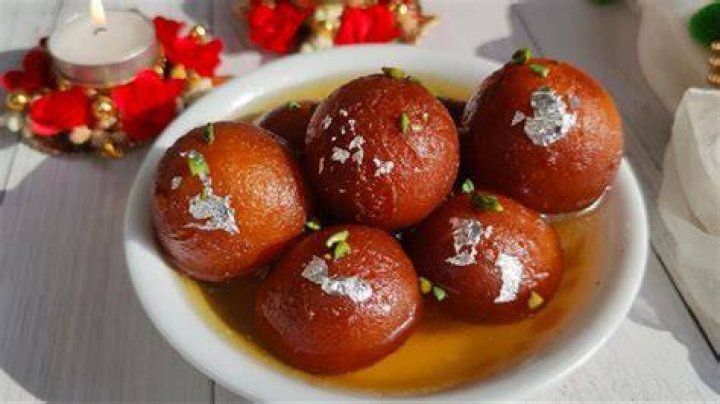
A warm, deep-fried ball of reduced milk solids drops into a translucent pool of scented sugar syrup, absorbing moisture until it sinks under its own saturated weight. Across Japanese social media and variety television broadcasts, this golden orb is routinely billed as "sekai ichi amai okashi", the world's sweetest dessert. What began as a regal centerpiece in medieval Mughal banquets and a staple of South Asian Diwali celebrations has suddenly mutated into an international culinary fascination. In early 2026, the dessert crossed another cultural frontier when bakeries began baking the syrup-soaked sphere directly into French pastry, sparking a massive online feud documented by a viral News18 report on the so-called "Cromun" craze.
The fascination reaches far beyond bakery display cases. In Tokyo, variety shows dispatch idol groups to tackle the sweet's extreme sugar content as an on-camera endurance test, while popular serialized manga depict wide-eyed protagonists experiencing their first sensory jolt from a roadside Indian mithai stall. Behind the algorithmically driven novelty sits a complex foodway with centuries of history, precise thermodynamic chemistry, and an intensifying battle between diasporic preservation and boundary-pushing internet stunts.
📌 Quick Summary:
- The Phenomenon: Gulab jamun has evolved from a sacred festive staple into a global viral commodity, earning a legendary reputation in East Asia as the benchmark for maximum sweetness.
- The Culinary Architecture: The sweet relies on slow-cooked milk solids (khoya) kneaded with flour, fried at moderate temperatures, and soaked in cardamom-rose sugar syrup until reaching a 45, 55% sugar concentration.
- The Culture Clash: Modern internet experiments, from the croissant-infused Cromun to infamous pizza toppings, highlight the tension between sacred culinary heritage and click-driven fusion dining.
How Mughal Feasts and Persian Fritters Created an Empire’s Signature Sweet
The lineage of gulab jamun traces back to medieval cross-cultural exchanges between Central Asia and the Indian subcontinent. Culinary historians widely associate its technical roots with the Persian fritter bamieh and the Arabic luqmat al-qadi, dough balls fried in fat and dipped in honey or syrup. When Turko-Persian rulers established dynastic seats across northern India in the 12th through 16th centuries, royal confectioners adapted the concept using indigenous dairy techniques.
The breakthrough came with the substitution of water-based dough for khoya, whole buffalo or cow milk boiled down over low heat for hours in iron vats until all liquid evaporates, leaving dense, caramelized milk solids. Kitchens infused the soaking syrup with rosewater and crushed green cardamom. The name itself reflects this linguistic union: gulab stems from the Persian words for flower (gul) and water (ab), while jamun references the Java plum, an Indian fruit that matches the fried dough’s rounded shape and deep color.
During the Mughal era, royal records documented the sweet appearing on gold platters at coronation banquets and wedding feasts. Over the succeeding centuries, regional variations blossomed. In Bengal, confections like pantua and ledikeni emerged, tweaking the ratio of chhena (fresh curd cheese) to flour. By the 20th century, no South Asian wedding, Eid gathering, or Diwali banquet was complete without rows of glistening gulab jamun sitting warm in copper service trays.
The Japanese Media Obsession: From TV Variety Stunts to Manga Pages
In Japan, gulab jamun bypassed the conventional route of diaspora-led restaurant expansion. Instead, it entered the national consciousness through television variety broadcasts in the 2010s and 2020s. Shows produced by major networks in Tokyo seized upon its hyper-sweet reputation, framing the sweet as an almost mythical culinary barrier: sekai ichi amai okashi.
Producers built entire segments around idols, comedians, and YouTubers attempting to consume three to five pieces in a single sitting without drinking water. The visual spectacle of the sweet, squeezed on camera to reveal streams of scented syrup pooling onto porcelain, fit digital consumption algorithms neatly.
Print culture followed suit. Gourmet manga series began dedicating chapters to Indian specialty cuisine, moving past standard curry-house tropes to explore regional Indian sweets shops in Tokyo districts like Nishi-Kasai. Writers illustrated the internal sponge-like matrix of the fried khoya with surgical detail, dramatizing the contrast between Japan's traditionally subtle, low-sugar confections (wagashi) and the unapologetic, high-intensity rush of South Asian syrup sweets. For a domestic audience conditioned to praise desserts for being "not too sweet" (ama-sugi-nai), the unvarnished sugar density of gulab jamun became an exotic, irresistible novelty.
The Chemistry of Maximum Sweetness: Dough Density and Syrup Saturation
Calling gulab jamun the single sweetest confection on earth is technically a cultural colloquialism, pure confectioner's fondant or boiled sugar drops contain higher raw sucrose by mass. Yet, physiologically, gulab jamun delivers an unmatched sensory perception of sweetness.
The secret lies in its structural porousness and temperature. When khoya is gently mixed with small quantities of refined wheat flour (maida) and a trace of leavening, it forms a soft, fat-rich matrix. Cooking these spheres requires disciplined heat management: the oil or clarified butter (ghee) must remain between 140°C and 150°C (284°F, 302°F). High heat burns the exterior before the core cooks through, leaving an inedible, dense dough center.
[Raw Khoya Dough Ball]
│
▼ Gently fried in ghee/oil at 145°C
[Browned, Porous Matrix]
│
▼ Immersed warm into 55°C syrup
[Capillary Absorption] ──> Khoya expands 25% by volume
│
▼
[Finished Gulab Jamun] ──> Syrup core: ~50° Brix concentration
Once browned, the hot dough balls drop into warm sugar syrup held at roughly 50°C to 60°C. If the syrup is boiling, the balls collapse into mush; if it is cold, the contracted fat blocks absorption. At the correct thermal equilibrium, capillary action pulls the scented liquid into every air pocket. The syrup itself sits at a concentration of approximately 50° Brix (50 grams of sugar per 100 grams of solution). Fat from the milk solids coats the tongue, slowing down flavor clearance and extending the duration of the sucrose interaction with taste receptors.
| Confection Type | Core Ingredients | Estimated Sugar by Weight (%) | Texture Profile |
|---|---|---|---|
| Gulab Jamun (Traditional) | Khoya milk solids, ghee, sugar, rosewater | 45, 55% | Porous, syrup-saturated, melts on palate |
| Baklava (Levantine) | Phyllo pastry, butter, chopped nuts, honey syrup | 35, 45% | Crisp, flaky, layered, viscous sweet finish |
| Daifuku Mochi (Japanese) | Glutinous rice flour, sweetened red bean paste | 20, 30% | Chewy, elastic outer layer with dense, earthy sweetness |
| American Fudge | Sugar, butter, condensed milk, cocoa | 60, 70% | Dense, crystalline, semi-solid chew |
The Cromun and the Culture War Over Radical Fusion Desserts
The globalization of gulab jamun has produced an inevitable byproduct: controversial, algorithm-optimized novelty foods. Bakeries around the world have pushed the boundaries of traditional mithai, culminating in the "Cromun", a laminated French croissant sliced open, stuffed with warm gulab jamun, and glazed with condensed milk and crushed pistachios.
Reactions across social networks exposed deep divisions. While casual food creators lauded the invention as a decadent hybrid, cultural purists expressed frustration at the perceived distortion of a heritage sweet.
This tension mirrors past culinary clashes reported across South Asian media:
- In 2019, images of a cheese-and-tomato pizza topped with sticky gulab jamun surfaced on social media, provoking outrage that led commentators to demand the immediate closure of the offending restaurant.
- Weeks later, street vendors produced "Gulab Jamun Pav," tucking the dripping confection inside a savory Mumbai dinner roll traditionally reserved for spicy potato cutlets (vada pav).
- Mainstream culinary outlets, including The Indian Express, monitored the recurring backlash, documenting how viral food stalls intentionally weaponize absurd food combinations to rack up millions of short-form video views.
Quality and authenticity concerns also fuel consumer skepticism. Late in 2023, viral footage of contaminated sweets bought from commercial shops in Chennai raised alarm bells over hygiene standards in rapid commercial packaging. Connoisseurs argue that industrial preservation undermines the real artisanal integrity of freshly fried khoya, reducing a regal dessert to a flattened, overly syrupy internet trope.
Global Adoption: How Western and Asian Palates Are Adapting Mithai
Despite the internet's obsession with shock-value recipes, serious international pastry chefs treat gulab jamun with genuine reverence. High-end restaurants across London, New York, and Singapore now deconstruct the sweet, pairing individual balls with tart components like bitter orange sorbet, unsweetened Greek yogurt foam, or black salt crumbles to balance the sucrose spike.
American interest in authentic South Asian dining has surged simultaneously. First-time tasting videos, such as popular series where creators try staples like butter chicken, naan, and gulab jamun for the first time, regularly generate upward of 35 million views on major platforms, sparking organic foot traffic to independent neighborhood mithai vendors.
In East Asia, tea houses have adopted a different pairing strategy. Instead of modifying the sweet's internal composition, Japanese and Taiwanese establishments serve half-portions alongside astringent, unsweetened beverages. The high tannin content of roasted green teas like hojicha or strong Taiwanese oolong cuts through the residual milk fat, cleansing the palate between bites and turning an intimidating sugar bomb into a balanced tasting experience.
Frequently Asked Questions (FAQ)
Q1: Is gulab jamun genuinely the sweetest dessert in the world?
A1: Scientifically, confections made of pure sucrose or crystalline sugar (such as cotton candy, fudge, or hard candies) register higher sugar percentages by weight. However, gulab jamun carries one of the highest perceived sweetness ratings of any traditional dessert because its fried, milk-fat sponge completely absorbs warm, 50% Brix liquid sugar, releasing it instantly upon chewing.
Q2: Can authentic gulab jamun be made without dairy?
A2: Traditional recipes depend entirely on khoya (condensed milk solids) and ghee for flavor and structure. While vegan variants use sweet potato, almond flour, or soy milk curds, the resulting texture lacks the specific melting elasticity provided by slow-reduced dairy proteins.
Q3: How should gulab jamun be stored and reheated?
A3: Keep the sweet completely submerged in its syrup inside an airtight container in the refrigerator for up to 10 days. Always serve it warm; cold temperatures solidify the milk fat, creating a chalky texture. Microwave a single piece in its syrup for 10 to 15 seconds to restore its soft, porous consistency.
The Living Heritage of South Asia’s Most Enduring Confection
Gulab jamun continues to outlive the short life cycles of digital trends. Whether packaged inside a trendy pastry crust for short-form video clicks or scrutinized by talk-show hosts on Japanese television, its appeal ultimately returns to the kitchen stove: the patient stirring of whole milk over charcoal, the deliberate roll of soft dough, and the gentle drop into spiced syrup.
Modern viral sensations come and go across international feeds. Yet the standard set centuries ago in imperial kitchens remains untouched. Handcrafted with high-grade dairy, spiked with fresh cardamom, and served warm from the soaking pan, gulab jamun holds its ground as an enduring classic of global dessert craft.
