Inside Fukuoka Airport's Secret Luxury Makeup Rooms: The Viral Vanity Stations Going Viral
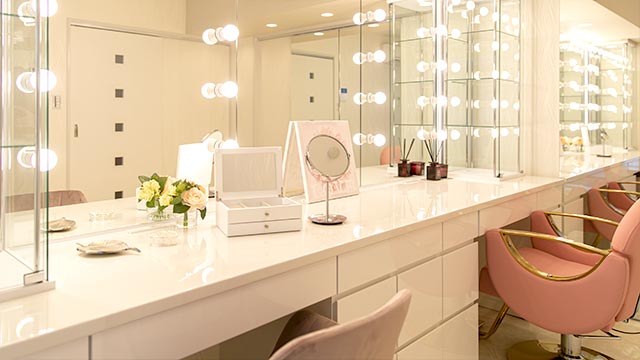
Travelers stepping off the domestic concourse at Fukuoka Airport often expect the standard transit experience: rows of vinyl bucket seats, duty-free snack stands, and functional tile restrooms. Over the past two years, however, short-form video feeds across East Asia began broadcasting something radically different. Clustered behind unmarked frosted glass partitions on the domestic terminal's second floor sits a suite of architectural, individual vanity booths outfitted with studio-grade vertical mirror lighting, integrated Japanese power outlets for curling irons, and custom dry counters designed exclusively for cosmetics touch-ups.
What originated as a domestic terminal infrastructure refresh has quietly turned Fukuoka Airport (FUK) into an international benchmark for traveler beauty lounges. By decoupling makeup application from the wet surfaces of traditional airport sinks, the facility solved a chronic spatial bottleneck for millions of passengers moving through Japan's busiest single-runway hub. For commuters rushing directly from an early-morning flight to corporate appointments in downtown Hakata, these spaces represent a quiet structural evolution in how Japanese transit nodes handle passenger personal care.
📌 Key Takeaways:
- The Flagship Location: The most expansive styling stations sit post-security in the Domestic Terminal second-floor departure lounge, supplemented by pre-security powder suites on the arrival and commercial floors.
- Curling Iron Infrastructure: Unlike legacy Japanese terminals that cap or shutter electrical access to prevent circuit trips, Fukuoka explicitly engineered high-amperage 100V outlets directly into private styling desks.
- Urban Proximity Driver: Situated just 3.3 kilometers from central Fukuoka, the airport functions as an inner-city metro station, forcing transit authorities to prioritize rapid professional freshen-up spaces.
The Transit Anomaly That Sparked Fukuoka's Vanity Boom
Fukuoka Airport occupies a geographic anomaly among modern international aviation hubs. Where Narita sits 60 kilometers outside central Tokyo and Kansai International occupies an artificial island in Osaka Bay, Fukuoka's domestic gates sit barely two subway stops, roughly five minutes, from Hakata Station. Downtown Tenjin is reachable within eleven minutes. This proximity creates an intense cross-section of daily corporate commuters, weekend tourists, and long-haul international transfers operating without intermediate hotel stops.
A passenger landing at 8:40 AM frequently faces an executive meeting in downtown Fukuoka by 9:30 AM. For decades, this reality produced severe congestion in standard women's washrooms. Wet counters, blocked mirrors, and cords stretched across shared basins created daily frustration. When Fukuoka International Airport Co., Ltd. (FIAC) accelerated its multi-stage terminal redevelopment between 2020 and 2025, planners treated passenger personal care as a core civil engineering challenge rather than an architectural afterthought.
Instead of merely expanding stall counts, architects isolated the "dry zone" entirely. The resulting powder room amenities mimic high-end department store beauty salons. By dividing spaces into distinct zones, sanitary washing, private stall cubicles, and individual cosmetics stalls, the airport eliminated physical friction between passengers washing their hands and those spending fifteen minutes styling hair.
Locating the Best Lighted Booths Across the Floor Guide
Finding the highest-specification cosmetics touch-up corner requires understanding the airport's layout. Fukuoka's Domestic Terminal holds the most comprehensively equipped facilities, primarily because domestic corporate travel drives peak demand for personal grooming stations.
The primary installation sits on the Domestic Terminal 2F Departure Gate Lounge, accessible immediately after passing central security screening. Spread across the airside corridor between Gates 6 and 10, these suites feature individual half-enclosed cubicles. Each pod isolates the user from concourse foot traffic, featuring vertical, dimmable LED strip lighting built flush into the mirrors. The color temperature sits at a neutral daylight rating (roughly 4000K to 5000K), specifically calibrated to prevent color distortion during foundation and powder application.
Landside travelers who have not yet cleared security can access secondary powder suites on the Domestic Terminal 2F commercial floor near the Sweets Hall, as well as the 1F check-in concourse. While functional, landside stations experience heavier transient foot traffic. For international passengers, the renovated International Terminal departures concourse on 3F introduced streamlined pre-flight freshen up booths ahead of long-haul departures to Southeast Asia, Europe, and the Americas, though the domestic facility remains the architectural flagship.
Curling Irons, Power Outlets, and Terminal Safety Standards
The defining element separating Fukuoka’s facilities from standard global airport restrooms is electrical availability. In most international aviation hubs, public power outlets in washrooms are either sealed, governed by strict low-voltage limits, or absent entirely due to moisture hazards and circuit overloads. Travelers carrying 1200-watt straighteners or curling irons routinely find themselves styling their hair on terminal waiting-room carpets next to communal charging totems.
Fukuoka Airport metered this problem directly. The vanity styling pods feature dedicated 100V alternating current (Type A) outlets installed inside dry-counter recesses. These circuits feature localized thermal breakers engineered to handle continuous high-draw heating appliances. Below is how Fukuoka's infrastructure compares to standard commercial facilities across the region:
| Terminal Facility | Styling Plugs | Partition Design | Lighting Configuration |
|---|---|---|---|
| Fukuoka Domestic 2F (Airside) | Dedicated 100V / High-Draw | Individual Private Booths | Dual High-CRI LED Strips |
| Fukuoka International 3F | Available (Select Stalls) | Semi-Partitioned Counters | Overhead + Diffused Edge |
| Legacy Japanese Regional Terminals | Restricted / Shuttered | Open Shared Counter | Standard Fluorescent Overhead |
| Standard Global Hubs (US / EU) | Shaver-Only (Low Wattage) | Integrated Sink Tops | Ambient Architectural Only |
Every individual station also incorporates deep hooks for outer coats, luggage clearances under the counter for 20-inch carry-ons, and wide, wipe-clean resin surfaces. By replacing porous natural stone with non-staining composites, terminal custodial teams can sanitize cosmetics spills in seconds between flights.
Queue Dynamics and the Unwritten Etiquette of Public Vanity Lounges
High demand brings operational friction. On weekday mornings between 7:30 AM and 9:00 AM, and Sunday evenings after 6:00 PM, wait times for private styling booths can run up to fifteen minutes. The sudden visibility of these spaces across social networks has also shifted how passengers interact with communal terminal infrastructure.
Terminal observations reveal a distinct set of community-driven norms. Passengers carry specialized heat-resistant pouches to pack away hot hair straighteners immediately after styling, ensuring the next person can use the counter surface without delay. Lingering to scroll on smartphones while occupying a lighted mirror station is frowned upon. Custodial personnel conduct visual sweeps every thirty minutes, verifying that power terminals remain dry and that no unattended electronics remain plugged into the circuits.
Luggage placement represents another subtle conflict point. The dry grooming alcoves sit slightly off the main concourse walkways. While carry-on roller bags tuck under the custom counter recesses, oversized suitcases often block adjacent booth entrances. Frequent flyers routinely stage checked luggage outside the powder room portal before entering, preserving tight clearances inside the grooming cluster.
How Japanese Regional Gateways Outpace Megahubs in Rest Amenities
The rise of Fukuoka's high-end terminal restrooms signals a broader realignment within Japanese transport architecture. Historically, prestigious civic design centered on mega-gateways like Tokyo's Haneda or Chubu Centrair in Nagoya. Yet regional hubs, spurred by privatization drives and fierce competition for low-cost carrier routes, now lead in micro-amenities that directly alter passenger experience.
Regional airport concessionaires recognize that commercial conversions correlate directly with dwell time and physical comfort. A passenger who feels unwashed, disheveled, or rushed after a delayed transit leg rarely wanders through luxury retail arcades or premium dining alleys. By offering free, dignified spaces for personal restoration, operators subtly extend dwell times in terminal shopping districts.
Similar upgrades have begun appearing at renovated hubs in Kumamoto, Sendai, and Hiroshima. None, however, match Fukuoka’s deliberate integration of electrical infrastructure and architectural scale. The terminal does not view cosmetics touch-ups as an indulgence; it treats grooming facilities as essential civic infrastructure tailored for modern mobility.
Frequently Asked Questions (FAQ)
Q1: Are Fukuoka Airport's luxury makeup rooms free to access?
A1: Yes. All vanity suites and powder room stations across both the Domestic and International Terminals are public amenities integrated directly into the airport's public restroom facilities, requiring no lounge membership or usage fees.
Q2: Can foreign travelers use international curling irons in the station outlets?
A2: Japanese outlets deliver 100V AC at 50/60Hz using ungrounded two-prong Type A plugs. Dual-voltage heating appliances (100, 240V) will function properly with a simple plug adapter, but single-voltage 220, 240V tools (common to Europe, Australia, and the UK) will not heat adequately and can damage equipment without a heavy-duty step-up converter.
Q3: Which terminal section has the largest number of private styling booths?
A3: The Domestic Terminal 2F post-security departure lounge (between Gates 6 and 10) hosts the highest density of private, lighted styling pods equipped with electrical outlets and counter space.
Q4: Do the stations provide complimentary cosmetics, skincare products, or hair tools?
A4: No. Fukuoka Airport provides the structural stations, mirrors, lighting, seating, counters, and electrical outlets, but does not stock communal cosmetics, dryers, or styling tools. Travelers must bring their own personal grooming products and appliances.
Q5: Are there dedicated styling booths available in men's terminal facilities?
A5: Renovated domestic men's washrooms include expanded dry mirror zones and full-length dressing mirrors, but private multi-plug styling cubicles remain predominantly concentrated within the specialized women's powder room suites.
The Evolution of Modern Transit Spaces
Transit hubs are commonly judged by runway capacity, security processing speeds, and baggage return metrics. Fukuoka Airport’s quiet investment in elevated powder rooms demonstrates that micro-scale human experience carries equal weight in passenger satisfaction. By turning an everyday domestic terminal washroom into a meticulously lighted personal care salon, the gateway acknowledges the real needs of modern travelers.
As terminals across Asia and Europe study Fukuoka’s template, the baseline expectation for transit architecture continues to rise. The days of balancing a hot curling iron across a soaking wet public sink counter are drawing to a close, replaced by spaces built with respect for the physical realities of modern travel.
