Inside Kagoshima Shoyo’s Rise: The Strategic Discipline Behind Their Kyushu Gold
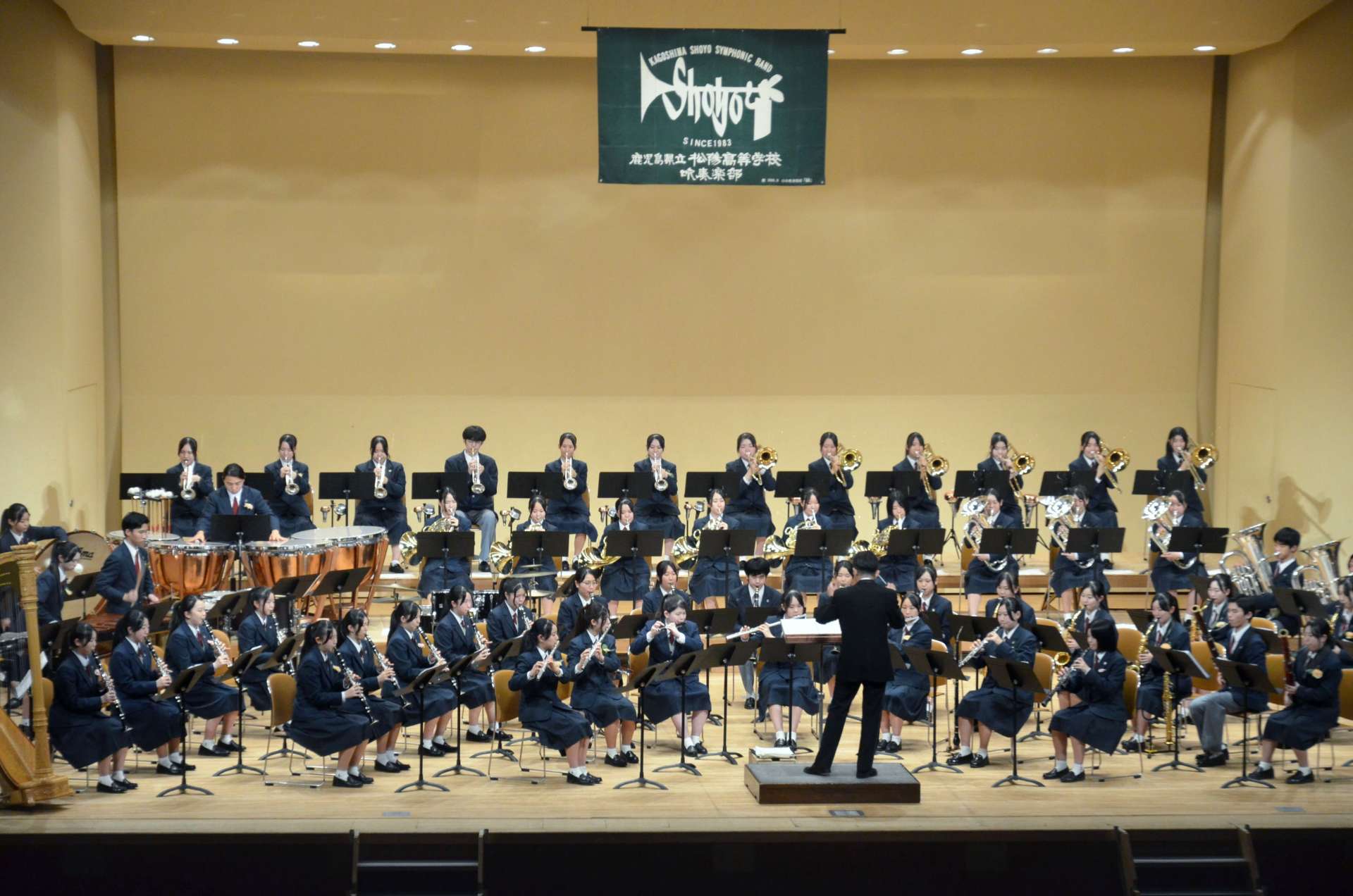
Tension inside the Kumamoto Prefectural Theater peaked on August 23, 2026, as the 71st Kyushu Band Competition reached its decisive verdict. Twenty-eight elite high school ensembles from across Kyushu and Okinawa took the stage, each vying for a fraction of the coveted invitations to the national finals. When the judges concluded scoring, 13 schools walked away with gold prizes, but only four earned the ultimate ticket to the All-Japan Band Competition. Standing shoulder-to-shoulder with established private powerhouses was Kagoshima Shoyo High School, delivering an astonishing performance that reshuffled the regional hierarchy, as documented by the official 朝日新聞社 Report.
For music observers across Japan, Shoyo’s qualification represents more than routine success. Outperforming fierce rivals in what musicians call the "Kyushu gauntlet" requires structural discipline and sonic clarity that few public school programs can sustain. Here is how Kagoshima Shoyo engineered their breakthrough on one of the most demanding stages in competitive wind music.
📌 Key Takeaways:
- The National Qualifiers: Kagoshima Shoyo, Tamana Girls High School, Kwassui High School, and Seika Girls High School secured the four Kyushu representation spots for the 2026 All-Japan Band Competition.
- The Venue Test: Twenty-eight regional ensembles competed at the Kumamoto Prefectural Theater on August 23, 2026, with judges awarding gold distinctions to 13 groups before selecting the final four.
- The Tactical Factor: Shoyo countered the sheer acoustic volume of private powerhouse bands by relying on dynamic balance, disciplined woodwind pitch center, and pristine set-piece pacing.
A High-Stakes Afternoon at Kumamoto Prefectural Theater
The Kyushu regional round of the Japanese high school brass band tournament is notoriously unforgiving. Unlike regions where berths are spread across open brackets, Kyushu concentrates multiple reigning national champions within a single afternoon session. The acoustic footprint of Kumamoto Prefectural Theater offers no refuge for loose articulation. Its hall rewards resonance but exposes split-second ensemble tearing.
Kagoshima Shoyo drew an intense afternoon draw, performing alongside legacy programs with deep bench depth and custom rehearsal campuses. The pressure broke several promising programs whose brass sections pushed intonation sharp during climatic tutti passages. Shoyo’s ensemble took an alternate tactical path. Rather than overwhelming the hall with sheer decibels, their staff leaned into acoustic transparency. From the opening statement of their required set piece, the band maintained steady dynamic control, letting delicate reed countermelodies cut cleanly beneath the low-brass foundation.
Deconstructing Shoyo’s Set Piece Execution
Victory in the Kyushu Wind Ensemble Federation tournament rests on navigating the compulsory test piece. These compositions are deliberately structured to trap undisciplined ensembles with tricky meter changes, exposed woodwind unisons, and deceptive tempo modulations. A single nervous flub from a solo euphonium can sink an entire season’s hopes.
Shoyo navigated the required piece with clinic-level consistency. The ensemble produced a warm, unified fundamental tone rarely heard from non-specialized public programs. When the score demanded abrupt transitions between driving militaristic marches and expansive lyricism, the players shifted without rhythmic dragging. That technical command held the panel's attention. Judges evaluating the 2026 cohort prioritized unified pitch centers over aggressive theatrical flair, giving Shoyo an immediate edge over rivals whose brass lines ran hot in the upper register.
Their selected free-choice work consolidated that advantage. By selecting a repertoire piece that emphasized layered timbral colors rather than straightforward percussive bombast, Shoyo highlighted the precision of their horn line and the pitch uniformity of their clarinets. They played with patience. They gave resonant pauses room to decay before launching back into dense polyphonic textures.
The 2026 Kyushu Regional Standings Breakdown
To understand the magnitude of Shoyo’s achievement, consider the programs they shared the winner's circle with. Tamana Girls High School and Seika Girls High School operate some of the most celebrated symphonic band programs in East Asia, routinely securing national gold. Kwassui High School brings equal historical heft from Nagasaki. Breaking into that quartet requires absolute execution.
| High School | Prefecture | Regional Result | National Ticket |
|---|---|---|---|
| Kagoshima Shoyo | Kagoshima | Gold Prize | Qualified (Kyushu Rep) |
| Tamana Girls | Kumamoto | Gold Prize | Qualified (Kyushu Rep) |
| Kwassui | Nagasaki | Gold Prize | Qualified (Kyushu Rep) |
| Seika Girls | Fukuoka | Gold Prize | Qualified (Kyushu Rep) |
| 9 Additional Ensembles | Various (Kyushu/Okinawa) | Gold Prize | Did Not Advance |
| 15 Other Ensembles | Various (Kyushu/Okinawa) | Silver / Bronze | Did Not Advance |
Securing a gold medal was not enough on its own. Nine other schools walked away with gold distinctions on August 23, yet saw their season conclude in Kumamoto. The gap between receiving an honorary gold and securing one of the four national nomination slips often comes down to fractional points in the judges' technical category.
The Structural Rigor Behind Shoyo’s Rehearsal Discipline
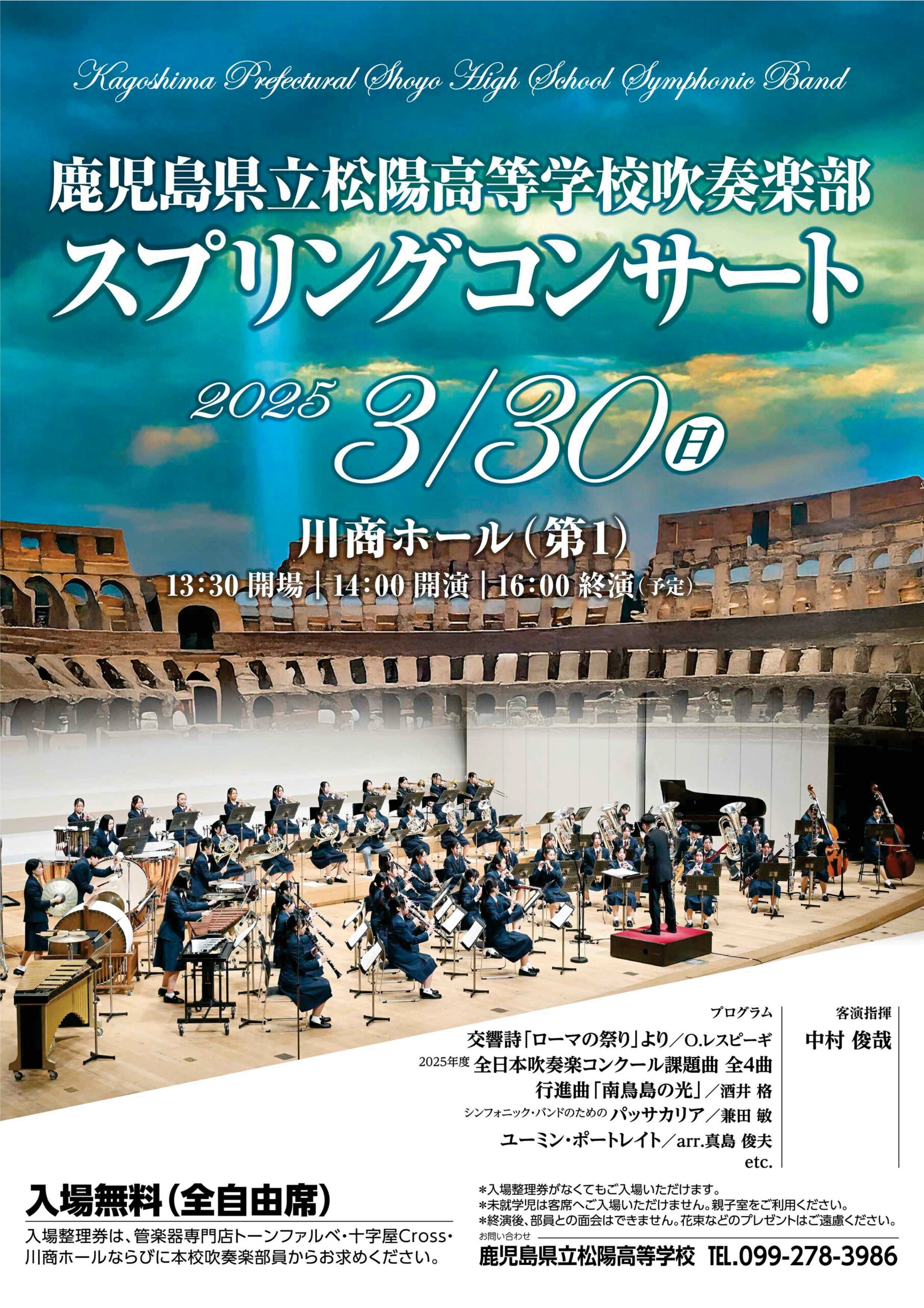
Public school music departments in Kagoshima Prefecture operate under clear operational boundaries. Unlike private academies that can recruit nationwide or schedule unbroken twelve-hour weekend drill sessions, prefectural high schools balance standard academic coursework and strict departmental guidelines.
Shoyo offsets these constraints through hyper-focused rehearsal blocks. Their program relies heavily on student-led sectionals where pitch verification is handled in micro-groups of three or four instruments before entire families ever sit together. If two alto saxophones cannot lock a minor third at pianissimo, the section does not progress to full ensemble rehearsals. This methodology shifts mechanical intonation correction out of full-band time, allowing conductors to dedicate podium sessions strictly to expressive phrasing, hall resonance, and tempo balance.
The culture inside Shoyo’s band hall also emphasizes shared leadership. Senior players supervise warm-up fundamentals, ensuring tone quality remains consistent even when first-year members rotate into key spots. This pedagogical foundation kept the ensemble's collective heart rate down inside Kumamoto’s pressure cooker, allowing them to out-execute more decorated competitors when scores were tallied.
The Road Ahead: Preparing for the All-Japan Stage
Earning a Kyushu nomination is an extraordinary milestone, but the All-Japan Band Competition presents a fundamentally different challenge. In late autumn, Shoyo will travel to face powerhouse bands from the Kansai, Kanto, and Tokai regions, programs that rehearse in university-grade concert halls and boast generational competitive pedigrees.
The immediate task for Shoyo’s staff involves microscopic adjustments. Scoresheets from Kumamoto will guide the fine-tuning of harmonic balance, particularly in the lower register, where hall characteristics in Nagoya or Tokyo differ from Kumamoto Prefectural Theater. The ensemble must also navigate the logistical strain of high-stakes travel while sustaining academic momentum for its upperclassmen.
Yet the mood across Kagoshima’s wind music community remains electric. Breaking into the national tier affirms that calculated technical precision can triumph over institutional advantages. Shoyo has demonstrated that their voice belongs on the biggest stage in Japanese school music.
Frequently Asked Questions (FAQ)
Q1: How many schools from the Kyushu Band Competition advance to the national finals?
A1: Out of 28 competing ensembles representing Kyushu and Okinawa, only four schools are awarded the recommendation to represent the region at the All-Japan Band Competition, even though 13 ensembles earned gold distinctions in 2026.
Q2: Why is the Kyushu regional contest considered one of the hardest in Japan?
A2: Kyushu contains several of Japan's most historic brass band programs, including Tamana Girls and Seika Girls, both frequent national gold prize winners. Competition for the four available slots is exceptionally fierce, leaving multiple gold-tier ensembles eliminated each August.
Q3: What pieces did ensembles play during the 71st Kyushu Band Competition?
A3: Every competing school performed two pieces: an official compulsory set piece selected by the All-Japan Band Association, followed by an open-choice free selection intended to demonstrate technical breadth and dynamic mastery.
The Broader Impact on High School Wind Music
Kagoshima Shoyo’s victory alters expectations across the southern music circuit. By clinching their national spot against entrenched regional royalty, the ensemble proved that deep sectional discipline and nuanced dynamic execution can overcome institutional resource disparities. As rehearsals begin for the All-Japan finals, Shoyo carries the pride of Kagoshima onto the national concert stage, fundamentally proving that regional excellence is forged through meticulous preparation rather than reputation alone.
