Inside Kutsorogi Tennen Onsen Yuraku: A Visual Breakdown of Natural Spring Baths and Saunas
;Resize=(1600,900))
Tsushima, a quiet city situated just west of Nagoya in Aichi Prefecture, rarely tops the itineraries of international travelers rushing between Tokyo and Kyoto. Yet for dedicated bathers, endurance runners, and seasoned combat athletes, this suburban enclave houses one of the Chubu region's most revered thermal sanctuaries. As documented in an investigative [All About NEWS Report](https://news.allabout.co.jp/articles/o/127848/), Kutsurogi Tennen Onsen Yuraku has earned an avid following among commuters and regional travelers seeking authentic hydrotherapy far removed from tourist-heavy resort strips.
Operating as a full-scale day-use onsen facility, Yuraku stands out in an era when many modern Japanese super sento facilities rely heavily on recirculated or artificially mineralized water. Here, the subterranean aquifers of the Nobi Plain deliver substantial volumes of free-flowing natural spring water straight to the facility's extensive array of indoor pools, open-air baths, and performance-grade sauna chambers.
📌 Key Takeaways:
- Geothermal Integrity: Yuraku utilizes true free-flowing natural spring water (kakenagashi) sourced deep beneath Tsushima, avoiding the aggressive chemical dilution common in urban day spas.
- The Sumo Connection: The facility serves as the official training and recovery base for the Takekuma sumo stable during the annual Nagoya Grand Sumo Tournament at Dolphins Arena.
- Sauna Circuit Architecture: The complex pairs a high-heat dry sauna with intensely chilled groundwater plunge pools and dedicated outdoor rest terraces tailored to contemporary Japanese sauna culture.
The Geothermal Draw of Tsushima's Mineral Wells
The defining metric of any Japanese onsen is the purity of its extraction. Kutsurogi Tennen Onsen Yuraku taps an abundant subterranean source that feeds its baths without reliance on heavy industrial filtration cycles. In the bathing halls, the water carries a faint, earthy mineral aroma and a subtle golden-amber clarity characteristic of the alluvial plains flanking the Kiso River system.
These mineral thermal baths contain mild alkaline and sodium-chloride profiles. When absorbed through the skin, the chloride salts create an evaporative barrier that retards moisture loss, trapping core body heat long after bathers exit the water. Local patrons refer to this as the "blanket effect." Joint stiffness eases rapidly under the hydrostatic pressure of the deep soaking pools, making the facility an operational benchmark for preventative wellness in western Aichi.
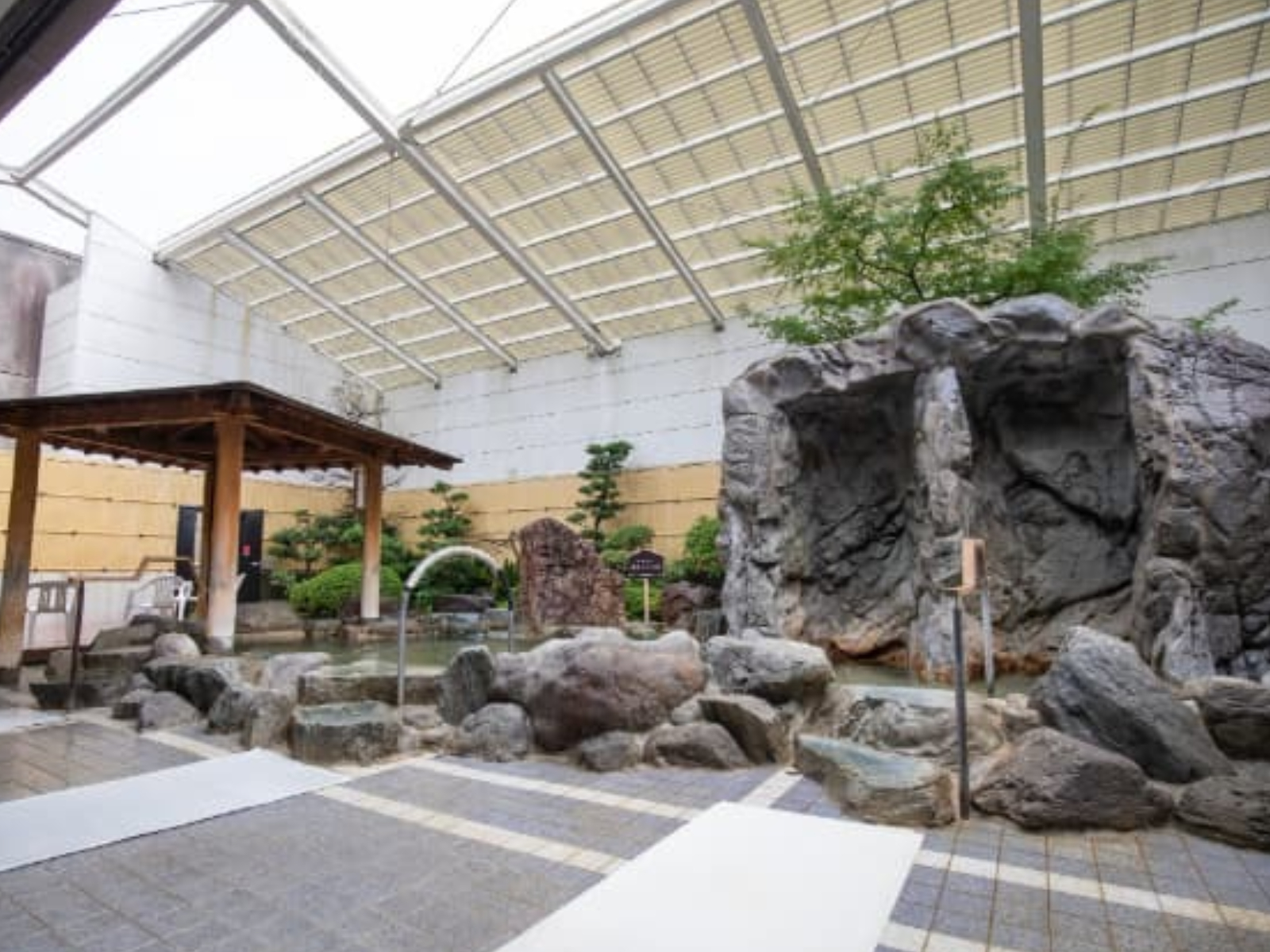
The outdoor zone, the rotenburo, houses rock-lined tubs sheltered beneath timber eaves. Steam drifts upward into the open air as bathers rotate through fluctuating water temperatures designed to stimulate the vascular system. Unlike commercial sento setups that limit natural flow to save on operational energy bills, Yuraku continuously pumps freshly extracted spring water through its primary basins, ensuring mineral consistency across both morning and midnight shifts.
Why Sumo Wrestlers Rely on Yuraku for Muscle Recovery
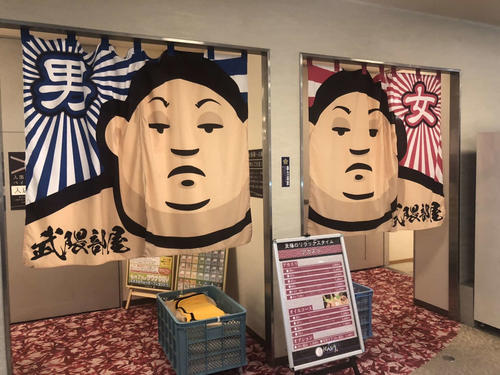
The ultimate test of any thermal facility is how effectively it repairs damaged physical tissue. In July 2022, Kutsurogi Tennen Onsen Yuraku became the official lodging and recovery headquarters for the newly independent Takekuma sumo stable, founded by former Ozeki Goeido. When the stable traveled to Aichi for the grueling 15-day Nagoya Grand Sumo Tournament at Dolphins Arena Nagoya, they bypassed conventional city hotels in favor of Yuraku's hot-spring infrastructure.
Sumo wrestling inflicts brutal kinetic impacts on the musculoskeletal frame. Wrestlers weighing over 330 pounds (150 kilograms) suffer chronic microtrauma across knees, hips, and lower spinal discs daily. For the Takekuma stable, the facility provided an integrated biological repair cycle: immediate post-bout contrast hydrotherapy, access to expansive thermal tubs capable of accommodating heavy frames, and tailored Japanese wellness hospitality that included specialized bunk accommodations directly adjoining the bath complex.
During that 2022 campaign, national sports outlets noted that Takekuma stable’s active roster achieved winning records right out of the gate in the first week. Stable leadership credited the continuous access to high-temperature mineral baths and cold hydrotherapy plunges for clearing metabolic waste and mitigating systemic inflammation between brutal morning bouts at Dolphins Arena.
Facility Blueprint: Comparing Yuraku's Thermal and Sauna Zones
To understand why Yuraku appeals to both blue-collar workers and high-performance athletes, consider how its spatial zones balance heat, water flow, and kinetic stimulation:
| Bath / Facility Zone | Target Temperature | Primary Physiological Function |
|---|---|---|
| Natural Source Rotenburo | 41.5°C, 42.5°C | Vasodilation, joint decompression, and chloride-barrier heat retention |
| High-Heat Finnish Dry Sauna | 90°C, 98°C | Rapid thermal sweating, cardiac conditioning, and heat-shock protein activation |
| Natural Groundwater Mizuburo | 15.0°C, 16.5°C | Sympathetic nervous system stimulation and rapid lactic acid clearance |
| Hydro-Jet Massage Pools | 39.0°C, 40.0°C | Targeted myofascial release along lumbar spine and hamstring groups |
The Precision of Modern Japanese Sauna Culture
Japan’s contemporary sauna movement, commonly called *sauna-iki*, has evolved far beyond passive sweating. Enthusiasts approach the circuit with scientific rigor: repeated sequences of high heat, abrupt immersion in cold water, and passive outdoor ventilation (*gaikiyoku*) to induce the state of neurological clarity known as *totonou* (mental equilibrium).
Yuraku’s dry sauna chamber features tiered stadium seating that delivers varying heat gradients. The lower bench sits near 85°C, while the highest tier reaches temperatures approaching 98°C. Air circulation is calibrated to prevent the stale, oxygen-depleted atmosphere that plagues poorly ventilated commercial saunas.
The linchpin of the entire circuit is the *mizuburo* (cold plunge). Rather than chilling chlorinated municipal tap water, Yuraku draws directly from deep local groundwater tables. The water feels noticeably softer against bare skin, lowering cardiac shock while driving rapid vasoconstriction. Bathers then transition to reclined lounge chairs scattered throughout the open-air garden, letting cool crosswinds from the surrounding rural plains restore resting heart rates.
Navigating Day-Use Onsen Logistics in Tsushima
Unlike luxury ryokan inns that require weeks of advance booking and steep overnight fees, Kutsurogi Tennen Onsen Yuraku operates on an accessible day-use model. General admission pricing sits comfortably under ¥1,000 ($6.50, $7.50 USD), making it an affordable recovery resource for local endurance athletes and road travelers navigating the Meitetsu railway line.
Visitors buy entry tickets at digital automated kiosks near the front entrance before turning in their footwear keys at the reception desk. The facility offers on-site dining featuring regional Chubu staples like miso katsu, chilled udon, and high-protein sets designed to replenish electrolytes after extended thermal sessions. Relaxation rooms fitted with tatami mats and reclining chairs allow patrons to nap between bathing cycles.
International visitors should observe standard Japanese bathhouse protocols. Wash thoroughly at the seated shower stations with soap and shampoo before entering any pool. Towels must never touch the communal bathwater. Those with visible decorative tattoos should verify current house policies at the desk, as suburban thermal baths in Japan maintain differing rules regarding ink coverage.
Frequently Asked Questions (FAQ)
Q1: How do I reach Kutsurogi Tennen Onsen Yuraku from central Nagoya?
Take the Meitetsu Tsushima Line directly from Meitetsu Nagoya Station to Tsushima Station or Hibino Station. The facility is a short 5- to 10-minute taxi ride or a 20-minute walk from the station through central Tsushima.
Q2: What makes the spring water at Yuraku different from standard urban sento?
Standard sento public baths typically heat municipal tap water. Yuraku draws unadulterated mineral spring water from deep natural wells beneath Tsushima, delivering authentic sodium-chloride mineral density directly to the baths without heavy artificial recirculation.
Q3: Can visitors watch sumo training at the facility?
Sumo stable residencies occur strictly during the Nagoya Grand Sumo Tournament in July. While Takekuma stable has utilized the facility as a residential recovery base, the bathing areas remain communal spaces dedicated to personal relaxation, not public spectator venues.
The Evolving Role of Day-Use Onsen in Regional Japan
As suburban populations across Japan age and regional transit corridors consolidate, facilities like Kutsurogi Tennen Onsen Yuraku carry an importance that extends well beyond leisure. They operate as decentralized hubs of preventive health, accessible physical therapy centers, and social gathering points for multi-generational communities.
Yuraku’s ability to host professional athletes like the Takekuma stable proves that high-grade thermal hydrotherapy does not require four-figure resort invoices. By preserving the raw flow of Tsushima’s underground aquifers and investing in modern sauna mechanics, the facility offers a template for how regional Japanese onsen can thrive in an increasingly demanding wellness landscape.
