Inside the AI Scripting of 'Wataru Seken wa Oni Bakari': Behind-the-Scenes Proof and Hina's Ongoing Story

When legendary scriptwriter Sugako Hashida passed away in 2021 at age 95, Japanese television networks assumed her signature genre had permanently closed its doors. For over three decades, Hashida’s flagship domestic chronicle, Wataru Seken wa Oni Bakari (Making It Through), defined the Heisei era’s primetime landscape, filling living rooms with sprawling, rapid-fire monologues about mother-in-law rivalries, inheritance squabbles, and kitchen table reconciliation. That finality cracked open when network executives turned to machine learning to ask a question that once belonged strictly to science fiction: How would Sugako Hashida write modern family life today?
The answer arrived through the broadcast of AI Sugako Hashida: Wataru Seken wa Oni Bakari Reiwa Edition on BS-TBS, a production that paired algorithmic text generation with veteran production oversight. As documented in an investigative MSN Report detailing the broadcast's origins, the two-part special brought audiences back to the familiar counters of the Koraku ramen restaurant. Yet the production pushed beyond cheap nostalgia. By placing the younger generation, notably the character arc of Kojima Hina, directly into modern friction points like remote employment, eldercare strain, and generational isolation, the revival tested whether artificial intelligence can capture the messy realities of the human heart.
📌 Key Takeaways:
- The Project: BS-TBS engineered an artificial intelligence model trained on decades of Sugako Hashida’s physical scripts to generate an authentic two-part Reiwa continuation.
- The Core Focus: The narrative centers around Kojima Hina and the younger heirs of the Koraku ramen dynasty, examining contemporary economic pressures through classic domestic drama conventions.
- The Human Anchor: Centenarian producer Fukuko Ishii supervised the workflow, ensuring the model's structural pacing met the emotional and verbal rhythms of the original series.
The Resurrection of Hashida-Bushi in the Reiwa Era
Sugako Hashida possessed a writing style so distinctive that Japanese television critics coined a specific term for it: Hashida-bushi. Characterized by lengthy, expository speeches delivered without musical accompaniment, her dialogue bypassed subtext in favor of brutal, articulate honesty. Characters rarely concealed their grievances. They unpacked them over steaming bowls of ramen at the Koraku restaurant, turning minor kitchen squabbles into philosophical debates on filial duty.
When BS-TBS launched the AI Sugako Hashida project, their primary technical challenge was teaching a large language model how to sustain these multi-page arguments without meandering into generic corporate platitudes. Early iterations produced dialogue that sounded too clean, polite, and sterile. Real domestic tension requires resentment, stubbornness, and unresolved emotional debt. Engineers fed the model hundreds of hours of broadcast scripts spanning 10 full seasons and 500 individual episodes, weighting sentence structures that leaned on conversational interruptions, honorific shifts, and sharp moral rebukes.
The resulting script captured Hashida's specific cadence with striking fidelity. In the two-part special, characters talk over one another, repeat grievances to assert control, and let small domestic slights snowball into existential family summits. The production team demonstrated that generative text tools, when calibrated against a strictly bounded historical corpus, can recreate an authorial voice without stripping away its idiosyncratic flaws.
Generative Scriptwriting Meets the Koraku Ramen Counter
The narrative engine of Wataru Seken wa Oni Bakari has always run on economic anxiety disguised as family tradition. For decades, the five Okamura sisters and their extended kin battled over who would inherit the Koraku ramen shop, who would care for aging relatives, and who would sacrifice personal ambition for the family collective. In the Reiwa special, those classic fault lines reappear through modern pressures: labor shortages, commercial rent hikes, and remote work arrangements that disrupt traditional household boundaries.
The AI model placed these contemporary realities directly into the Koraku kitchen. Rather than inventing external crises, the system identified structural pressure points inside the household and generated scenes where small lifestyle disagreements escalate into major confrontations. When characters debate whether to keep the ramen shop open seven days a week or pivot to third-party delivery apps, the dispute is not about logistics. It is about whether convenience erodes the interpersonal warmth that made the restaurant a community hub in the first place.
Cast members reported feeling an uncanny familiarity when reading the synthetic script. The lines demanded the same breathless stamina that Hashida had required of her actors for thirty years. Performers were not reciting loosely summarized prompts; they were memorizing solid blocks of dialogue where every conjunction, hesitation, and verbal barb mirrored the cadence of scripts drafted decades earlier on manual typewriters.
Production Timeline and Technical Evolution
The path from algorithmic prototype to primetime broadcast required multiple rounds of technical refinement and editorial intervention. Below is the verified operational timeline showing how the posthumous script engine was tested, evaluated, and brought to Japanese television screens.
| Phase & Date | Production Milestone | Operational Mechanics |
|---|---|---|
| Phase 1: May 2025 | Initial 30-Minute Pilot Special | Feasibility test using baseline prompt engineering on selected Heisei episode archives. |
| Phase 2: Fall 2025 | Corpus Fine-Tuning & Prompt Realignment | Integration of full 500-episode teleplay database with parameter weights for Hashida-bushi syntax. |
| Phase 3: Dec 20, 21, 2025 | Two-Part Reiwa Special Broadcast | BS-TBS airs two 60-minute episodes at 3:00 PM, tracking the Kojima household's modern conflicts. |
| Phase 4: September 2026 | Producer Fukuko Ishii Centenary Review | Industry assessment of AI teleplay frameworks as Ishii celebrates her 100th birthday. |
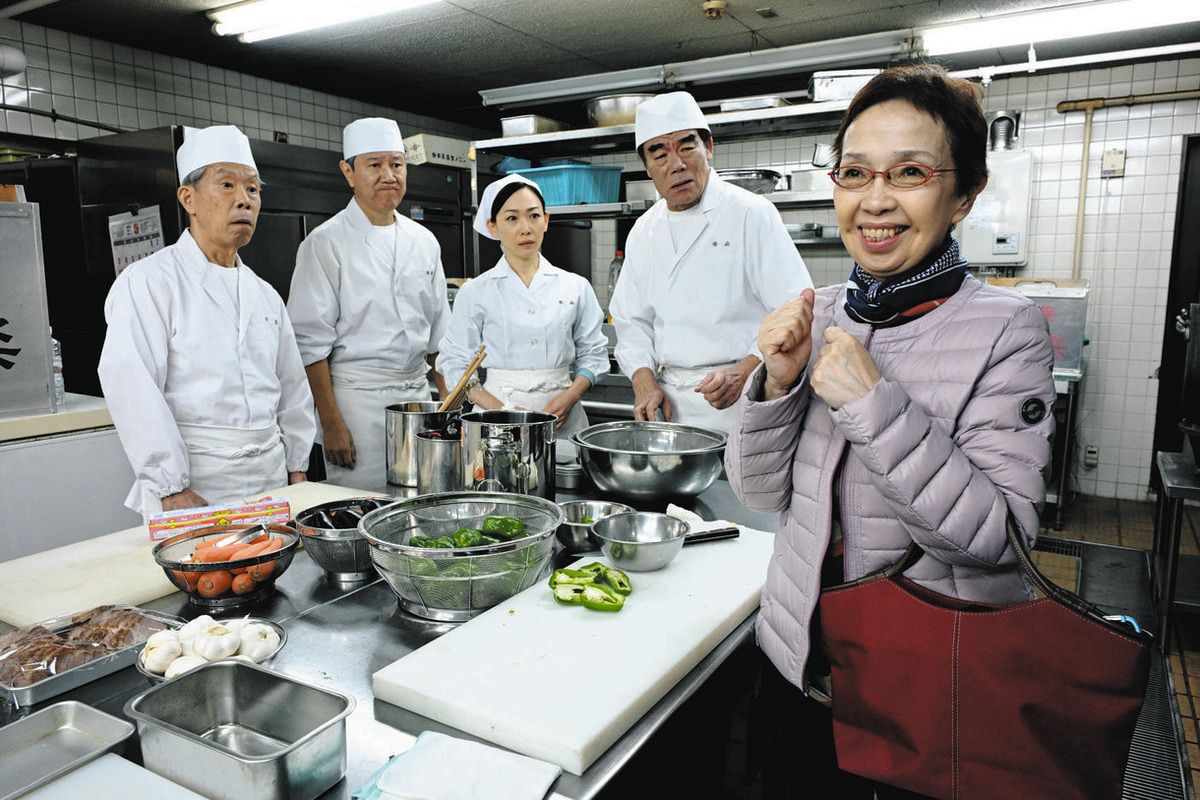
Kojima Hina and the Burden of Modern Multigenerational Living
Within the expansive ensemble of the Kojima household, the character arc of Kojima Hina provides the emotional core of the Reiwa edition. In previous decades, younger characters in Wataru Seken served largely as sounding boards or rebel figures against parental authority. They rebelled, suffered economic realities, and eventually returned to the communal fold. Hina's journey in the AI-penned script breaks away from that predictable formula.
Hina represents a generation caught between filial obligations and changing economic realities. The AI placed her in the middle of a conflict over career autonomy versus family duty. Unlike her elders, who viewed endless sacrifice as a moral necessity, Hina questions whether preserving family traditions at Koraku requires giving up her own future. Her dialogue does not dismiss her family's work. Instead, it examines the quiet exhaustion of younger workers facing stagnant wages and the burden of supporting elderly relatives.
The drama achieves its most authentic moments during Hina's extended exchanges across the dining table. When she confronts the older generation, the dialogue avoids generic teenage rebellion. She speaks with the measured, persistent cadence characteristic of Hashida's writing, detailing expenses, emotional fatigue, and the psychological cost of living under constant surveillance. The performance grounding Hina’s perspective proved that the AI system had absorbed more than just sentence structure; it understood how domestic hierarchy creates pressure on those at the bottom.
Fukuko Ishii at 100: Guarding the Soul of Japanese Domestic Drama
An algorithm can assemble syntax, but it cannot judge human warmth. That responsibility fell to legendary television producer Fukuko Ishii, Hashida's creative partner for over half a century. Celebrating her 100th birthday on September 1, 2026, Ishii remains the world's oldest active television producer, possessing an unmatched institutional memory of how Japanese family drama functions from the inside out.
Ishii served as the human quality control filter for the entire production. Whenever the model generated scenes that leaned too cynical or introduced plot points that felt out of character, Ishii stepped in to recalibrate the prompt boundaries. She understood that Hashida’s characters could be bitter and combative, but they were never cruel. Their arguments were grounded in a desire for connection, even when expressed through anger.
Her hands-on involvement answered a major ethical question hovering over the project. This was not a tech startup repurposing an artist's catalog for quick streaming views. It was a deliberate collaboration led by the deceased writer’s closest collaborator. Ishii’s active presence in the studio reassured the veteran cast that the production was an authentic continuation of their life’s work, rather than an automated novelty.
Ethical Precedents and Industry Realities of Posthumous AI Television
The successful broadcast of the Reiwa edition establishes a notable precedent for international broadcasting. While Hollywood spent much of 2023 and 2024 striking over the unauthorized use of generative models in writers' rooms, Japan’s television industry is approaching the technology from an archival perspective. Broadcasters face shrinking domestic production budgets and an aging television audience that prefers long-form domestic stories over fast-paced streaming formats.
The project showed that synthetic script generation functions best as an archival extension rather than an autonomous replacement for human writers. The system succeeded because it operated within a closed world: the Koraku restaurant, an established ensemble of characters, and a fifty-year stylistic blueprint. Attempting to generate a completely original series from scratch would have produced disjointed results. By focusing on continuity, the production team demonstrated how legacy franchises can be respectfully maintained after their creators are gone.
Broadcasters are now watching the aftermath closely. The BS-TBS broadcast showed that viewers will tune in to an algorithmic drama if the execution respects the source material. However, the model’s viability depends entirely on human curation. Without Ishii's steady hand on the tone, the project could easily have slipped into parody. The genuine accomplishment of the special was showing that technology can serve as a conduit for preserving creative traditions, provided human artists remain firmly in control of the final cut.
Frequently Asked Questions (FAQ)
Q1: Who wrote the script for the 2025 Reiwa edition of Wataru Seken wa Oni Bakari?
A1: The script was generated using an artificial intelligence system trained on the complete body of work by original series creator Sugako Hashida, who passed away in 2021. The production was overseen, edited, and verified by long-time series producer Fukuko Ishii and the BS-TBS production department.
Q2: What is the main narrative focus of Kojima Hina's storyline in this revival?
A2: Kojima Hina’s storyline centers on modern economic and domestic pressures facing Japan's younger generation. Her arc explores the tension between personal career independence and traditional expectations to help manage the Koraku ramen restaurant and support aging family members.
Q3: How was Fukuko Ishii involved in the AI production process?
A3: As the original co-creator and producer of the franchise, Fukuko Ishii personally directed the project's creative direction. She reviewed AI-generated drafts, adjusted scene transitions, and ensured that character dialogue adhered strictly to the distinct, emotionally resonant pacing of Hashida's original style.
The Future of Posthumous Drama in Japanese Broadcasting
The AI revival of Wataru Seken wa Oni Bakari proves that classic television formats can find second lives in the digital age without compromising their core identity. By grounding its technical experiments in the everyday domestic struggles of the Kojima family, the production avoided the coldness typical of generative experiments. It offered longtime viewers a familiar, comforting return to the Koraku ramen counter while giving younger audiences an honest reflection of Reiwa-era challenges through the eyes of Kojima Hina.
As television production continues to integrate machine learning into development workflows, the BS-TBS model offers a clear lesson. Machine intelligence can successfully map syntax, recreate complex conversational rhythms, and maintain narrative continuity across decades of fictional history. Yet the emotional heartbeat of storytelling remains distinctly human, sustained by the lived memories of veteran actors and the watchful eye of a producer who knows every corner of the world being brought back to life.
