Inside the Gravity Mechanism: Visual Breakdown of How Pendulum Multi-Pens Work
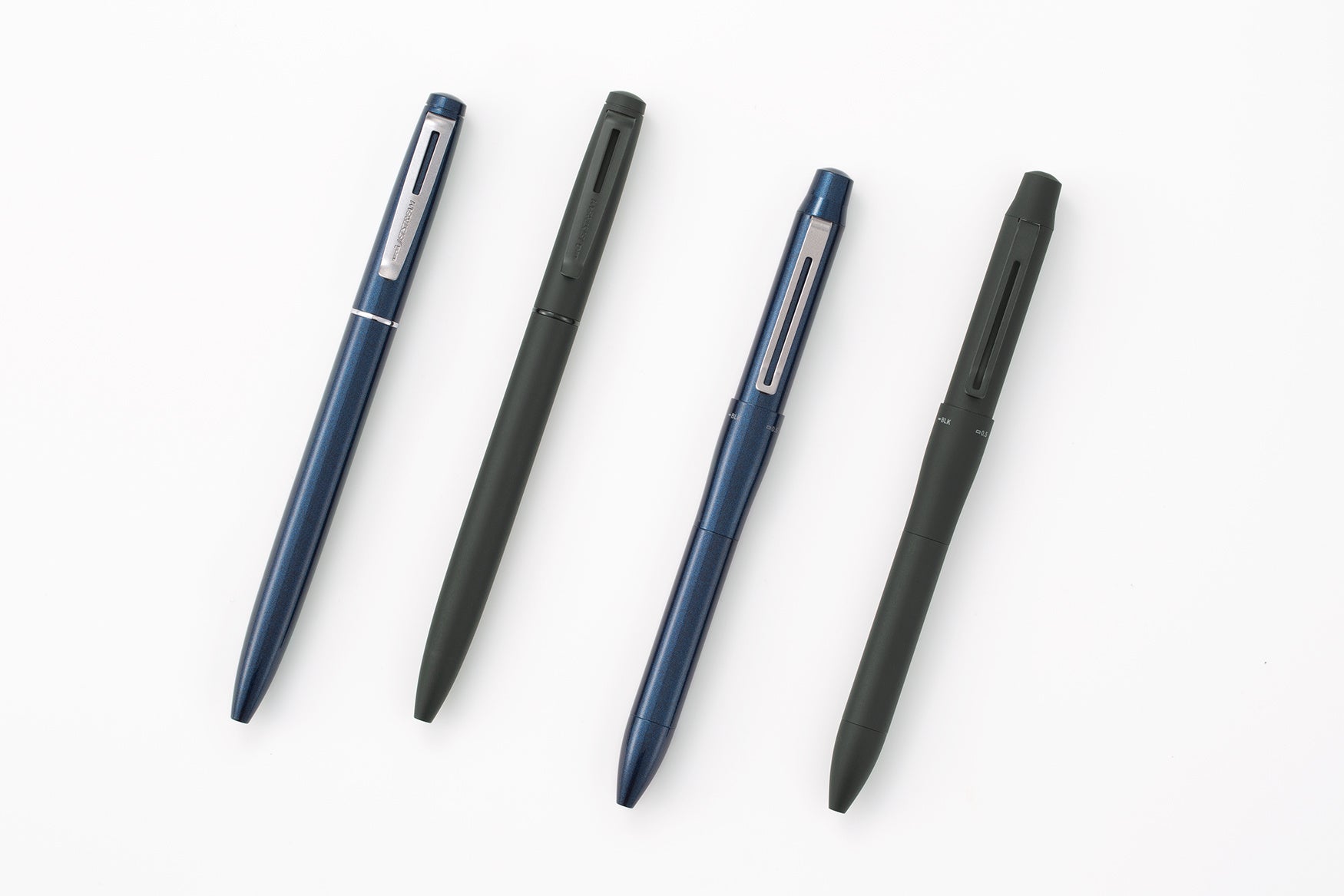
Pick up an all-metal multi-pen, turn it so the small red indicator faces upward, press the rear push-button, and a red ballpoint cartridge snaps cleanly through the nose cone. Rotate the barrel 90 degrees to face the pencil icon, click again, and a 0.5 mm lead mechanism extends instead. There are no side sliders or stepped plastic tracks cluttering the exterior. The entire selection process is handled silently inside a brass or aluminum cylinder by a physics trick known in Japan as furiko-shiki (振り子式), or the pendulum multi-function pen mechanism. While Japanese manufacturers like Mitsubishi Pencil have pushed high-end writing instruments back into the spotlight, most recently highlighted in a PR TIMES Report detailing the updated Jetstream Prime lineup priced from ¥3,850 to ¥6,050, the mechanical gravity feed mechanism remains one of the most misunderstood feats of miniature engineering in modern everyday carry gear.
📌 Key Takeaways:
- The Operating Core: A free-swinging internal weight selector drops under gravity into a specialized spring-loaded selector catch, locking only the uppermost refill into the push rod channel.
- Form Factor Advantage: By eliminating exterior slider slots, pendulum pens maintain a slim, uninterrupted barrel profile with balanced metal barrel balancing that mimics a luxury single-barrel pen.
- Modular Architecture: Most gravity systems rely on the international D1 refill standard and accept interchangeable mechanical pencil converter units, giving users customizable ink and lead layouts.
The Mechanical Shift Inside the Barrel
Traditional multi-pens rely on sliding plastic levers that travel along cutouts milled into the barrel wall. These sliders require substantial exterior clearance, forcing manufacturers to build wide, bulbous grips that many writers find fatiguing over long sessions.
The pendulum multi-function pen solves that ergonomics problem by relocating the cartridge selection entirely inside the upper housing. Inside the barrel sits a cluster of three to four independent refill tubes, each mounted on an offset pivot and tensioned by an individual return spring. Above this cluster hangs an eccentric counterweight, the internal weight selector, suspended on a low-friction universal pivot pin.
When you tilt the pen horizontally or at a normal 45-degree writing angle, gravity pulls the heavy side of that internal counterweight toward the Earth. As the counterweight drops, its lower tip swings directly above the specific cartridge socket aligned with the printed label facing you. Depressing the rear push-button drives an internal plunger downward against the counterweight, which acts as a directional wedge, forcing only that selected refill forward into the multipen mechanical clutch while leaving the remaining cartridges seated safely in reserve.
The Anatomy of the Gravity-Assisted Ink Switch
Understanding why the mechanism functions reliably requires looking at the micro-tolerances engineered into the spring-loaded selector catch. A typical 3-in-1 or 4-in-1 pendulum pen consists of four primary internal stages:
| Component Stage | Mechanical Material | Primary Engineering Role |
|---|---|---|
| Pendulum Counterweight | Machined brass or zinc alloy | Rotates via gravity to position the drive pin directly behind the chosen refill collar. |
| Cartridge Guide Nest | Reinforced POM polymer or brass | Maintains 0.1 mm spacing between barrels, preventing adjacent D1 refills from snagging. |
| Return Spring Cluster | Tempered stainless spring steel | Applies constant upward tension (roughly 1.2, 1.8 N) to snap the tip back upon release. |
| Push-Button Retraction Ring | Stamped spring steel or clip lever | Disengages the active cartridge latch when pressed directly or via pocket clip action. |
When the top cap is pressed, the drive pin seats firmly inside a shallow notch at the base of the selected refill carrier. As the refill travels toward the nose cone, it flexes slightly inward along a radial ramp. Because the tip hole at the front of the pen is drilled precisely in the center, every refill must bend approximately 1.5 to 2.5 degrees off its central axis to emerge cleanly. The spring-loaded selector catch holds the extended cartridge under positive engagement until the user triggers the push-button retraction, typically by pressing a side button, clicking the pocket clip, or cycling the cap a second time.
Rotary vs Gravity Multi-Pen Architectures
Writing enthusiasts frequently debate the trade-offs between continuous twist mechanisms and gravity-driven systems. In business markets where fast color switching matters, the two designs serve distinctly different working habits.
Rotary pens, such as the renewed Jetstream Prime twist models, rely on an internal helical barrel track. Twisting the cap moves a follower pin along continuous cam grooves, sliding one cartridge forward while simultaneously withdrawing another. This architecture delivers silent operation, making it popular in executive boardrooms where clicking noises are unwelcome. The trade-off is two-handed operation: selecting between black, red, and mechanical pencil requires grasping both halves of the pen body.
Pendulum multi-function pens prioritize rapid single-handed deployment. A quick roll of the fingers aligns the desired color icon with the user's line of sight, and a thumb press locks the tip into place. For field workers, medical professionals, engineers, and everyday carry (EDC) multi-color pen users, that single-handed efficiency outweighs the soft mechanical rattle inherent in a floating internal counterweight.
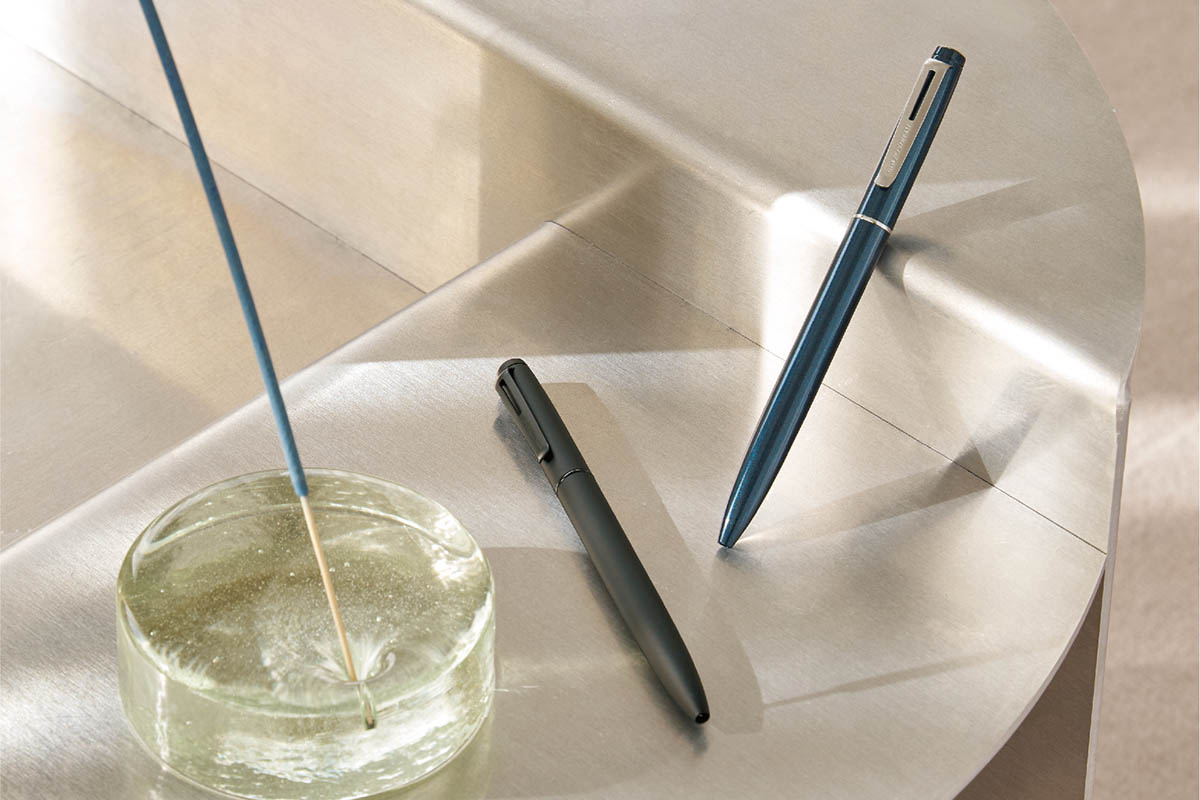
The Standardized Heart: D1 Refills and Pencil Converters
A major factor sustaining the popularity of gravity feed mechanisms across decades is standardization. While high-volume disposable multi-pens use proprietary plastic ink reservoirs, premium pendulum pens universally adopt the D1 refill standard.
Measuring roughly 67 mm in length and 2.3 mm in diameter, metal-jacketed D1 cartridges can be sourced with standard oil-based ballpoint ink, hybrid emulsion formulas (such as Jetstream ink), or gel inks from third-party manufacturers. Because each cartridge is sheathed in stainless steel or brass, the pen maintains rigid tip support despite the lateral bending required during deployment.
Furthermore, gravity pens rarely limit themselves strictly to ballpoints. Many configurations reserve one slot for a specialized mechanical pencil converter. This self-contained 0.5 mm or 0.7 mm unit slots into the clutch receiver exactly like an ink cartridge. When the pencil position is selected by gravity, subsequent clicks of the top button advance the graphite lead through an internal ratcheting collet without disengaging the primary cartridge lock.
Why Weight Distribution Matters for Everyday Carry
Building a reliable pendulum pen requires careful metal barrel balancing. If the barrel is made from lightweight, thin-walled plastic, the shifting momentum of the internal counterweight can make the pen feel unbalanced or hollow in the hand.
Manufacturers address this by using machined aluminum, brass, or stainless steel for the outer body. The added mass of a metal chassis serves two practical functions:
- It dampens the tactile vibration of the swinging internal weight selector when moving the pen between tasks.
- It shifts the center of gravity forward toward the grip section, reducing hand strain during lengthy note-taking sessions.
Premium EDC multi-color pens strike an intentional balance: enough weight in the grip section to anchor the writing point, with a rigid upper chassis that keeps the pivot clearance of the internal pendulum stable across years of daily pocket carry.
Frequently Asked Questions (FAQ)
Q1: Why does my pendulum multi-pen select the wrong color?
A1: Gravity selector errors almost always happen when the pen is held too vertically during the click. The internal counterweight requires a slight tilt, typically between 30 and 60 degrees from vertical, so gravity can swing it fully into the chosen channel notch before the top button is pressed.
Q2: Can I install gel refills into a pendulum multi-function pen?
A2: Yes, provided the refills adhere to the standard D1 form factor (67 mm length by 2.3 mm diameter). Several manufacturers produce hybrid oil and micro-gel D1 refills that fit directly into gravity pen receiver clutches.
Q3: How do you refill the lead in the mechanical pencil component?
A3: Retract the pencil mechanism completely, unscrew the lower barrel from the pen, and gently pull the pencil converter straight out of its receiver socket. Remove the brass tip sleeve from the converter unit, insert one or two 0.5 mm replacement leads into the reservoir tube, slide the sleeve back into place, and push the converter firmly back into the clutch socket.
The Continuing Appeal of Analog Gravity Systems
In an era dominated by rapid digital interfaces, the lasting popularity of the pendulum multi-pen proves that mechanical problem-solving retains distinct advantages. By letting gravity handle channel routing instead of relying on external plastic levers, the furiko-shiki system delivers three or four distinct writing tools inside the profile of a single refined instrument. For writers who appreciate intentional design, every single click remains a small, satisfying demonstration of everyday kinetic physics at work.
