Inside the Hachioji Host Disappearance: The Nightclub Mystery That Shocked Tokyo
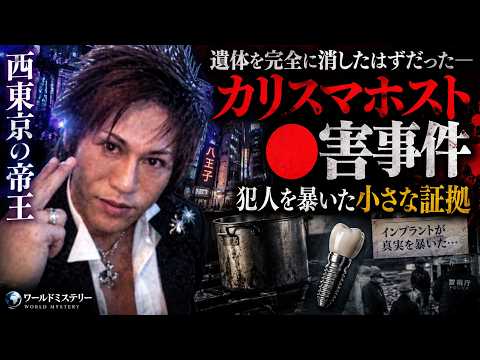
Late on the night of November 25, 2010, Masamichi Tsuchida walked out of a commercial building in western Tokyo and vanished into thin air. Known throughout the prefecture's entertainment circuits as the "Emperor of West Tokyo," the 29-year-old charismatic host was the undisputed kingpin of Hachioji's glitzy nightlife district, pulling in tens of millions of yen monthly while orchestrating an ambitious push toward Shinjuku’s Kabukicho. When his luxury car turned up abandoned in a quiet suburban parking lot days later with his wallet and personal belongings untouched, rumors exploded across the capital's entertainment districts. As documented in an investigative retrospective by the YouTube (ワールドミステリーch) Report on the case, what began as a missing-person alert soon unraveled into one of the most chilling evidence-tampering and murder inquiries in modern Japanese criminal history.
The Tokyo Metropolitan Police Department eventually mobilized elite homicide detectives from the First Investigation Division to crack the Hachioji host disappearance. Behind the champagne towers and velvet booths lay a claustrophobic web of astronomical private debts, toxic business partnerships, and violent turf rivalries. Over a decade later, the charismatic host missing incident remains a haunting case study in how far perpetrators will go to engineer a body-less crime, exposing the dark mechanics of suburban Tokyo's unregulated club underbelly.
📌 Key Takeaways:
- The Disappearance: Masamichi Tsuchida vanished on November 25, 2010; his abandoned car in Musashimurayama signaled foul play almost immediately.
- The Gruesome Method: Suspects attempted to eliminate all physical evidence by using high-concentration alkaline drain chemicals to dissolve human remains in an apartment bathroom.
- The Forensic Triumph: Despite massive chemical destruction, forensic technicians recovered a single dental prosthetic screw from a municipal septic pipe that proved Tsuchida was dead.
- The Legal Limbo: Due to strict Japanese evidentiary thresholds regarding the exact cause of death without an intact body, prosecutors struggled to secure final homicide convictions, leaving lingering outrage.
The Rise of Masamichi Tsuchida and the West Tokyo Nightlife Boom
To understand the panic ignited by the Hachioji nightclub scandal, one must understand the economic weight Masamichi Tsuchida carried. Hachioji sits roughly forty kilometers west of central Tokyo, functioning as a sprawling university town and suburban commercial hub with its own autonomous entertainment zone. While ambitious hosts traditionally migrated directly to Shinjuku, Tsuchida established his dominion right in Hachioji. Charismatic, imposing, and relentlessly driven, he converted mid-tier venues into regional cash cows.
His persona as the "Emperor of West Tokyo" was not merely club promotion. Tsuchida built an ironclad personal clientele. Wealthy business owners, local women, and rival host club workers spent small fortunes at his tables every week. In the Japanese host club economy, top-ranking hosts operate almost like independent corporate divisions, generating hundreds of thousands of dollars in monthly revenue. Yet this business model comes with acute structural risks. Hosts frequently front money for their customers’ astronomical tabs, absorbing personal liability when high rollers default on their debts.
By late 2010, Tsuchida wanted bigger turf. He set his sights on establishing permanent bridgeheads in Kabukicho, the world's most competitive nightlife district. That expansion pitted him directly against entrenched syndicates and soured relationships with local business partners who felt sidelined by his aggressive maneuvers. Tsuchida was managing cash flow running into millions of yen while navigating escalating friction with co-investors over equity splits, uncollected debts, and management control.
The Vanishing at Midnight: Musashimurayama and the Abandoned Sedan
On November 25, 2010, Tsuchida completed an evening shift, met associates, and ceased all communication. His mobile phone abruptly went dark around midnight. For a man who managed dozens of employees and juggled demanding VIP clients across multiple messaging apps, sudden radio silence sounded immediate alarms. Two days later, his family filed an official missing-person report with the local police precinct.
Detectives caught their first break when Tsuchida’s luxury sedan was discovered in a convenience store parking lot in Musashimurayama, several miles north of his home base. The vehicle was locked. There were no signs of an exterior collision, no broken glass, and no immediate bloodstains visible to the naked eye. Tsuchida’s wallet, keys, and driver’s license were gone, but investigators knew suburban car abandonments often serve as tactical diversions intended to buy perpetrators transit time.
The Tokyo Metropolitan Police Department escalated the inquiry from a routine disappearance to an active kidnapping and homicide investigation. Surveillance camera sweeps across western Tokyo highway corridors revealed another vehicle trailing Tsuchida’s sedan on the night he vanished. Informants within the nightlife trade began whispering that the charismatic host had walked straight into an ambush orchestrated not by outside yakuza muscle, but by individuals from his own inner circle.
Chronology of the Hachioji Criminal Investigation
The operational timeline behind this Tokyo nightlife cold case illustrates how investigators dismantled an intricate web of deceit spanning three years of covert surveillance, forensic testing, and custodial interrogations.
| Date | Investigative Milestone | Operational Impact |
|---|---|---|
| November 2010 | Tsuchida disappears; abandoned sedan recovered | Police initiate covert tracking of his former business associates |
| 2011, 2012 | Purchases of industrial caustic soda traced to suspects | Detectives establish pre-meditated evidence destruction logistics |
| April, May 2013 | Arrests of co-owner, former staff, and chemical accomplices | Metropolitan Police carry out massive search of apartment drainage infrastructure |
| Late 2013 | Forensic recovery of synthetic dental implant fragments | Scientific confirmation of victim's biological presence at the crime scene |
| 2014, 2018 | Judicial trials for corpse destruction and disputed murder charges | Exposes legal hurdles in prosecuting homicides without direct cause-of-death evidence |

Caustic Chemicals and Drainage Pipes: The Forensic Search
When Tokyo police raided an apartment rented by an acquaintance of Tsuchida's business partner in 2013, they found an environment scrubbed down to the concrete. The conspirators had conceived an execution method designed to leave zero biological trace. Hardware store receipts revealed that suspects had purchased dozens of liters of high-concentration sodium hydroxide and industrial drain cleaner, an alkaline compound capable of dissolving soft tissue and fat over extended periods.
The perpetrators placed Tsuchida’s remains in a domestic plastic bathtub, submerged the body in chemical solutions, and slowly washed the liquefied material through the municipal plumbing system. It was an appalling plot ripped from true-crime fiction. However, absolute biological erasure is exceptionally difficult. Forensic technicians dismantled the entire bathroom unit, pulled up floorboards, and systematically seized the underground pipes connecting the building to the municipal wastewater network.
Deep within the sludge of the underground drainage junctions, crime lab specialists isolated their critical piece of physical evidence: a microscopic section of dental bone fused to an artificial titanium implant screw. Medical serial numbers and specialized dental records matched Tsuchida’s clinical profile. The chemical bath had melted flesh and dissolved porous organic structures, but it could not vaporize surgical-grade titanium. The evidence tampering forensic clue shattered the suspects' alibi that Tsuchida had simply skipped town to evade debts.
Host Club Rivalry, Debts, and the Dark Side of Tokyo Nightlife
The motive behind this host club rivalry homicide reveals the predatory economics driving Tokyo's club trade. As police cross-examined suspects, including Tsuchida's former business partner and several compliant club staff members, a pattern of toxic co-dependence emerged. Behind the bright neon marquees, the host industry operates on high-stakes cash advances, unwritten loans, and intense jealousy over high-spending female patrons.
Tsuchida had accumulated significant financial leverage over his peers, but he also held debts tied to club lease acquisitions and marketing ventures. When business relationships soured, his partners realized that killing Tsuchida could wipe their books clean while allowing them to absorb his lucrative customer base. Unlike organized crime hits managed by professional syndicates, this crime was engineered by ambitious amateur operators operating inside an insular nightlife bubble.
The crime exposed how unchecked greed can transform commercial disputes into extreme violence. Host clubs frequently recruit young men with promises of fast wealth, sports cars, and luxury watches, yet the baseline reality is filled with cutthroat internal pressure. When financial cracks appear, the lack of formal corporate governance means disputes often escalate outside civil courts, breeding the very conditions that culminated in Tsuchida's murder.
The Limits of Japanese Law: A Body Without a Murder Charge
Despite the forensic recovery of Tsuchida's dental hardware, the trial exposed a profound vulnerability within Japan's criminal justice system. Under Japanese penal law, securing a murder conviction requires proving beyond a reasonable doubt not only that a victim is deceased, but also the specific mechanism and intent of death. Without lungs to show asphyxiation, a skull to demonstrate blunt trauma, or blood samples to establish poisoning, prosecutors faced a monumental evidentiary wall.
The defense took ruthless advantage of this legal standard. While suspects admitted to their involvement in the horrific destruction and abandonment of a corpse, they shifted blame regarding who actually delivered the fatal blow. Some claimed Tsuchida had died accidentally during a heated argument, while others argued they arrived only after he was already dead, coerced into helping dispose of the remains under threat of physical retaliation.
The Tokyo District Court ultimately handed down multi-year prison sentences for the destruction of a human body, but the central murder charges collapsed or resulted in acquittals for key actors. The victim’s family and public observers were left stunned. In the annals of Japan true crime mysteries, the case remains an infuriating example of how an extreme method of evidence destruction effectively shielded the perpetrators from the full weight of a life sentence.
Frequently Asked Questions (FAQ)
Q1: Why was Masamichi Tsuchida called the "Emperor of West Tokyo"?
A1: He was the highest-grossing host in Hachioji, dominating the regional nightlife market outside central Tokyo and generating millions of yen monthly while managing premier talent across multiple clubs.
Q2: How did police prove Tsuchida was dead without a complete body?
A2: Forensic teams searched the apartment's municipal drainage pipes and septic systems, recovering a tiny fragment of jawbone attached to a surgical-grade titanium dental implant that conclusively matched his dental records.
Q3: Were the suspects convicted of murder?
A3: While several individuals were convicted and sentenced to prison for corpse abandonment and evidence destruction, the lack of an intact body prevented prosecutors from proving the exact cause of death, resulting in acquittals or dropped charges for direct murder.
The Permanent Shadow Over Hachioji
The disappearance and horrific death of Masamichi Tsuchida permanently altered public perception of Japan's host industry outside Tokyo's central wards. For years, suburban clubs had operated under the radar of major police crackdowns, presenting themselves as glitzy local alternatives to Shinjuku or Roppongi. The gruesome forensic reality uncovered beneath an ordinary suburban apartment bathroom forced local municipalities and the Tokyo Metropolitan Police to impose far stricter regulatory oversight on nightlife management, financial accounting, and staff recruitment.
Yet for true crime historians and legal experts, the Hachioji case remains an unsettling marker of the limits of physical evidence. A charismatic nightlife icon was betrayed by his closest business allies, his body chemically dissolved, and his killers largely insulated from murder convictions by the very thoroughness of their crime. Tsuchida’s name endures not just as an entertainment legend, but as the central figure in one of Tokyo’s most tragic and legally frustrating modern mysteries.
