Inside the Viral Haranishi Gorilla Craze: How a Comedian's Zoo Stunt Conquered the Internet

Across short-form video feeds worldwide, millions of viewers have stopped scrolling to watch the exact same bizarre scene: a massive, muscled silverback gorilla resting behind the glass of a zoo enclosure suddenly stands on two legs, pivots smoothly toward a stunned family, and bursts into frantic hip-hop locking and pop dancing. The creature does not roar. It flashes a cheeky human grin, spins like a top, and drops into an absurd physical comedy routine that leaves children screaming with delight and adults questioning their sanity.
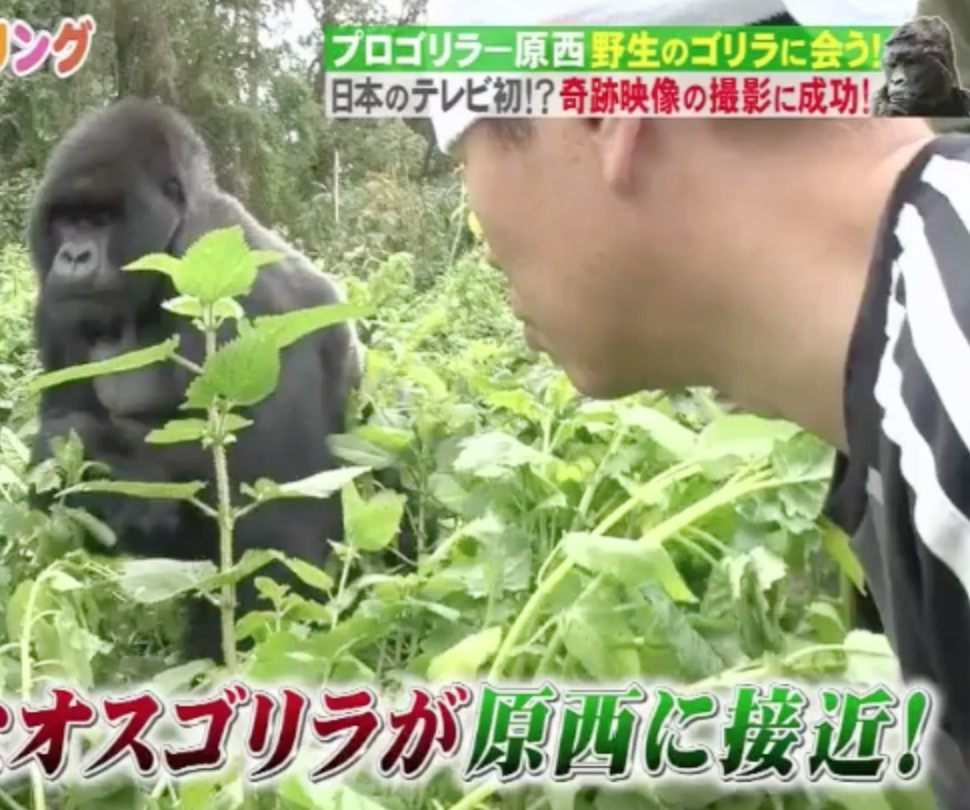
The creature is not an escapee from an unreleased Hollywood creature feature, nor is it an advanced animatronic experiment from a robotics lab. Beneath the layer of hand-punched yak hair and silicone musculature is Takayuki Haranishi, the veteran physical comic who forms one half of the iconic Yoshimoto Kogyo comedy duo FUJIWARA. Broadcast on Tokyo Broadcasting System's long-running variety program Ningen Kansatsu Variety Monitoring (TBS Monitoring), the recurring hidden-camera segment has transcended Japanese network television to become a recurring global internet sensation.
📌 Key Takeaways:
- The Performer: Veteran comedian Takayuki Haranishi uses his extraordinary body agility and repertoire of physical gags to bring a photorealistic primate costume to life.
- The Production: TBS's Monitoring spent millions of yen commissioning a cinema-grade creature suit that seamlessly blends hyper-realistic zoological aesthetics with hidden-camera mechanics.
- The Global Appeal: The stunt bypasses language barriers entirely, turning traditional Japanese dokkiri television into universal, non-verbal slapstick that dominates international social media algorithms.
The Comedic DNA of Takayuki Haranishi and FUJIWARA
To understand why the stunt works so well, one must understand Haranishi himself. Formed in 1989 alongside his partner Toshifumi Fujimoto, the duo FUJIWARA emerged from Yoshimoto Kogyo's famous NSC Osaka comedy academy. While Fujimoto took on the role of the loud, reactive straight man (tsukkomi), Haranishi developed a legendary reputation as an eccentric, rapid-fire gag specialist (boke). Over three decades, Haranishi famously claimed to possess an arsenal of over 1,000 original "one-shot gags" (ippatsu gyagu), built almost entirely around explosive movements, rubber-faced contortions, and unpredictable rhythm.
Long before slipping into an animal hide, Japanese variety shows regularly poked fun at Haranishi's compact, muscular build and ape-like kinetic energy. Rather than resisting the trope, Haranishi leaned into it. When TBS producers conceived a hidden-camera concept testing whether zoo visitors could differentiate between an exotic animal and a seasoned stand-up comic, Haranishi was the only real choice. He did not simply wear a suit. He studied zoological footage, mastered the lumbering knuckle-walk of adult western lowland silverbacks, and learned how to switch instantly from chillingly accurate animal stillness into hyperactive Japanese variety comedy.
Cinema-Grade Craftsmanship: Inside the Hyper-Realistic Prank Suit
Low-budget gag suits fail instantly because human perception detects rubber masks within seconds. TBS avoided this trap by treating the stunt like a feature film creature shoot. The network contracted specialized Japanese creature effects workshops, the same tier of artisan studios responsible for lifelike canine and ursine suits featured across contemporary Japanese cinema, to build an outfit tailored specifically to Haranishi's measurements.
The fabrication demanded rigorous mechanical and cosmetic engineering:
- Prosthetic Facial Blending: The facial skin utilized medical-grade silicone matched to facial mechanics, allowing Haranishi's genuine mouth movements and jaw shifts to articulate the gorilla's lips directly without motorized lag.
- Hand-Rooted Coat Work: Technicians spent weeks hand-punching individual strands of synthetic fibers and natural hair into a breathable mesh under-suit, replicating the dense, silver-tipped coat of a dominant male gorilla.
- Anatomical Padding: Custom arm extensions and an arched spine-rig offset Haranishi’s human posture, creating the deep chest cavity, dropped shoulders, and forward-heavy stance essential for biomechanical believability.
When placed in low exhibit lighting behind heavy zoo acrylic, the silhouette is practically indistinguishable from a living 400-pound ape. That technical credibility creates the high-stakes comedic friction required for the prank to pay off.
The Evolution of the Haranishi Gorilla Stunt Across Japanese Television
What began as a one-off segment for Monitoring quickly evolved into one of the network's most reliable ratings magnets. TBS iterated on the formula over multiple broadcasts, gradually raising the absurdity of the situations while preserving the deadpan realism of Haranishi’s performance.
| Era & Stunt Phase | Core Scenario | Spectator Reaction Dynamic | Cultural Reach |
|---|---|---|---|
| Phase 1: The Zoo Exhibit (2015, 2017) | Placing Haranishi behind enclosure glass at real animal parks, switching from genuine ape resting poses to unannounced gag outbursts. | Total confusion giving way to hysterical realization as visitors spot Haranishi’s signature physical trademarks. | Dominated domestic network ratings on TBS Thursday primetime slots. |
| Phase 2: Safari Ambush & Urban Encounters (2018, 2021) | Moving the gorilla outside the glass: ambushing safari bus tours, riding tricycles, and stealing props in public spaces. | Immediate flight-or-fight panic instantly disarmed when the gorilla pulls off delicate human tasks with high-society manners. | Initial clip leaks began migrating onto early TikTok and YouTube compilation channels. |
| Phase 3: The Algorithmic Global Boom (2024, 2026) | Celebrity cross-overs, competitive athletic challenges, and remastered social edits circulating across vertical video platforms. | Universal internet applause focusing on the intersection of special-effects craftsmanship and master-class physical performance. | Hundreds of millions of cumulative views across Reddit, X, and Instagram Reels worldwide. |
The progression shows how TBS maximized the comedic payoff. By steadily transitioning from passive exhibit viewing to absurd, active scenarios, the show ensured the visual joke remained fresh across multiple television seasons.
The Architecture of Spectator Confusion: Why the Prank Works
Psychologically, the stunt succeeds because it exploits a distinct gap in human cognitive processing. When a visitor approaches an authentic zoological enclosure, their mind has already accepted the premise that whatever sits on the other side of the safety barrier is a wild animal. That cognitive bias does heavy lifting for the production crew.
When Haranishi sits motionless, scratching his belly with the heavy, calculated inertia of a silverback, the brain confirms its hypothesis. The comedy detonates in the exact split-second that illusion shatters. Haranishi does not break character slowly; he explodes into motion. He drops into an absurd low-squat dance, executes a Michael Jackson slide across the grass, or suddenly produces a miniature tea set and drinks with refined posture. The spectator experiences a rapid emotional whipsaw: primal surprise transforms into cognitive dissonance, which immediately dissolves into gut-level laughter.
Crucially, the prank avoids the mean-spirited edge found in many Western hidden-camera stunts. Haranishi never chases unsuspecting pedestrians to induce genuine terror, nor does the show stage dangerous scenarios. The joke is never on the spectator's vulnerability; the joke is Haranishi's relentless, sweaty dedication to playing a ridiculous primate.
How Japanese Variety Shows Dominate Global Short-Form Feeds
Traditional Japanese television relies heavily on complex wordplay (dajare), intricate social hierarchies, and rapid-fire Osaka dialect that rarely translates cleanly to international audiences. Subtitled dramas and anime find massive overseas distribution, but domestic variety formats often stay confined to Japanese airwaves.
Haragori breaks every linguistic barrier. A man disguised as an ape moonwalking in an enclosure requires zero translation. Whether viewed in Tokyo, Toronto, or São Paulo, the comic rhythm is self-evident. On platforms like TikTok and Instagram Reels, where visual punchlines must register within three seconds, Haranishi’s explosive kinetic routines represent ideal algorithmic fuel. The resurgence of these clips highlights how the golden age of physical comedy, reminiscent of Buster Keaton, Charlie Chaplin, and Ken Shimura, remains the most resilient form of mass entertainment across modern digital media.
Frequently Asked Questions (FAQ)
Q1: Is the gorilla in the viral clips an actual animatronic robot?
A1: No. While the suit includes minor mechanical elements for facial expression and ear posture, the movements, dances, and gestures are performed live by Japanese comedian Takayuki Haranishi. His physical fitness and decades of slapstick experience give the character its distinctive movement style.
Q2: Where were the iconic zoo segments filmed?
A2: Most enclosure segments were produced in controlled, coordinated partnerships with Japanese zoos and animal theme parks (such as Izu Shaboten Zoo or specialized safari parks) during off-peak hours or inside temporarily retired enclosures to ensure complete public and animal safety.
Q3: Did the show ever put Haranishi inside an enclosure with real gorillas?
A3: Never. Real silverbacks are fiercely territorial and possess immense physical strength; introducing a human in a costume into an active troop would create fatal risks. Haranishi was always housed in separate, quarantined enclosures or staged viewing zones far away from living primates.
Q4: Why is a Japanese variety clip from years ago going viral again right now?
A4: Short-form algorithms prioritize instantly understandable, high-energy physical comedy with zero language barriers. As international aggregator accounts rediscover classic episodes of TBS’s Monitoring, millions of new viewers encounter Haranishi’s performance for the first time, sparking fresh cycles of viral engagement.
The Enduring Mastery of Unfiltered Physical Absurdism
In an entertainment landscape increasingly saturated with generative visuals, hyper-edited digital pranks, and algorithmic cynicism, Takayuki Haranishi’s gorilla stunt succeeds because it is delightfully, unapologetically analogue. A real man spends hours enduring adhesive makeup, straps on fifty pounds of layered artificial fur, and crawls on his knuckles through the dirt just to make a room full of strangers double over with laughter.
The Haragori phenomenon proves that true comic craft does not age out of relevance. Decades after FUJIWARA first broke onto the Kansai comedy circuit, Haranishi’s commitment to physical foolishness remains peerless. Sometimes, the highest form of entertainment is nothing more complicated than an exceptional comedian in an astonishing suit, reminding the entire world how good it feels to laugh without thinking.
