Is FF Truly Superior in Snow? Debunking Winter Driving Myths Between FF and FR
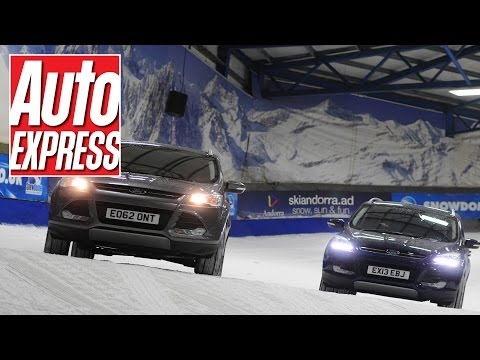
For decades, automotive folklore handed front-engine, front-wheel drive (FF) vehicles an automatic winter victory over rear-wheel drive (FR) counterparts. Drivers routinely packed sandbags into the trunks of rear-drive sedans each November, desperate to keep their tail ends from snapping around on slick asphalt. Yet contemporary tire chemistry, computerized stability management, and chassis balance have completely upended these old showroom rules. A seminal YouTube (Auto Express) Report demonstrated years ago that driven wheels matter far less than compound selection, sparking an engineering debate that remains intensely active among winter drivers today.
Recent testing across Scandinavia and northern proving grounds reveals a nuanced reality. While front-wheel drive still provides undeniable packaging and directional stability advantages for daily commuting, its supposed dominance on ice collapses under specific, predictable physical conditions. Examining the mechanical layout, traction physics, and hill-climbing dynamics exposes where front-drive excels, and where rear-drive quietly takes the crown.
📌 Key Takeaways:
- The Incline Reversal: Front-wheel drive dominates flat-ground launches because 60% of vehicle mass rests over the drive axle, but steep uphill climbs shift that weight backward, handing the traction advantage to rear-wheel drive.
- Predictability vs. Rotation: Front-drive vehicles fail safely through terminal understeer, making them inherently easier for novice drivers to control when tire grip exceeds allowable slip angles.
- Tire Compound Over Drivetrain: Independent cold-weather testing consistently shows that a rear-wheel drive car on premium winter tires stops, turns, and accelerates faster on ice than a front-wheel drive car on all-season rubber.
The Mechanical Blueprint of Front-Engine, Front-Wheel Drive
Front-engine, front-wheel drive packaging dominates the modern passenger car landscape for clear structural reasons. By mounting the powertrain using a transverse engine layout, automakers position the engine, transmission, and differential into a single compact transaxle between the front wheels. This layout eliminates the heavy longitudinal driveshaft and rear differential housing entirely.
The immediate physical consequence is an aggressive forward weight bias. In an entry-level hatchback or compact sedan, 58% to 62% of the total curb weight sits directly over the front tires. When pulling away from an icy intersection on level asphalt, that concentrated mass pushes the tread blocks directly into the snowpack, generating immediate mechanical interlock without requiring extra ballast. Furthermore, eliminating the rear driveline drops total curb weight by 150 to 300 pounds, delivering measurable fuel efficiency and packaging advantages that free up rear cabin legroom and trunk capacity.
Winter Traction Physics and Front Axle Load Dynamics
Friction operates on a finite budget governed by Circle of Forces theory, first formalized in tire dynamics by automotive engineer Wolfgang Kamm. A tire can provide longitudinal force for acceleration and braking, lateral force for steering, or a vector combination of both. When you demand both simultaneously on packed ice, where the friction coefficient drops from a dry 0.85 μ down to 0.15 μ, that available traction budget evaporates rapidly.
This is where front axle load dynamics show their dual nature. Because the front tires must deliver tractive torque while steering the vehicle, asking an FF vehicle to accelerate hard through a snowy corner easily overwhelms tire grip. As slip angles climb beyond the tire's threshold, front-engine front-wheel drive cars succumb to classic understeer characteristics: the front tires wash wide, the car refuses to turn, and it plows straight ahead. For an untrained driver, this failure mode is remarkably intuitive to manage. Easing off the throttle immediately transfers weight back onto the front tires, tightens the turning radius, and restores steering authority.
The Hill Climb Paradox: Where Rear-Wheel Drive Fights Back
The standard assumption that front-wheel drive always pulls better than rear-wheel drive pushes falls apart the moment a road tilts upward. In controlled comparative testing conducted by specialty outlets like Tyre Reviews, evaluators pitted an Audi A4 (FWD) against a BMW 3 Series (RWD) fitted with identical winter rubber on an alpine gradient. The results surprised long-time front-drive advocates.
When a vehicle climbs a 10% to 15% incline, static and dynamic weight transfer moves vehicle mass rearward. That initial 60/40 forward weight bias rapidly equalizes or even reverses, effectively unloading the front drive axle. As the front tires spin on the icy incline, front axle load drops, causing the driven wheels to slip uncontrollably. Conversely, rear-wheel drive handling differences come alive on hills: dynamic weight transfer compresses the rear suspension, planting the driven rear tires firmly into the ice. While the front-wheel drive car spins its tires and slides sideways toward the ditch, the rear-wheel drive platform gains traction with every degree of incline.
| Driving Scenario | Front-Wheel Drive (FF) Dynamics | Rear-Wheel Drive (FR) Dynamics | Primary Physical Driver |
|---|---|---|---|
| Flat-Surface Launch | Superior initial grip; engine weight directly loads drive tires. | Prone to low-speed axle hop and wheelspin without ballast. | Static weight distribution over drive axle (approx. 60% vs. 48, 50%). |
| Incline Climbing (10, 15%) | Struggles; dynamic weight shift unloads front drive wheels. | Superior climbing traction; rearward load transfer boosts drive grip. | Rearward inertial and gravitational load transfer during ascent. |
| Mid-Corner Slipping | Predictable understeer; car slides straight ahead until speed drops. | Oversteer risk; rear steps out, requiring countersteering skills. | Separation vs. combination of steering and drive torque vectors. |
| Emergency Braking (50, 0 mph) | Identical stopping distances when tire compounds match. | Identical stopping distances when tire compounds match. | Four-wheel disc braking mechanics (drivetrain is disengaged). |

Electronic Aids and Torque Steer on Asymmetrical Ice
Chassis behavior becomes complicated when vehicles encounter "split-mu" surfaces, situations where the left tires run on dry tarmac while the right tires hit slush or sheet ice. In front-wheel drive cars, transverse layouts frequently employ unequal-length half-shafts. When hard acceleration meets uneven traction, drivetrain torque steer causes the car to yank violently toward the side with higher traction.
Modern traction control systems mitigate this via individual wheel braking, but the intervention cuts momentum right when drivers need it most. Rear-wheel drive cars, configured with symmetric longitudinal driveshafts, experience zero steering wheel tug under differential slip. Instead, advanced multi-channel electronic stability control gently brakes a slipping rear wheel while routing power across a mechanical or electronic limited-slip differential. This stabilizes the yaw axis without interfering with the driver's steering input.
The Rubber Reality: Why Winter Tires Beat Layout Myths
The automotive industry has spent decades selling all-wheel drive and front-drive security as silver bullets for sub-zero weather. Veteran mechanic Scotty Kilmer frequently notes in his workshop analyses that consumers spend thousands on drivetrain upgrades while driving on rock-hard, low-rolling-resistance all-season rubber. The physics of winter driving refute this priority completely.
Tire rubber drops below its glass transition temperature at approximately 45°F (7°C). Standard rubber compounds harden into hockey pucks, losing their ability to deform into road micro-textures. A dedicated winter tire utilizes high-silica rubber compounds that stay pliable at -20°F (-29°C), complemented by thousands of microscopic sipes that create biting edges on sheet ice.
In independent braking tests from 30 mph on packed snow, a front-wheel drive car on standard all-season tires requires an average of 115 to 130 feet to stop. The exact same vehicle on dedicated winter tires stops in just 60 to 70 feet. Drivetrain layout only dictates how power reaches the road; all cars stop on four identical patches of rubber. A rear-wheel drive coupe riding on quality winter rubber will outperform a front-wheel drive sedan on all-season tires in braking, cornering, and emergency swerves every single time.
Frequently Asked Questions (FAQ)
Q1: Is an all-wheel drive car always safer than a front-wheel drive car on ice?
A1: No. All-wheel drive only assists with forward acceleration. It provides zero mechanical advantage during braking or lateral cornering. A front-wheel drive vehicle equipped with three-peak mountain snowflake (3PMSF) winter tires stops far shorter and corners with higher stability than an AWD vehicle riding on standard all-season rubber.
Q2: Why do rear-wheel drive cars feel so nervous on slick roads?
A2: When rear tires break traction under throttle, the rear of the car rotates around its vertical axis, creating oversteer. This requires immediate, precise countersteering to correct. Front-wheel drive cars push straight ahead when they lose grip (understeer), which feels less frightening because simply lifting off the throttle naturally brings the nose back into line.
Q3: Should I put sandbags in the trunk of a front-wheel drive car during winter?
A3: Absolutely not. Adding ballast to the trunk of an FF vehicle lifts weight off the front drive axle, reducing traction, compromising steering response, and lengthening emergency stopping distances. Ballast belongs exclusively over the rear axle of rear-wheel drive vehicles.
Winter Dynamics in the Modern Fleet
The traditional dogma declaring front-wheel drive fundamentally superior in winter conditions holds true only within specific boundaries. For level city commuting, low-speed intersections, and drivers who prefer predictable understeer, FF vehicles offer a dependable, cost-effective winter package. But on steep inclines and complex switchbacks, dynamic weight transfer shifts the mechanical advantage straight to rear-wheel drive platforms.
As electric vehicles reshape the fleet with 50/50 balance, low centers of gravity, and instant motor response, the historical dividing line between front and rear layouts continues to blur. Regardless of which axle receives engine torque, vehicle control on snow begins and ends at the contact patch. Drivetrain layout helps you get going, but purposeful winter tires remain the absolute determinant of whether you stop before the intersection.
