Is Splitting Shifts on Job Boards Actually Prohibited? Prime Serve Analyzes Platform Rules
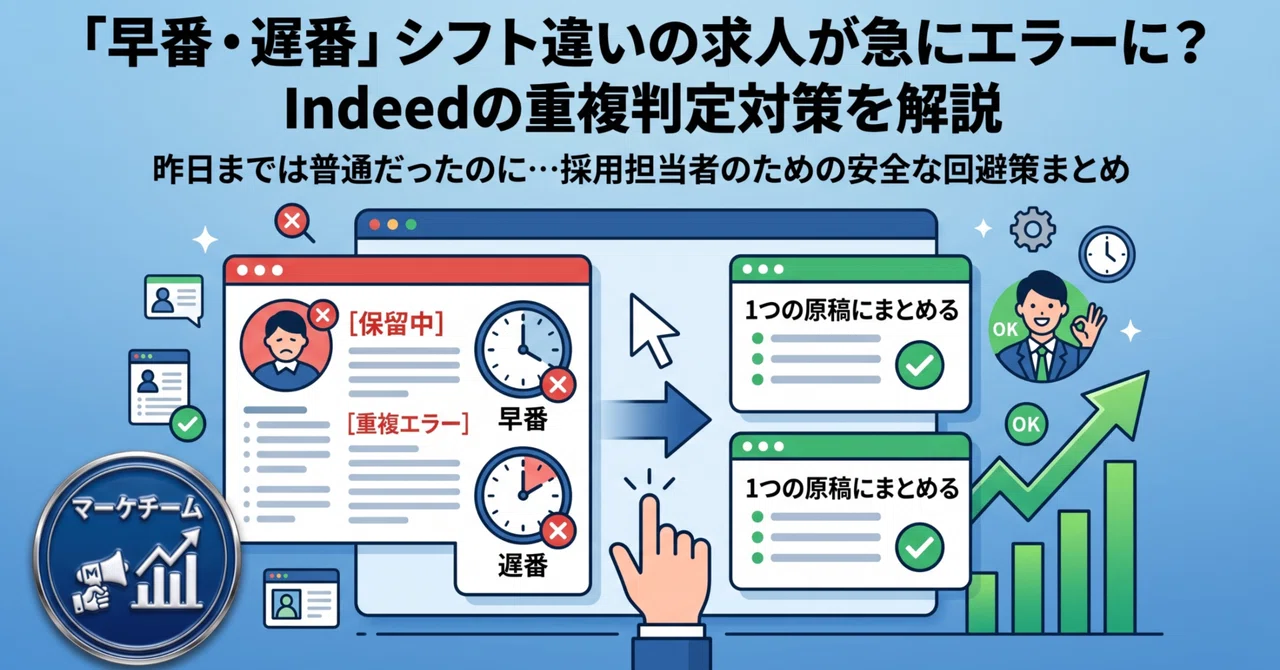
Thousands of recruitment managers across retail, food service, and logistics recently faced an unwelcome surprise inside their employer dashboards. Open job vacancies that performed reliably for months suddenly dropped to zero impressions or displayed sudden listing errors. In many instances, the jobs disappeared entirely without explicit manual rejection warnings. The underlying reason behind these abrupt interruptions centers on a widespread operational habit: publishing separate job ads for morning, evening, or weekend shifts at identical store locations.
According to an operational advisory published in a note Report by Tokyo-based recruitment consultancy Prime Serve (株式会社プライムサーヴ), automated quality filters on major aggregation platforms have tightened significantly. What human resources departments long treated as routine candidate targeting, dividing early shifts (hayaban) and late shifts (osoban) into distinct posts, now triggers automated enforcement triggers for deceptive indexing. Platforms like Indeed have escalated enforcement to combat artificial search volume inflation, leaving hiring managers scrambling to fix sudden delisting errors and avoid structural account penalties.
📌 Key Takeaways:
- The Platform Reality: Creating split shift advertisements for the same location job role directly breaches current hiring platform algorithm updates targeting duplicate listings.
- The Enforcement Mechanism: Search indexing bots automatically flag identical job descriptions sharing postal codes and titles, reclassifying them as spam to safeguard candidate search relevance.
- The Path Forward: Recruitment advertising compliance requires consolidating working hours within a single master post rather than distributing schedules across multiple entries.
The Ghost Listing Crackdown: Why Morning and Evening Postings Vanish
Publishing separate recruitment ads for distinct shifts historically offered clear benefits. A 24-hour convenience franchise or warehouse facility seeking both a 6:00 AM breakfast crew and an 11:00 PM closing crew could write distinct headlines tailored to students, retirees, or night-shift workers. By listing the early shift under one ID and the graveyard shift under another, employers secured double the screen real estate on candidate search feeds.
That tactical advantage vanished as platform algorithms matured. Automated crawlers designed to maximize candidate experience now treat fragmented hours for an identical position as deliberate search manipulation. When two entries share identical street addresses, similar wage structures, and overlapping core duties, automated moderation bots treat the secondary posting as redundant inventory.
Instead of generating twice the candidate flow, accounts splitting shifts routinely find both postings throttled. Prime Serve recruitment consulting highlights that platform algorithms view split shift ads not as helpful operational breakdowns, but as attempts to clutter user feeds. When search bots detect multiple posts that could logically exist within a single entry, search visibility drops to zero, and the platform issues silent account de-indexing.
Inside Indeed’s Duplicate Content Filter and Spam Detection
Indeed job posting policies rest on a straightforward principle: job seekers should encounter unique employment opportunities rather than cloned entries from the same employer. When an enterprise attempts to recruit for warehouse packers across three shifts, automated moderation systems compare title tags, physical geolocations, and body text across the company's catalog.
[Master Job Posting: Warehouse Associate]
├── Shift A: 08:00, 16:00 (Early)
├── Shift B: 16:00, 00:00 (Late)
└── Shift C: 00:00, 08:00 (Night)
Outcome: Fully compliant, indexed once, unified analytics.
[Split Postings: 3 Independent Ads]
├── Ad 1: Warehouse Packer (Morning) --> Flagged: Duplicate pattern match
├── Ad 2: Warehouse Packer (Evening) --> Flagged: Shared location match
└── Ad 3: Warehouse Packer (Overnight) --> Action: Systematic feed delisting
The system evaluates the underlying role rather than just schedule variations. If the fundamental duties, qualifications, and reporting managers remain identical across shifts, splitting the posting violates core search indexing rules. Job description policy violations occur because the platform categorizes the redundant advertisements as keyword manipulation.
Platform operators enforce this strictly because multi-posting degrades the search experience. A user searching for clerical work in a specific metropolitan district does not want twenty identical listings from the same corporate entity dominating the search results page. The moderation systems systematically penalize deliberate duplication by demoting the company’s organic reach across all postings.
Operational Risks and Platform Metrics: Split Ads vs. Unified Listings
The commercial consequences of falling out of recruitment advertising compliance extend beyond temporary ad delisting fixes. Prolonged violations frequently escalate into permanent job board account suspension, cutting off hiring pipelines entirely.
| Compliance Factor | Fragmented Shift Ads (High Risk) | Consolidated Shift Posting (Compliant) |
|---|---|---|
| Indexing Status | High probability of shadowbanning or automated removal | Fully verified, sustained organic search placement |
| Duplicate Listing Penalties | Elevated risk of employer account freeze or termination | Zero penalty risk; builds verified platform authority |
| Click-Through Distribution | Diluted across conflicting posts; inflates cost-per-click | Concentrated on single post; maximizes conversion rates |
| Data Integrity | Fragmented applicant tracking guidelines and siloed records | Unified candidate evaluation and streamlined review |
When recruitment campaigns split into fragments, enterprise spending efficiency collapses. Budget allocations across sponsored ad listings cannibalize each other when multiple entries bid for identical search queries within the same geographic perimeter. By consolidating these entries, employers eliminate competitive friction between their own job vacancies.
How HR Teams Trigger Unintentional Account Suspensions
Most companies that trigger duplicate listing penalties do not intend to game the system. Instead, the problem stems from outdated applicant tracking systems (ATS) or decentralized management practices. When multiple branch managers independently commission job listings through corporate integrations, identical roles naturally proliferate.
A retail brand operating five regional stores might attempt to hire twenty weekend cashiers. If each store creates multiple entries for separate time slots, the corporate account suddenly broadcasts dozens of near-identical postings. Ingestion engines analyze this incoming data stream and detect classic bot-spam signatures.
Platform policies outline explicit red lines for programmatic intake:
- Posting identical job titles across multiple entries within a single municipal radius.
- Altering solely the shift time in the description while maintaining identical boilerplate responsibilities.
- Deleting stalled recruitment advertisements only to republish them instantly under different reference numbers.
- Creating separate accounts to bypass location restrictions for identical business entities.
Once moderation engines flag an account for systematic policy breaches, recovery becomes an uphill climb. Human review backlogs mean suspended accounts often stay offline for days or weeks. For enterprises that rely on high-volume, seasonal hiring cycles, losing access to job board inventory during critical hiring windows translates directly into operational shortfalls and lost revenue.
Practical Compliance: Consolidating Shifts Without Sacrificing Applicant Flow
Resolving the conflict between recruitment advertising compliance and shift flexibility requires restructuring job descriptions. Platform algorithms reward comprehensive, clear listings that offer flexible work options within a single post, rather than forcing job seekers to sift through multiple variations.
HR recruitment optimization begins by auditing the title field. Job titles should remain clean and industry-standard, free of shift tags like "Early Shift Welcome" or "Night Only." Shift preferences belong inside the structured schedule parameters in the body text or through dedicated intake questions during the application process.
Compliant Job Posting Architecture
[Job Title]: Logistics Warehouse Associate
[Location]: Tokyo Distribution Center, Koto Ward
[Base Wage]: ¥1,400, ¥1,750 / hour (Shift Differentials Applied)
[Work Schedule Options]
- Early Shift: 07:00, 15:30 (Break: 60 min)
- Standard Shift: 09:00, 17:30 (Break: 60 min)
- Late Shift: 14:00, 22:30 (Break: 60 min)
- Candidates may indicate their primary shift availability
on the initial application questionnaire.
This consolidated layout fully adheres to same location job role guidelines. It presents the search engine with a single, authoritative reference point, which stabilizes performance metrics. When candidates submit applications, automated pre-screening forms capture their specific shift availability directly. This maintains applicant clarity without fragmenting job postings or risking platform penalties.
Frequently Asked Questions (FAQ)
Q1: Is creating separate job postings for distinct shifts explicitly banned across all job boards?
A1: Major aggregators like Indeed do not have a rule that mentions the word "shift," but their anti-spam and duplicate content policies prohibit publishing multiple vacancies that share identical responsibilities, job titles, and physical locations. Functionally, this means splitting shifts into separate entries violates platform terms.
Q2: How can an employer tell if an ad was delisted for a duplicate policy violation rather than low budget?
A2: When an ad lacks visibility due to budget limits, it still shows an active status alongside zero impressions or a low spend warning. When flagged for duplicate listing penalties or search manipulation, the status changes to paused, rejected, or delisted, and impressions drop to absolute zero despite healthy bids.
Q3: How quickly does organic search reach recover after consolidating duplicate shift postings?
A3: Recovery depends on the severity of the enforcement action. If the listings were merely filtered out by search algorithms, consolidating them into a single post usually restores search visibility within 24 to 48 hours. If the account faced an administrative moderation hold, the employer must submit an appeal to support teams, which can take several business days to review.
Navigating Algorithmic Recruitment Governance in 2026
Hiring platforms continue to adjust their systems to favor clean data and quality user experiences. The shift toward automated moderation and spam detection means hiring teams can no longer rely on outdated listing volume tactics. Attempting to maximize search visibility by splintering single positions into artificial shift postings now harms performance instead of helping it.
Long-term success on major job platforms requires treating job postings as clear sources of truth rather than promotional billboards. Companies must align their applicant tracking workflows, title conventions, and schedule disclosures with modern platform guidelines. Centralizing listings, simplifying job titles, and handling shift preferences through direct intake surveys protects enterprise hiring accounts from costly suspensions, ensuring steady applicant traffic across all shifts.
