Is Udon Daimonji Worth the Hype? Examining Shime Town's Newest Dining Tenant
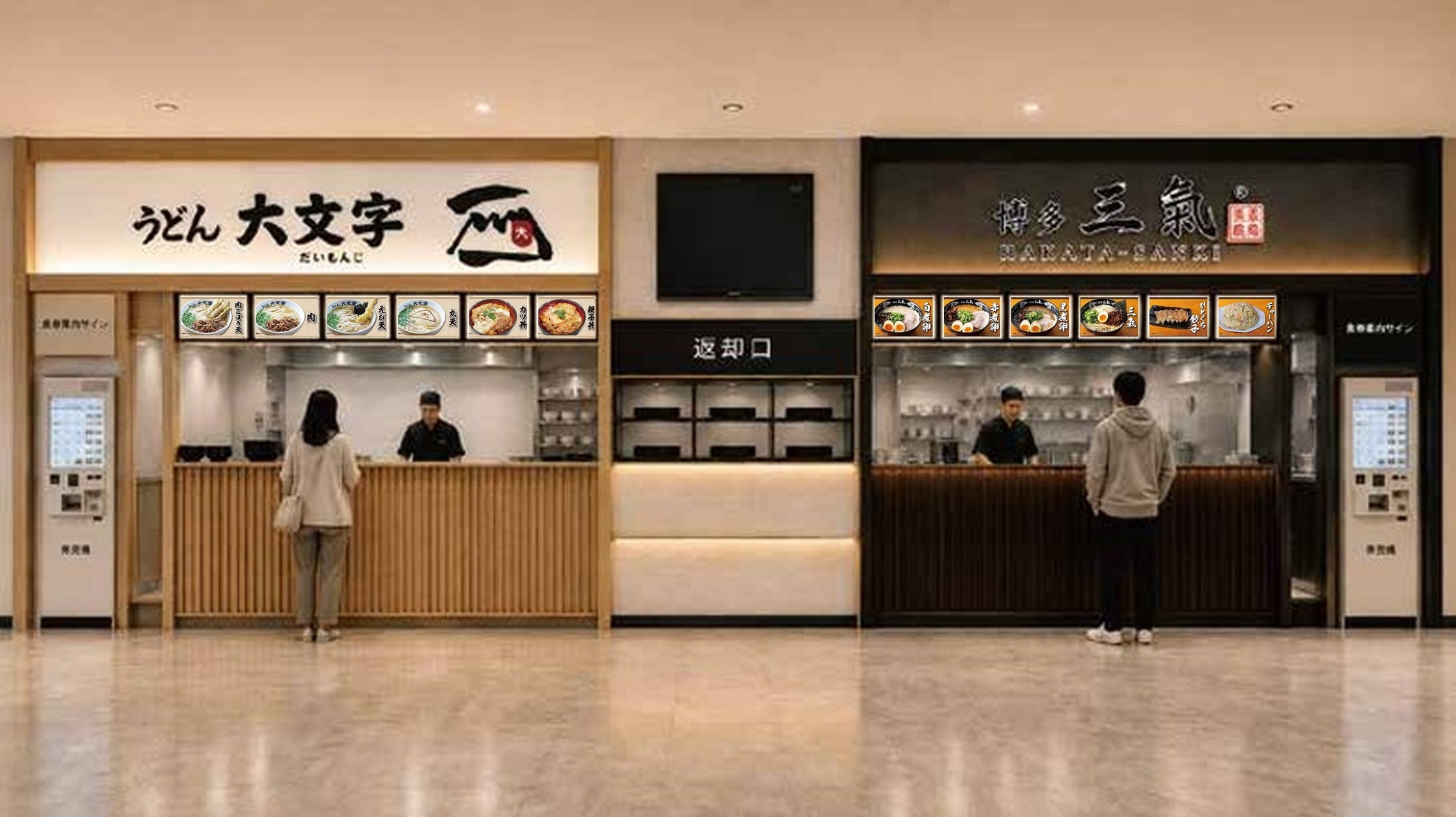
Fukuoka’s Kasuya District is experiencing a quiet culinary reassessment as suburban retail spaces rethink fast-casual convenience. On September 11, 2026, Aeon Fukuoka Higashi unveiled the second phase of its commercial renovation in Shime Town, anchoring its transformed first-floor dining concourse with a synchronized double opening: tonkotsu specialist Hakata Sanki ramen and the regional noodle brand Udon Daimonji.
As detailed in the official PR TIMES Report, the project aims to turn routine suburban retail visits into high-caliber dining destinations for local Fukuoka lunch spots. Yet for culinary traditionalists who associate authentic Japanese noodle soup with standalone roadside kitchens, housing an artisanal brand inside a high-volume shopping center renewal immediately invites skepticism. Can handmade broth and noodles survive the rapid operational turnover of a bustling mall concourse?
📌 Key Takeaways:
- The Opening: Udon Daimonji and Hakata Sanki officially opened side by side at 11:00 AM on September 11, 2026, inside Aeon Fukuoka Higashi.
- The Product: Daimonji transplants Fukuoka-style soft-textured udon and freshly crisped goboten udon directly into a self-service format.
- The Market Shift: The move represents a calculated shift by mall operators to replace generic nationwide chains with authentic regional gastronomy.
The Kasuya District Food Scene Meets Commercial Mall Restructuring
Shime Town has long functioned as a commuter hub adjacent to Fukuoka City, caught between rapid residential expansion and historic post-coal-mining communities. Its commercial corridors along Route 68 are notoriously competitive, lined with established ramen shacks, family-run diners, and traditional udon houses that feed factory workers, office fleets, and weekend families. Standalone operations in this region thrive on low real estate overhead and intensely loyal local followings.
Aeon Fukuoka Higashi’s multi-phase overhaul reflects an urgent operational defense. Suburban malls across Japan are confronting shifting retail habits, where apparel sales drop while experiential grocery and specialized food offerings retain foot traffic. By orchestrating a major phase-two modernization dedicated to food court restaurants and fresh grocery vendors, the Shime Town property is wagering that destination dining can pull patrons off highway bypasses and into the mall concourse on ordinary weekdays.
Pairing Udon Daimonji alongside Hakata Sanki creates an intentional one-two punch. Sanki provides recognizable, high-turnover tonkotsu noodles known for affordable noodle refills, while Daimonji brings gentler, dashi-driven comfort cuisine. The pairing covers both ends of northern Kyushu’s everyday noodle cravings under a shared ceiling.
Broth, Batter, and Tenderness: Testing the Daimonji Recipe Under Pressure
Fukuoka udon noodles operate on an entirely different philosophy than the firm, toothsome Sanuki variety from Kagawa Prefecture. True Hakata-area noodles are soft, pillowy, and deliberately simmered until they absorb the complex maritime nuances of the golden broth beneath them. At standalone counters, master cooks regulate boiling pots meticulously to ensure strands stay tender without dissolving into mush.
Transporting that balance into an automated food court demands exacting kitchen logistics. Daimonji’s signature presentation leans on a clear soup base derived from dried sardine (iriko), flying fish (ago), and kelp (kombu). In the Shime Town kitchen, continuous small-batch broth brewing avoids the bitter, oxidized profile that plagues mass-production steam tables. The dashi arrives at the service counter translucent and hot, cutting sharply through the richness of fried toppings.
The operational benchmark rests with their goboten udon. The burdock root must be sliced thin enough to cook through rapidly, yet fried at precise temperatures so the lace-like tempura batter stays crisp against the surface of the soup. Even on busy weekends, Daimonji’s modular fry stations in Shime deliver shatteringly crisp tempura rims while allowing the center to submerge and thicken the stock. It is a genuine, uncompromised regional bowl delivered in plastic trays.
Pricing, Volume, and Value: Shime Town Udon Compared
Everyday lunch culture in Kasuya District is intensely price-sensitive. Office workers and shopping patrons will abandon a concept if mall convenience carries an unreasonable surcharge. Udon Daimonji balances this pressure by pricing its core bowls competitively against established regional operators while outperforming generic fast-food alternatives on ingredient provenance.
| Dining Format & Operator | Core Price Range (2026) | Noodle Texture & Style | Average Wait Time |
|---|---|---|---|
| Udon Daimonji (Aeon Fukuoka Higashi) | ¥580, ¥920 | Medium-soft, artisanal dashi-absorbed Kyushu style | 4, 7 minutes |
| Traditional Kasuya Roadside Shops | ¥520, ¥850 | Ultra-soft, thick cuts with heavy kombu emphasis | 8, 12 minutes |
| National Chain Fast-Casual (Sanuki Style) | ¥460, ¥780 | Firm, chewy, extruded noodles with standardized dashi | 2, 4 minutes |
| Hakata Sanki (Adjacent Concourse Stall) | ¥680, ¥1,050 | Thin, straight wheat noodles in rich pork bone broth | 3, 5 minutes |
The pricing architecture positions Daimonji slightly above discount franchise cafeterias, yet comfortably below sit-down dinner destinations. A standard bowl paired with freshly fried tempura hovers around ¥800, matching typical expenditure patterns across suburban Fukuoka. The value equation rests entirely on dashi quality; diners pay an extra few yen to skip artificial soup powders in favor of real flying-fish and kelp extraction.
The Dual-Opening Dynamic: Sanki and Daimonji Side by Side
Opening two distinct noodle shops in a single food court at the identical minute, 11:00 AM on a Friday, was a calculated operational maneuver. Rather than cannibalizing business, the adjacent footprints resolve an age-old family dining gridlock. Groups split cleanly between those wanting heavy, garlicky tonkotsu ramen and those seeking lighter dashi infusions.
Community reception during the initial opening weeks highlighted practical logistical adjustments. Peak line congestion between 12:00 PM and 1:30 PM forced floor managers to route queues along designated floor tapes to keep central walking lanes clear. Because both operators rely on buzzer notification systems rather than standing cafeteria lines, foot traffic disperses comfortably across Aeon’s seating zones.
Online reviews across Japanese local dining portals indicate strong approval for the dual configuration. Early feedback specifically praises the ability to grab a side of seasoned rice balls (kashiwa meshi) from Daimonji while companions order extra noodles from Sanki. This operational synergy converts what could have been a chaotic dining bottleneck into an efficient multi-brand food hall.
Who Should Make the Trip: Evaluating the Diners' Profile
Despite its craftsmanship, a shopping center food court installation is not universally ideal for every visitor. Choosing where to spend a lunch break requires evaluating priorities between atmosphere and speed.
Ideal Profiles:
- Time-Constrained Families: The expansive seating, child-friendly high chairs, and wide aisles at Aeon Fukuoka Higashi remove the stress of cramming toddlers into narrow roadside counter stalls.
- Commuters Combining Errands: Drivers needing grocery restocking or retail services can secure an authentic bowl of noodles without navigating an additional parking lot.
- Dashi Aficionados on Tight Schedules: The broth preparation yields authentic depth within a five-minute ticket window, rivaling standalone restaurants.
Profiles Better Suited for Standalone Venues:
- Ambiance Purists: Diners seeking quiet, cedar-paneled interiors, historic steam-filled kitchens, and personal interactions with the master chef will find a brightly lit mall concourse lacking charm.
- Firm Noodle Enthusiasts: Those who insist on the jaw-straining chew of Kagawa-style Sanuki udon will likely find Fukuoka’s gentle, yielding texture too soft.
Frequently Asked Questions (FAQ)
Q1: What is the standout menu item to order at Udon Daimonji’s Shime branch?
A1: The signature Goboten udon is the consensus benchmark. The burdock tempura provides a crisp contrast against the soft noodles, while releasing roasted earthy flavors into the light fish-and-kelp dashi.
Q2: How does the mall location handle busy lunch rushes?
A2: Daimonji utilizes digital buzzer pagers. Once you order and pay at the counter, you take a buzzer to your table. Orders are typically fulfilled within 4 to 7 minutes, even during the peak noon rush.
Q3: Is parking readily accessible at Aeon Fukuoka Higashi?
A3: Yes. Unlike cramped urban noodle joints with limited parking, Aeon Fukuoka Higashi provides extensive free surface and rooftop parking, accommodating over 1,000 vehicles with direct elevator access to the first-floor concourse.
The Shime Town Dining Outlook for Late 2026
The arrival of Udon Daimonji at Aeon Fukuoka Higashi highlights an ongoing modernization across Fukuoka’s suburban dining landscape. Shopping malls are moving past generic fast-food franchises, opting instead for recognized regional artisans capable of satisfying local flavor expectations. For residents of Shime Town and the greater Kasuya District, this food court renovation delivers an authentic, dashi-rich bowl that respects traditional methods without demanding a lengthy sit-down commitment.
