Laziness or Practical Reality? Fact-Checking Why Housewives Walk Away From Part-Time Jobs
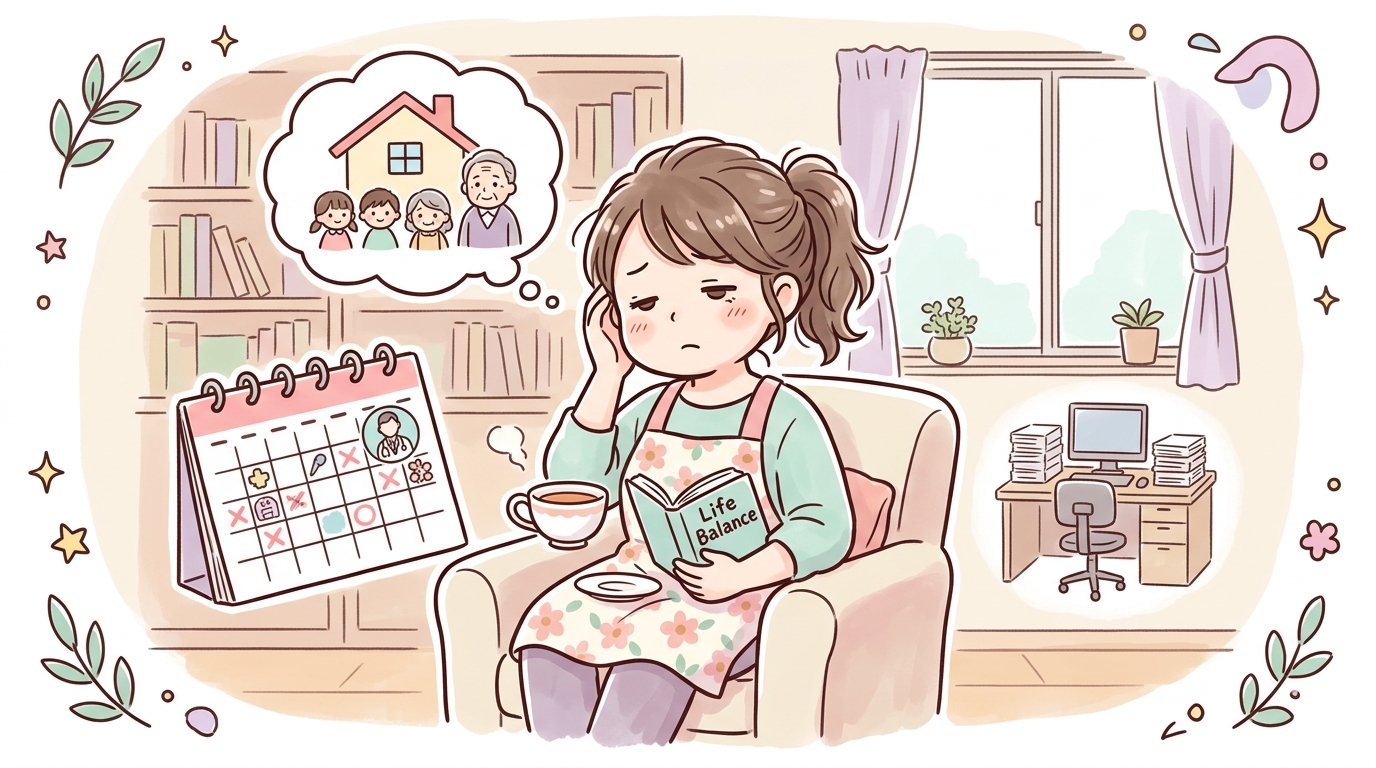
Search engines and community forums routinely register spikes in inquiries around women seeking an exit from the labor market, captured colloquially in Japanese culture as hatarakitaku nai shufu, housewives who do not want to work. The public discourse often weaponizes this sentiment, reducing it to personal apathy or a lack of ambition. Yet social media footage documenting domestic collapse tells a different story. As chronicled in a viral Newsweek Report where a mother of four exposed the chaos of her home after pausing domestic chores for mere days, the line between perceived idleness and physical exhaustion is wafer-thin.
Beneath the provocative online search queries lies a structural rupture across advanced economies in 2026. Mothers walking away from retail shifts, administrative temp pools, and erratic part-time rosters are not rejecting work itself. Instead, they are conducting an unvarnished balance-sheet calculation. When an inflexible hourly job collides with relentless unpaid domestic labor, stepping away from the formal workforce ceases to be an indulgence; it becomes a defensive economic survival strategy.
📌 Key Takeaways:
- Economic Reality: Low-wage, inflexible service positions routinely yield negative real income once childcare, commuting, and second-earner tax penalties are deducted.
- The Domestic Friction: Household invisible labor remains overwhelmingly shouldered by mothers, creating severe physical depletion when paired with rigid work schedules.
- Policy Distortion: Archaic narratives surrounding dependency continue to obscure the fact that family caregiving economics subsidize private sector stability.
The Breaking Point of the Part-Time Shift
Hourly part-time work has long been marketed to mothers as the ideal compromise. Corporate human resources departments position twenty-hour workweeks as flexible arrangements tailored to school pickups and meal preparations. On the ground, the mechanics operate quite differently. Shift assignments change with minimal advance notice. Managers demand last-minute overtime while offering zero paid leave when a toddler spikes a fever.
The friction creates acute part-time employment fatigue. Workers juggle retail inventories or customer support queues under tight quotas, only to clock out and step directly into a second, unpaid shift at home. When domestic expectations remain fixed while employer demands fluctuate wildly, the compromise shatters. For millions of women, the friction is untenable. Walking away from an employer offering $14 an hour with shifting weekend schedules is not an evasion of responsibility; it is an elimination of an operational bottleneck that threatens family stability.
Dismantling the Welfare and Idleness Narrative
Public commentary frequently frames non-working mothers through an adversarial lens, reviving caricatures of dependency. Historical analyses, including research broadcast by PBS on early twentieth-century mothers' pensions and subsequent political mythmaking, demonstrate how easily public policy misdiagnoses maternal caregiving. When initial state support programs launched between 1911 and 1935, they acknowledged that sustaining a home constituted public labor. Decades later, political rhetoric inverted that understanding, manufacturing tropes of the idle recipient to slash social safety nets.
Modern stay-at-home mothers contend with identical cultural biases. Critics assume an adult outside the registered labor force produces zero economic output. In practice, the workforce opt-out movement among married mothers reflects an acute understanding of market replacement cost. Cooking meals from scratch, managing pediatric appointments, coordinating educational logistics, and providing eldercare represent tangible economic outputs. When society refuses to price this labor, it defaults to calling the provider unproductive.
Childcare Balance Sheets and Negative Real Income
The decision to quit low-wage employment often comes down to basic arithmetic. In many metropolitan markets across the United States, Japan, and Western Europe, infant and toddler care costs outstrip median part-time wages. A parent working twenty-five hours weekly at minimum wage frequently discovers that their net paycheck fails to cover day care fees, transport costs, professional clothing, and outsourced meals.
| Household Budget Factor | Dual-Earner Roster (Inflexible Part-Time) | Single-Earner Focus (Home Management) |
|---|---|---|
| Monthly Net Income Contribution | +$1,100 to +$1,400 (Gross wages less taxes) | $0 (Formal monetary wages) |
| Direct Childcare & Transport Overhead | -$950 to -$1,350 (Center care, fuel, transit) | $0 (Eliminated third-party expenses) |
| Domestic Outsourcing Costs | -$250 to -$400 (Convenience meals, rush services) | $0 (In-house batch cooking and planning) |
| Effective Monthly Net Gain | -$100 to +$150 (Marginal or negative return) | Baseline preserved without debt acceleration |
| Weekly Stress & Task Overlap | Severe chronic exhaustion, schedule bottlenecks | High physical labor, lower scheduling friction |
When the net financial contribution hovers near zero, the proposition collapses. Working eight hours a day to take home a net surplus of fifty dollars a week while absorbing enormous cognitive stress is a poor financial trade. Rational households identify the leak and plug it by resigning.

The Invisible Burden of the Domestic Mental Load
Discussions regarding labor force participation rates consistently omit the mental load of motherhood. Planning vaccination schedules, monitoring refrigerator supplies, buying clothes ahead of seasonal growth spurts, and tracking academic progress require project management skills. This domestic orchestration does not evaporate when a parent clocks in at a retail store.
Instead, dual-income household stress spikes. Sociological data shows that even when female partners contribute substantial household earnings, their share of domestic cognitive management drops marginally. The result is chronic sleep debt, heightened marital strain, and depressive symptoms. When women express a desire to avoid outside employment, they are often describing an inability to sustain two full-time operational functions inside a twenty-four-hour day.
Who Benefits From Exiting, and Who Faces Real Risk
Choosing to opt out of the workforce produces distinct outcomes depending on existing household solvency, partner reliability, and individual career trajectories. Examining these profiles clarifies whether resignation stabilizes a home or triggers financial exposure.
The Viable Profile: Families with a single primary earner whose income comfortably covers fixed overhead, health insurance, and automated retirement savings benefit immediately. In these environments, the stay-at-home partner optimizes domestic capital: preparing nutritious food, eliminating late fees, supporting child development directly, and managing family administrative chores. The household operates smoothly because basic liquidity remains secure.
The Vulnerable Profile: Households carrying high unsecured consumer debt or relying on volatile gig-economy income incur dangerous risks when a second earner steps down. Additionally, prolonged absences from formal employment degrade resume capital, suppress lifetime pension contributions, and leave individuals financially defenseless in the event of divorce or partner disability. Walking away without an independent legal or financial safety net transforms temporary relief into structural vulnerability.
Frequently Asked Questions (FAQ)
Q1: Does resigning from a part-time job permanently damage a woman’s career prospects?
A1: An extended resume gap poses hiring friction, particularly in traditional corporate environments. However, the growth of remote administrative contracting, specialized certifications, and project-based roles has created clearer pathways for mid-career re-entry compared to previous decades.
Q2: Why do stay-at-home mothers still experience severe burnout without an outside job?
A2: Domestic caregiving lacks clean shift boundaries, performance feedback, and physical separation from the workspace. Managing young children while maintaining household operations without adult interaction generates sensory overload and chronic fatigue.
Q3: How does the tax code influence a mother's decision to stop working?
A3: Joint taxation systems in several industrialized nations tax the secondary earner's first dollar of income at the primary earner's highest marginal rate. This policy dampens the take-home value of entry-level and part-time wages, actively disincentivizing workforce participation.
Structural Realities in the Modern Labor Market
Dismissing the phrase hatarakitaku nai shufu as proof of personal laziness ignores the realities of the modern economy. Working mothers are not fleeing productivity; they are walking away from broken contracts. Inflexible part-time roles demand total availability while offering negligible compensation, zero security, and no institutional support for caregiving obligations.
Until labor markets provide predictable scheduling, pay equity that comfortably outpaces daycare costs, and authentic schedule autonomy, millions of capable women will continue to calculate their options and step away. Their withdrawal is an indictment of an economic system that treats family caregiving as an infinite, uncompensated resource. Choosing the home over an exploitative shift is an assertion of agency in a market that refuses to value what matters most.
