Ran Mouri Voice Change Q&A: Who Plays Ran Now in Detective Conan and Why?

Searches for "毛利 蘭 声優 変わっ た" (Did Ran Mouri's voice actor change?) regularly spike across Japanese search engines and global anime forums whenever a new television season or feature film premieres. Viewers watching recent episodes frequently notice subtle shifts in vocal resonance and immediately assume TMS Entertainment quietly recast the female lead of Detective Conan (known internationally as Case Closed).
The underlying reality tells a very different story. While massive turnover has reshuffled key personnel across the franchise's legendary roster, cataloged extensively in an industry-tracking note Report detailing cast transitions across the series, Ran Mouri has not undergone a voice actor replacement. Veteran voice actress Wakana Yamazaki has portrayed the karate champion and deuteragonist without interruption since Episode 1 aired on January 8, 1996.
📌 Key Takeaways:
- The Unbroken Record: Wakana Yamazaki remains the sole Japanese voice actress for Ran Mouri, maintaining an uninterrupted 30-year tenure across television, theatrical movies, and video games.
- The Source of Confusion: The recurring recast rumor stems from natural vocal maturation, modern digital audio mixing, and high-profile recasts of surrounding characters like Kogoro Mouri and Toru Amuro.
- Production Stance: TMS Entertainment and sound director Yasuyuki Urakami prioritize veteran continuity, reserving cast replacements strictly for unavoidable health crises, retirements, or contract dissolutions.
The Online Rumor Mill: Why Viewers Think Ran Was Recast
Speculation surrounding Ran Mouri's casting surfaces every spring during the annual theatrical film cycle. Casual viewers tuning into theatrical box-office juggernauts after months away from the weekly anime often detect a perceptibly deeper vocal register. In late-1990s episodes, Yamazaki delivered Ran’s lines with the bright, high-frequency cadence typical of adolescent heroines of that production era. By contrast, recent 2020s broadcasts showcase a grounded, resonant, and mature delivery.
Social media amplifies this acoustic shift. Clips circulating on TikTok, X, and YouTube comparing Ran's iconic scream from 1997's The Time Bombed Skyscraper with her fight sequences in recent theatrical installments prompt widespread questions about whether a successor took over the booth. Because long-running anime rarely issue public statements confirming that an actor has not changed, casual queries frequently harden into unverified rumors across international fan circles.
Conflation also drives the narrative. Because other central figures inside the Mouri Detective Agency have experienced seismic voice talent shifts, casual audiences often assume the female lead underwent a similar transition.
The Official Record: Wakana Yamazaki’s Three-Decade Consistency
Wakana Yamazaki stepped into the recording booth at age 30 to voice the then-16-year-old high school student. Born in March 1965 and represented by talent agency Aoni Production, Yamazaki brought extensive credentials to the role, having voiced Meiko Akizuki in Marmalade Boy and Atsuko "Akko" Kagami in the 1998 revival of Himitsu no Akko-chan.
Over more than 1,100 television episodes and 27 feature films, Yamazaki has never taken an extended medical leave or stepped aside for a guest replacement in the mainline canon. Her performance anchors the emotional core of the series, balancing Ran's vulnerable romantic pining for Shinichi Kudo with bone-crushing physical combat sequences. Studio logs at TMS Entertainment confirm Yamazaki has maintained near-perfect attendance across three decades of weekly studio sessions, cementing her status alongside Minami Takayama (Conan Edogawa) as the production's foundational pillar.
Real Detective Conan Cast Changes: A Comparative Breakdown
While Ran Mouri's casting remains stable, Detective Conan holds one of the most complex recast histories in Japanese broadcasting. Multiple primary characters have changed voice talent due to contractual disputes, generational retirements, and tragic deaths of veteran performers.
The table below contrasts Ran Mouri's unbroken casting history against the major verified voice actor changes within the franchise.
| Character | Original Japanese Voice Actor | Current Status / Replacement | Transition Date & Driver |
|---|---|---|---|
| Ran Mouri | Wakana Yamazaki | Wakana Yamazaki (No change) | 1996, Present; unbroken tenure |
| Kogoro Mouri | Akira Kamiya | Rikiya Koyama | October 2009; contractual dispute |
| Toru Amuro / Rei Furuya | Tohru Furuya | Recast pending implementation | June 2024; voluntary resignation |
| Inspector Juzo Megure | Hirotaka Suzuoki (Temporary) / Chafurin | Chafurin | Active since 1996 (Guest fills only) |
| Ginzo Nakamori | Unsho Ishizuka | Koji Ishii | 2019; passing of original actor |
| Andre Camel | Kiyoyuki Yanada | Kenji Nomura | 2023; passing of original actor |
The Kogoro Mouri recast remains the most direct catalyst for the confusion surrounding Ran. In September 2009, veteran voice actor Akira Kamiya announced on his personal blog that contract renegotiations with Nippon Television (NTV) and TMS Entertainment had collapsed, citing disputes over royalties and trust. When Rikiya Koyama stepped in starting from Episode 553, the dynamic of the Mouri household changed fundamentally. Viewers who registered that Kogoro sounded completely different frequently assumed that his daughter had been replaced as well.
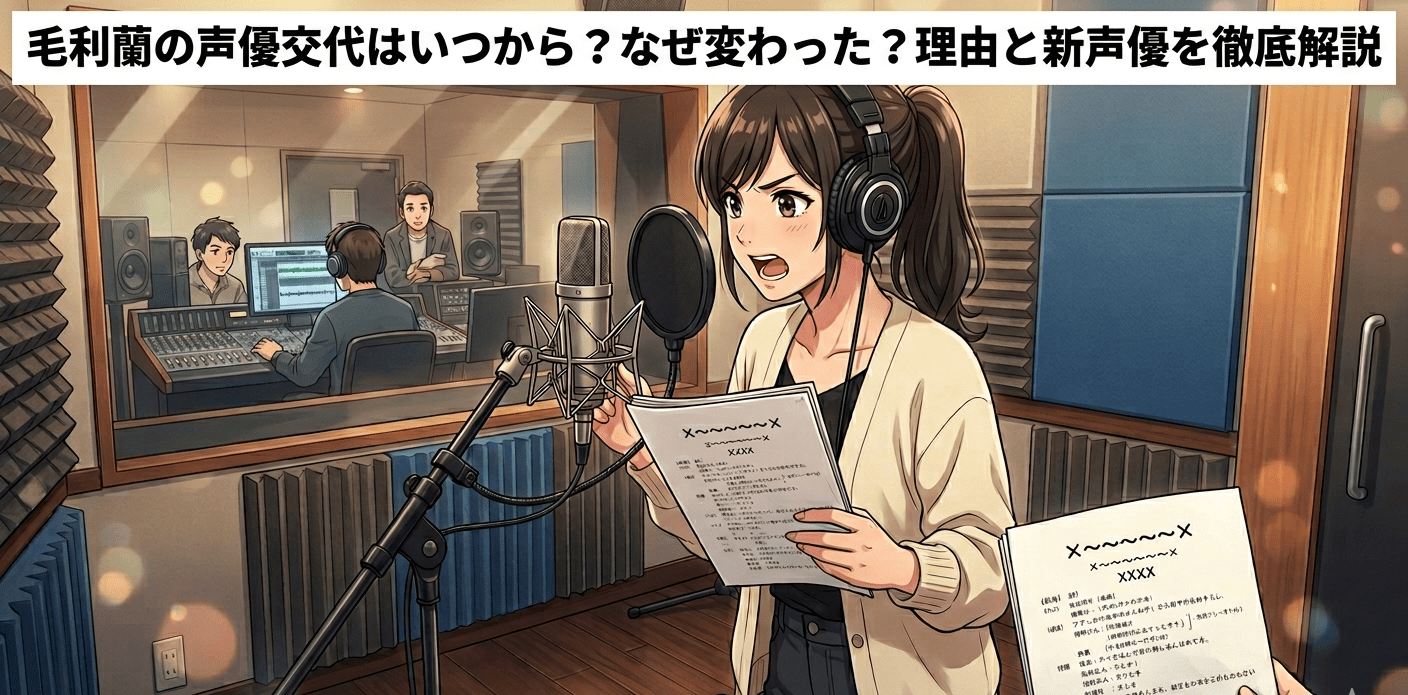
Acoustic Maturation: Why Ran Sounds Different to Modern Ears
The physiological reality of vocal aging explains why Ran's vocal track sounds different today compared to 1996. Human vocal cords naturally lose elasticity over three decades. Voice actors playing teenage characters past age 50 adjust their vocal technique to avoid strain, settling into a slightly lower, more sustainable pitch during long weekly dialogue sessions.
Recording technology has evolved in tandem. Early episodes of Detective Conan were captured on analog magnetic tape through dynamic studio microphones, producing a warm mid-range roll-off that masked subtle throat clicks and lowered sibilance. Modern TMS broadcasts utilize high-sensitivity solid-state condenser microphones running through pristine 24-bit/96kHz digital conversion.
Modern mastering captures exact breath control, micro-tremors, and dry acoustic reflections. Sound director Yasuyuki Urakami adjusts Ran’s mix to sit alongside modern cinematic orchestrations composed by Yugo Kanno, who took over soundtrack duties starting with 2022's The Bride of Halloween. These acoustic layers make Yamazaki’s delivery sound crisper, leaner, and naturally deeper than early cel-animation recordings.
Production Pressures and Continuity Management at TMS Entertainment
Japanese anime production committees treat vocal continuity as sacred intellectual property. Character popularity in Japan links directly to the specific acoustic timbre of the voice talent (seiyuu). For flagship legacy franchises like Sazae-san, Doraemon, and Detective Conan, recasting an active character risks public backlash and merchandise devaluation.
TMS Entertainment practices proactive retention. Sound directors collaborate directly with senior performers, scheduling recording blocks to accommodate vocal rest and adjusting dialogue delivery speeds to match comfortable breathing patterns. Original creator Gosho Aoyama frequently consults on vocal tone during feature film pre-production, ensuring Ran’s emotional beats align with Yamazaki’s current vocal capabilities rather than forcing her to artificially mimic her 1996 self.
Replacing a voice actor in Japan requires clear industry justifications: death, formal retirement, legal issues, or catastrophic contract breakdowns. Because Yamazaki remains healthy, professional, and beloved by production staff, TMS Entertainment has zero financial or creative motive to alter Ran Mouri's casting.
Frequently Asked Questions (FAQ)
Q1: Has Ran Mouri's Japanese voice actress ever been changed?
No. Wakana Yamazaki has voiced Ran Mouri continuously since the premiere of *Detective Conan* in January 1996, spanning every canon television episode, feature film, and licensed video game.
Q2: Why does Ran Mouri sound different in recent Detective Conan episodes?
The difference stems from thirty years of natural vocal maturation by voice actress Wakana Yamazaki, combined with high-resolution digital studio microphones and modern audio mixing standards that capture deeper vocal frequencies than 1990s analog equipment.
Q3: Did Ran Mouri's English voice actor change in Case Closed?
Yes. In the English localizations, Ran (Rachel Moore) was originally voiced by Colleen Clinkenbeard for Funimation’s initial dub run. When Bang Zoom! Entertainment began dubbing modern films and specials in 2020, Cristina Vee assumed the role.
Q4: Which main Detective Conan characters have actually been recast?
Kogoro Mouri was recast in 2009 (Rikiya Koyama replacing Akira Kamiya). Other prominent recast characters include Ginzo Nakamori (Koji Ishii replacing the late Unsho Ishizuka), Andre Camel (Kenji Nomura replacing the late Kiyoyuki Yanada), and Toru Amuro following Tohru Furuya's resignation in 2024.
The Reality of Longevity in Modern Anime Production
The enduring rumors regarding Ran Mouri's vocal replacement illustrate the unique friction between timeless fictional characters and aging human artists. Ran Mouri remains perpetually 16 or 17 years old inside the sliding timeline of Gosho Aoyama's universe, yet the artists who give the cast their soul must navigate decades of real-world physical changes.
Wakana Yamazaki’s ongoing performance as Ran Mouri represents one of the longest continuous runs by a single actor in global animation history. When Ran calls out to Conan or confronts criminals in upcoming theatrical releases, viewers are listening to the exact same performer who entered the booth in 1996, navigating the passage of time through refined technique, exceptional discipline, and institutional respect for anime history.
