Real-Life Spirited Away Locations: Side-by-Side Visual Proof of the Bathhouse
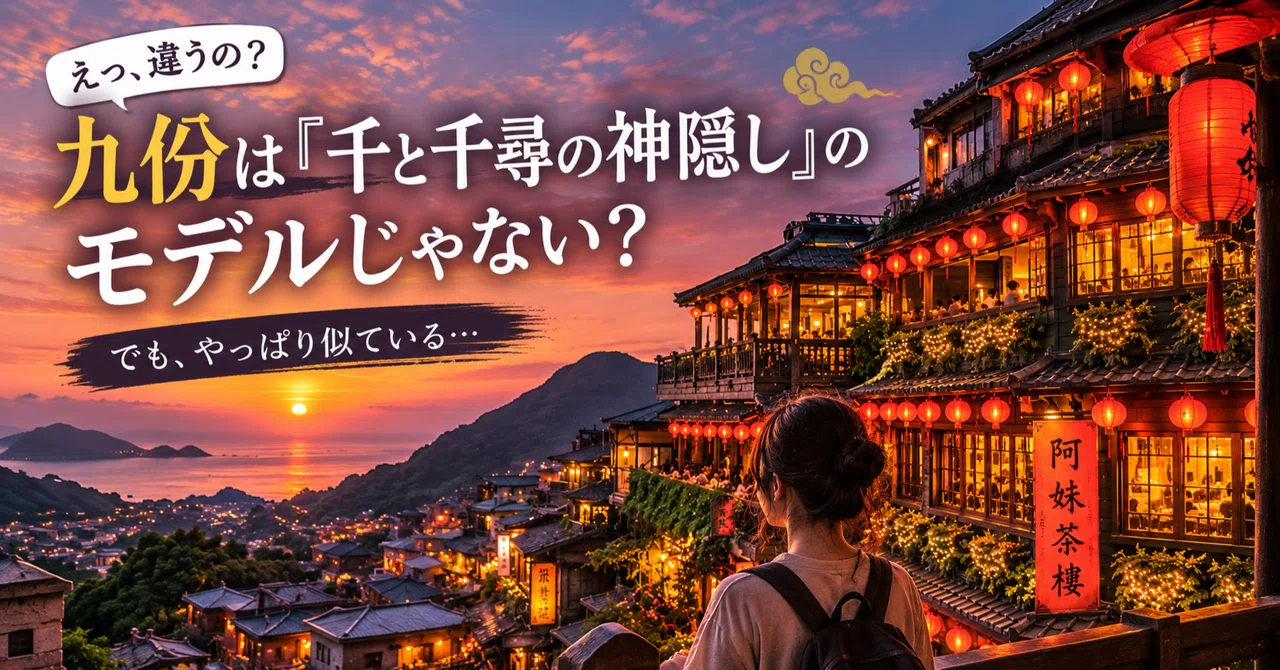
Ever since Studio Ghibli released Spirited Away (Sen to Chihiro no Kamikakushi) in 2001, travelers have scoured East Asia to find the real-world sanctuary of Yubaba’s bathhouse, the Aburaya. For decades, international travel guides insisted that the hillside town of Jiufen in Taiwan served as the primary blueprint for the spirit world's lantern-lit staircases. Yet, as documented in an investigative note Report analyzing how travel myths spread across East Asia, both director Hayao Miyazaki and former Studio Ghibli president Toshio Suzuki have repeatedly confirmed that Jiufen was never visited or referenced during the production. The true architectural DNA of the film remains anchored in historic Japanese bathhouses and preserved Meiji-era public structures.
Rather than copying a single location, Miyazaki assembled the Aburaya as an architectural collage. He combined traditional hot-spring ryokan, regional bathhouses, and preserved historic storefronts across Japan to construct a fictional establishment that felt instantly familiar to Japanese audiences. Dissecting the film frame by frame against surviving Japanese landmarks reveals the exact physical structures that built the most iconic bathhouse in animation history.
📌 Key Takeaways:
- Core Architecture: The Aburaya bathhouse is an intricate composite of Dogo Onsen Honkan, Sekizenkan, and traditional timber structures preserved at the Edo-Tokyo Open Air Architectural Museum.
- The Jiufen Debunk: Studio Ghibli executives have repeatedly stated on record that Taiwan’s Jiufen had zero influence on the film’s visual layout, despite enduring marketing claims by local tourism agencies.
- Human Origin: Chihiro was explicitly modeled on the ten-year-old daughter of Nippon Television producer Seiji Okuda, designed intentionally without exaggerated anime heroic traits to mirror ordinary Japanese children.
Dogo Onsen Honkan and the Imposing Silhouette of Aburaya
The primary structural reference point for the exterior of Yubaba's bathhouse stands in Matsuyama, Ehime Prefecture. Dogo Onsen Honkan is one of Japan's oldest operational hot springs, tracing roots across thousands of years of recorded lore. The main wooden complex, rebuilt in 1894 by master carpenter Sakamoto Matashihirō, features multi-tiered roofs, timber balconies, and intricate decorative gables that directly parallel the film's master establishing shots.
Look at the rooftop profile of Aburaya during Chihiro's arrival at dusk. The third-story tower, crown cupola, and the distinct Shinrokaku (white heron drum pavilion) atop Dogo Onsen Honkan match the multi-level massing of Miyazaki's fantasy structure. Inside Dogo Onsen, the cramped wooden stairways, narrow hallways, sliding screen doors, and multi-layered bath levels mirror Chihiro's frantic sprint through the service corridors. Miyazaki visited Dogo Onsen during early pre-production, absorbing the practical mechanics of a bathhouse processing hundreds of guests at once.
Shima Onsen's Red Bridge and the Gateway to the Spirit World
Before Chihiro enters the bathhouse, she must cross an arched vermilion bridge spanning a misty gorge, holding her breath to avoid alerting the lingering spirits. That bridge exists almost stroke for stroke in Gunma Prefecture at Sekizenkan in Shima Onsen.
Sekizenkan holds the title of Japan’s oldest surviving wooden hot spring inn, with its main building constructed in 1691 during the Genroku era. Spanning the Shima River right before the inn's front entrance is the Keiun Bridge, a bright red span that perfectly aligns with the entrance bridge in the film. The visual correlation continues beneath the building. Sekizenkan features an underground tiled walkway called the Roman Tunnel, an arched corridor built in the early 20th century that connects the main wooden inn to the mountain annex. Walking through this dimly lit passage evokes the exact tension of Chihiro and her parents navigating the abandoned railway tunnel at the start of the movie.
Inside Sekizenkan, the Genroku-no-Yu bathhouse, constructed in 1930, features arched Western-style windows and embedded stone floor pools. The film’s public bathing scenes directly borrow this hybrid Taisho-era aesthetic, blending deep wooden beams with mosaic tiles and sunken bathing basins.
Kanaguya and the Towering Wooden Facades of Shibu Onsen
For the sheer verticality of Aburaya, Miyazaki drew from Kanaguya, an extraordinary four-story timber ryokan located in Nagano Prefecture's Shibu Onsen. The inn's most famous wing, the Saiten-kaku, was completed in 1936 using traditional sukiya-zukuri architectural techniques, built without modern industrial fasteners.
When dusk falls in Shibu Onsen, Kanaguya lights up with dozens of warm exterior lanterns, casting deep shadows across its overlapping cedar shingles and carved exterior balconies. Comparing this scene to the frame where Chihiro watches Aburaya ignite its paper lanterns reveals identical vertical proportions. The film captures the feeling of looking up at Kanaguya from the narrow stone streets below: an intimidating wall of glowing windows, eaves stacked haphazardly toward the night sky, and deep red accents framing intricate woodwork.

Architectural Breakdown: Real Japanese Landmarks Versus Film Scenes
Studio Ghibli relied on distinct physical landmarks to build the exterior silhouettes, interior machinery, and transitional thresholds seen throughout the film. The structural parallels break down as follows:
| Landmark | Location | Architectural Element | Film Scene Equivalent |
|---|---|---|---|
| Dogo Onsen Honkan | Matsuyama, Ehime | Multi-tiered roofs, Shinrokaku tower | Aburaya main exterior silhouette |
| Sekizenkan | Shima Onsen, Gunma | Keiun red bridge & Roman stone tunnel | Crossing into the spirit world with Haku |
| Kanaguya | Shibu Onsen, Nagano | Four-story timber Sukiya-zukuri facade | Nighttime exterior lighting of the bathhouse |
| Kodakara-yu | Edo-Tokyo Open Air Museum | Curved Karahafu gabled entrance | Yubaba's grand main entrance gate |
| Takei Sanshodo | Edo-Tokyo Open Air Museum | Floor-to-ceiling wooden apothecary drawers | Kamaji’s boiler room herb wall |
Kodakara-yu and the Meiji Heritage at Edo-Tokyo Open Air Museum
While regional onsen towns provided the natural settings and exterior proportions, the direct blueprint for the bathhouse's fine detailing sits inside Koganei Park in western Tokyo. The Edo-Tokyo Open Air Architectural Museum preserves historic buildings dismantled and relocated from across the capital. Miyazaki, an honorary patron of the museum who lives nearby, walked these grounds regularly during the late 1990s as he storyboarded the movie.
The entrance to Aburaya features an ornate karahafu (cusped gable) adorned with golden carvings. That specific entryway is a direct recreation of Kodakara-yu, a traditional public bathhouse originally constructed in 1933 in Adachi Ward and moved to the museum in 1993. The wood-carved details above the front doorway, featuring monkeys, dragons, and cranes, match the ornamentation above the entrance where No-Face is formally welcomed.
A few steps away from Kodakara-yu inside the same open-air park sits Takei Sanshodo, a stationary store founded in the early Meiji period. Inside the preserved shop, an entire wall is covered with narrow, ceiling-high wooden storage drawers used historically to store calligraphy brushes and ink sticks. In the film, Kamaji the six-armed boiler man operates identical sliding wooden drawers to dispense herbal bath powders for Yubaba's wealthy guests. Studio Ghibli animators sketched this exact interior during their documented field trips to the park.
Deconstructing the Jiufen Myth and Studio Ghibli's Stated Origins
Search engines and social media still link the town of Jiufen in northern Taiwan to Spirited Away. Visitors pack the steep stone steps of Shuqi Road and photograph the Amei Tea House, believing they are standing in front of the real-world model for Yubaba's tea halls. Tour operators across Taipei routinely sell "Spirited Away Day Tours" to meet this international demand.
The correlation, however, is entirely incidental. Miyazaki addressed the rumor directly during a press interview with Taiwan's TVBS in 2013, confirming he had never set foot in Jiufen while making the film and was surprised to hear about the comparison. Studio Ghibli's artistic documentation confirms that the visual universe of Spirited Away was intentionally conceived to preserve disappearing Meiji, Taisho, and early Showa era Japanese architecture. The aesthetic of Jiufen, with its hanging red lanterns and tiered wooden teahouses built into a hillside, shares a superficial resemblance to historic East Asian mining-town layouts, but holds no formal connection to Ghibli’s design sheets.
The Real-Life Muse: How a Ten-Year-Old Girl Created Chihiro
The architectural realism of the bathhouse is balanced by an equally grounded human foundation. Chihiro herself was not an idealized anime heroine. Miyazaki created her after spending summer holidays at a mountain cabin in Nagano with his friend Seiji Okuda, a Nippon Television producer, and Okuda's ten-year-old daughter, Chiyuki.
Observing Chiyuki and her young friends, Miyazaki noticed that mainstream shojo manga offered little that reflected the genuine temperaments of real pre-teen girls. The characters in those magazines were constantly hyper-glamorous or preoccupied with romance. Miyazaki set out to make a film specifically for ordinary ten-year-old girls, giving his protagonist clumsy movements, bad posture, and visible sulking expressions during the early car ride scenes.
Chihiro's gradual maturation across her trials in the bathhouse reflects real developmental psychology. Her growth comes from manual labor, sweeping floors, and confronting uncomfortable physical realities rather than acquiring magical combat abilities. By anchoring a hyper-realistic child in an architectural collage drawn from authentic, aging Japanese timber structures, the production team created a fantasy world that resonates with physical weight.
Frequently Asked Questions (FAQ)
Q1: Did Hayao Miyazaki ever confirm Jiufen as an inspiration for Spirited Away?
A1: No. In recorded interviews with Taiwanese media and statements from Studio Ghibli leadership, Hayao Miyazaki confirmed that he never used Jiufen as a reference during production. The similarities in nighttime lantern aesthetics are coincidental.
Q2: Can travelers stay overnight at the real bathhouses that inspired the film?
A2: Yes. Both Sekizenkan in Gunma Prefecture and Kanaguya in Nagano Prefecture operate as active hot spring ryokan accepting overnight reservations. Dogo Onsen Honkan in Ehime operates primarily as a public daytime bathhouse with historic viewing rooms rather than overnight lodging.
Q3: What is the most accessible Spirited Away pilgrimage location from central Tokyo?
A3: The Edo-Tokyo Open Air Architectural Museum in Koganei Park is the most accessible site, roughly 30 minutes by train from Shinjuku Station. Visitors can walk directly inside Kodakara-yu bathhouse and view the herbal drawer wall at Takei Sanshodo for an admission fee under ¥500.
Navigating Japan’s Living Bathhouse Heritage
Miyazaki’s genius in Spirited Away was not pure invention, but preservation. During the late 1990s, when traditional wooden sento bathhouses across Tokyo were being demolished at record rates to make way for modern concrete developments, Studio Ghibli preserved their craftsmanship on celluloid. The creaking floorboards, damp cedar fragrance, copper pipes, and heavy tile eaves of the Aburaya stand as an homage to historic Japanese public architecture.
For visitors exploring Dogo Onsen, Sekizenkan, or the Edo-Tokyo Open Air Architectural Museum today, the experience offers direct contact with the tactile reality that built Ghibli's most celebrated masterpiece. The magic of the film does not stem from an unreachable fantasy world, but from the timber, tile, and thermal water of a Japan that still survives.
