Slow-Motion Breakdown: The Exact Hand Release Behind a Perfect Hook Shot

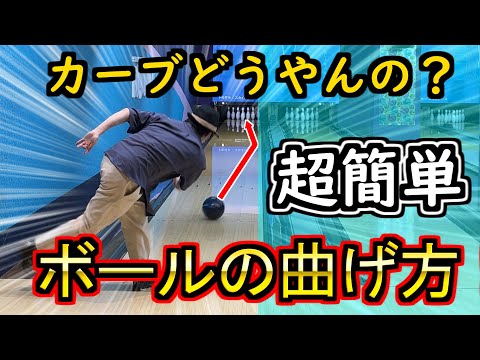
Watching an elite bowler snap a heavy urethane or reactive resin ball from the gutter directly into the 1-3 pocket looks like sleight of hand. High-speed cameras running at 1,000 frames per second tell a different story: the entire hook is won or lost in an 18-millisecond window at the bowler's ankle. As highlighted in a technical breakdown by the YouTube (ボウリング用品の匠たち) Report, amateur bowlers frequently attempt to force curve through muscular torque, wrenching their elbows sideways and killing both ball speed and rotational energy. True hook mechanics rely instead on relaxed kinetic energy and an exacting sequence of thumb clearance and finger lift.
When done correctly, hand release mechanics create a dynamic balance of axis rotation and tilt that lets the ball skate through the front oil before gripping the dry backends. Mastering this movement requires unlearning the intuitive urge to spin the ball like a top. It demands an understanding of how gravity, wrist unloading, and leverage intersect at the sliding foul line.
📌 Key Takeaways:
- Thumb Clearance Precedes Finger Action: The thumb must exit cleanly 10 to 15 milliseconds before the fingers apply upward lift to create clean rotational energy.
- Wrist Unloading Powers Rev Rate: Modern power comes from a controlled transition from a cupped wrist to a flat, relaxed wrist, not through elbow twisting.
- Entry Angle Dictates Carry: Striking consistently requires an entry angle between 4 and 6 degrees into the pocket, which straight roll angles cannot replicate.
The Millisecond Sequence: Deconstructing the Modern Hand Release
The defining trait of modern bowling hook technique is the distinct gap between when the thumb leaves the ball and when the fingers deliver lift. When the bowling ball reaches the bottom of the swing flat against the ankle, the thumb must exit without friction. This immediate release shifts the ball's entire mass onto the pads of the middle and ring fingers.
High rev rates require the wrist to start in a firm, slightly cupped position during the downswing. As the ball passes the slide foot, the wrist deliberately relaxes and hinges forward, a process coaches describe as wrist cup and collapse. This snapping motion allows the fingertips to trace upward along the inner equator of the ball, imparting axis rotation without demanding forced forearm strain. Bowlers who hold tension in their thumb hang up inside the ball, dragging their loft forward and sending the ball into an uncontrollable skid.
Finger lift drills help isolate this sensation away from the full approach. Kneeling on a soft mat and swinging a ball gently over a pillow teaches the fingers how to apply pressure upward along the trailing edge of the core. The goal is a crisp, quiet exit where the ball rolls end-over-end off the finger pads rather than being yanked violently toward the ceiling.
Axis Tilt and Rotation: Controlling Ball Motion Downlane
Once the ball clears the hand, two geometric angles govern its path through the oil: axis tilt and axis rotation. Axis tilt represents the vertical angle of the ball's spin axis relative to the lane surface. Measured between 0 and 30 degrees, low tilt creates an early, sweeping roll, while high tilt causes the ball to push far downlane before responding to dry boards. Axis rotation measures the horizontal direction of the spin axis. Side-roll angles of 45 to 70 degrees generate the sharp lateral turn seen on television broadcasts.
Manipulating these angles gives players direct control over pocket entry angle. Hitting the headpin head-on at zero degrees deflects the ball into the 5-pin, leaving corner pins standing. Entering the 1-3 pocket at an optimal 6-degree angle drives the ball directly through the 8-pin spot, scattering pins across the deck through chain-reaction deflection. Raising axis rotation broadens this entry window, transforming weak leaves into solid strikes.
| Ball Category | Core Type & Dynamics | Optimal Axis Rotation | Realistic Entry Angle |
|---|---|---|---|
| House Ball (Polyester) | Pancake / Symmetrical (Diff: 0.010, 0.015) | 65°, 85° (Extreme side-roll required) | 1.5°, 2.5° |
| Urethane Control | Low RG Symmetrical (Diff: 0.025, 0.035) | 25°, 45° (Forward, smooth roll) | 3.0°, 4.2° |
| Reactive Resin (Pearl/Solid) | Asymmetrical / High Diff (0.045, 0.058) | 45°, 65° (Dynamic recovery) | 4.5°, 6.2° |
House Ball Curve Adjustments vs. Custom Reactive Equipment
Executing a house ball curve at a commercial bowling center presents unique physical barriers. House balls feature hard plastic polyester coverstocks that slide on oil with minimal friction. Their internal cores are flat pancake weights offering virtually zero track flare. Attempting to throw a house ball using standard fingertip mechanics causes the ball to roll out straight, regardless of how much finger lift is applied.
To produce an observable curve with alley rental balls, bowlers adapt by removing the thumb entirely or using a two-finger grip. Omitting the thumb allows the palm to stay underneath the sphere, creating rev rates exceeding 350 RPM without custom-drilled finger inserts. Bowlers must hunt for dry lane friction along the outer five boards, tossing the ball where thin oil allows the slick polyester surface to catch traction.
High-performance reactive resin balls operate differently. Built with porous coverstocks infused with chemical friction additives, they cut through conditioning oil and bite hard into bare wood or synthetic boards. Their dense internal engines flare fresh surface onto the lane with every revolution, converting release speed directly into hook potential without forcing the bowler to contort their fingers.
Footwork Leverage: Power from the Slide Foot, Not the Bicep
A consistent release depends entirely on approach footwork. The arm swing acts strictly as a pendulum driven by gravity. Forcing the downswing with arm muscles misaligns the swing plane, driving the thumb deep into the hole and spoiling release timing. Smooth energy transfer begins with the initial pushaway on step two of a standard four-step approach.
During the final slide, the non-dominant knee flexes into an athletic 45-degree crouch. This lowers the center of gravity and drops the swing arc within two inches of the lane surface. Sliding toward the target gives the hand room to clear the ball smoothly onto the deck without bouncing. The trail leg sweeps back behind the bowler, acting as a counterbalance to keep the torso stable.
Follow-through mechanics lock this kinetic chain into place. Once the fingers unhook from the ball, the bowling arm should continue naturally upward along the target line, with the hand finishing near eye level. Pulling the follow-through across the chest causes early turn, sending the ball washing out into the opposite gutter.
Reading the Invisible: Navigating Lane Oil Pattern Transitions
A strike ball on lane five can easily leave a blowout split on lane six due to invisible oil patterns. Bowling lanes are coated with specialized mineral oils ranging from 39 to 44 feet long, applied heavier in the center and lighter near the edges. Every shot alters this environment, stripping oil off the front boards and depositing trace amounts downlane in a process called carrydown.
Recognizing oil pattern transitions prevents sudden scoring slumps. When the ball hooks early and hits high on the headpin, the front portion of the lane has burned up. Players counter this by moving their stance and target left (for right-handed bowlers), sending the ball through the oily middle section before letting it bounce off dry friction downlane.
Adjusting ball speed provides another tactical fix. Adding one mile per hour of speed helps the ball push an extra two feet past stripped front oil before changing direction. Slowing down by half a mile per hour gives the coverstock extra time to read the lane when playing on heavier patterns.
Frequently Asked Questions (FAQ)
Q1: Why does my thumb get stuck or blister when attempting a hook shot?
A1: Thumb hang-ups happen when a bowler squeezes the ball with the base of the thumb during the downswing. The thumb should remain relaxed and completely straight, letting centrifugal force hold the ball in place. Using bowling tape inside the thumb hole ensures a snug fit without requiring knuckle pinching.
Q2: Can I throw an effective hook using a traditional three-finger grip with house balls?
A2: Conventional house ball holes are drilled wide and deep to fit all hand sizes, forcing the fingers to insert up to the second knuckle. This depth restricts the thumb from exiting early, making a conventional three-finger hook very difficult. Gripping the ball with only two fingertips or tucking the pinky finger helps increase leverage on rental equipment.
Q3: How do I know if my rev rate or ball speed is out of balance?
A3: If your ball skids through the target without hooking into the pocket, your ball speed is overpowering your rev rate. If the ball hooks immediately off your hand and rolls out early, your rev rate outpaces your ball speed. Balanced bowlers match roughly 16 to 17 miles per hour of ball speed with 275 to 350 RPM.
Refining Your Release for Consistent Pin Carry
Building a dependable hook comes down to quiet hands and repeatable fundamentals. Rather than muscling the ball across boards, focus on letting gravity clear the thumb before your fingers apply their upward unrolling motion at the bottom of the swing. Keep your slide knee bent, maintain a stable balance line, and track the ball's skid through the oil pattern.
Film your approach in slow motion from both behind the approach and down the foul line. Checking the precise moment your thumb clears the ball against your sliding ankle will instantly reveal whether your revs are clean or forced. Master that brief release window, and dynamic pin carry will naturally follow.
