Stuck Inflatable Valves Debunked: Photos and Fixes for Blocked Swim Rings
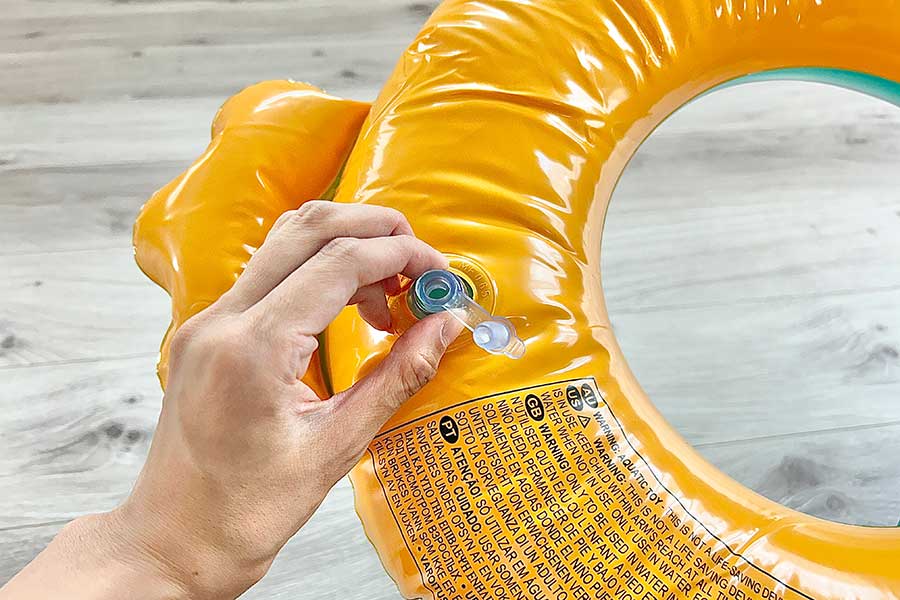
Every summer, thousands of beachgoers unpack a brand-new inflatable pool float only to hit an immediate physical roadblock: air simply will not enter the chamber. Cheeks turn red, manual pumps hiss in protest, and electric compressors whine under strain, yet the plastic ring remains completely flat. While consumer floatation gear shares conceptual roots with historical marine safety devices designed to preserve human buoyancy, a function documented in nautical archives such as the Wikipedia (en) Report on buoyant rings and lifebelts, recreational pool toys depend on cheap mass-market valve systems that often seal themselves shut before leaving the factory.
The frustrating resistance is rarely a defect that requires returning the product. Instead, it stems from the fundamental physics of the modern pinch valve mechanism combined with standard warehouse storage practices. Understanding why internal valve flaps seize up gives swimmers immediate ways to break the seal safely without tearing the plastic.
📌 Quick Summary:
- The Direct Culprit: Inflatable pool toys feature an internal one-way check valve flap designed to retain air, which frequently adheres to the nozzle wall during heat-sealed packaging.
- The Structural Cause: Plasticizers inside flexible PVC migrate under summer warehouse temperatures, creating an airtight bond between the flap and inner nozzle collar.
- The Proven Remedy: Compressing the base perpendicular to the seam or running a temporary straw bypass trick pops the membrane open without puncturing the chamber.
The Physics of the Modern Pinch Valve Mechanism
Almost every mass-produced swim ring relies on a small rubbery stem known as a safety pinch valve. Inside the stem sits a micro-thin flap made from polyvinyl chloride (PVC). This flexible flap functions as a passive one-way check valve. When you blow air into the stem, internal air pressure drops relative to external pressure, theoretically pushing the flap inward to allow air entry. The moment you remove your mouth or pump nozzle, the positive buoyancy chamber pressure pushes the flap flat against the opening, preventing rapid deflation while you scramble to push the plug into place.
The problem arises because this flap requires mechanical deflection to open. Unlike sophisticated industrial valves that operate on springs or ball bearings, pool toy valve seals depend entirely on soft material flexibility. If the flap sits pressed firmly against the internal nozzle wall, incoming air from standard human breath, which generates less than 2 pounds per square inch (psi) of pressure, merely pushes down on the exterior flat surface of the flap. Instead of opening a passage, user breath presses the blockage harder against the stem exit.
Why Brand-New Inflatables Fuse Together in Packaging
When you unbox a new float, the issue is almost never an air nozzle blockage from dirt or debris. The failure happens during shipment. Flexible PVC products contain plasticizers like phthalates or synthetic polymer alternatives that keep the vinyl supple. During assembly, factories heat-weld components at high temperatures before folding the float tightly into retail packaging.
During transit in ocean shipping containers and distribution warehouses, ambient temperatures frequently climb past 120°F (49°C). Under prolonged mechanical compression and sustained heat, the internal flap softens. The smooth surface of the flap presses against the smooth inner wall of the valve housing, creating a partial vacuum and slight chemical cohesion known as PVC valve flap sticking. When the float cools down in air-conditioned distribution centers or inside store aisles, the two surfaces settle into a semi-permanent contact bond. To an eager swimmer at poolside, the valve feels as solid as a molded piece of plastic.
Comparing Valve Types, Failure Points, and Field Workarounds
Different valve designs across water recreation gear demand distinct handling methods. The table below details how various consumer valves behave and the exact friction points that prevent smooth airflow.
| Valve Design | Primary Failure Mode | Cracking Pressure Range | Verified Visual Fix |
|---|---|---|---|
| Standard Pinch Stem (1/4", 3/8") | Heat-welded PVC flap adhesion inside stem base | 1.5, 3.0 psi | Perpendicular pinch or paper straw bypass |
| Boston Two-Way Valve | Cross-threaded cap or warped silicone gasket | 0.2, 0.5 psi | Unscrew base ring; reset silicone diaphragm seat |
| Rapid-Flow Wide Port (1") | Internal hinge binding against structural gusset | 0.5, 1.0 psi | Finger-tip displacement of rear hinge plate |
| Dual-Chamber Micro-Stem | Secondary baffle blockage near seam line | 2.0, 4.5 psi | Warm water soak followed by tapered nozzle insert |
The Straw Bypass Trick and Safe Mechanical Unsticking
Brute force will not work when dealing with fused vinyl. Blowing harder into a stuck valve elevates heart rates and creates dizziness without pushing a single cubic centimeter of air past the barrier. Instead of using excessive lung pressure, swimmers can employ proven swim ring inflation tips that physically separate the adhered surfaces.
The fastest manual technique involves manipulating the stem geometry. Look closely at the valve stem. You will notice two faint mold lines running down opposite sides. Squeezing the stem along these seam lines often compresses the flap flat against the wall, worsening the seal. Rotate your fingers 90 degrees so you are pinching perpendicular to the seams. Squeeze hard at the very base where the stem meets the body of the float. This distorts the circular stem into an oval, popping the flap away from the wall with a noticeable click.
If manual compression fails, the straw bypass trick offers an immediate solution. Insert a standard paper straw or smooth plastic drinking straw 0.75 to 1.0 inch down the neck of the valve. Push gently until you feel the straw push through the internal flap. The straw establishes a physical conduit, holding the flap open so air flows smoothly into the float whether you use mouth pressure or an external pump. Once the float expands to roughly 80% capacity, withdraw the straw. The internal air pressure will immediately begin pushing outward, allowing the check flap to function normally as intended.
Never use sharp objects like toothpicks, screwdrivers, or car keys to unseat the valve. A tiny tear in the PVC flap destroys its ability to seal later, leaving the float permanently prone to slow leaks on the water.
Matching Nozzles with High-Volume Pumps and Adapters
Attempting to fill a large pool lounger using lung power is inefficient, but improper equipment pairing can also simulate a blockage. Most consumer electric inflators operate on high-volume, low-pressure (HVLP) mechanics. These pumps move large air quantities but generate less than 0.8 psi of static push. If the electric inflator adapter does not reach deep enough into the valve stem to physically deflect the flap, the pump cannot overcome the flap’s resistance. The motor will race, air will deflect back out around the rim, and the float will stay flat.
To ensure efficient airflow with an electric inflator, verify that the tapered nozzle pushes past the internal flap before powering on the unit. Quality pump kits come with multi-step conical attachments. Select an adapter diameter that fits snugly into the stem while seating deep enough to actuate the flap. If using a manual air pump, such as a double-action barrel pump, the sustained mechanical stroke creates sharp pressure spikes up to 5 psi, which can blow open a stubborn valve without requiring an oversized nozzle tip.
Thermal Expansion and Air Stopper Release at Day's End
Overfilling a swim ring presents genuine risks once the vinyl sits beneath midday direct sun. Air is a gas that expands predictably in response to heat. A float inflated to rock-hard rigidity in the morning at 72°F (22°C) will experience significant air pressure increases as surface temperatures climb toward 100°F (38°C) on the sand. This internal pressure strains the welded vinyl seams around the valve anchor, causing micro-fractures that lead to irreversible buoyancy loss.
Deflating the float after swimming requires reversing the same physics. To initiate an air stopper release without exhausting your fingers, reinsert an empty straw into the stem to pin the flap back. Alternatively, pinch the valve base between your thumb and index finger while folding the float slowly from the opposing side. Storing inflatables with the valve stems pulled outward and unstoppered prevents plasticizers from re-fusing the valve flap during off-season winter storage.
Frequently Asked Questions (FAQ)
Q1: Why does my electric pump make a loud noise without putting air inside the float?
A1: Electric pump motors change pitch when they hit high backpressure. If the pump nozzle is too short to physically displace the internal valve flap, the air has nowhere to go. Switch to a longer, tapered adapter that extends at least one inch into the stem to physically separate the flap from the valve wall.
Q2: Can using a straw damage the pool toy valve seal permanently?
A2: Smooth drinking straws will not harm the valve. The internal flap is made of flexible PVC designed to bend out of the way. Avoid wooden skewers, pens, or metal utensils, as their sharp or rigid edges can nick the flap edges, creating a permanent slow leak that cannot be repaired with vinyl glue.
Q3: Is it possible to fix a valve that has completely welded shut from extreme heat?
A3: Yes. Immerse the uninflated valve stem in warm water, around 110°F to 120°F (43°C to 49°C), for roughly 60 seconds. Warm water softens the PVC and relaxes polymer bonds. While the vinyl is warm, insert a smooth, rounded plastic straw through the stem to separate the flap cleanly without ripping the material.
Best Practices for Trouble-Free Float Setup
Frustration at the water's edge almost always boils down to misunderstanding the internal flap geometry of cheap vinyl valves. These components are deliberately designed to halt reverse air movement, and factory heat frequently glues them shut before the first outing. Carrying a simple drinking straw in your beach kit, matching long-nosed pump nozzles to the valve depth, and checking stem orientation before applying breath eliminates nearly all inflation headaches. A brief inspection before heading to the pool ensures your floats inflate smoothly and perform safely all afternoon.
