Suma Rikyu Park Slide Accident: Viral Injury Claims Spark Urgent Safety Scrutiny

A smartphone video shot on a steep hillside in Kobe captured a child rocketing down an outdoor park slide at alarming velocity, bouncing violently near the deceleration zone, and tumbling off balance. Millions of views across Japanese TikTok, YouTube Shorts, and X later, the footage triggered panic among parents planning weekend trips to Suma Rikyu Park. Comment threads filled with terrifying claims: broken tailbones, severe friction burns through denim, and rumors of indefinite playground bans.
Beneath the sensational digital chatter lies a very real municipal safety reckoning. Suma Rikyu Park, celebrated for its botanical gardens and expansive hillside "Children's Forest" athletic facilities, has faced intense scrutiny regarding slide acceleration, impact zones, and patron safety. Kobe municipal park management stepped in to investigate reported injuries, leading to equipment audits, temporary closures, and structural retrofits designed to bring vintage park thrill-rides into compliance with modern safety benchmarks.
📌 Key Takeaways:
- The Core Reality: Verified municipal logs confirm multiple minor to moderate injuries, primarily friction abrasions, contusions, and landing sprains, rather than the catastrophic structural failures rumored on social media.
- The Physical Cause: Natural hillside terrain creates excessive slide slope angles, where moisture, synthetic clothing, and tandem riding (parent with child) eliminate friction and double downward kinetic velocity.
- The Civic Response: Kobe park authorities initiated play facility temporary closures, installed protective landing mats, recalibrated deceleration zones, and enforced strict age and posture rules.
Hillside Thrills and Viral Alarms in Kobe's Premier Garden
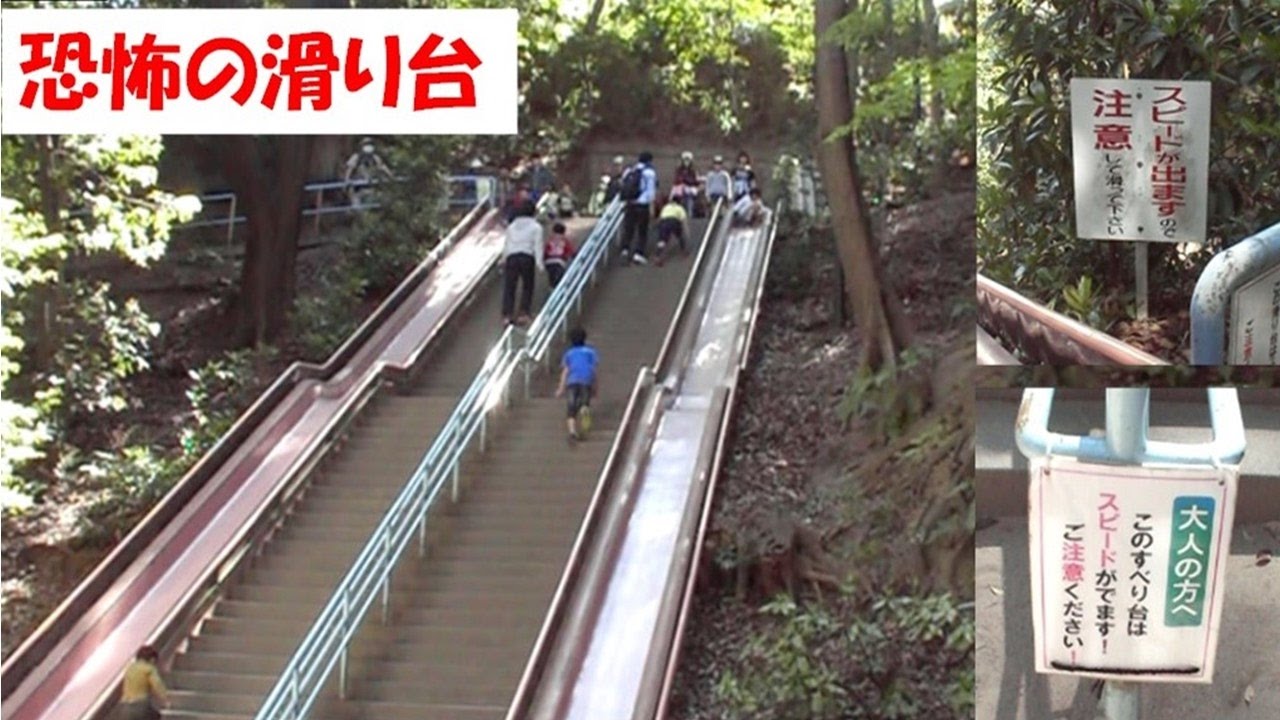
Perched against the slopes overlooking Osaka Bay, Suma Rikyu Park spans over 80 hectares of historic botanical landscaping, fountains, and terraced recreation grounds. For generations of Kansai families, its crown jewel for young children has been the "Children's Forest" adventure course (子供の森 冒険コース), an outdoor athletic course embedded directly into the park's steep natural topography. The course leverages the natural 20-to-30-degree incline to deliver multi-stage wooden obstacles and long descent slides.
That exact natural elevation sparked controversy. Between 2023 and 2025, several short-form video clips showing children and adults losing control on the park's long slides went viral. In one widely shared clip, a rider appeared to catch air before slamming down onto the track, while another showed an adult sliding with a toddler between their legs, narrowly missing a severe foot-entrapment injury. Discussion boards on Japanese parenting platforms lit up with warnings. Commenters debated whether the slides were thrilling testaments to traditional outdoor play or dangerous municipal hazards operating without adequate guardrails.
Separating Viral Rumors From Verified Municipal Incident Logs
When panic spreads through short video algorithms, context vanishes. Park administrators and Kobe municipal authorities faced an influx of inquiries asking whether the facility was concealing catastrophic accidents. The reality recorded in Kobe City's official park maintenance logs paints a more nuanced picture.
Accident investigation findings compiled by the Kobe municipal park management confirmed that while no fatal or life-altering spinal severances occurred, the athletic slides were producing a predictable pattern of preventable injuries. Over a three-year observation window, park staff documented dozens of first-aid requests. The most frequent issues involved second-degree friction burns on bare forearms, coccyx contusions from riders bouncing off uneven chute seams, and ankle sprains occurring when riders exited the runout zone too fast. The viral claims of multiple compound leg fractures were largely conflated with historic incidents on roller slides elsewhere in Japan, where adults riding with small children pinned the child's foot against the sidewall.
The Physics of Descent: Slope Angles, Friction, and Human Error
The mechanics behind playground slide injuries come down to basic physics: kinetic energy, friction coefficients, and gravitational pull along a variable incline. Standard municipal playground equipment safety standards set by the Japan Park Facilities Association (JPFA) mandate that public slides maintain an average descent slope of no more than 30 degrees, with a deceleration zone sloping at less than 4 degrees before reaching the ground. When outdoor athletic course slides are constructed over natural hill contours, small settled pockets can create localized acceleration dips.
Slide speed fluctuates drastically depending on three environmental and operational factors:
- Apparel Fabrics: Synthetic fibers like polyester windbreakers and nylon track pants lower friction coefficients dramatically compared to traditional cotton or denim, allowing riders to reach speeds exceeding 25 kilometers per hour.
- Atmospheric Moisture: Morning dew or humidity common to coastal Kobe coats slide surfaces, effectively turning roller slides or polished steel chutes into water slides without water brakes.
- Tandem Riding Dynamics: Well-meaning parents often hold toddlers in their laps. This added mass increases momentum while simultaneously trapping the child's lower limbs between the adult's thighs and the slide barrier, a primary cause of pediatric tibial fractures nationwide.
Safety Audits, Temporary Closures, and Course Upgrades
Following public complaints and recommendations from independent playground safety evaluators, Kobe City ordered a play facility temporary closure for targeted sections of the Children's Forest course to conduct thorough structural reviews. Engineers audited the slide slope angle regulations, checked roller bearing tolerances, and tested deceleration runouts using digital accelerometers.
| Phase / Timeline | Identified Hazard & Root Cause | Municipal Intervention Implemented |
|---|---|---|
| Phase 1: Initial Reviews (2022, 2023) | Hard impacts on gravel runout pads; high speed due to nylon clothing during school excursions. | Replaced worn landing turf with high-density protective landing mats; placed visual warning boards at entry gates. |
| Phase 2: Viral Spike (2024) | Adult-child tandem sliding injuries; social media stunts attempting high-speed runs on wet tracks. | Temporary closure of high-velocity slides; strict prohibition of tandem riding; increased ranger patrols on peak weekends. |
| Phase 3: Structural Overhaul (2025, 2026) | Localized velocity spikes on transitional bends; child fall prevention measures required along lateral barriers. | Installation of speed-dampening roller friction locks, raised sidewall barriers, and shock-absorbing impact zones. |
Public Park Liability and Japan's Playground Safety Landscape
Municipal liability in Japan is governed by strict civil service statutes. Under Article 2 of the State Redress Act, local governments bear legal responsibility when a defect in the construction or management of a public structure causes damage to citizens. If a slide design inherently violates established JPFA standards or if maintenance crews ignore documented wear, the city faces direct financial liability.
Kobe's park administration acted swiftly because legal precedents in Japan leave little room for administrative complacency. In similar cases across Tokyo, Kanagawa, and Shizuoka, municipalities paid substantial settlements after roller slide accidents resulted in broken bones. When an adult or child steps onto a public attraction, there is an assumed baseline of safety. While parents retain a duty of care to supervise minors, the infrastructure itself must fail gracefully rather than catapulting an off-balance rider onto hard ground.
To shield the city from liability while protecting young visitors, Kobe park officials retrofitted the landing zones with certified impact-absorbing elastomer cushioning. They also raised the side rails on transitional curves to eliminate any possibility of riders tipping over the edges during high-speed runs.
Who Should Ride and Who Should Steer Clear
The updated athletic facilities at Suma Rikyu Park are open, safe, and regulated, but they are not an indoor soft-play center. The hillside terrain demands physical coordination and parental awareness.
Ideal Profiles:
- Children aged 7 to 12 who possess good balance, core strength, and independent braking skills.
- Visitors wearing sturdy athletic footwear and durable cotton clothing that provides moderate traction without overheating skin.
- Riders who understand how to maintain an upright, forward-facing seated posture throughout the entire descent.
High-Risk Profiles (Avoid or Supervise Strictly):
- Toddlers and children under 4 years old, who lack the trunk stability to handle sudden deceleration.
- Parents planning to ride down with an infant on their lap, this remains the single highest statistical predictor of pediatric leg fractures.
- Anyone wearing slick nylon windbreakers, raincoats, or open-toed sandals.
- Visitors using the equipment during or immediately following rainstorms, when sliding speeds can double uncontrollably.
Frequently Asked Questions (FAQ)
Q1: Was anyone critically injured or paralyzed at the Suma Rikyu Park slide?
A1: No. Verified city records confirm that despite dramatic online rumors, there were no fatal or paralyzing incidents. Documented injuries consisted of friction burns, tailbone contusions, and soft-tissue sprains.
Q2: Why did Kobe park authorities temporarily close the slide?
A2: Kobe municipal park management issued temporary closures to conduct structural safety audits, measure slope velocity, install protective landing mats, and install speed-dampening components along the descent tracks.
Q3: Is it safe for parents to ride down together with toddlers?
A3: No. Pediatric orthopedists and park safety regulations strictly prohibit tandem sliding. The combined weight drives excessive velocity, while the child's flexible limbs risk becoming trapped under the adult's legs or wedged against sidewalls.
Q4: What should children wear when visiting the Suma Rikyu Park athletic course?
A4: Sturdy cotton pants (such as jeans), long sleeves to shield against friction burns, closed-toe sneakers with grip soles, and fitted gloves for navigating climbing ropes and wooden obstacles.
Balancing Play Value With Child Safety in Public Spaces
The viral panic surrounding Suma Rikyu Park highlights an ongoing tension in civic playground design: how to deliver exhilarating outdoor challenges without exposing children to unacceptable physical hazards. Stripping public spaces of all speed and height produces sterile environments that fail to engage growing children, pushing them toward digital screens instead of physical activity.
Kobe's municipal response demonstrates how careful engineering can preserve the thrill of hillside recreation while neutralizing structural dangers. By replacing rigid impact surfaces with shock-absorbing turf, smoothing out acceleration zones, and actively policing tandem riding, Suma Rikyu Park has transformed an alarming viral controversy into a case study for responsible public playground management.
