Sunshine Ikezaki's Routine Decoded: Behind-the-Scenes Analysis of His Physical Comedy and Cues
Few figures in Japanese variety television command a stage with the sheer acoustic ferocity of Satoru Ikezaki, known universally as Sunshine Ikezaki. Wearing his trademark sleeveless blue athletic jersey, red gym shorts, and sweatband, the comedian turns rapid-fire autobiographical confessions into explosive performance art. In a July 2026 broadcast of his radio program Pegasus & Unicorn, highlighted by an MSN Report, Ikezaki unpacked how live comedy performance demands radical physical adaptation. Reflecting on veteran duo Cool Poco engaging 30 children during an off-camera corporate stage gig, Ikezaki pointed out the reality of the craft: volume alone falls flat without impeccable stage mechanics.
Audiences often mistake his act for unhinged shouting. Behind the bloodshot eyes and straining vocal cords lies a calibrated system of rhythmic cues, diaphragmatic control, and self-deprecating subversion. Examining the transcript of his legendary routine reveals why this physical routine remains one of modern owarai comedy's most adaptable frameworks.
📌 Key Takeaways:
- Vocal Precision: Ikezaki paces his syllables with sharp staccato bursts, reserving maximum diaphragm pressure for his signature "Ieeeeeey!" finale.
- Structural Subversion: The monologue sets up an untouchable mythical hero, only to puncture that image with absurd personal vulnerabilities like bank balances and secret pin codes.
- Commercial Adaptability: Major brands continually license his exact cadences, subbing product names and wordplay directly into his battle-cry template.
The Self-Introduction Monologue That Rewrote Pin-Geinin Rules
Solo performers (pin-geinin) in Japanese comedy frequently rely on props, storytelling, or character impersonations. Ikezaki discarded those conventions in favor of hyper-compressed grandiosity. The centerpiece of his career remains his self-introductory battle monologue, which captured national attention at the 2017 R-1 Grand Prix and continues to anchor his live appearances.
The routine follows a strict script designed to build momentum through rhythmic escalating claims:
"Kuuzen zetsugo no! Chouzetsu doutou no pin-geinin!"
(Unprecedented! The transcendently furious solo comedian!)
"Warai o aishi, warai ni aisareta otoko!"
(The man who loves laughter, and is loved by laughter!)
"Koudan, rakugo, manzai, conte... Subete no warai no uminoyao!"
(Storytelling, rakugo, manzai, sketch comedy... The father who birthed all forms of comedy!)
Up to this point, the performance mimics the dramatic cadence of traditional theater and pro-wrestling hype speeches. The tonal reversal arrives immediately after:
"Chokin zandaka, kyusen-yonhyaku-en!"
(Savings account balance: 9,400 yen!)
"Anshou bangou, 8931! 'Hakusai' tte oboete kudasai!"
(PIN code: 8931! Remember it as 'Chinese Cabbage'!)
"Subete o sarakedashita kono ore wa... San! Shaaain! Ikeeeee... ZAKI! Ieeeeeey!"
(Exposing everything, I am... Sun! Shine! Ikeeeee... ZAKI! YEEEAAAH!)
The humor operates through bathos. He adopts the posture of an ancient deity, only to blurt out financial insecurity and personal data that no functioning adult would disclose on television. The audience laughs because the grandeur of his physical execution directly contradicts the pathetic reality of his disclosures.
Kinetic Mechanics: Why the Blue Jersey and Backbend Timing Work
Screaming alone cannot hold an audience's attention for three minutes. Ikezaki maintains physical tension through calibrated stage positioning and athletic micro-movements. Every vocal beat corresponds to an aggressive bodily punctuation mark.
He starts by planting his feet wide, slightly beyond shoulder-width, establishing a grounded center of gravity. As he begins the monologue, his hands knife through the air in sharp horizontal slashes. These hand motions serve an acoustic purpose: they force his chest open, allowing full lung expansion before each line. Watch his shoulders closely on stage, and you will notice him taking deep nasal breaths in the exact half-second beats between lines.
The climax of the routine involves an extreme lumbar backbend. When screaming "Ieeeeeey!", Ikezaki drops his hips, pushes his pelvis forward, and bends his spine backward at nearly 45 degrees. His arms extend outward with index fingers pointed toward the sky, neck veins bulging, eyes wide open. Holding this pose forces immense air pressure through his vocal cords without collapsing his posture.
The backbend also serves as a visual countdown for the audience. Viewers watch his body strain against gravity, creating anticipation: how long can he hold the scream before his breath gives out? The physical endurance becomes the punchline.
From Variety Stages to Commercial Parody Goldmines
Advertising directors recognized early that Ikezaki's delivery formula could easily be adapted for marketing campaigns. Because the rhythm of his catchphrase is instantly identifiable, brands regularly swap his personal confessions for product messaging.
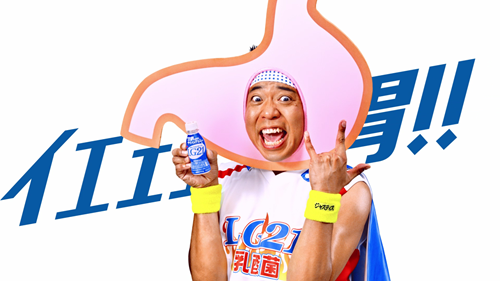
In July 2024, Meiji cast him for an online video campaign promoting their functional yogurt brand, Meiji Probio LG21. Playing the character "Ikezaki LG21 Man," he preserved his exact physical backbend while replacing his signature yell with "Ieee---I!", playing on the Japanese word for stomach (i). The linguistic swap worked instantly because audiences already anticipated the acoustic explosion.
By late July 2026, mobile gaming publisher MIXI tapped Ikezaki for their high-profile Kotodaman Summer 2026 campaign. Running promotional spots and in-game voiced stamps, MIXI utilized his signature "Chouzetsu Doutou" preamble to frame mobile word puzzles as high-stakes summer events. Even within five-second digital pre-roll formats, his compressed delivery communicated instant, unmissable enthusiasm.

Performance Matrix: Stage Adaptations Across Media Formats
Ikezaki alters his delivery cadence depending on whether he performs on live television, at community venues, or inside recording studios. The core mechanics shift to accommodate room size, camera angles, and live acoustics.
| Performance Format | Vocal Intensity & Decibels | Core Script Modifications | Physical Space Demands |
|---|---|---|---|
| Broadcast Contests (R-1 Grand Prix) | Sustained 95, 105 dB; maximum vocal cord compression | Full autobiographical parody; personal bank details and address disclosures | Standard studio stage; tight marks for close-up facial zoom shots |
| Live Regional Corporate Gigs (Eigyo) | Variable; relies on room echo and handheld mic distance | Call-and-response variants; interactive callbacks with audience children | Wide stage runs; frequent jumps into crowd aisles to manage room energy |
| Digital Commercials (Kotodaman / Meiji) | Controlled studio audio mastering; sharp peak limiting | Puns on product benefits (e.g., "Ieee---I!" for digestion, summer catchphrases) | Static green screen setup; exaggerated facial grimaces framed for 9:16 mobile feeds |
The Mechanics of Audience Participation in Live Gig Adaptations
On his radio program, Ikezaki reflected on how live touring conditions test a performer's fundamentals. In studio tapings, audio technicians manage sound levels dynamically with limiters and equalizers. In local shopping centers or gymnasiums, however, raw acoustic power can overwhelm small children or lose unengaged crowds entirely.
Ikezaki handles live environments by breaking down the barrier between stage and spectator. Instead of reciting the entire self-introductory script alone, he splits the lines into call-and-response cues. He prompts the audience to deliver the opening adjective "Kuuzen zetsugo no!" before returning the roar with doubled energy.
This dynamic keeps his act sustainable. Shouting continuously at full volume for 20 minutes across three weekend appearances will shred any performer's vocal cords. By turning his high-decibel act into a game with the audience, Ikezaki maintains the room's energy while protecting his voice for the final scream.
Frequently Asked Questions (FAQ)
Q1: What does "Chouzetsu Doutou" mean in Sunshine Ikezaki's opening lines?
A1: The phrase translates roughly to "transcendently furious" or "overwhelmingly turbulent." It combines two dramatic Japanese expressions, chouzetsu (transcendent/extreme) and doutou (surging like raging waves), borrowed from classical narration to build exaggerated heroic tension.
Q2: Does Sunshine Ikezaki actually share his real bank balance and PIN code on stage?
A2: In his early breakout performances, the bank balance and address he shouted were authentic details from his real life as a struggling comedian. As his career grew and he became a household name, he adjusted the numbers for comic effect and privacy, though he often keeps realistic modest figures in the bit to preserve the contrast.
Q3: How does he preserve his vocal cords while performing these screams multiple times a week?
A3: Ikezaki relies on diaphragmatic support similar to theatrical projection techniques. Instead of squeezing his throat muscles, he engages his core and keeps his mouth wide open, avoiding the abrasive vocal fry that leads to long-term vocal nodule damage.
Why the High-Decibel Formula Endures in Modern Japanese Entertainment
Japanese owarai comedy frequently cycles through short-lived catchphrase trends, leaving many one-hit performers behind after a single season. Ikezaki avoided this fate because his routine functions as a flexible container rather than a static joke. The core joke is not a specific punchline, but his physical commitment to high-energy absurdity.
Whether shouting on stage at a crowded suburban venue, bantering with fellow comedians on radio, or lending his voice to mobile game tie-ins, Ikezaki executes his character with total conviction. The blue jersey and sweatband remain fixtures of contemporary variety television because the mechanics underneath are sound: precise pacing, clear vocal projection, and a willing embrace of the ridiculous.
