Tested: Can a $1 Car Window Net Really Replace a Real Window Screen?

Urban apartments across Japan and rental units worldwide share a persistent summer dilemma: unshielded windows and aggressive pests. With custom sliding window insect netting costing anywhere from $45 to $120 per frame, millions of tenants turn to 100-yen chains like Daiso, Seria, and Can Do for improvised fixes. What started as desperate car camping hacks has exploded into a viral home-improvement subculture, echoing the experimental budget testing popularized by coverage like the SoraNews24 Report on bottom-dollar utility gear.
The premise sounds unbeatable on social feeds. Stretch an elastic car window sunshade net over a casement sash, slap adhesive hook and loop mesh along the frame, or hang netting from a spring-loaded tension rod. You walk away spending less than $3. But putting thin polyethylene mesh between your bedroom and swarms of dusk mosquitoes exposes major trade-offs in airflow, optical distortion, and structural endurance.
📌 Key Takeaways:
- The Pest Reality: Standard 100-yen mesh stops houseflies and adult mosquitoes, but sub-millimeter midges easily bypass low-density knits.
- The Ventilation Cost: Car sunshade conversions reduce indoor breeze speeds by up to 54% compared to factory-grade screens.
- The Rental Hazard: Budget double-sided tape degrades in direct sunlight, leaving hardened adhesive residue that risks your rental security deposit.
How the 100-Yen Mesh Phenomenon Took Over Apartment Living
Japanese architectural regulations do not universally require landlords to install exterior screens on older residential units. When spring gives way to humid rainy seasons, renters face a grim choice between stifling stagnant heat and letting swarms of Culex mosquitoes invade their living rooms. Professional frame replacement or custom retrofitting requires landlord approval and steep out-of-pocket expenses.
Budget retailers noticed the friction. Daiso rapidly expanded its seasonal hardware aisles, stocking standalone rolls of replacement mesh, self-adhesive magnetic window mesh screen strips, and roll-on window screen repair tape. Simultaneously, van-life culture and frugal home-hackers realized that an elastic car window sunshade net bug barrier, designed to pull over vehicle door frames like a sock, cost only 110 yen to 330 yen ($0.75, $2.20). Videos showcasing tension rod screen hack setups accumulated millions of views, pitching the workaround as a five-minute triumph of thrift over landlord indifference.
Airflow and Pest Defense Put to the Test
A bug barrier succeeds or fails on two physical metrics: pore size and yarn diameter. Factory-installed insect screens use rigid fiberglass or vinyl-coated polyester set to a standardized 18-mesh to 24-mesh count (openings per linear inch), yielding pore sizes around 1.15 mm to 0.85 mm.
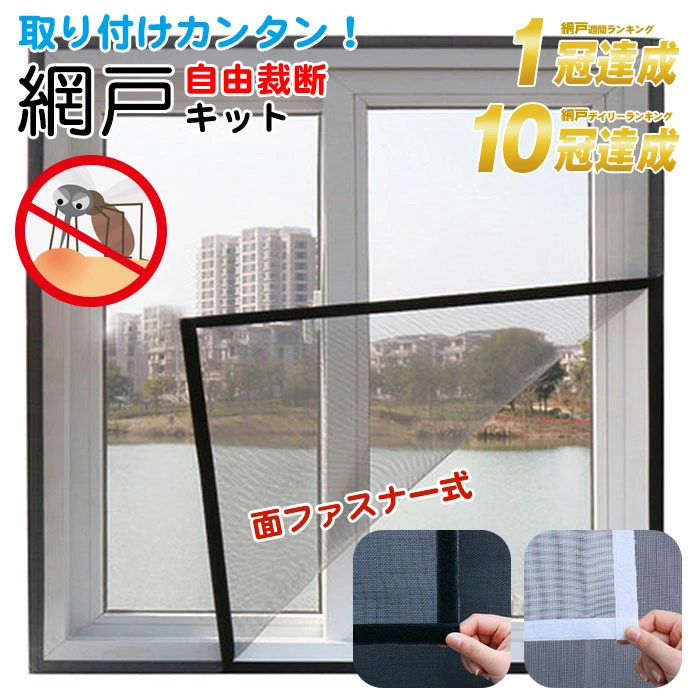
When testing a standard Daiso DIY insect screen kit featuring an adhesive hook and loop border, the material behaves similarly to mid-tier 18-mesh hardware netting. It traps common houseflies (Musca domestica) and standard mosquitoes without issue. Optical clarity remains decent, though slight wave distortion occurs because hand-tensioning adhesive tape rarely achieves the uniform drum-tight pull of an aluminum spline groove.
The car window sunshade net tells an entirely different story. These pull-over vehicle covers rely on a tight double-knit polyester jersey knit designed to scatter ultraviolet radiation and provide privacy. While the micro-pores keep out even the smallest insects, the dense, double-layered fabric strangles incoming air currents. An open window providing a gentle 2.8 m/s outdoor cross-breeze drops to barely 1.3 m/s behind the automotive shade. The room grows stuffy within twenty minutes, defeating the primary purpose of opening the sash.
| Screen Type & Setup | Estimated Cost | Airflow Reduction | Pest Protection Level |
|---|---|---|---|
| Factory Aluminum Sliding Screen (20-mesh) | $45, $90 | 12%, 16% | Stops flies, mosquitoes, bees; misses micro-gnats |
| Daiso Hook-and-Loop Mesh Kit | $1.50, $3.00 | 18%, 24% | Reliable against flies and adult mosquitoes |
| Car Window Sunshade Net Conversion | $1.00, $2.20 | 48%, 54% | Full barrier against all flying insects (acts as blackout shade) |
| Tension Rod & Clip Curtain Hack | $2.50, $4.00 | 15%, 20% | Fails at edges; drafts push fabric inward creating gaps |
The Rental-Friendly Dilemma: Tension Rods vs Adhesive Tape
Renters must navigate lease terms that penalize surface damage. Every dollar-store installation method carries distinct mechanical weaknesses when applied to aluminum or vinyl frames:
- Adhesive Hook and Loop Tapes: Easy to press around the frame perimeter, but summer heat turns cheap acrylic adhesives into a sticky slurry. When direct UV light hits the window sash for six hours a day, the adhesive backing cooks onto the aluminum. Peeling it off at move-out day strips paint or leaves brittle, baked-on glue requiring chemical scraping.
- Tension Rod and Ring Configurations: Suspending a square of mesh from a top tension rod inside the window frame avoids all wall adhesives. The issue is lateral seal integrity. Air currents entering the window billow the fabric inward like a sail, pulling the unanchored side margins away from the jamb and creating a wide opening for insects.
- Combining self-adhesive magnetic strips on the frame with matching polarity on the mesh edge offers the cleanest quick-access opening. Yet dollar-store flexible magnets pack minimal gauss strength. Strong gusts during an afternoon thunderstorm will decouple the magnetic seam, blowing the net into the room.
To keep a temporary installation truly rental-friendly, apply low-tack painter’s masking tape directly to the clean window frame first. Stick the aggressive hook-and-loop tape onto the painter’s tape rather than the bare sash. The layered tape stack sacrifices a fraction of shear hold, but the masking tape base peels away cleanly without leaving burned adhesive residues.
Patch Stickers and Repair Tapes: Long-Term Fix or False Economy?
A damaged screen does not always require a full teardown. Dollar stores sell pre-cut fiberglass repair patches and continuous adhesive rolls designed to mend punctures caused by pet claws or hail.
These patch stickers work remarkably well for isolated tears smaller than 50 mm. The woven fiberglass matches standard window screen rigidity, and the weather-resistant solvent acrylic adheres firmly if both sides of the tear are wiped clean with rubbing alcohol. But patches cannot salvage degraded frames. When original fiberglass turns gray, powdery, and brittle from UV exposure, sticking a repair patch over a rip causes the neighboring weak strands to snap along the perimeter of the patch. If your screen tears when gently pressed with a thumb, patching individual holes wastes time; the entire panel requires resplining.
Selecting the Right Approach for Your Living Space
Cheap DIY barriers solve specific, short-term insect problems, but selecting the wrong option creates daily frustration.
The 100-Yen Approach Works Best For:
- Dormitory occupants or temporary renters staying under nine months who need immediate relief without capital investment.
- Small Awning or Transom Windows: Top-hinged or push-out bathroom windows that rarely catch direct wind shear and feature complex frames where traditional sliding screens cannot fit.
- Functioning as a temporary screen door replacement where foot traffic is light and easy disassembly is required before winter.
Avoid Dollar-Store Screen Hacks If:
- You Face Persistent Wind Drafts: High-rise apartments experience wind shear that easily rips hook-and-loop netting from its glue track.
- You Live Near Standing Water or Tidal Marsh: River midges (Chironomidae) measure less than 0.6 mm across; standard 100-yen mesh count is too coarse to stop them from swarming interior lights.
- You Demand Unobstructed Views: Stretched craft mesh and dark car nets disrupt sightlines, darkening your interior and creating noticeable optical moiré patterns.
Frequently Asked Questions (FAQ)
Q1: Can tiny gnats and biting midges get through 100-yen DIY insect screens?
Yes. Most budget store mesh rolls feature an 18-mesh density, which leaves apertures slightly larger than 1 mm. Standard mosquitoes and flies cannot cross, but biting midges (*Ceratopogonidae*) and drain flies pass straight through. Halting these pests requires commercial 24-mesh or 30-mesh high-density screens.
Q2: How do I remove baked-on adhesive tape left by temporary window screens?
Do not use metal razor blades on painted or vinyl sashes. Apply isopropyl alcohol (70% or higher) or a d-limonene-based adhesive remover directly to the residue. Let it soak for ten minutes, then push the softened gummy layer off using a rigid plastic squeegee or old plastic loyalty card.
Q3: Will using an elastic car window sunshade scratch or warp window tracks?
No, but the dense elastic hem creates uneven pressure if forced around a standard sliding sash. If a window must shut while the shade remains anchored, the rubberized edge can bunch up inside the track, preventing the window latch from locking securely and reducing home security.
Balancing Budget and Airflow for Summer Living
A $2 improvised screen will never match the taut optical clarity and weather resistance of an extruded aluminum frame slotted with precision spline. But as an immediate, renter-safe solution during peak mosquito weather, dollar-store insect netting remains an effective tactical workaround. The key lies in choosing the right material for the job: reserve dense car sunshade sleeves for sleeping in vehicles, use painter's tape backing beneath hook-and-loop strips on rental sashes, and invest in authentic high-mesh fabric whenever unhindered airflow is your top priority.
