The Complete Face-Slimming Routine: Proven Techniques for Mature and Flat Profiles
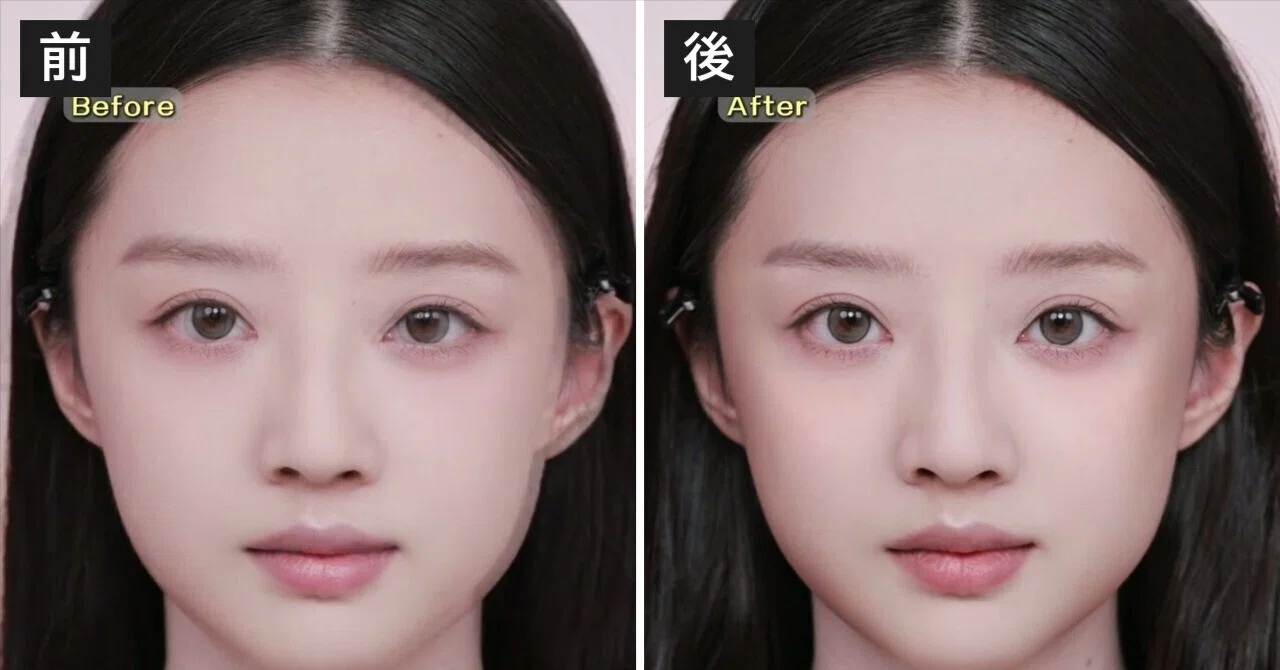
Aging shifts bone support and redistributes subcutaneous fat, widening the visual plane of the midface. For flatter facial structures, conventional Western makeup techniques, such as carving deep hollows beneath the cheekbones with dark powders, consistently backfire. Instead of producing sculpted definition, aggressive pigment placement creates an ashen, tired finish that accentuates skin laxity. As detailed in a recent Yahoo!ニュース Report, mature faces naturally accumulate negative space ("facial margins"), making traditional heavy shading look muddy rather than dimensional.
The industry has moved decisively away from heavy matte stripes toward perimeter architecture and proportional correction. Across East Asia, makeup artists are abandoning full-face bronzing in favor of structural redirection. Spearheaded by virality across Douyin and refined by Japanese editorial artists, the focus is now on controlling negative space, recalibrating the eye-to-brow axis, and restricting shade to anatomical inflection points. Mastering this routine requires rethinking how light interacts with flat and mature facial profiles.
📌 Key Takeaways:
- The Core Flaw: Carving under cheekbones on flat or aging faces drags features downward and creates dirty, hollow patches.
- The 4-Fold Rule: Restricting shade strictly to the four outer structural bends of the skull slims the perimeter without flattening front-facing volume.
- The Brow Connection: Incorrect arching and dense tails compress the eye socket, making the midface appear wider and less balanced.
The Negative Space Shift: Why Heavy Contouring Fails Flat Profiles
Mature skin loses structural bounce, causing the distance between the lower eyelid and the upper lip to visually elongate. In Japanese beauty theory, this expanse is known as kao no yohaku, the negative visual space of the face. When traditional dark bronzers are applied indiscriminately across the cheeks, they do not create the illusion of cheekbones. They create visual dirt.
The primary error occurs when shading crosses inward past the highest point of the zygomatic arch. The flat front plane of the cheek requires reflective light and soft volume to maintain youthfulness. When darker pigments creep past the outer corner of the eye toward the nose, the midface looks sunken.
Skin texture also changes the physics of contouring. Mature skin features enlarged pores, diminished moisture retention, and micro-creasing. Heavy, cool-toned matte powders cling to rough texture, separating within hours. Strategic visual facial space reduction does not rely on dark pigment across the entire cheek. It relies on crisp demarcation at the structural edges of the head, leaving the central facial mask clean, illuminated, and undisturbed.
The Douyin 4-Fold Hack: Precise Architectural Placement
In late 2025, celebrity makeup artist Hua Tianqi published a 75-second tutorial on Douyin demonstrating what he termed the "four structural folds" (4つの折れ曲がり). The video quickly collected 431,000 likes and 346,000 saves, sparking an international shift in contour placement. His premise was simple: full-face blending creates visual mud; precision placement at skeletal transition points creates instant lift.
Instead of drawing long, unbroken lines along the jaw and cheek, the 4-fold method confines contour placement to four discrete structural zones:
- The Temple Fold: Placed at the lateral edge of the forehead where the skull curves backward into the hairline. This shortens wide foreheads without lowering the brow line.
- The Lateral Zygomatic Fold: Positioned strictly on the outer side of the cheekbone, never extending inward past the outer corner of the eye. This tapers wide cheekbones inward.
- The Mandibular Angle Fold: Dabbed right at the rear corner of the jawbone directly beneath the earlobe, sharpening the transition between neck and jaw.
- The Chin Lateral Inflection: Placed on either side of the lower chin tubercle to narrow a squared or sagging lower face.
By confining shadows to these four perimeter hinges, the frontal plane remains open. The face retains its natural brightness while the peripheral edges visually recede.
Contour Methodologies: 2010s Western Bronze vs. 2026 Structural Precision
The contrast between heavy perimeter bronzing and architectural shading illustrates how application logic has transformed for mature and flat bone structures.
| Feature Vector | Traditional Western Bronzing | 2026 East Asian Precision Architecture |
|---|---|---|
| Placement Zone | Sub-zygomatic hollow sweeping inward to mouth | Peripheral skull folds; halts at outer eye axis |
| Formula & Texture | Heavy matte pressed powder, warm or grey-brown | Ultra-sheer cream emulsion with neutral desaturated undertone |
| Negative Space Effect | Shrinks cheek volume; hollows out mature tissue | Preserves frontal cheek volume; tapers the perimeter |
| Skin Finish Target | Opaque, velvety, high-contrast matte | Translucent watercolor veil; blends imperceptibly into skin |
Brow Shaping for Eye Enhancement: Opening the Upper Facial Third
Face-slimming makeup does not end with shading products. Eyebrow architecture plays an equally critical role in framing the face. As Japanese brow artist SAORI notes, an improperly structured brow shrinks the perceived size of the eyes and widens the surrounding facial canvas.
When the eyebrow tail drops below the starting head of the brow, it drags down the outer eye corner. This accentuates drooping eyelids and lengthens the temporal area. Drawing brows with heavy, uniform thickness creates a harsh horizontal bar that compresses the orbital socket, making eyes look smaller and the lower cheeks look broader.
To visually slim the face, the brow must balance the lower jaw:
- The arch should sit directly above the outer boundary of the iris, creating an upward diagonal pull.
- Tapered, Lifted Tail: The tail must terminate slightly higher than the lower edge of the brow head to pull the visual focal point upward.
- The inner head of the brow must remain soft and diffused. Packing dark pigment at the front creates tension between the eyes, drawing attention to asymmetrical or flattened nose bridges.
A balanced, slightly lifted brow arch expands the orbital frame. This makes the eyes appear larger and naturally reduces the surrounding expanse of skin.
The Jawline Lifting Technique and Tonal Discipline
The lower facial boundary requires a light touch. Mature skin often develops softening around the jawline, creating minor jowls. Applying a thick, dark line directly along the edge of the mandible merely frames the laxity in brown pigment.
An effective jawline lift places shadow underneath the bone rather than directly on it. Blend a sheer, neutral cream bronzer upward from the submental space, stopping cleanly at the razor-edge of the jawbone. This creates a clean anatomical shadow that sharpens the profile without leaving visible makeup on the face.
Tonal discipline is equally critical. Over-saturating multiple features with dense shades creates a heavy, collapsed appearance. Autumnal browns and deep plums can add sophistication, but packing rich pigment onto eyes, cheeks, and lips simultaneously flattens dimension. If the eyes feature defined structure, the cheeks should carry only a whisper of translucent cream, allowing the natural skin tone to breathe.
Frequently Asked Questions (FAQ)
Q1: Why does contouring make my mature skin look dirty instead of chiseled?
A1: Contouring appears dirty when applied over the flat, frontal planes of the cheek or when using formulas with overly warm, orange tones or dry matte textures. When dark pigment passes the outer corner of the eye, it sits on areas that naturally require light, aging the face and emphasizing texture.
Q2: Where should cheekbone contour stop to avoid aging flat facial planes?
A2: Stop all contouring products at an imaginary vertical line dropped from the outer corner of your eye. Everything inward toward the nose must remain clean and highlighted to keep the midface lifted.
Q3: Can natural cream bronzer replace cool-toned contour powders?
A3: Yes, provided the cream bronzer has a desaturated, neutral undertone rather than a red or orange base. Creams fuse with mature skin without settling into fine lines, yielding an imperceptible shadow that mimics real bone structure.
Precision, Contrast, and the New Rules of Facial Geometry
Making a mature or flat face look smaller is not about drawing on artificial hollows. It is an exercise in managing negative space and controlling edges. The outdated method of buffing heavy bronzer across the cheeks only creates muddiness, working against natural bone structure.
Confining depth to perimeter bone transitions sharpens the face without sacrificing youthful fullness. Lifted brows widen the eye zone, while sheer cream textures prevent unwanted product buildup on delicate skin. The most effective face-slimming routine remains invisible: the skin stays luminous, the jawline sharpens, and the overall profile looks effortlessly refreshed.
