The Complete Guide to Windproofing Clothes Hangers with Rubber Bands: Placement, Tips, and FAQs
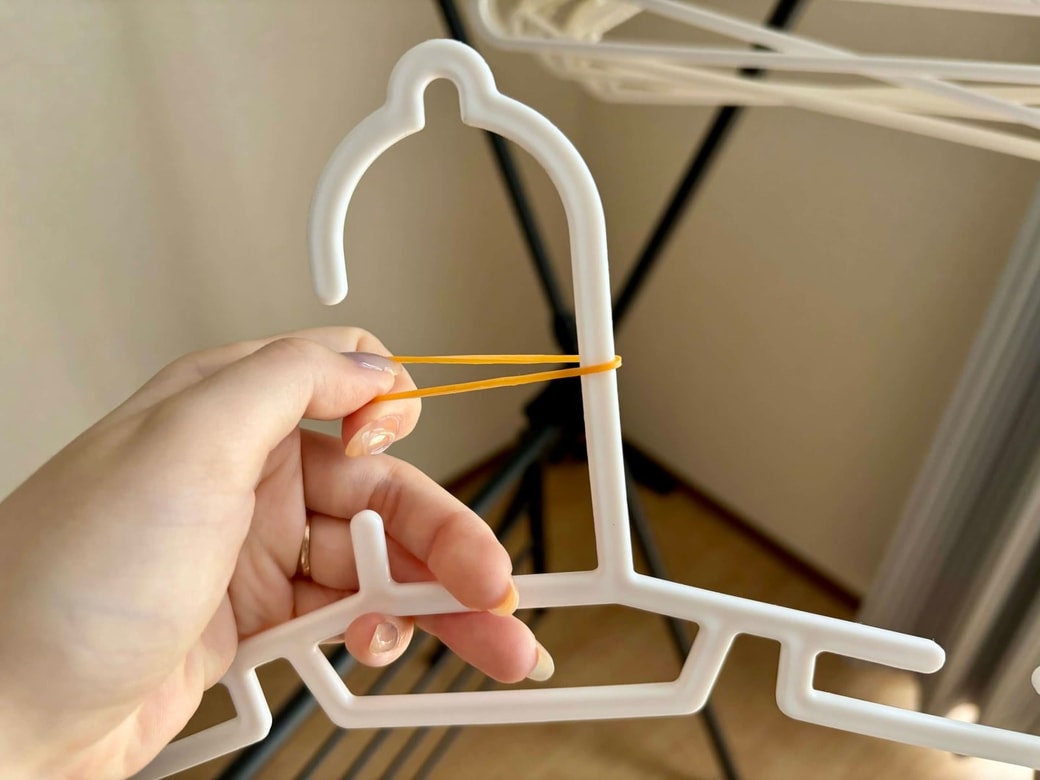
Gusty winds routinely turn apartment balconies and backyard clotheslines into scenes of domestic frustration. A sudden afternoon squall pushes clean shirts together into a damp, bunched-up clump, or worse, launches entire hangers onto the ground below. While hardware stores sell specialized wind-lock clips and heavy-duty steel clamps, an ultra-low-cost domestic lifehack originating in Japan has demonstrated that two standard office rubber bands can anchor laundry through brisk winds. As documented in an Excite エキサイト Report detailing everyday household optimizations, wrapping ordinary elastics around key pivot points creates enough mechanical resistance to keep clotheslines spaced and garments locked down for hours under active airflow.
📌 Key Takeaways:
- The Core Mechanism: Wrapping rubber bands around the neck or hook of a plastic hanger converts a slick, low-friction surface into an active rubber band friction grip that bites into metal drying poles.
- The Dual Problem: The method solves two distinct outdoor laundry failures: hangers sliding laterally and bunching together, and wide-collar garments slipping off smooth plastic shoulders.
- Field Durability: Standard rubber bands resist wind speeds up to 15, 20 mph, but direct UV radiation degrades standard natural latex within 60 to 90 days of sustained outdoor exposure.
The Mechanics of Friction: Why Plastic Hangers Fail in Open Air
Modern laundry drying equipment prioritizes smooth, snag-free surfaces. Polystyrene hangers and stainless steel poles look clean and protect delicate fabrics, but their low kinetic friction coefficient creates an aerodynamic failure point outdoors. When wind hits hanging garments, it turns fabrics into sails. The resulting lateral drag forces plastic hangers to glide effortlessly along the line, packing wet clothes together and cutting off the airflow necessary for evaporation.
A standard rubber band alters this equation entirely through shear modulus and static friction. Rubber features a high coefficient of friction against smooth steel, aluminum, and vinyl-coated wire lines. When compressed against a clothesline, the elastomeric material deforms slightly around microscopic surface irregularities, generating physical resistance against horizontal sliding.
Instead of sliding freely when pushed by a cross-breeze, the hanger remains anchored in its assigned position on the rack. This simple plastic hanger grip modification costs fractions of a cent per unit, bypassing the need for bulky clothesline accessories while preserving consistent clothesline spacing tricks that ensure uniform drying.
The Pole-Lock Technique: Stopping Horizontal Drift in High Winds
Securing a hanger against horizontal drift requires securing the hook junction. When winds push parallel to a clothesline, the apex of the hook acts as a bearing, rolling or sliding along the metal bar. Wrapping a single rubber band tightly around the base of the hook where it joins the hanger body offers moderate friction, but applying a figure-eight wrap creates superior stability.
To execute the two-band pole lock:
- Loop one medium-gauge rubber band around the vertical neck of the hanger just below the hook.
- Stretch the band upward and twist it across the inner curve of the hook where it rests on the clothesline.
- Add a second band directly adjacent to the first to create twin rubber contact pads on the underside of the curve.
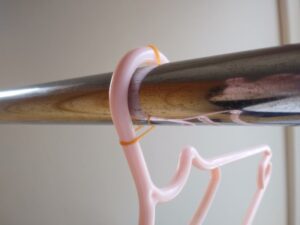
When placed over an outdoor drying rack, the weight of the wet garment presses the rubber directly against the pole. The rubber band friction grip creates a non-skid interface that resists wind-driven displacement. Testing under moderate outdoor gusts demonstrates that this setup keeps garments separated by a steady 4 to 6 inches, eliminating the uneven drying caused by clustered wet fabric.
The Three-Point Shoulder Wrap: Preventing Ground Drops
Securing the hanger to the clothesline solves only half the equation. High winds also lift clothing off the hanger shoulders, pulling garments upward before dumping them onto balcony concrete or garden soil. Slick rayon blends, wide-neck sweaters, and smooth synthetic athletic apparel are particularly vulnerable.
An additional Japanese household survey highlighted by Excite in late 2025 examined how strategic rubber band placement stops garments from shedding off hangers entirely. By placing rubber bands on three distinct contact points, one at each shoulder end and one across the neck, hangers grip both the line and the fabric simultaneously.
Winding two to three turns of a rubber band roughly 1 inch inward from the outer tips of each hanger shoulder creates raised ridges. These ridges act as physical stops for shirt collars and straps. Even when wind catches the hem of a shirt and billows it outward, the high-friction latex stops the shoulder seams from sliding over the edge.
Comparing Laundry Windproofing Methods
Balcony laundry management involves balancing cost, setup speed, and durability. The table below outlines how DIY elastic modification compares to commercially sold alternatives across real-world outdoor drying criteria.
| Drying Method | Wind Resistance | Estimated Unit Cost | UV Lifespan Outdoors |
|---|---|---|---|
| Standard Clothespins / Pegs | Moderate (slips on smooth lines) | $0.10, $0.25 | 6, 12 months (plastic degrades) |
| Rubber Band Friction Grip | High (locks position on pole) | 2, 3 months (natural latex) | |
| Commercial Windproof Locking Clips | Very High (mechanical latch) | $1.20, $2.50 | 18, 36 months |
| Silicone Anti-Slip Adhesive Strips | Moderate to High (fabric grip only) | $0.30, $0.60 | 12, 24 months |
While dedicated commercial latches provide superior longevity, their bulk makes them cumbersome for daily storage. The rubber band technique serves as an immediate, near-zero-cost intervention using materials already sitting in kitchen drawers.
Material Science Constraints: UV Degradation and Heat Exposure
The primary limitation of relying on rubber bands for laundry drying stability lies in polymer chemistry. Standard office rubber bands consist of vulcanized natural latex (polyisoprene). Natural rubber degrades rapidly when subjected to ultraviolet radiation and ambient ozone.
Over 6 to 10 weeks of regular sun exposure, the polymer chains cross-link excessively, leading to embrittlement. The elastic loses its flexibility, turns powdery or brittle, and snaps under tension. In humid summer conditions, heat can cause lower-grade synthetic rubber to soften and leave sticky residues on plastic hanger frames.
To avoid transferring degraded rubber onto clean textiles:
- Apply rubber bands strictly to the plastic frame, avoiding direct contact with white or delicate fabrics.
- Swap natural tan office bands for synthetic silicone bands or EPDM (ethylene propylene diene monomer) bands if you intend to leave them permanently on outdoor hangers.
- Inspect bands monthly and strip away cracking elastics before they disintegrate against clothing fibers.
Aerodynamic Layouts for High-Wind Balconies
Preventing wind displacement requires smart spacing alongside physical grips. Placing laundry randomly along an outdoor clothesline creates turbulent airflow that intensifies drag on individual garments.
Arranging clothing in an arch formation reduces wind stress. Hang long, heavy items, such as bedsheets, bath towels, and trousers, at the outer ends of the drying pole. Position shorter garments, like underwear, T-shirts, and socks, across the center. This concave profile guides wind up and over the laundry rack, minimizing sideways drag against the center hangers.
Pairing this arch formation with rubber-band-anchored hangers prevents the "accordion effect," where garments bunch up at the leeward side of the balcony. Air channels between garments remain open, cutting overall drying time by as much as 30% on overcast or humid days.
Frequently Asked Questions (FAQ)
Q1: Will rubber bands leave stains or sticky marks on wet clothes?
A1: Standard office rubber bands can leave yellowish stains or gummy residues if they touch wet, light-colored fabrics under direct sunlight. To prevent this, wrap the bands only around the hanger hook or on the underside of the shoulder frame where fabric contact is minimal. Alternatively, switch to clear silicone bands, which do not degrade into gummy residue.
Q2: How many rubber bands are needed per hanger for reliable wind protection?
A2: Two bands are sufficient for windproofing. Wrap one or two tightly around the neck and hook to grip the clothesline, which stops lateral sliding. If you are drying wide-neck shirts or slippery fabrics, add two more bands, one at each shoulder tip, for four bands in total.
Q3: Can this method hold heavy wet winter coats or thick hoodies?
A3: Yes, but with a structural modification. Heavy wet garments generate significant downward force, which actually improves the friction grip between the rubber band and the drying pole. However, thin wire hangers will bend under the load. Use wide-shouldered plastic or composite hangers wrapped with heavy-gauge (#64) rubber bands to handle the weight without deforming.
Everyday Laundry Efficiency
Securing an outdoor clothesline does not require commercial gear or specialized laundry accessories. High-wind laundry drying comes down to controlling friction and managing airflow across drying surfaces.
By deploying small rubber bands at critical mechanical junctions, household driers can transform inexpensive plastic hangers into reliable non-slip tools. The technique keeps clothes anchored on the line, preserves the critical air gaps required for fast drying, and prevents clean laundry from taking accidental flights off high-rise balconies. A handful of common elastics eliminates one of daily housekeeping's most irritating interruptions with absolute simplicity.
